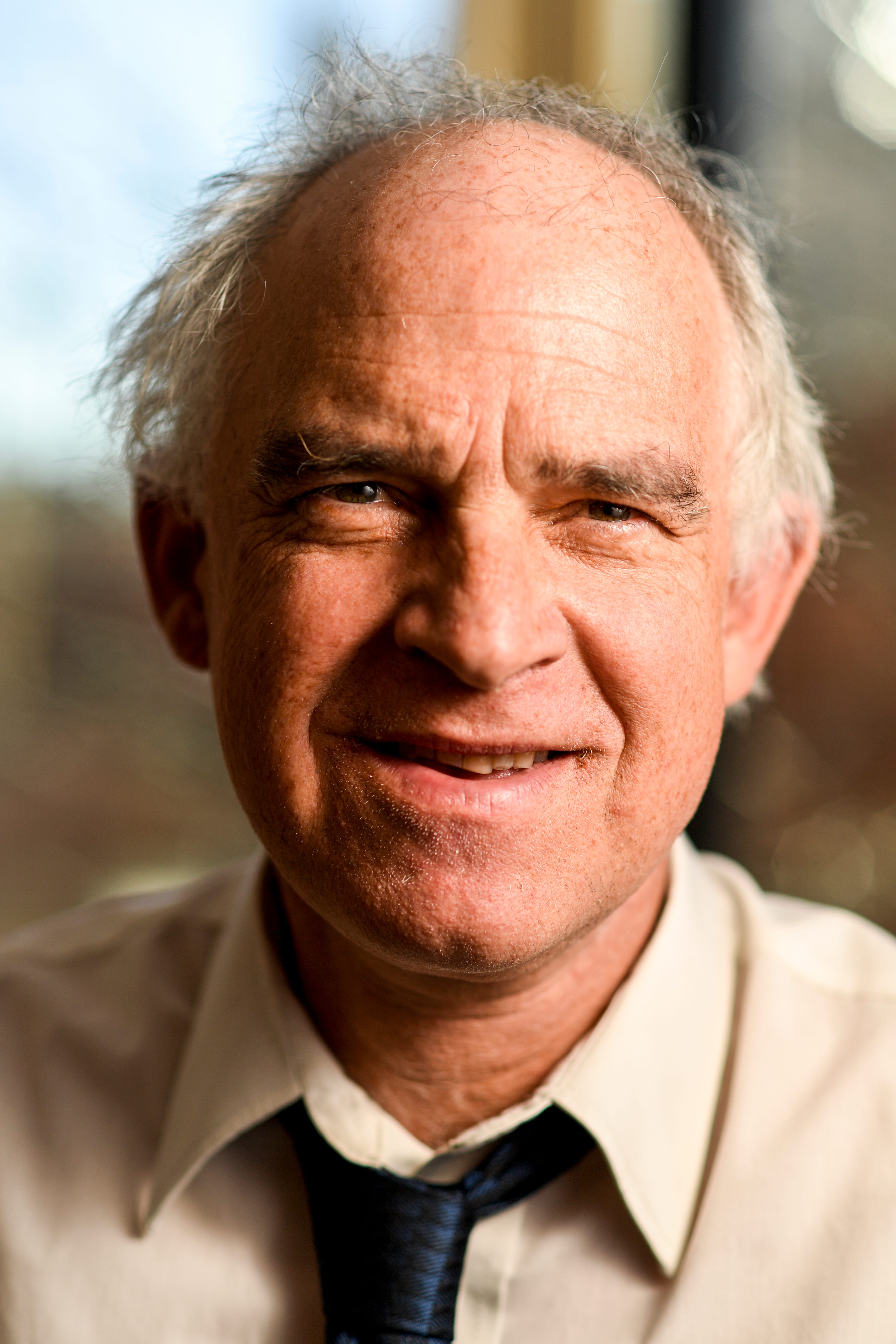
Volts podcast: Will Toor on Colorado's burst of clean energy policy
In this episode, Will Toor of the Colorado Energy Office shares about the state’s ambitious climate agenda and the array of energy policies they’ve been passing under a Democratic political trifecta.
Washington, DC, is a slow-motion nightmare right now, but out in the states — at least the states that Democrats control — climate and clean energy policy is still happening. A few weeks ago, I covered the fantastic policies recently passed in my home state of Washington (see also my podcast with Washington legislator Joe Fitzgibbon).
Today, we turn our gaze to Colorado.
In 2018, Democrats gained a trifecta in the state — the governorship and both houses of the legislature — for the first time since 2013. They promptly got busy passing a vast array of clean energy policies: reform of electric utilities, support for electric vehicles and charging infrastructure, new restrictions on oil and gas production.
During this year’s legislative session, Gov. Jared Polis released a comprehensive roadmap to 90 percent statewide reductions in greenhouse gas emissions by 2050 and the state legislature tackled clean buildings, industry, environmental justice, reform of state transportation agencies, reform of natural gas utilities, and on and on.
To discuss this flurry of activity, I turned to a man who has been involved in Colorado politics since the previous century: Will Toor.
Toor was mayor of Boulder from 1998 to 2004. From 2005 to 2012, he was Boulder County Commissioner. During all that time he was also board chair at the Denver Regional Council of Governments, where he led efforts on climate policy. He then became director of the transportation program at the Southwest Energy Efficiency Project, until 2019, when the newly elected Polis appointed him to run the Colorado Energy Office.
Toor has had a hand in shaping Polis’s energy agenda from the beginning, and he has been closely involved in negotiating bills through the legislature. He helped walk me through Colorado's sector-by-sector approach to emissions, what the state has accomplished so far, and what might be next for it.
Listen, enjoy, and if you appreciate work like this, please consider becoming a paid subscriber to Volts.
As a bonus, here’s a picture of Toor in 2003, as mayor of Boulder, hosting visiting scholar Noam Chomsky.
Text transcript:
David Roberts
All right, with no further ado, Will, welcome to Volts.
Will Toor
Thank you.
David Roberts
So I've been following states and climate policy for a long time, and it seemed like a few years ago, Colorado just kind of burst out of the gate at a full gallop and has been going really strong now for two sessions of the legislature. So maybe just by way of starting, tell us some about the political developments of Colorado over the last five years that put all the pieces in place that allowed this burst of activity.
Will Toor
Yeah, really, I think what happened was that in 2018, we both elected a new governor, Jared Polis got elected governor on a platform of, among other things, 100% renewable electricity by 2040 and bold climate action, and we elected a Democratic Senate. We had had a Democratic House, but had not had a Democratic Senate since 2014. And so the combination of having a governor who was committed to climate action and a House and a Senate that were aligned and the fact that there was just kind of a pent-up demand for action on climate and clean energy really set the stage for a kind of monumental legislative session in 2019.
So that year we had, depending exactly how you count it, something like 15 major bills on setting climate targets, modernizing our utility regulation to set our utilities on a pathway to at least 80% greenhouse gas reductions by 2030. A bunch of bills on electric vehicles, a bunch of bills on energy efficiency. We had a major oil and gas reform bill. One of the things that's a little unusual is that Colorado is a major oil and gas producer that is actually acting on climate and clean energy. And Senate Bill 181 completely rewrote the regulatory structure for oil and gas in Colorado.
Then last year was a little bit quieter because of the pandemic that kind of shut down our legislative session partway through, although there was still lots of action at the Public Utilities Commission and the Air Quality Control Commission. But then this year has really shaped up to be another year where that kind of pent-up demand for action really came out at the legislature.
David Roberts
Well, I want to get into some of the specifics of the legislation, but just as a background political question, because I'm curious. Do you have a supermajority of Democrats or does Colorado — do you need a supermajority to sort of override Republican objections or sort of like, what's the disposition of the state Republican Party on all of this? Are they just irrelevantly sitting on the sidelines, or is there some engagement? What's the degree of Democratic domination, I guess, is what I'm asking.
Will Toor
So, there's a large Democratic majority in the House. In the Senate, it's a much narrower majority. For 2019 and 2020, it was actually a one-vote margin, 18-17. After the 2020 elections, it's now a 19-16 margin. I would say that some of the issues have been bipartisan, but the vast majority of votes on clean energy have been primarily Democrats. There is one Republican in the Senate who is a very strong advocate for clean energy and climate action, Senator Kevin Priola, who has actually been a sponsor of many of the pieces of legislation. Where the Republican Party, I think, has had an impact has been often helping to shape some of the pieces of legislation in ways that may make them work better for their communities.
They often represent rural parts of the state, and there's been a lot of interest in trying to make sure that we're moving forward on climate action in ways that can work for rural Colorado in addition to the urban part of the state. We had one major bill this year on funding our just transition effort for coal communities, and that was a very bipartisan bill.
David Roberts
Right, I bet.
Will Toor
Yeah.
David Roberts
So one thing that happened this year, I think prior to most of the big bills, is the governor issued his roadmap. This is a sort of roadmap whereby Colorado can reach its goals. So tell us what the targets are and sort of what is the roadmap, what was the purpose of the roadmap?
Will Toor
Yeah. So this really came out of that 2019 legislative session. One of the pieces of legislation that moved forward for
You May Also Like

NPR News Now
NPR
Newshour
BBC World Service

Real America’s Voice
Real America's Voice

The Fox News Rundown
FOX News Radio

24/7 News: The Latest
iHeartPodcasts and TTWN

Dialogue Works
Nima Rostami Alkhorshid

Asmongold TV
Asmongold TV

共同通信Podcastーニュースの裏側も、多言語学習も、経済もー
共同通信社 KyodoNews(Japan News Agency)
Jeffrey Epstein: The Coverup Chronicles
Bobby Capucci

Así las cosas con Carlos Loret de Mola
WRadio
NPR News Now
NPR
Newshour
BBC World Service
Real America’s Voice
Real America's Voice
The Fox News Rundown
FOX News Radio
24/7 News: The Latest
iHeartPodcasts and TTWN
Dialogue Works
Nima Rostami Alkhorshid
Asmongold TV
Asmongold TV
共同通信Podcastーニュースの裏側も、多言語学習も、経済もー
共同通信社 KyodoNews(Japan News Agency)
Jeffrey Epstein: The Coverup Chronicles
Bobby Capucci
Así las cosas con Carlos Loret de Mola
WRadio
Community discussion