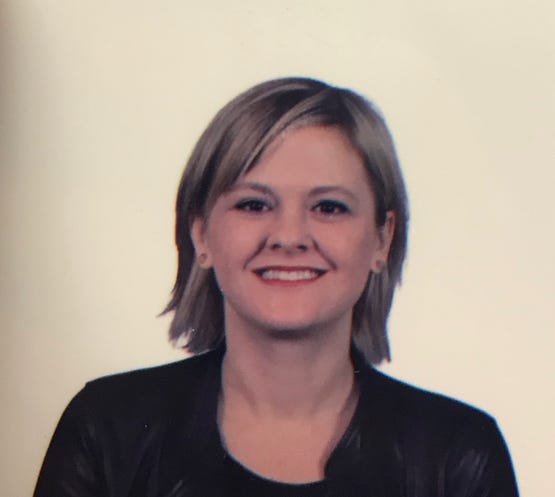
Volts podcast: Lori Lodes on climate activism and the path forward
In this episode, Lori Lodes of Climate Power discusses how climate activists can maintain momentum when federal action feels entirely out of reach.
Text transcript:
David Roberts
It is a dark time for climate activists. The immense hope they felt at the introduction of the original Build Back Better bill has curdled. It is still possible that some kind of deal might emerge from the Senate in this final month, but if it does it will be a pale shadow of what it once was.
Meanwhile, the Republican-dominated Supreme Court has just taken away one of the EPA's principal tools for addressing greenhouse gases. And that is, of course, only one tiny sliver of the damage that the court has done and is continuing to do. A Supreme Court that is hostile to climate action seems fated to be a fact of life for at least a generation.
It is not clear what climate activists could have done differently to avert these grim outcomes. And it is not at all clear how they should proceed from here. They have no way of encouraging West Virginia Democrat Joe Manchin to be a decent human being and once the reconciliation bill is done, the midterms will be upon us, and all signs point toward disastrous Democratic losses that will take legislation off the table entirely.
What should climate activists be doing right now? How should they be maintaining hope and momentum?
To discuss these difficult questions, I contacted Lori Lodes, the head of the nonprofit advocacy organization Climate Power, which was created by John Podesta and others in the run-up to the 2020 election to ensure that climate had a place on the Democratic agenda. Lodes is a veteran of several difficult Democratic fights going back to Obamacare and is a self-proclaimed lover of political combat, so I was eager to hear from her on what climate activists should be doing, how they should feel about whatever emerges from the Build Back Better negotiations, and how they should move forward in a world where federal action has become all but impossible.
Without further ado, Lori Lodes of Climate Power. Welcome to Volts. Thanks for coming.
Lori Lodes
Thank you for having me.
David Roberts
We are meeting here, I guess, what you'd say, under inclement circumstances of a variety of kinds. Among them, I'm on the downside of a piece of COVID which is why I'm coughing and sound hoarse. So bear with me. I want to talk about what's going on and what's coming next. Lori, but just to start with, you were chosen by John Podesta to run this new climate organization in the run up to the 2020 elections.
Lori Lodes
That's right.
David Roberts
Talk a little bit about what your experience prior to that. And I know you played a big role in fighting for Obamacare and then fighting to protect Obamacare afterwards. And we're on the Hillary campaign, the ill-fated 2016 Hillary campaign. So maybe just talk a little bit about your pre-climate work and the sort of things you picked up from it about Democrats, and their problems, and how they can win.
Lori Lodes
Big question, I mean ...
David Roberts
That's a lot.
Lori Lodes
I got my start in politics. Like a lot of people, I just cared deeply and was a complete idealist. I read the newspaper every day with my family. But the big thing for me was saying, "I like big fights," and I have a complete belief or ideology that we can do better, that we can form a more perfect union, but it takes a lot of hard work. And so I've been on one side of the battle or the other, fighting to expand health care, to get as many people health insurance as humanly possible with certain limitations, with certain political limitations that we have from trying to pass minimum wage laws, from trying to prevent Justice Kavanaugh from getting on the bench.
And now I've started Climate Power with Podesta to really do everything that we can to win the politics of climate. And that's really at the heart of so much of these big political battles. The policy is smart policy, right? If this was just about the policy, we would have passed climate laws to take care of climate change a decade, two decades, three decades ago.
David Roberts
If this were a battle of white papers, we would have won an overwhelming victory long ago.
Lori Lodes
Yes, right. And as progressives who care about policy and who think a lot, our side has a lot of those white papers, a lot of them, what we haven't been able to do is change the political calculation. It's getting a lot better, right. If you look back to 2016, when Hillary Clinton ran for president, she really wasn't talking about climate change very much, right? Bernie Sanders really wasn't talking about climate change very much. It came up in very specific instances, but they weren't running on it. And that's really why we started Climate Power in 2020, was how do we make sure that whoever the presidential nominee was going up against Trump was going to fight on climate?
Because the politics of climate we believe, and I still believe this, have changed demonstrably. But it's not enough to say that you have to prove it to elected officials every single day, and prove to elected officials that you have their back, that there is a political benefit for talking about climate, for running on climate, and then for governing on climate. And that's where we are today.
David Roberts
I want to ask about that. It does seem like one clear victory of the climate movement between, let's say, 2016 and 2020 and today is that it really does seem like elected Democratic officials have put climate at the center of their agenda for whatever that counts as victory. That does seem like a clear-cut victory, like something activists did, right. It really does seem like the party establishment has swung around behind this full square.
Lori Lodes
Incredibly so, right. This was not a long time ago an issue that people, elected officials, didn't want to talk about except when they had to. And now you have climate being the singular issue that completely united the Democratic Party in Build Back Better, right. When you look at the vote for Build Back Better in the House, and I'm just going to put the Senate aside, I clearly did a little bit of gymnastics to get around Manchin, but if you look at the vote in the House, there was one Democrat who voted against Build Back Better, and, you know, this was the House version of it.
So it was big and there was a lot of great policy pieces in it, and that was Jared Golden up in Maine. If you flash back to 2009 when the House passed Waxman-Markey, there were 44, I think, somewhere around there of Democrats who voted against it. And that did not happen by accident. There has been a concerted strategy over the last ten years to really, "how do we move the ball forward, how do we get more people involved?" And a lot of credit where it is due to young people, in particular Sunrise, for really galvanizing, mobilizing people in a new and better way and really giving a voice to young people where candidates felt like they could no longer ignore it.
David Roberts
Well, let me offer one of the con
You May Also Like

Die Nachrichten
Deutschlandfunk

Čteme vám Seznam Zprávy
Seznam Zprávy

O Antagonista
O Antagonista

NPR News Now
NPR

The Diddy Diaries
Bobby Capucci
Newshour
BBC World Service

Real America’s Voice
Real America's Voice

CNN 5 Cosas
CNN en Español

The Fox News Rundown
FOX News Radio

24/7 News: The Latest
iHeartPodcasts and TTWN
Die Nachrichten
Deutschlandfunk
Čteme vám Seznam Zprávy
Seznam Zprávy
O Antagonista
O Antagonista
NPR News Now
NPR
The Diddy Diaries
Bobby Capucci
Newshour
BBC World Service
Real America’s Voice
Real America's Voice
CNN 5 Cosas
CNN en Español
The Fox News Rundown
FOX News Radio
24/7 News: The Latest
iHeartPodcasts and TTWN
Community discussion