Volts podcast: Johannes Ackva on effective climate altruism
In this episode, Johannes Ackva of Founders Pledge discusses his thinking on the most effective forms of climate philanthropy.
Text transcript:
David Roberts
Say you’re a private individual (or a company, or a foundation) who cares about climate change and has some money to spend on it. What’s the best way to spend that money? How can you ensure the largest possible impact?
Similar questions about maximizing philanthropic impact have led to an entire field of study and practice known as “effective altruism,” which seeks to apply logical and empirical rigor to do-gooderism. But it is only very recently that effective altruists have turned their attention to climate change.
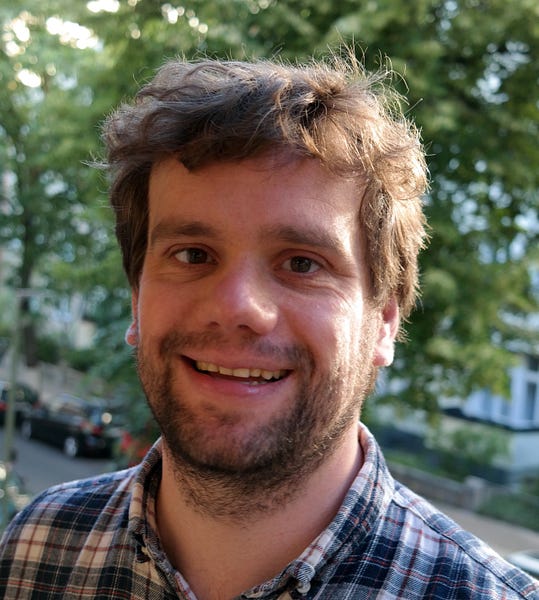
One of the leading EA voices on climate is Johannes Ackva. He’s a researcher at Founders Pledge, an organization through which business owners and entrepreneurs donate a portion of their earnings to charity. For years, Ackva has been thinking through the puzzle of how best to channel climate philanthropy, given the structure of the problem and the politics around it.
If you’re interested in what groups Founders Pledge has chosen for its donations, you can find a list on the website, but I was more interested in the thinking that led Ackva to those recommendations. Given the enormous spatial and temporal scales involved in climate change, the many social and political complexities, the extensive and irreducible uncertainties, how can a well-meaning donor have any confidence in their choices?
I found our conversation quite enlightening — a new lens through which to view this familiar problem — it and I think you will too.
Johannes Ackva, welcome to Volts. Thanks for coming.
Johannes Ackva:
Yeah, thank you, David. Thanks for having me. It's an honor and pleasure to be here.
David Roberts:
Let's start a few steps back since I'm not entirely sure that the Volts audience will be familiar with the effective altruism movement, even though it gained quite a bit of press attention recently. So to start with, just tell us briefly, what is effective altruism and what is it trying to do?
Johannes Ackva:
So effective altruism is really a social and intellectual movement that tries to answer the question, “how can we do the most good possible?” And, not only answer that question in a theoretical way, but in a very practical way, actually trying to do as much good as possible.
There are two components to it. The first one that I would stress is, of course: altruism, which is about trying to be really serious about helping other people and other beings. So, effective altruists usually take a global take, including all humans, also all future humans, also all animals. So, having a really expansive form of altruism. And many effective altruists donate a large part of their income to the global poor or change their careers. So this is the altruism piece of it.
And then there's this effectiveness piece, which is like thinking really hard and long, and trying to use as much evidence as possible to think about “how can we have the most impact?”, the most positive impact. And one thing about impact here that I think is crucial, because I think it will come up throughout our conversation, is that a lot of what I'm saying on climate is motivated by this notion of counterfactual impact. Given what everyone else is doing, what is the thing that is additional, should be done next? So, not only trying to have impact, but trying to have impact that otherwise would not happen in the world. And I think that's really key to how we think about climate.
David Roberts:
And this is the concept of additionality, doing something that would not otherwise be done?
Johannes Ackva:
Yeah, doing something that would not otherwise be done. Yes, that's the concept of additionality.
David Roberts:
I won't claim any deep familiarity with the ins and outs of the movement, but my impression over the last few years is that some of the most prominent spokespeople for effective altruism are relatively down on climate change as a target for philanthropic giving. I think the idea is that they're trying to think about all humans today and all humans that will ever be. They're thinking about what might cause the extinction of the human race, and they say climate is unlikely to cause extinction, whereas, you know, a terrible pandemic or an asteroid or an AI that becomes sentient and does a terminator on us are much greater threats of extinction.
So why, within the context of effective altruism, do you think that climate change is a worthy target for people's giving and attention?
Johannes Ackva:
First, I would say you're broadly right there. And it’s funny, because I was a climate person before I was an effective altruist, before I encountered effective altruism. So, it was the first instance of having to justify myself. Why am I working on climate? Growing up in Germany this was something I never had to justify. So I think that's broadly right, most effective altruists do not focus on climate and I think the reason that you’ve outlined as to why is broadly right.
Climate is a really big threat, and I think effective altruists acknowledge that there are very serious threats from extreme climate change, so the view is not that climate isn't a serious problem. I think effective altruists take it very seriously. But seeing a broad set of problems of similar magnitude (like nuclear war, advanced artificial intelligence that you mentioned, or bio risk) where many of those issues receive far, far less attention than climate change is the reason that many effective altruists would not first go to climate.
David Roberts:
But you think they're wrong about that, that climate is a worthy target of giving and philanthropy? What is the effective altruism justification for focusing on climate?
Johannes Ackva:
Yeah, okay, so I think the effective altruism justification for caring about climate has two different aspects. One comes from thinking about humans alive today, or humans alive in the near future. So obviously, I think we know from the literature on climate impacts, that vulnerable populations in the Global South will suffer the most from climate change, and helping them can be quite effective, also because solving climate change is related to solving some other really big problems, in particular air pollution and energy poverty. So, if you think about clean energy abundance as one possible solution for climate change, that would actually solve all of those issues.
David Roberts:
Right. So you're solving three problems in one when you solve this problem?
Johannes Ackva:
Yeah, that's the first piece. I think the second piece comes if you think about global catastrophic risk or if you think about the importance of geopolitical stability and good international cooperation. If you think about how climate change can go wrong, how climate change can cause migration, international attention, etc. I think that's another set of reasons to care about climate change, just making the world in genera
You May Also Like

NPR News Now
NPR
Newshour
BBC World Service

Real America’s Voice
Real America's Voice

The Fox News Rundown
FOX News Radio

24/7 News: The Latest
iHeartPodcasts and TTWN

Dialogue Works
Nima Rostami Alkhorshid

Asmongold TV
Asmongold TV

共同通信Podcastーニュースの裏側も、多言語学習も、経済もー
共同通信社 KyodoNews(Japan News Agency)

Jeffrey Epstein: The Coverup Chronicles
Bobby Capucci

Así las cosas con Carlos Loret de Mola
WRadio
NPR News Now
NPR
Newshour
BBC World Service
Real America’s Voice
Real America's Voice
The Fox News Rundown
FOX News Radio
24/7 News: The Latest
iHeartPodcasts and TTWN
Dialogue Works
Nima Rostami Alkhorshid
Asmongold TV
Asmongold TV
共同通信Podcastーニュースの裏側も、多言語学習も、経済もー
共同通信社 KyodoNews(Japan News Agency)
Jeffrey Epstein: The Coverup Chronicles
Bobby Capucci
Así las cosas con Carlos Loret de Mola
WRadio
Community discussion