Volts podcast: how to get urban improvements done quickly
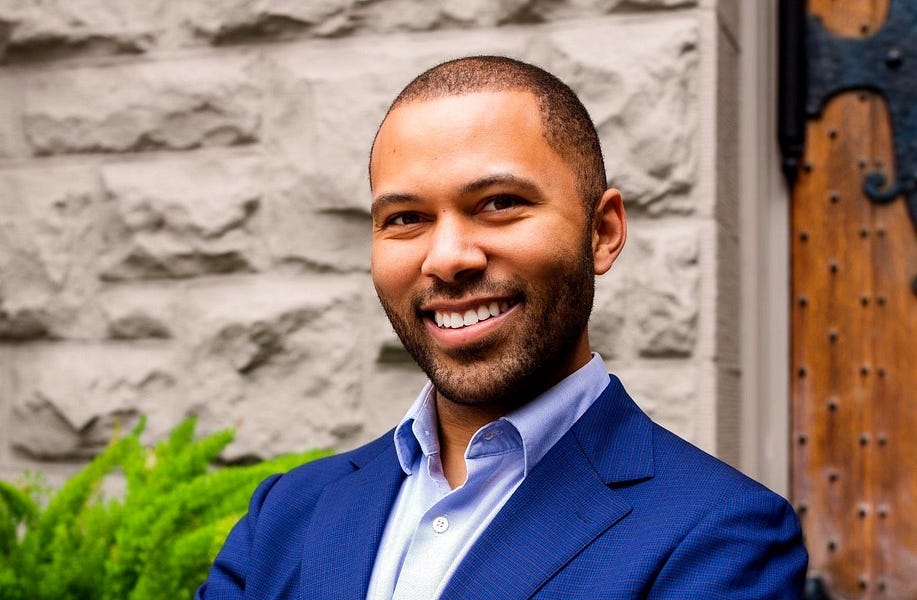
In this episode, transportation planner Warren Logan shares his expertise on how cities can make fast, cheap, impactful improvements to safety and walkability.
Text transcript:
David Roberts
When it comes to reducing transportation emissions, two main ideas compete for mindshare in the climate space. First is switching out internal combustion engine vehicles for electric vehicles. Second is improving the built environment to make walking, biking, and public transit easier, to reduce the amount of miles traveled in cars and trucks altogether.
The conventional wisdom is that the former is faster. There are a few key policy levers that can be pulled to get massive numbers of EVs on the roads, whereas urban improvements proceed one at a time, each facing its own bespoke set of challenges.
But there are people out there at the city level working to increase the speed of those improvements. One of them is Warren Logan, currently a partner at Lighthouse Public Affairs, but before that, policy director of mobility in the Oakland, California, mayor's office, a senior transportation planner for San Francisco, and an intern in the transportation office at Berkeley, California.
In his time working on transportation projects, Logan has given a lot of thought to, and done a lot of work on, improving city processes to make safety and walkability improvements faster and less capital-intensive. He wants cities to free themselves up to make fast, cheap changes that can have big impacts without an enormous investment of time and money.
As listeners will have noticed, I have been somewhat obsessed lately with urban design and transportation issues. I hope you will indulge me in another conversation about the nature of resistance to urban improvements, the kinds of changes that can be made quickly to dramatically improve safety, and the larger need to avoid over-reliance on EVs.
Warren Logan, thank you for coming to Volts and sharing your time.
Warren Logan
Thank you so much for having me, David.
David Roberts
Let's start with a little Warren background, a little Warren history here. Tell us sort of what your position was and what you're more to the point, sort of what your engagement was in transportation and transportation projects. Tell us about your last few years.
Warren Logan
Sure. So before my time at Lighthouse Public Affairs, as a partner in Public Affairs, I was Mayor Libby Schaaf's Policy Director of Transportation and Government Affairs of the City of Oakland, which is two jobs that they pushed together. And I think it's important to share here just quickly that before my time in the mayor's office, I was also a transportation planner in the city and county of San Francisco. And before that was an urban designer as a consultant in the East Bay, in the Bay area here. And before that was a transportation planner again for the city of Berkeley.
So my point here is I've done a lot of different cool transportation work across the Bay.
David Roberts
Yeah, you must know so many NIMBYs. It's like a NIMBY survey you've done with your career.
Warren Logan
Yeah.
David Roberts
Berkeley to Oakland.
Warren Logan
You got it. And this might come out later in our podcast, but most of the subjects I've worked on have been like, "what's the most contentious issue at the time? Changing parking pricing. Let's talk about bike lanes. Let's talk about ... let's keep the city from falling apart during COVID," easy subjects really.
David Roberts
Tell us then at the sort of high level of abstraction, which is just let's address this argument. If I'm Joe Schmo on the street, I know transportation needs to be decarbonized. And I look around and I was like, "oh, there's the decarbonized transportation right there. It's called an electric vehicle. Let's just stop making the gas vehicles, start making the electric vehicles. Problem done. Let's move on to the next problem." I think that is a fairly widespread disposition toward this issue. So just tell us why you think that at the broadest level, why that kind of thinking is insufficient.
Warren Logan
Sure. So to all the Joe Schmos out there, the truth of the matter is that just switching to electric cars is not going to solve all of our climate issues. And I'm sure we'll go into all the different reasons why. But for me, and probably for anyone who's ever been near cars at all, it's not just about the climate that we have to think about. It's like traffic safety as well. And I can only stress this enough, that if you get hit by a car, it doesn't matter if it was an electric vehicle or not. In fact, it might be worse because they're heavier, which is in no way to say we shouldn't be considering electric vehicles.
David Roberts
And you might not hear it coming right?
Warren Logan
And you might not hear it coming, right. So, David, your point is so good, though, that there is certainly room for absolutely decarbonizing our vehicles. I will admit I own an electric vehicle, and I own an electric bike, and that together, those two means of transportation get me really far.
David Roberts
But if you're talking to Joe Schmo and Joe Schmo says, "if I switch out all the cars, what is the remainder? What is left?" What is the ... and remember, we're just talking climate here. Like, there are obviously other issues of urban life, but if we're just focusing on climate, what is the remainder that's left after the electric vehicles?
Warren Logan
Yeah, the remainder also includes public transit, which also we need to work on decarbonizing here in the Bay. And actually, in California, we passed a bill, I want to say last year or the year before that required that all of the transit agencies shift over the next, I think, ten years to electric buses, or electric and hydrogen, alternate fuel sources. So it's not just that we need more EV cars. We need EV trucks for all of the deliveries. We need EVs for the buses and similarly for trains. Not every train is electric. We're very fortunate here in the bay that Bart runs on electricity, but there are plenty of trains across the country that still use gas and diesel, et cetera.
So there's plenty of room for improvement across every subsector of transportation.
David Roberts
Continuing as Joe Schmo here, I don't know why I chose this name, but we're stuck with it now. Another sort of, I think, intuition a lot of people have in this exchange is, "okay, I get it that maybe EVs aren't enough. I get it that there are other goals. We want quality of life, we want walkability, things like this. We want more public space." But in terms of speed, and this is really where the rubber hits the road in this argument.
Warren Logan
Literally.
David Roberts
Yes. I think Joe Schmo thinks, just quitting making ice vehicles and starting making EVs. I can see that happening quickly. The market seems to be accelerating, but it seems like changes in urbanism, changes in urban form, changes in building, changes in the way we do streets, this kind of thing take forever. Aren't they just intrins
You May Also Like

NPR News Now
NPR
Newshour
BBC World Service

Real America’s Voice
Real America's Voice

The Fox News Rundown
FOX News Radio

24/7 News: The Latest
iHeartPodcasts and TTWN

Dialogue Works
Nima Rostami Alkhorshid

Asmongold TV
Asmongold TV

共同通信Podcastーニュースの裏側も、多言語学習も、経済もー
共同通信社 KyodoNews(Japan News Agency)

Jeffrey Epstein: The Coverup Chronicles
Bobby Capucci

Así las cosas con Carlos Loret de Mola
WRadio
NPR News Now
NPR
Newshour
BBC World Service
Real America’s Voice
Real America's Voice
The Fox News Rundown
FOX News Radio
24/7 News: The Latest
iHeartPodcasts and TTWN
Dialogue Works
Nima Rostami Alkhorshid
Asmongold TV
Asmongold TV
共同通信Podcastーニュースの裏側も、多言語学習も、経済もー
共同通信社 KyodoNews(Japan News Agency)
Jeffrey Epstein: The Coverup Chronicles
Bobby Capucci
Así las cosas con Carlos Loret de Mola
WRadio
Community discussion