The right-wing groups behind renewable energy misinformation
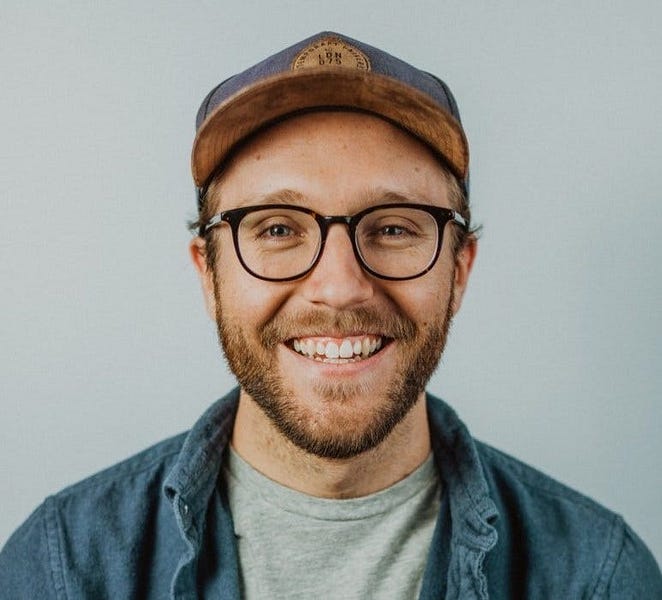
Independent journalist Michael Thomas did a deep dive into the methods and misinformation used by right-wing groups to rally community opposition to renewable energy projects. In this episode, he discusses what he found and how climate advocates can fight back.
Text transcript:
David Roberts
It's easy to find stories in the media these days about communities blocking solar, wind, and other clean energy projects. This has prompted an enormous amount of discourse about NIMBYs and the challenges of permitting projects. What's often left out of the discourse — and almost always left out of those stories — is how such community groups receive organizational help and money from billionaire-funded right-wingers.
Across the country and the internet, there are hundreds of conservative think tanks, groups, and individuals working to stir up community opposition to renewable energy with misinformation and lies. With virtually no public scrutiny, they have secured state-level policies restricting renewable energy siting in dozens of states.
Independent journalist Michael Thomas set about to learn more about these right-wing groups. He joined anti-renewable-energy Facebook groups, combed through the tax filings of various right-wing think tanks, and tried to trace funding sources. He published the results in his own newsletter, Distilled.
I'm excited to talk to him about what he found: the groups involved, the tactics they use, the policies they've helped pass, and the best way to fight back.
All right then, with no further ado, Michael Thomas. Welcome to Volts. Thank you so much for coming.
Michael Thomas
Thanks for having me. I've been a longtime reader and I'm a fan of the Volts podcast. So really happy to be here.
David Roberts
So for some reason you decided to jump in and immerse yourself in the world of anti-renewable-energy people and organizations and communications online. Before we jump into the specifics, what led you to this? Did you get sort of pulled in bit by bit or did you decide to do a project on this at some point?
Michael Thomas
Yeah, it was honestly not that intentional. I was reading a lot of stories over the summer about NIMBY opposition to local solar and wind projects and was following a lot of the discourse and debate over the permitting reform bill. And one story caught my attention that was about a group of residents on the east coast that were trying to block an offshore wind farm and a substation that was going to be put on land to bring the power to land. And it appeared to be just a normal resident group, kind of the classic NIMBY arguments that they were worried about property values or didn't like the site of the wind farm.
And then I read this subtle, just one line mention of a think tank that I had heard of, the Caesar Rodney Institute, and this is a part of a much larger group of think tanks that have been funded for years by fossil fuel companies and far-right billionaires. So I started looking into it and discovered that they were very involved in the effort and giving some of these resident groups money to fund lawsuits and support. And so I started to report on that story, and it kind of got me deep into the world of climate misinformation and clean energy misinformation, and I just really became curious about what was going on and if there was a bigger story here, and ended up working on a series of stories over the last month and a half. And I learned a lot in the process.
David Roberts
Yeah, this is a theme I'll return to later, but it really in some sense should not come as a surprise to anyone that this network of anti-renewable energy, "citizen groups" across the country is being funded and coordinated by right-wing operators. Like, of course it is — you know, the Tea Party was — like, we've just learned that over and over again. But it just seems like the pro-renewable energy forces, the pro-climate forces, just kind of sleep on that and just kind of don't pay attention to it, just kind of let it run in the background.
So it's a little insane that it's not a bigger point of discussion among green types. So I'm glad you did this and I'm glad we're talking about it. So one of the things you did, God bless you, is wade into Facebook and join a bunch of anti-wind and solar groups — Good Lord — so tell us what messages about renewable energy are they emphasizing in these groups? Like, what are the consistent themes?
Michael Thomas
Yeah, so I clearly know how to have a good time by joining all of these groups and sifting through the posts. So as context, I was doing this reporting on local opposition and learning about some of these think tanks. And I learned in that research that a lot of these resident groups are organizing on Facebook groups and pages. And that makes sense if you look at the demographics of these groups, they tend to be a lot of boomers and a lot of people who are very active on Facebook. And so I joined a few of them at first.
And then in the groups there are often reshares of posts and other groups. And so by joining three or four, I quickly started to see that there were way more of these groups than I had initially expected. And in total I ended up finding about 40 groups. I joined all of them and just started scrolling through and looking at the posts and taking screenshots and taking notes and trying to understand how do the people that are in these groups communicate about clean energy? What are the common narratives? Because there are usually between 500 and 2,000 people in these groups, so we're talking about tens of thousands of people in very small communities that are receiving this messaging.
So it's I think, really important...
David Roberts
And of course, you know, just to point out the obvious, these are probably the hard core and they take those messages and spread them word of mouth to many, many thousands more, right?
Michael Thomas
Totally.
David Roberts
It's a much larger audience than just the members.
Michael Thomas
Yeah, it's also — I think — really important to note that these tend to be the most civically engaged people. So on TikTok, a video might go viral about how great solar panels are, but if the people watching that video don't show up to the county commission meeting, then it doesn't really matter necessarily. Or it does matter, but it's not as effective. So these are a lot of people who are retired or who are very engaged in their communities. And so what starts on Facebook quickly bleeds into town halls and county commission meetings. And often the discourse is really intense and really emotionally charged.
But to answer your question of what sort of themes and messages I saw, there was a range of posts. Some of them were misleading claims about clean energy. Like, an example that I saw a lot of was that solar panels and wind turbines are made using rare earth materials and they're made in China, and China uses a lot of coal. And so the implication is that clean energy is not actually that clean and it's not good for the environment, which, of course, the status quo energy system we have today that relies on fossil fuels, is terrible for the env
You May Also Like

La Estrategia del Día México
Bloomberg Línea
The Dominic Carter Show
Podcast WABCRadio

Die Nachrichten
Deutschlandfunk

Čteme vám Seznam Zprávy
Seznam Zprávy

聽天下:天下雜誌Podcast
天下雜誌
O Antagonista
O Antagonista

NPR News Now
NPR

The Diddy Diaries
Bobby Capucci
Newshour
BBC World Service

Real America’s Voice
Real America's Voice
La Estrategia del Día México
Bloomberg Línea
The Dominic Carter Show
Podcast WABCRadio
Die Nachrichten
Deutschlandfunk
Čteme vám Seznam Zprávy
Seznam Zprávy
聽天下:天下雜誌Podcast
天下雜誌
O Antagonista
O Antagonista
NPR News Now
NPR
The Diddy Diaries
Bobby Capucci
Newshour
BBC World Service
Real America’s Voice
Real America's Voice
Community discussion