Induction stoves with batteries built in, and why they matter
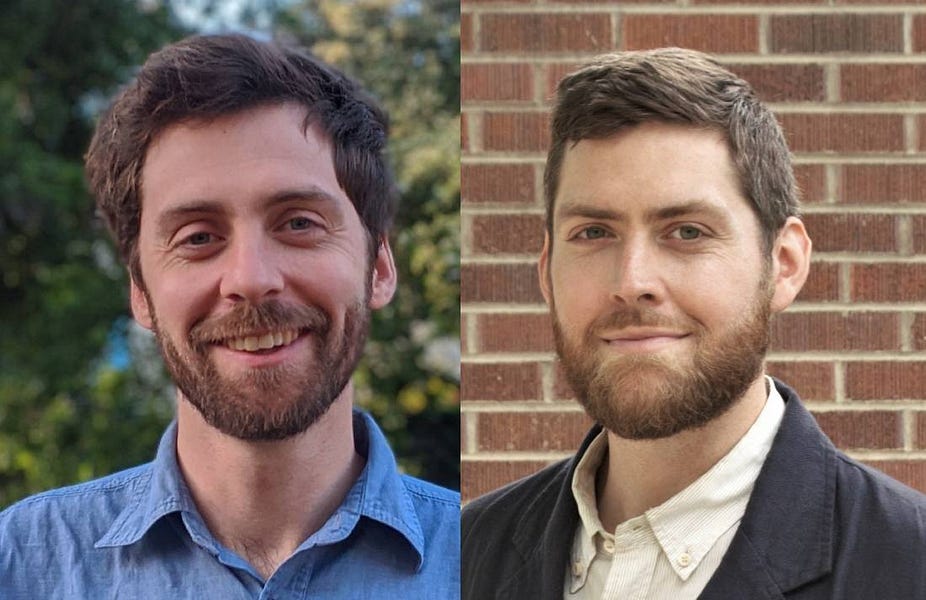
In this episode, scientist Sam Calisch, whose company just introduced an induction stove with a built-in lithium-ion battery, and Wyatt Merrill of DOE, who helped secure funding for the project, talk about the exciting opportunities that stoves with embedded batteries might offer for chefs, consumers, grid operators, and more.
Text transcript:
David Roberts
In the last few months, two separate fledgling companies — Impulse and Channing Street Copper — have announced the upcoming release of a new product: an induction stove with a lithium-ion battery built in. This might not seem like a big deal, but it is actually a peek into a whole new world of possibilities.
Embedding batteries into appliances opens up all kinds of intriguing opportunities. A stove with a battery can deliver more power at the point of cooking. It can continue working when the power grid goes out. And it can serve as distributed storage to assist in grid stability.
To explore the new world of battery-enabled appliances, I contacted two experts. The first, Sam Calisch, helped start Rewiring America, a nonprofit focused on national electrification. He also worked at Otherlab with previous Volts guest Saul Griffith, from which he helped launch Channing Street Copper Company, where he is chief scientist. Channing’s first product is a stove with a battery (for now, there’s a wait list, and they’re only selling in the Bay Area).
My second guest is Wyatt Merrill, who works at the Department of Energy's Building Technologies Office, where he manages programs related to building electrification. He was instrumental in helping Otherlab secure more than $2 million in funding from DOE to help launch the Channing stove project.
I am excited to talk to Sam and Wyatt about the merits of embedding batteries in stoves, the things battery-enabled stoves allow consumers to do, and the future grid benefits battery-enabled appliances could yield.
With no further ado, Sam Calisch and Wyatt Merrilll. Welcome to Volts. Thank you guys so much for coming.
Sam Calisch
Great to be here.
Wyatt Merrill
Thanks for having us. A long time. First time.
David Roberts
Awesome. Sam, I want to start with you putting aside the stove for a moment. Take us back to your work. You've been doing work with Otherlab. You've been doing work with Rewiring America. You're big into the whole Electrification of America thing. You're very immersed in that whole business. Tell us how all that work led to this idea and this proposal.
Sam Calisch
Great question. So, as you say, I've been spending the last few years really going deep on electrification, both from a technology perspective, which is the majority of my background, but also from a policy perspective, and worked really hard on a lot of the stuff that went into the Inflation reduction act. And so about two years ago, my friend Saul Griffith and I, we were working on this book called "Electrify Together" with our friend Laura Fraser, and we're doing a bunch of data analysis for it, looking at trends in cost of the technologies related to electrification. And the thesis of that book is that we kind of have all the technology we need today and we just need to deploy it.
And David, you've done a really good job getting this idea out there. I think you said electrification is the main course. Right. Which I really enjoy. And so it's mostly true that we have what we need today. We just need to deploy it. But there's certainly technology developments that we can do that will make it faster, better, cheaper.
David Roberts
Right.
Sam Calisch
And one of the trends that we were really disturbed about was all these costs were coming down. Like, if you read Bloomberg New Energy Finance, you see battery prices approaching $100 a kilowatt hour, all of this. But if you actually looked at what it cost to install those, to put them on your house or something, those prices weren't coming down. And it was mirroring a very familiar story from residential solar, where now the hardware cost of residential solar is really cheap. It's something like $0.26 a watt for the actual hardware, but it's closer to $3 a watt to put it on your house.
And we were seeing the same thing happen with batteries and to do what we needed to do. Those trends couldn't continue. And so we started thinking about ways to get around that. And this idea emerged what we now call energy storage equipped appliances or ESE, or if you're feeling cheeky, maybe easy appliances where you can put a battery into an appliance in a factory instead of putting a battery on your house. And by doing that, you can do it really cheaply and really safely when you put it on your house in a sort of a bespoke way.
You need to have a site plan. You need to get a permit. You need to have someone come out and do custom electrical work. You have to get it inspected. All these things just add tons and tons of cost. So we said, well, what if instead of doing that, we allow batteries to be installed in appliances in a factory at the cheapest possible cost? And then they kind of come into your house, kind of like a trojan horse inside of the appliance, and all of a sudden you have this battery backup, this ability to use more renewables to power your life, this ability to make it easier to electrify.
And you didn't have to do all that custom, expensive work.
David Roberts
Right. You submitted a proposal to the DOE, right?
Sam Calisch
That's right. So we kind of wrote this idea up, and fortunately, our proposal found its way to Wyatt and some other folks who thought there was some potential inside of it and recommended it for award.
David Roberts
That's a good hand off to Wyatt. So, Wyatt, tell us what you're doing at DOE, kind of what your team is doing and how you found this and why it grabbed you.
Wyatt Merrill
Sure. I'll start with, kind of broadly, my role and the role of the team that I'm part of. I'm in the Building Technologies Office. I'm part of the Emerging Technologies Program in the office. And that office is one of a number of tech offices that comprises energy efficiency and renewable energy, or eer under DOE. So it's org charts on charts. So just to give you an idea of kind of where the project lives in DOE, so broadl
You May Also Like

NPR News Now
NPR
Newshour
BBC World Service

Real America’s Voice
Real America's Voice

The Fox News Rundown
FOX News Radio

24/7 News: The Latest
iHeartPodcasts and TTWN

Dialogue Works
Nima Rostami Alkhorshid

Asmongold TV
Asmongold TV

共同通信Podcastーニュースの裏側も、多言語学習も、経済もー
共同通信社 KyodoNews(Japan News Agency)

Jeffrey Epstein: The Coverup Chronicles
Bobby Capucci

Así las cosas con Carlos Loret de Mola
WRadio
NPR News Now
NPR
Newshour
BBC World Service
Real America’s Voice
Real America's Voice
The Fox News Rundown
FOX News Radio
24/7 News: The Latest
iHeartPodcasts and TTWN
Dialogue Works
Nima Rostami Alkhorshid
Asmongold TV
Asmongold TV
共同通信Podcastーニュースの裏側も、多言語学習も、経済もー
共同通信社 KyodoNews(Japan News Agency)
Jeffrey Epstein: The Coverup Chronicles
Bobby Capucci
Así las cosas con Carlos Loret de Mola
WRadio
Community discussion