Getting better at mining the minerals needed for clean energy
To create a clean-energy economy, the US badly needs an advanced mining industry that can provide huge amounts of key minerals for batteries and other technologies — and it’s nowhere close to where it needs to be. In this episode, KoBold Metals CEO Kurt House describes the current state of mineral exploration, the significant changes it needs to make, and how machine learning and artificial intelligence can help it get there.
Text transcript:
David Roberts
Building the machines and batteries needed to decarbonize the economy will require enormous amounts of a few key minerals. The proven reserves of those minerals, sitting in mines now operating, are nowhere close to enough to satisfy what is expected to be skyrocketing demand.
Without the minerals, we can’t make the clean-energy economy. And we don't know where the minerals are going to come from.
What's worse, exploring for new mineral deposits has been getting less and less efficient over the last several decades, as the amount of investment needed per successful discovery has risen. We seem to be getting worse at finding this stuff right when we badly need to be getting better.
That state of affairs has drawn in several new startups that endeavor to use machine learning and artificial intelligence to improve mining’s hit rate. The most talked-about is KoBold Metals. With financial backing from Bill Gates, Jeff Bezos, and other big-name investors, KoBold is now exploring for minerals on four continents.
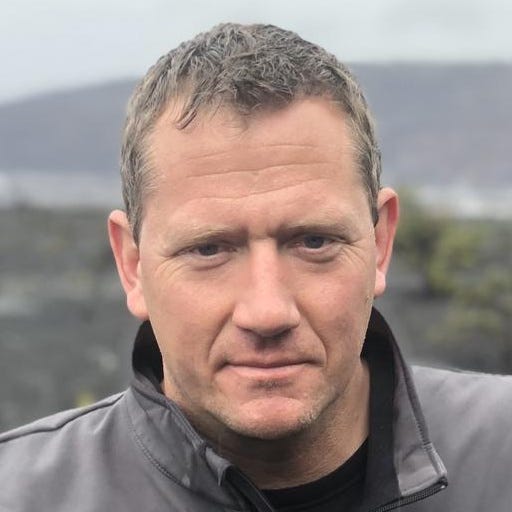
To get a better handle on mining and how we can improve at it, I contacted KoBold CEO Kurt House. We talked about the projected gap between supply and demand, the somewhat primitive way current exploration works, the massive data-gathering and coordination project the company has undertaken, and the role of justice and equity in this AI-accelerated future of mining.
Kurt House, CEO of KoBold Metals, welcome to Volts. Thank you so much for coming.
Kurt House
I'm so pleased to be here. I'm a huge fan. I listen to the podcast all the time, so it's fun to talk to you live.
David Roberts
We're going to talk about something that is of great interest these days, which is finding the stuff that we need to build the clean energy economy. This is something I did a series of articles on a couple of years ago, and it's come up repeatedly over the years. People talk about possible shortages of materials as one of the bottlenecks that might slow the clean energy transition. So maybe let's just start there with setting some context, talk a little bit about the big four minerals that you focus on and sort of what we know about how much we have access to and how much we project we're going to need.
Kurt House
Perfect setup question. So, the energy transition is fundamentally about getting off fossil fuels. It's fundamentally about electrifying the economy to the greatest extent possible. So we electrify transport, all electric generation becomes renewable, et cetera, et cetera. That requires a lot of very specific materials and very specific materials because different elements have different physical properties, obviously, and they do different things better and worse than others. And some of those elements are really difficult to substitute for, for very, very deep physical reasons. So KoBold is focused on what we call "the materials of the future," and those are lithium, cobalt, copper and nickel.
That's not at all to say that there aren't other important materials for the energy transition.
David Roberts
Are those four the most important? By just mass, just, we need most of those —
Kurt House
No, by total mass, it'd probably be aluminum and steel, iron for steel. The reason these are so important, there's two orthogonal reasons that we focus on these. One is how difficult they are to substitute for in specific applications. And I'll talk about that. And then the orthogonal element to it is that they are exploration problems. So aluminum is really useful in a whole bunch of reasons, but it's not an exploration problem. There's just gobs of bauxite, aluminum silicon oxide on the planet, and we know where it is. It's just a matter of processing it in more efficient and less carbon intensive ways.
So, it's a metallurgical challenge. It's not an exploration challenge. In the case of lithium, cobalt, copper and nickel, you could take any forecast you want, but basically the end state is something like 2 billion electric vehicles on the planet, plus a whole bunch of renewable energy build out. And any way you slice it, those are just gigantic numbers, and they require gigantic amounts of lithium, cobalt, copper and nickel. And then you can say, "Okay, that's how much we need at, say, 2050 to be mostly off fossil fuels by 2050, how much exists in the reserves of current mines?"
So if we take all the mines that are producing today, and they're going to produce out for the next several decades, that's another number. That's another quantity. And that you also have to add in all of the other uses for these minerals. Right. If the economy just goes on, and there's lots and lots of uses for nickel and copper, in particular in stainless steel and all manner of electrical applications for copper that just happen anyway. So you have to add up those, plus the energy transition metals and compare them to existing mine supply and existing mine reserves, and you get a gap.
And then, if you multiply by current commodity prices, that gap is about $15 trillion.
David Roberts
Good Lord.
Kurt House
We call that — exactly — the "missing metals gap". And so it's not the total amount of metal we need. We actually need a lot more. But that's the value of the metal that we need to find, right? We need to find and then develop into mines.
David Roberts
That represents metal we need, but we don't yet know where it is or where it's going to come from?
Kurt House
Exactly. Because I've subtracted out existing mine supply. Right. And not just existing mine supply, but existing mine supply, plus mines that are in late stages of development. We know they're going to be mines. We've just included that in existing mine supply. So it's really the things that we need to find new deposits that no one in the world knows where they are right now. And then we need to develop them into operating mines — to build new mines. And then those mines need to go into production, and they need to operate for many, many years to produce the necessary amount of metal.
And the value of that metal, roughly speaking, is $15 trillion.
David Roberts
And that all needs to happen — if you look, like, 2050 used to be a lot farther away than it is these days. And now if you look at those lines, they're going up and to the right pretty steeply. So all of that stuff needs to happen much more quickly than it has in the past.
Kurt House
Exactly right, David. And that is what makes this so difficult. So, in round numbers, in v
You May Also Like

The Dominic Carter Show
Podcast WABCRadio

Die Nachrichten
Deutschlandfunk

Čteme vám Seznam Zprávy
Seznam Zprávy

O Antagonista
O Antagonista

NPR News Now
NPR

The Diddy Diaries
Bobby Capucci
Newshour
BBC World Service

Real America’s Voice
Real America's Voice

CNN 5 Cosas
CNN en Español

True Crime Today | Daily True Crime News & Interviews
Real Story Media
The Dominic Carter Show
Podcast WABCRadio
Die Nachrichten
Deutschlandfunk
Čteme vám Seznam Zprávy
Seznam Zprávy
O Antagonista
O Antagonista
NPR News Now
NPR
The Diddy Diaries
Bobby Capucci
Newshour
BBC World Service
Real America’s Voice
Real America's Voice
CNN 5 Cosas
CNN en Español
True Crime Today | Daily True Crime News & Interviews
Real Story Media
Community discussion