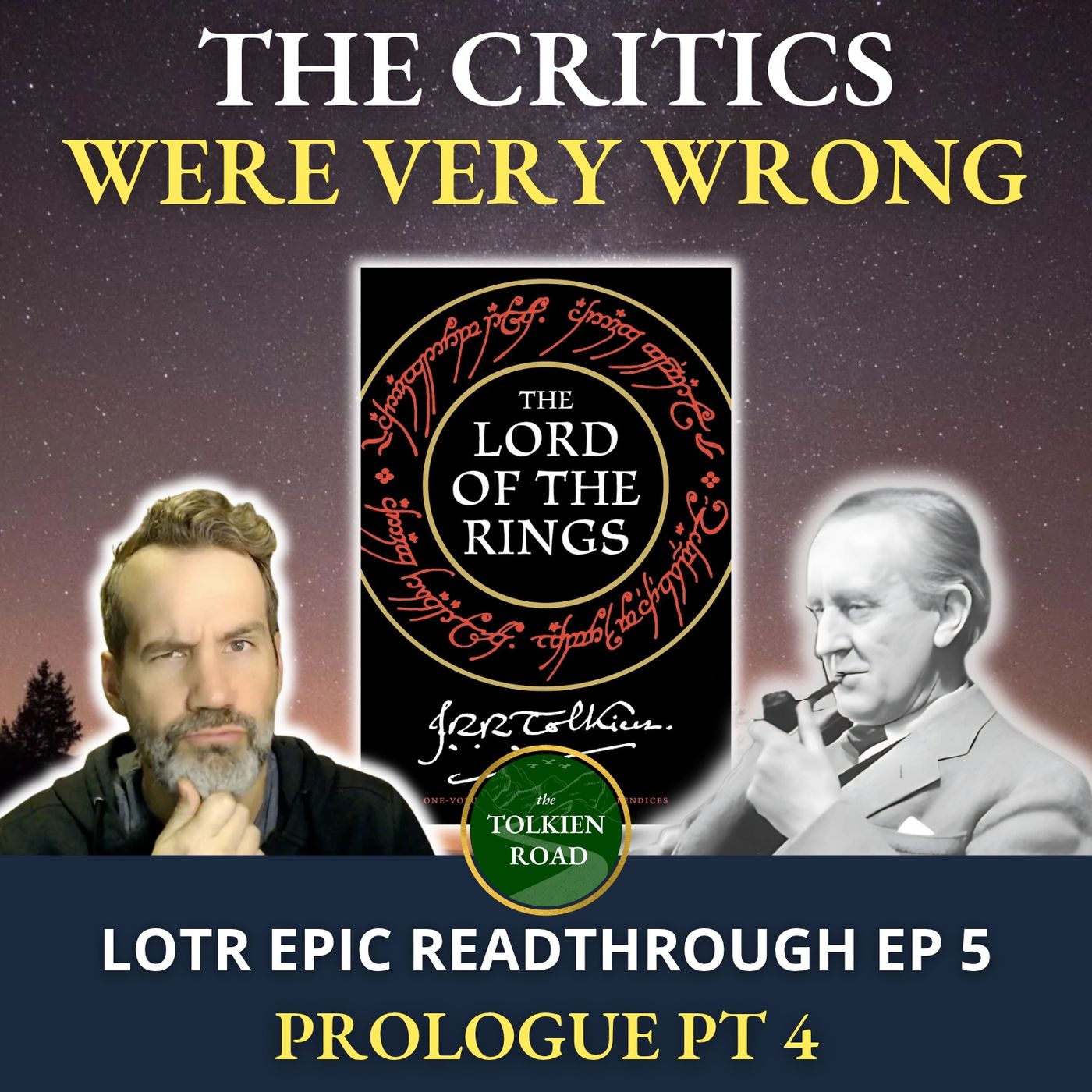
0393: The Lord of the Rings » Prologue » Mathoms
In Episode 393 of The Tolkien Road, John goes back through some fascinating “mathoms” from Do Not Be Hasty—from Tolkien’s rejected Silmarillion and savage early reviews to allegory, Sarehole Mill, the origins of “Hobbit” and “Dwarves,” the meaning of Middle-earth, and more.
━━━━━━━━━━━━━━
CHAPTERS
00:00 — Introduction
00:44 — What Is a Mathoms Episode?
01:49 — Tolkien and the “Impression of Depth”
03:29 — Why Publishers Rejected The Silmarillion
04:52 — Could Silmarillion Stories Become Novels?
07:23 — The Worst Early LOTR Reviews
09:23 — “Juvenile Trash”?
11:00 — Tolkien Was Supposedly Already Forgotten
13:35 — Tolkien on Allegory
15:00 — Allegory vs. Applicability
17:03 — Sarehole Mill and the Real Shire
18:11 — Tolkien Returns to His Lost Paradise
22:14 — Prologue Mathoms
22:19 — Did Tolkien Invent “Hobbit”?
25:30 — Why Tolkien Wrote “Dwarves”
28:03 — How Tolkien Imagined Hobbits
29:21 — Middle-earth Is Our World
30:58 — What Arnor and Gondor Mean
32:46 — Marcho and Blanco
34:09 — What “Angmar” Means
35:35 — The Shire Is Rural England
37:11 — Where “Shirriff” Comes From
38:40 — Tolkien Rewrites Bilbo’s Ring Story
40:13 — What “Samwise” Means
41:28 — The Meaning of Elrond
42:48 — Final Thoughts
━━━━━━━━━━━━━━
THE SILMARILLION WAS REJECTED
In 1937, Tolkien submitted Silmarillion material for publication.
It was considered too strange and difficult, though Stanley Unwin believed its stories might be mined for books more like The Hobbit.
That raises an interesting possibility: could individual Silmarillion stories have become full-length novels?
The Children of Húrin shows what that might look like.
━━━━━━━━━━━━━━
THEY CALLED LOTR “JUVENILE TRASH”
Some early critics dismissed The Lord of the Rings as childish, simplistic, or doomed to be forgotten.
History had other plans.
The reviews also reveal the divide between Tolkien and parts of the literary establishment that never quite knew what to make of him.
━━━━━━━━━━━━━━
ALLEGORY VS. APPLICABILITY
Tolkien was not opposed to readers finding deeper meaning in stories.
He objected to deliberately constructing stories as rigid one-to-one allegories.
A good story can apply naturally to many experiences because readers bring their own lives to it.
━━━━━━━━━━━━━━
HOBBITS, DWARVES, AND MIDDLE-EARTH
Did Tolkien invent “Hobbit”? Almost certainly in the form we know it.
Why “Dwarves” instead of “Dwarfs”? Tolkien preferred the form suggested by the word’s older linguistic history.
And Middle-earth is not another planet.
It is our world imagined in a distant mythological age.
━━━━━━━━━━━━━━
THE SHIRE IS ENGLAND
Tolkien explicitly said that, if we drop the fiction, the Shire is rural England.
Sarehole and the countryside of Tolkien’s childhood strongly influenced its creation.
The Hobbits may live in an ancient mythological world, but culturally they carry Victorian rural England with them.
━━━━━━━━━━━━━━
BILBO’S STORY
Tolkien changed Bilbo’s account of finding the Ring because The Lord of the Rings required a more sinister Ring.
Inside the story, that revision becomes evidence that the Ring was already affecting Bilbo.
A real-world rewrite becomes part of Middle-earth’s lore.
━━━━━━━━━━━━━━
THE BIG TAKEAWAY
With Tolkien, even the smallest details have histories.
Words, names, places, manuscripts, and revisions all lead somewhere deeper.
That is why these little “mathoms” are so rewarding: they show just how thoroughly Tolkien built his world.
━━━━━━━━━━━━━━
SPECIAL THANKS
• Caitlin of Tea with Tolkien
• John R.
• KG
• A.R. Endale Hope
• Alan C.
•...
The Tolkien Road
SubscribeSign in
Playback speed
×
Share post
Share post at current time
Share from 0:00
0:00
/
0393: The Lord of the Rings » Prologue » Mathoms
Responding to the Tolkien Haters
John Carswell
Share
Transcript
What did we miss in the Foreword and Prologue to The Lord of the Rings?
In this bonus “Mathoms” episode of Do Not Be Hasty, John goes back through some of the most fascinating details that didn’t make it into the main episodes—from Tolkien’s thoughts on the “impression of depth” and early rejection of The Silmarillion to savage contemporary reviews, allegory, Sarehole Mill, the origin of “Hobbit,” the real meaning of “Middle-earth,” and the surprising histories hidden inside familiar names.
CHAPTERS
00:00 — Introduction
00:44 — What Is a Mathoms Episode?
01:49 — Tolkien and the “Impression of Depth”
03:29 — Why Publishers Rejected The Silmarillion
04:52 — Could Silmarillion Stories Become Full Novels?
07:23 — The Worst Early Reviews of The Lord of the Rings
09:23 — “Juvenile Trash”?
11:00 — The Review That Said Tolkien Was Already Forgotten
13:35 — Tolkien on Allegory and Applicability
15:00 — Why a Good Story Doesn’t Need to Be an Allegory
17:03 — Sarehole Mill and the Real-Life Shire
18:11 — Tolkien Returns to His Lost Paradise
19:40 — Exploring Sarehole Today
22:14 — Prologue Mathoms
22:19 — Did Tolkien Invent the Word “Hobbit”?
25:30 — Why Tolkien Wrote “Dwarves”
28:03 — How Tolkien Imagined Hobbits
29:21 — Middle-earth Is Our World
30:58 — What Arnor and Gondor Mean
32:46 — Marcho and Blanco
34:09 — What “Angmar” Means
35:35 — The Shire Is Rural England
37:11 — Where “Shirriff” Comes From
38:40 — How Tolkien Rewrote Bilbo’s Ring Story
40:13 — What “Samwise” Means
41:28 — The Meaning of Elrond
42:48 — Final Thoughts
THE SILMARILLION THAT PUBLISHERS DIDN’T WANT
In 1937, Tolkien submitted Silmarillion material along with other writings for consideration.
The response was not encouraging.
The material was considered too strange and difficult to publish on its own, though Stanley Unwin thought the mythology contained stories that might be developed into books more like The Hobbit.
That raises an intriguing question: could individual Silmarillion stories have become full-length novels?
The Children of Húrin shows what that possibility can look like.
THE BAD REVIEWS
The Lord of the Rings was not universally celebrated when it appeared.
Some critics dismissed Tolkien’s work as childish, simplistic, or even “juvenile trash.”
Looking back now, the comments can seem astonishingly shortsighted.
The episode uses those reviews to explore Tolkien’s uneasy relationship with the intellectual and literary establishment—and how little their approval ultimately mattered.
ALLEGORY VS. APPLICABILITY
Tolkien’s famous dislike of allegory was more nuanced than a simple rejection of symbolic meaning.
His point was that a powerful story does not need to be constructed as a one-to-one allegory.
A story about power can naturally apply to war, politics, technology, temptation, or countless other things because readers bring their own experiences to it.
That is the difference between imposed allegory and applicability.
SAREHOLE AND THE REAL SHIRE
Tolkien’s childhood home near Sarehole Mill became one of the great imaginative sources for the Shire.
He remembered it as a kind of lost paradise.
When he returned years later, urban development had radically transformed the countryside he remembered.
That experience helps illuminate Tolkien’s recurring concern with industrialization, lost landscapes, memory, and the preservation of beautiful places.
DID TOLKIEN INVENT “HOBBIT”?
Tolkien believed he had invented the word “hobbit,” though similar dialect words were later brought to his attention.
He maintained that his own creation was independent and that the primary English influence in his mind was “hole.”
Within the fictional linguistic history of Middle-earth, “hobbit” is itself imagined as a worn-down form of an older word meaning “hole-builder.”
WHY “DWARVES”?
Tolkien famously preferred “dwarves” to the normal English plural “dwarfs.”
Philologically, he believed something like “dwarves” or even “dwarrows” better represented how the Old English word might have developed.
That same history survives in a name like Dwarrowdelf.
MIDDLE-EARTH IS OUR WORLD
Tolkien repeatedly insisted that Middle-earth was not another planet.
It is our world, imagined in a remote mythological past.
Even the term “Middle-earth” comes from old Germanic language referring to the inhabited world between the realms above and below.
That matters because Tolkien was not trying to invent an entirely detached fantasy universe.
He was creating a mythology for this world.
THE SHIRE IS ENGLAND
Tolkien was even more explicit about the Shire.
If we “drop the fiction,” he said, the Shire is rural England.
Its people, place names, customs, and geography intentionally evoke an older English countryside.
The Hobbits may live inside an ancient mythological world, but culturally they arrive carrying something much closer to Victorian rural England.
BILBO’S CHANGING STORY
The rewritten story of how Bilbo obtained the Ring is one of Tolkien’s most elegant retcons.
The real-world reason for the change is simple: Tolkien needed the Ring to become something much more important for The Lord of the Rings.
But inside the story, Bilbo’s altered account becomes evidence that the Ring was already influencing him.
A revision becomes lore.
THE MEANING OF ELROND
The episode closes with one last linguistic gem.
“Elrond” means something like “Star-dome.”
The name evokes both the starry heavens and the great vaulted hall of Menegroth.
It is a fitting reminder of just how much history, language, and meaning Tolkien could pack into a single name.
THE BIG TAKEAWAY
The great pleasure of Tolkien is that the deeper you look, the more there is to find.
Words have histories.
Names have histories.
The fictional texts have histories.
Even Tolkien’s revisions acquire explanations within the world.
These “mathoms” may look like scraps and footnotes, but together they reveal the extraordinary depth behind The Lord of the Rings.
Discussion about this video
CommentsRestacks
The Tolkien Road reply rules
Podcast
Embark upon a wondrous journey through the realms of Middle-earth and beyond with the Tolkien Road, a podcast dedicated to the enchanting tales and writings of JRR Tolkien. Come, join John, Greta, and our mighty Fellowship as we delve deep into the magic that lingers within the pages of these timeless legends. And always remember: DO NOT BE HASTY!!! Become a supporter of this podcast: https://www.spreaker.com/podcast/the-tolkien-road--5222755/support.
Embark upon a wondrous journey through the realms of Middle-earth and beyond with the Tolkien Road, a podcast dedicated to the enchanting tales and writings of JRR Tolkien. Come, join John, Greta, and our mighty Fellowship as we delve deep into the magic that lingers within the pages of these timeless legends. And always remember: DO NOT BE HASTY!!! Become a supporter of this podcast: https://www.spreaker.com/podcast/the-tolkien-road--5222755/support.
Subscribe
Authors
John Carswell
Recent Posts
0235: Books of Lost Tales II » Tolkien’s First Great Tales
• John Carswell
0394: The Lord of the Rings » Foreword & Prologue » Mailbag
• John Carswell
0399: The State of Tolkien Fandom » Rings of Power, Hunt for Gollum & What Comes Next
• John Carswell
0234: Book of Lost Tales I » A Completely Different Silmarillion
• John Carswell
0008: Illustrating Ainulindalë
• John Carswell
0007: The Silmarillion - Ch03 - Of the Coming of the Elves and the Captivity of Melkor
• John Carswell
0006: On Enjoying Tolkien, Or Reasons Why
• John Carswell
Ready for more?
Subscribe
© 2026 John Carswell · Privacy ∙ Terms ∙ Collection notice
Start your SubstackGet the app
Substack is the home for writing, podcasting, and media founders.
<style> #nojs-banner { position: fixed; bottom: 0; left: 0; padding: 16px 16px 16px 32px; width: 100%; box-sizing: border-box; background: red; color: white; font-family: -apple-system, "Segoe UI", Roboto, Helvetica, Arial, sans-serif, "Apple Color Emoji", "Segoe UI Emoji", "Segoe UI Symbol"; font-size: 13px; line-height: 13px; } #nojs-banner a { color: inherit; text-decoration: underline; } </style> <div id="nojs-banner"> This site requires JavaScript to run correctly. Please <a href="https://enable-javascript.com/" target="_blank">turn on JavaScript</a> or unblock scripts </div>
You May Also Like

The Newest Olympian
Mike Schubert
RISK!
Kevin Allison
Tony Katz Today
Tony Katz

The Splendid Table: Conversations & Recipes For Curious Cooks & Eaters
American Public Media

Mahlakung
Thobela FM

The Losers' Club: A Stephen King Podcast
Bloody FM
War Nerd Radio — Subscriber Feed
Gary Brecher

92NY Talks
92NY
The Sporkful
Dan Pashman
Magellans at the Movies
Nathan Magalhaes
The Newest Olympian
Mike Schubert
RISK!
Kevin Allison
Tony Katz Today
Tony Katz
The Splendid Table: Conversations & Recipes For Curious Cooks & Eaters
American Public Media
Mahlakung
Thobela FM
The Losers' Club: A Stephen King Podcast
Bloody FM
War Nerd Radio — Subscriber Feed
Gary Brecher
92NY Talks
92NY
The Sporkful
Dan Pashman
Magellans at the Movies
Nathan Magalhaes
Community discussion