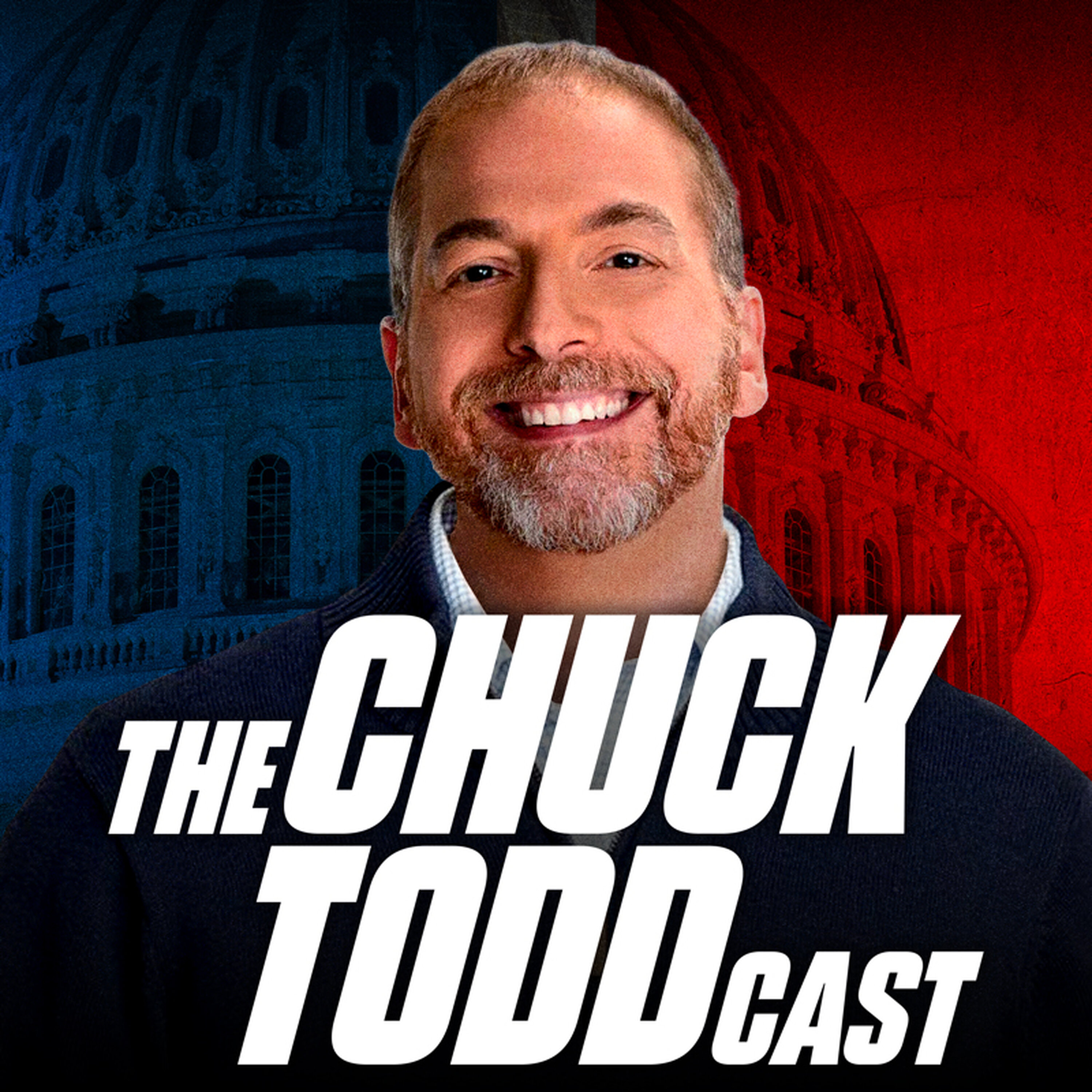
Full Episode - Trump’s Iran Deal Is Worse Than The Deal He Tore Up + A Marine Sniper’s Message on Service, Sacrifice, and Country
Chuck Todd opens with a brutal verdict on the emerging Iran "deal": it's just a worse version of the Obama agreement Trump once tore up, Iran has effectively avoided every stated goal Trump and Israel set out to achieve, and Tehran retains control of the Strait of Hormuz — meaning this is unambiguously a loss for the United States, no matter how the administration tries to spin it. He argues Trump bit off far more than he could chew, that Bibi Netanyahu put his faith into Donald Trump (which never ends well), and that America's standing has been diminished in ways that will reverberate for years. Iran's regime won't be able to repress its own people forever, He notes, but the window to actually topple it during the protests was missed — and Gulf state allies will now be dealing with the Iranians for much longer than they bargained for, having quietly hoped the U.S. and Israel would do their dirty work for them. The political damage at home is just as severe. He cites the Wall Street Journal christening the past seven days as "the week that broke Trump's hold on Congress," with the president now underwater on every single issue, consumer confidence unlikely to recover before the midterms, the Senate unable to fund DHS through reconciliation because Trump makes bipartisan solutions impossible, and his January 6th slush fund producing a backlash that won't go away — with Republican senators visibly wavering. Chuck's verdict on the lame duck arriving early: this is a failed first two years of the Trump presidency, and the stronger his grip on the party, the weaker that party becomes in general elections. He blasts Todd Blanche for turning the DOJ into Trump's personal legal team (Blanche should be impeached, Todd argues, and nothing coming out of this DOJ can be trusted), tears into the long-awaited DNC autopsy of the 2024 loss as paralyzed, tone-deaf, and poorly thought-out — naming Ken Martin as the wrong person to lead the DNC and noting that the simple truth Democrats can't bring themselves to face is that the party is perceived as too liberal in a country with more conservatives than progressives. He flags Mike Duggan dropping out of the Michigan governor's race after his hoped-for contentious Democratic primary never materialized, and Tulsi Gabbard's resignation as DNI proving that the position itself was never really necessary
Then, former Marine sniper AJ Pasciuti — author of the new book Dark Horse and host of the Combat Story podcast — joins the Chuck Toddcast for one of the most riveting and clear-eyed conversations about military service, leadership, and the realities of modern war. Pasciuti was 16 years old on September 11th, enlisted at 17, and eventually became the Marine who led the team that killed "Juba" — the notorious Iraqi sniper who uploaded videos of his American kills to the internet to taunt the U.S. military. He walks listeners through the entire hunt: how Marines studied Juba's uploaded footage to identify his patterns, how the team set a trap, how Pasciuti spotted Juba in his hide by catching the glint off the lens of a Sony Handycam, and how he knew within minutes that they'd gotten him — while emphasizing that he may have pulled the trigger but it was an entire team that brought Juba down. Pasciuti reflects on the strange experience of fighting enemies who saw themselves as freedom fighters rather than terrorists, why attention to detail is the trait that weeds out most sniper candidates, and how snipers are ultimately meant to combat the enemy emotionally as much as physically.
The conversation broadens into a sweeping meditation on what military service teaches you about America — and where Pasciuti worries the country is heading. He calls the military one of the last bastions of the American dream, where opportunity is real but has to be earned, and argues that a culture promoting service to the greater good over the accumulation of wealth would make America measurably healthier.. Pasciuti is openly worried about political leadership infecting the values of the military, makes the case that empathy must be viewed as a strength rather than a weakness in military leadership, and insists his book is political but not partisan — it's about values. He offers a vital warning that the Taliban proved asymmetrical warfare can defeat a stronger foe, that drone warfare is dangerously dehumanizing combat by reducing casualties to dollars and cents, and that the most important thing any soldier carries home is their soul intact — something he says becomes harder every year as the social contract between America and its veterans erodes. Pasciuti describes seeing fear rather than hatred in the eyes of a dying enemy combatant, a moment that has stayed with him, and explains why he can't support any politician who describes a political opponent as an enemy. He shares his experience running for city council and personally knocking on thousands of doors, his frustration with the financial barriers to entry in modern politics, and his belief that current discourse simply doesn't allow for real dialogue. He closes with the most powerful observation of the episode, made for Memorial Day: the holiday isn't about those who came home — it's about those who didn't — and anyone calling for war should be required to first sit down and have a conversation with a Gold Star family.
Finally, Chuck hops into the ToddCast Time Machine for a thoughtful Memorial Day reflection on how countries honor their war dead — and how the rituals they choose reveal who they understand themselves to be. He traces Memorial Day back to its actual origins in the Civil War and its 600,000 American dead, including the powerful and often-forgotten story of formerly enslaved people who reburied Union soldiers from a mass grave to give them the dignified resting place their country had failed to provide. He explains that the date was chosen not because of a specific battle but because of when flowers bloom, that Southern states kept parallel remembrance traditions for the Confederacy, and that Memorial Day's secondary role as the unofficial start of summer has always made it a uniquely American hybrid of grief and gathering — which, Chuck argues, is actually one of its virtues, because coming together is how communities find common ground. He surveys how other nations approach the same task: WWI created a uniquely Canadian identity around remembrance, Russia centers its V-Day celebrations on WWII triumph as the foundation of national identity, Germany approaches its war dead cautiously and somberly with a deep awareness of historical responsibility, and Japan frames remembrance through loss, peace, and explicit anti-war reflection. His larger argument is that the story and tone of a country's remembrance day reveals exactly how it understands itself — what it celebrates, what it confronts, and what it would rather not look at. He closes with the smallest but most important reminder of the day: you don't say "Happy Memorial Day." He also answers listeners’ questions in the “Ask Chuck” segment.
Predict the action all the way through the finals. Sign up now for your twenty-five dollar bonus on https://fanduel.com/predicts
Link in bio or go to https://getsoul.com & enter code TODDCAST for 30% off your first order.
Refresh your wardrobe with Quince. Go to https://Quince.com/chuck for free shipping on your order and 365-day returns.
Thank you Wildgrain for sponsoring. Visit http://wildgrain.com/TODDCAST and use the code "TODDCAST" at checkout to receive $30 off your first box PLUS free Croissants for life!
Timeline:
(Timestamps may vary based on advertisements)
00:00 Chuck Todd’s introduction
04:00 Pending Iran deal looks like a worse version of
You May Also Like
The Dominic Carter Show
Podcast WABCRadio

Die Nachrichten
Deutschlandfunk

Čteme vám Seznam Zprávy
Seznam Zprávy
O Antagonista
O Antagonista

NPR News Now
NPR

The Diddy Diaries
Bobby Capucci
Newshour
BBC World Service

Real America’s Voice
Real America's Voice

CNN 5 Cosas
CNN en Español

The Fox News Rundown
FOX News Radio
The Dominic Carter Show
Podcast WABCRadio
Die Nachrichten
Deutschlandfunk
Čteme vám Seznam Zprávy
Seznam Zprávy
O Antagonista
O Antagonista
NPR News Now
NPR
The Diddy Diaries
Bobby Capucci
Newshour
BBC World Service
Real America’s Voice
Real America's Voice
CNN 5 Cosas
CNN en Español
The Fox News Rundown
FOX News Radio
Community discussion