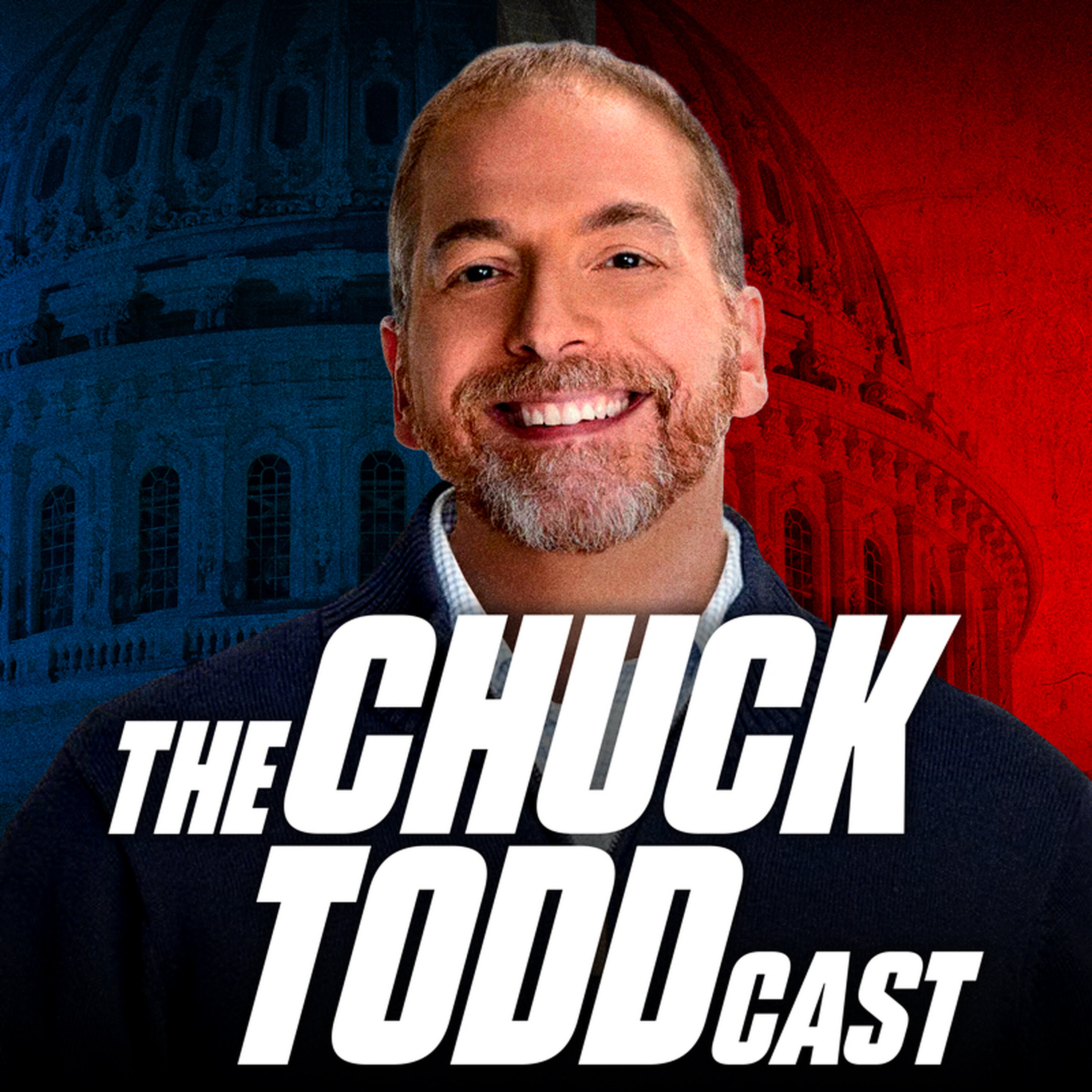
Full Episode - Character Is Destiny In Politics + The Independent Mayor Making The Case For Post-Partisan Politics
Chuck Todd opens with the latest from the Iran war's increasingly costly stalemate, arguing Trump doesn't actually want a deal — he wants the ability to declare an accomplishment without ever looking like he capitulated, the same trick he ran with NAFTA and the JCPOA where he ripped up agreements only to sign nearly identical ones under new names. June, Chuck warns, is when the energy shock will start showing up in domestic prices, every day Hormuz stays closed exponentially increases the damage, consumers may begin behaving irrationally and hoarding, and a single bad natural disaster on top of all this could trigger a genuine crisis. But the heart of the episode is Chuck’s meditation on a single phrase: character is destiny in politics. It's not whether character flaws exist — everyone has them — but when those flaws become public and start affecting the people you were elected to serve. Trump's character problems were on display long before he ever became president, but his defenders now include the exact same Rubios and Grahams who used to blast him as morally unfit. And the most uncomfortable part of Chuck argument for the Democratic base: the same progressives who mocked Trump supporters for excusing his behavior are now using essentially identical defenses for Maine's Graham Platner — who has been accused of sexting in 2023, behavior that isn't youthful indiscretion and isn't going away.
Chuck argues political parties used to function as imperfect but real vetting organizations, that once voters become emotionally invested in a candidate they will defend literally anything, that running for office sometimes becomes a substitute for therapy rather than a vehicle for service, and that democracy itself depends on elected officials being able to separate their personal motivations from their public obligations — something Biden failed at when his family obligations led to those preemptive pardons. He notes the Bidens were genuinely beloved before the election but Biden's ambition did real harm to his party, his family, and his own legacy. Todd points to Pope Leo as a potential moral leader Americans seem desperate for at exactly the moment when neither party seems remotely interested in finding the best possible actors. He observes that Platner vs. Collins is starting to feel like a rerun of Trump vs. Clinton in 2016 — two candidates voters genuinely don't want to choose between — and closes with quick hits on Jill Biden's forthcoming memoir, the California gubernatorial primary (where Xavier Becerra and Tom Steyer could finish in the top two), and the increasingly strange Los Angeles mayoral race in which Karen Bass appears to be deliberately ignoring Spencer Pratt because she would much rather face him in a general election than the genuinely formidable Nithya Raman.
Then, Colorado Springs Mayor Yemi Mobolade — the independent who won a culturally conservative city by running as a true centrist who refuses to be boxed into either party — joins the Chuck Toddcast to make the case that quality-of-life governance still beats partisanship when voters are actually given the chance to choose it. Mobolade, who adapted his governing principles from Abraham Lincoln, argues that there's a genuine and growing appetite for leadership that isn't red or blue — but warns that working for unity is incredibly hard and tiring work that few politicians want to do anymore. He walks through Colorado Springs' fight to retain Space Command after Trump and Biden moved the headquarters back and forth between Colorado Springs and Huntsville, Alabama, and explains why he ultimately chose not to sue over the relocation (the decision was within the president's purview, and burning that bridge would have cost the city more than it gained). Mobolade describes hiring his own mayoral opponent Wayne Williams after the campaign — a move he calls part of his "radical collaboration" approach — and argues that mayors don't have the luxury of partisan posturing because their job is fundamentally about producing deliverables for actual residents who want safer streets, better services, and a higher quality of life.
The conversation moves into the practical challenges facing every American mayor in 2026, with data centers emerging as the political pain point in nearly every community across the country. Mobolade describes calling an emergency meeting to develop a data center strategy for Colorado Springs, walks through the balanced-but-responsible-growth framework his team has settled on, and explains the tradeoffs honestly: residents are worried about quality-of-life impacts, but the tax revenue from data centers is exactly what cities need to fund essential services. Larger data centers in his city are now forced to pay impact fees to offset their costs, some are being placed on military bases for security purposes, and Mobolade is candid with residents that they cannot have the services they demand without the revenue base to pay for them. The conversation turns to Colorado Springs' housing shortage — the city has been named one of the best places for young people, but only if young people can actually afford to live there — and Mobolade discusses his work with HUD to expand supply, his belief that the country needs genuine innovation in finding cheaper ways to build, and his frustration with a Colorado political landscape that he says no longer has room for center-left and center-right voices the way it used to. His closing argument is the one that ties the whole episode together: the country needs more independent leadership, not because partisanship is bad in theory, but because the current version of it is incapable of delivering the basics that voters actually care about.
Finally, Chuck hops into the ToddCast Time Machine to revisit two stories that occurred on the same day… the Tiananmen square massacre, and Poland’s first post-soviet elections. He also answers listeners’ questions in the “Ask Chuck” segment.
Predict the action all the way through the finals. Sign up now for your twenty-five dollar bonus on https://fanduel.com/predicts
Link in bio or go to https://getsoul.com & enter code TODDCAST for 30% off your first order.
Thank you Wildgrain for sponsoring. Visit http://wildgrain.com/TODDCAST and use the code "TODDCAST" at checkout to receive $30 off your first box PLUS free Croissants for life!
Timeline:
(Timestamps may vary based on advertisements)
00:00 Chuck Todd’s introduction
05:30 Iran war/ceasefire has settled into a costly stalemate
06:45 Trump doesn’t want a deal, just ability to declare an accomplishment
07:30 Trump doesn’t want to look like he capitulated
08:00 Trump ripped up other deals, then got same deals with new names
09:15 June will be when the impacts of energy shock show up domestically
10:30 Every day Hormuz remains closed exponentially increases the damage
11:30 Consumers may begin to behave irrationally, start hoarding
12:30 If a natural disaster hits during energy shock, it could be major crisis
13:45 Pulling out of WHO has exacerbated Ebola outbreak
15:00 We can’t foresee all negative impacts, we just know they’re coming
16:15 Character is always destiny in politics, it’s a matter of when people see it
18:00 Everybody has their own motivation for voting, character isn’t always important
18:45 People defending character flaws are a huge part of the problem
20:00 Rubio & Graham used to blast Trump’s character, now defend it
20:30 People criticizing Trump’s behavior are now defending Graham Platner’s
22:00 People run for office for a variety of reasons, and sometimes no
You May Also Like

Kenny & JT
Kenny & JT

گزارش روز با مجتبا پورمحسن - Daily report with Mojtaba Pourmohsen
Iran International - ایران اینترنشنال

Clark County Today News
ClarkCountyToday.com

The Epstein Chronicles
Bobby Capucci
The Bulwark Podcast
The Bulwark
The True Crime Tapes
Bobby Capucci
The Quicky
Mamamia Podcasts
Garage Logic
Gamut Podcast Network
Asmongold TV
Asmongold TV
AP Newswatch: Top Stories from the Associated Press
The Associated Press
Kenny & JT
Kenny & JT
گزارش روز با مجتبا پورمحسن - Daily report with Mojtaba Pourmohsen
Iran International - ایران اینترنشنال
Clark County Today News
ClarkCountyToday.com
The Epstein Chronicles
Bobby Capucci
The Bulwark Podcast
The Bulwark
The True Crime Tapes
Bobby Capucci
The Quicky
Mamamia Podcasts
Garage Logic
Gamut Podcast Network
Asmongold TV
Asmongold TV
AP Newswatch: Top Stories from the Associated Press
The Associated Press
Community discussion