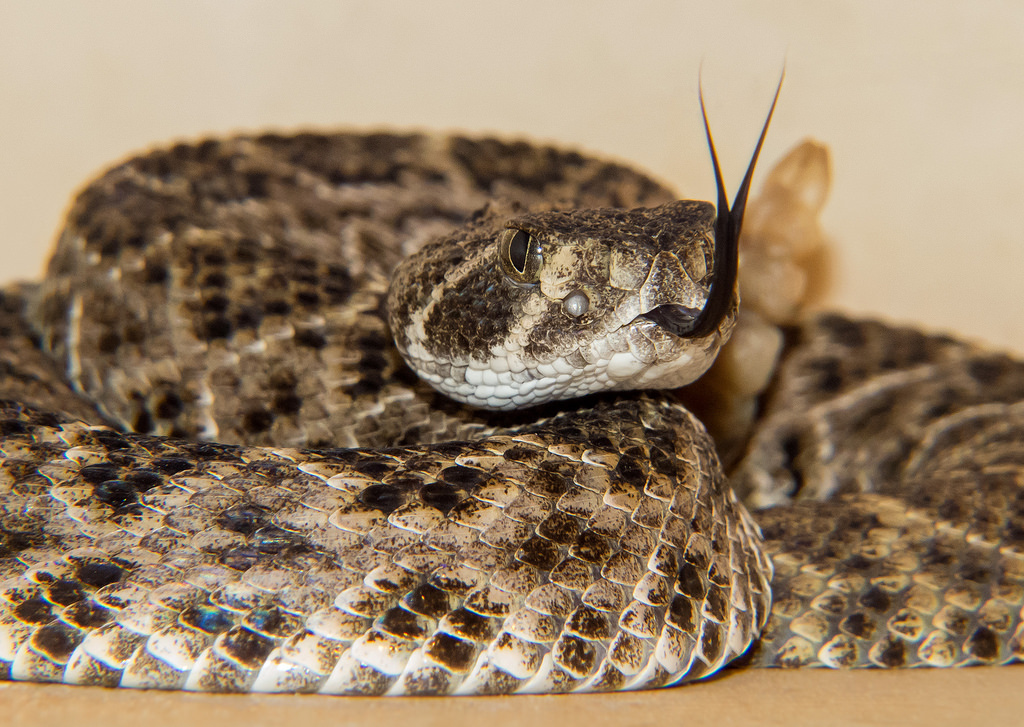
Podcast # 343: Snake Bites
Educational Pearls:
- Snake bites commonly occur between April and October.
- Rattlesnake bites are the most common.
- Venom contains proteins/enzymes that cause local inflammation, coagulopathy, and systemic effects (hypotension, angioedema, renal failure, etc.) along with neurotoxins may cause fasciculations, ptosis, drooling, or hyporeflexia.
- Management:
- Mark site for swelling.
- Monitor progression.
- Elevate and immobilize injured limb and treat pain.
- Check basic labs including coagulation studies, and update tetanus.
- Antidote is CroFab and use if patient has systemic symptoms. Anaphylaxis is a known complication of CroFab
- Avoid: ice, tourniquets, and incision and drainage.
References
Hifumi T et. al.. Venomous snake bites: clinical diagnosis and treatment. J Intensive Care. 2015 Apr 1;3(1):16. doi: 10.1186/s40560-015-0081-8.
Warrell DA. Snake bite. Lancet. 2010. 375(9708):77-88. doi: 10.1016/S0140-6736(09)61754-2.
Warrell DA. Envenoming and injuries by venomous and nonvenomous reptiles worldwide. In: Wilderness Medicine, 6th Edition, Auerbach PS (Ed), Elsevier Mosby, Philadelphia 2012. p.1040.
You May Also Like

Por el Placer de Vivir con el Dr. Cesar Lozano
Uforia Podcasts

Vitality Radio Podcast with Jared St. Clair
Jared St. Clair

The Good Gluten Free Grub Podcast
Lorin Smith

Sleepy
Otis Gray

Microdose U - Using Mushrooms For Depression and Anxiety
Dr. David M. Madow

Iron Culture presented by MASS
MASS Research Review

Fitness Confidential
Vinnie Tortorich

The Anxious Truth - A Panic, Anxiety, and Mental Health Podcast
Drew Linsalata

Got Gains Podcast
Gabriel Bogle

The Dr. John Delony Show
Ramsey Network
Por el Placer de Vivir con el Dr. Cesar Lozano
Uforia Podcasts
Vitality Radio Podcast with Jared St. Clair
Jared St. Clair
The Good Gluten Free Grub Podcast
Lorin Smith
Sleepy
Otis Gray
Microdose U - Using Mushrooms For Depression and Anxiety
Dr. David M. Madow
Iron Culture presented by MASS
MASS Research Review
Fitness Confidential
Vinnie Tortorich
The Anxious Truth - A Panic, Anxiety, and Mental Health Podcast
Drew Linsalata
Got Gains Podcast
Gabriel Bogle
The Dr. John Delony Show
Ramsey Network
Community discussion