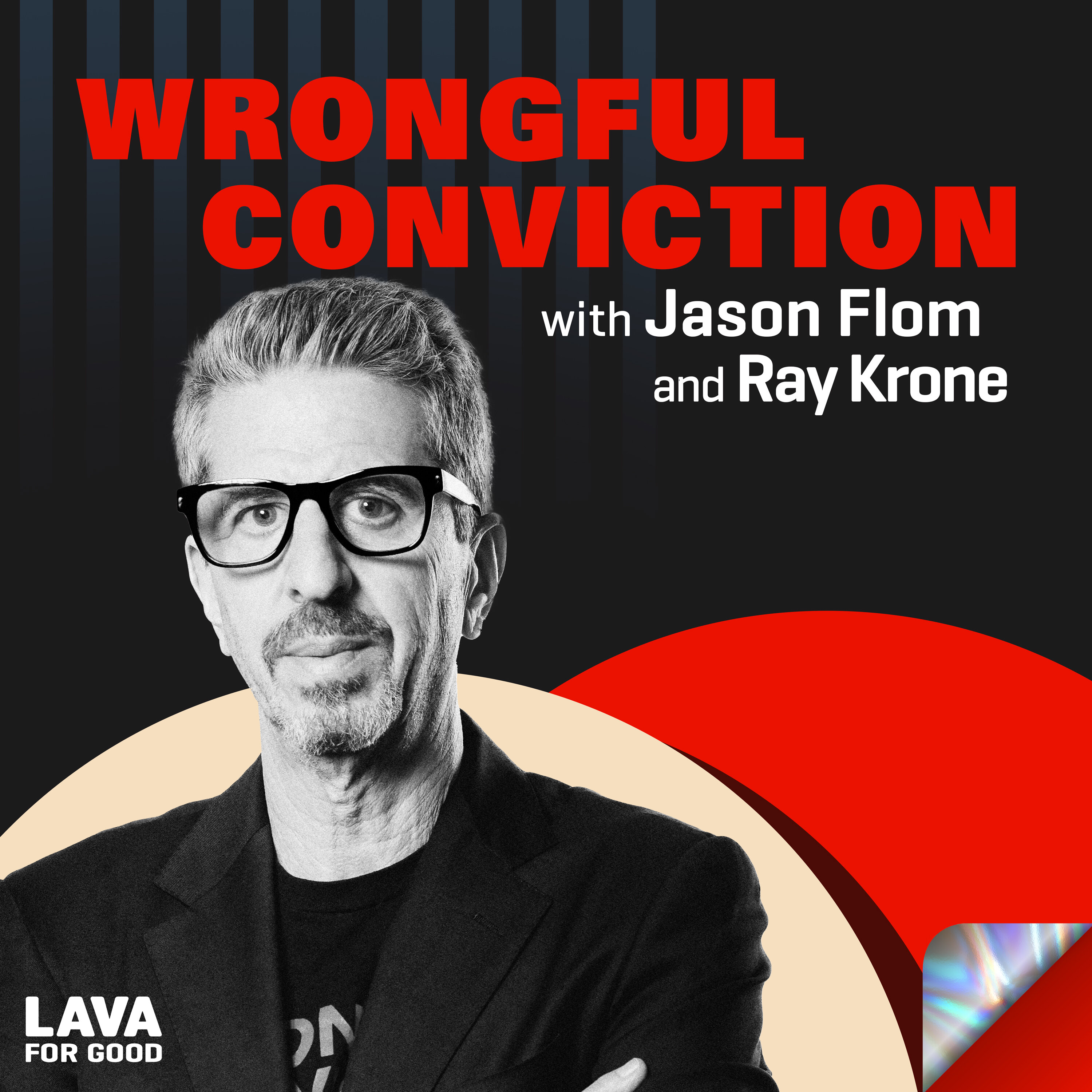
0:02 On December 29, 1991, the body of a 36-year-old bartender was found nude in the men's restroom of her bar in Phoenix, Arizona. She had been assaulted and fatally stabbed. 0:13 No semen was found. However, what appeared to be bite marks were on her neck and breast, along with saliva. 0:20 With DNA testing still in its infancy, serology tests could only show that both the blood and saliva at the scene matched the victim's blood type. One witness implied that the victim may have been dating a 34-year-old bar regular 0:34 named Ray Crone, who the victim allegedly had mentioned was supposed to help her close up that night. But since Ray had been at home with his roommate at the time of the crime, he had nothing to hide, fully cooperating with investigators and eventually giving a blood sample and 0:47 an impression of his teeth. With the limitations of the serology in this case, the notorious junk science of bite mark analysis became the sole evidence against Ray. The judge's denial of a continuance for the defense to prepare to 1:00 refute this evidence made a path for a second trial, but not before Ray was convicted and sentenced to death. 1:07 At the second trial, with the salivary DNA evidence excluding Ray, he was still reconvicted. But this time, the judge sentenced Ray to life while voicing his obvious doubts. In 2002, further DNA testing both excluded Ray as well as identified 1:23 a convicted child molester named Kenneth Phillips as the actual killer. 1:27 Within days, Ray Krohn became the 100th former death row inmate freed based on actual innocence since capital punishment was reinstated in 1976. This is Wrongful Conviction. Welcome back to Wrongful Conviction. Today's episode is... will rock your world. And 1:56 I say that with such a high degree of confidence because this story, this man, Ray Krohn, was the 100th exoneree from death row in the United States. And his case is so troubling because on top of all the other terrible things, Ray's case relied solely on the junkiest 2:15 of junk sciences, which is bite mark evidence. That was it. 2:19 Nothing else. 2:20 And furthermore, as happens every Too often in too many of the cases that we cover, the actual perpetrator went on to commit an unspeakable crime after Ray was targeted for reasons that we'll get into later, which are inexplicable, 2:36 but they're real. So without further ado, Ray Krohn, welcome to Wrongful Conviction. 2:42 Well, thank you. I'm glad to be here. 2:44 And Ray, your case happened in Maricopa County, Arizona, which has a notorious past of prosecutorial misconduct. In fact, when referring to some more recent instances, an ACLU article said, and this is a quote, it is indicative of a 2:59 decades-long culture of misconduct that flows from the top down, one that prioritizes winning convictions over pursuing fairness and executing justice, end quote. And to be fair to Maricopa, that quote could be applied to countless prosecutor's offices all over the country. 3:17 But in your case, the prosecutor was Noel Levy. who sent at least two innocent people to death row that we know of, right? The first was Deborah Milkey back in 1990 when Levy hid the lead detective's long history of lying under oath. And that was exposed in 2015, 3:34 which allowed Deborah Milkey to finally clear her name. And then, of course, you. But before all of this insanity, can you take us back a bit? What was your life like growing up? 3:44 Well, I was actually born and raised in a small agricultural town in southern Pennsylvania. I went to the same high school my grandparents went to, the same church my great-grandparents went to. I was involved in church. I was 3:56 on the choir. I also played Little League baseball, peewee football. 3:59 I was involved in sports. I grew up growing vegetables and hunting and fishing, the typical things that small-town country boys do. I graduated in 1974, and I entered the U.S. 4:10 Air Force. I signed up for six years active duty, was stationed in places like Texas, Mississippi, then Georgia, Maine, and then the last was Phoenix, Arizona. My six years were up. I got out of there. A few years later, I got a job at the post office, and life 4:24 was really pretty good. Again, I played a lot of sports, and that's really where my problem arose because of the one bar that I played volleyball for that I had shot darts at a few times became a scene of a murder. 4:34 Right, and this particular crime occurred on December 29, 1991, where the body of a 36-year-old woman was found nude in the men's restroom of the CBS Lounge in Phoenix, Arizona. 4:46 The bar owner had found the body of the previous night's bartender, and she had been brutally assaulted and stabbed to death. Now, remember, this was back in the early 90s, right? 4:58 So DNA testing was still in its infancy, right? It was a new thing. So they only had serology to work with. And at the time, it seemed like there was very little physical evidence left behind. There was no semen, right? 5:12 And the blood and saliva at the scene all matched the victim's blood type. There were, though, what appeared to be human bite marks on the victim's neck and breast. So, which is, we've talked about that before, how notoriously unreliable 5:26 that is. But so, Ray, from these facts, how did they even come to suspect and ultimately target you? 5:32 Yeah, she was found by the owner when he came in on that Sunday morning to open up his bar, found the front door unlocked, was concerned why his night manager hadn't taken care of security. He made his way to the cash register, to a safe. Both were on 5:45 unsecured the money was still in there as he made his way around the bar he found her body in the men's bathroom and of course the police called in and they initiated an investigation on the assumption had to be somebody that knew her no evidence of break-in no 5:56 sign of a robbery they talked to some of the co-workers one of them mentioned my name as a potential boyfriend i did not date her she was not my girlfriend i knew her from the bar you treat bartenders then waitresses kindly in any profession if you're going to 6:09 be attending that place of business and that's all it was but uh It was about one o'clock on that Sunday and I heard my dog was outside and he started barking. Two men in suits had pulled in front of my neighbor's house and were getting out of their car. 6:22 And by the time I went outside to let my dog in, they were walking up my driveway. And I stepped out and I said, excuse me, can I help you? 6:27 And the one man said, are you Ray Crona? I said, well, yes, I am. What can I do for you? And he said, do you know? And I thought, I don't think I know anybody named. And he exchanged glances with the man next to him. He said, you don't know from the 6:40 CBS lounge. I said, well, wait a minute. I, play volleyball there. I shoot darts there sometimes. There's a girl there named * * * *. I said, I don't know her last name. And he kind of looked at me. 6:48 So he said, you don't know her last name. You're a boyfriend, aren't you? I kind of said, no, I'm not her boyfriend. What's going on here? He said, well, you're dating her, aren't you? I said, no, I'm not dating her. What is this about? And at that point, 6:58 he opened up his jacket, pulled out his badge, identified himself as a homicide detective and informed me of her death, said he was there to ask me a few questions. 7:06 Now I'm stunned. I've been going to that bar about two months. Here's somebody I knew was a victim of a, homicide and the police are at my house to ask me questions. The first thing I said was, sure, come on inside. And he said, no, we really need to 7:17 do this downtown. And so I was interrogated for the next three hours about how long we've been dating, where do I take her on dates, how many times she's been to my house. All of them, I told her were negative. You know, she'd never been to my house. 7:27 I didn't date her. I would see her at the bar. 7:29 I was at a Christmas party with a number of people from the bar at one point with her. And that was it. At one point, they took my sneakers out. 7:36 At another point, they took mug shots. They had me take my shirt off, took pictures of my upper torso. 7:41 They took fingerprints. Another part, they had like a white styrofoam cups. Had it tied two pieces together where I actually bit into that. And I cooperated. I didn't know anything about her death. I didn't know her that well. 7:52 I was at home that night. I have a roommate that knows I was home that night. And after about three hours, it was over. And I thought that was the end of it. But then the next day, which was a Monday, I went to the post office, delivered 8:02 my mail, got home that day, and there he was waiting. 8:05 Detective Gregory said, I need to eliminate you as a suspect. 8:08 I don't think you've been completely truthful. You want to cooperate, don't you, Mr. Crone? And I said, sure. What is it you need me to do? And he said, well, I need you to come downtown again. Again, I volunteered to go downtown. This time when I got down there 8:19 in the little interrogation room, right away he pulled out a piece of paper and said, oh, yeah, by the way, I have an affidavit here, a request for evidence here. 8:27 and that it said that they were going to take a blood sample, a hair sample, and a cast of my teeth. Now I'm a little upset. Now I'm concerned. 8:33 It's like, what's going on here? It was signed by a judge, said I was required to give these samples, and it said they had three hours to do it. 8:40 So I cooperated when they took blood out of both arms. 8:42 I'm not sure why that was necessary. I cooperated when they took hair samples, and then I was taken next door in a bigger room where there was a dentist and a dentist chair set up, at which point they sat me in a chair, put this goop, and he 8:53 took two casts of my upper teeth, two casts of my lower teeth, And for about the next two and a half hours was nothing but taking pictures and questioning me about my dentition history. When I was 18 years old, I was a passenger in a head-on collision. I woke 9:05 up with a broken jaw, mouth wearing shut. Six weeks went by. The bottom jaw didn't line up with the top. 9:10 They had to re-break it, wear it shut again for another six weeks. I had some teeth that had eventually died. 9:15 I had some teeth issues, root canals, some bridge work, some different things that went on with the front teeth in my mouth. And finally, when that was over, I went next door to that little interrogation room, at which point the detective banged his desk with his big old 9:28 book and said, look, it's time to come clean. It's time to tell the truth. I know you did it. 9:31 Why don't you just confess so we can all go home? Well, by now, I was pretty angry. I was pretty upset with what was going on, the way I was being treated. 9:38 I was almost 35 years old. I'm not a little child. 9:41 I spoke up to him. I told him what I thought of him, what I thought of the investigation, the police department. Why are you wasting my time? Go find the person that did this. And by the way, your three hours were up. I mean, I was hot. And 9:51 he looked at me. He looked at his watch. He looked back up. He said, look, Mr. Crone, I'm not going to argue with you. There's other ways to handle this. 9:57 He took me home, 15-minute ride, never said a word to me again. I thought that was the end of it. 10:01 But I found out what he meant by other ways to handle this the next day, December 31st, 1991. It was just about four o'clock. I pulled into my driveway, just stepped out of my car, at which point all of a sudden I heard a speaker go off, freeze, 10:13 don't move, you're under arrest. A van load of police officers came pulling up. Black and whites came pulling up. 10:18 The van doors opened up with armed officers in full riot gear, threw me on the ground, arrested me for murder, kidnapping, and sexual assault. Jesus Christ. 10:26 So there you are spending New Year's Eve in a jail cell. And from what I understand, you stayed right there until trial. But you had your roommate, right, who had been home with you that night. So it sort of seemed like you could clear this up pretty easily. 10:43 And from what I understand, you had a public defender there. 10:46 Did they share the same optimism? 10:49 One day I got called out to a legal visit. 10:51 I'd probably been in there for a good month or two. 10:53 And it's just like you see on TV with a separate area where one picks up the phone and you talk through clear glass. And I was in there and a lady came in, sat a briefcase down, picked up the phone, identified herself as representing the public defender's office. 11:05 And she said, you've been charged with murder, kidnapping, and sexual assault. You can expect to be found guilty, but we'll fight it on appeal. And I went crazy. What do you mean? I'll be fine. I had nothing to do with it. I just started going off ranting and raving. 11:17 And she got the phone held away from her ear, waiting for me to calm down. And she got back in that phone and she said, listen, Mr. Crone, let me tell you something. I don't take that tone of voice from the judge. I don't take it from the prosecutor. 11:27 And I'm certainly not going to take it from you. 11:30 Hung up the phone, picked up a briefcase and was going. 11:32 And I thought, this is incredible. What is this system I believe in? The country I believe in, the things I stood for and was taught and raised to believe. Anyway, I got a letter about a week or two later from the public defender's office that stated that they were 11:45 being removed from my case. They cited a conflict of interest, said the next most likely suspect was the victim's ex-husband. 11:52 They had a 15-year-old daughter together, and he did a sleepover for her birthday and did something inappropriate with one of her little girlfriends and was arrested, rightfully so. And they were representing him, and I was told that I 12:03 would be getting a court-appointed attorney. I thought, oh, good, I'm going to get a private attorney now. Somebody's going to be appointed. to represent me, somebody that'll do the job. 12:11 But unfortunately, the day I went before the judge to get a court-appointed attorney, it was a man that had never done a death penalty case. And at the point when the judge appointed him to me, he was granted $ 5, 000 to defend me, to represent me in a capital murder case. 12:24 Yeah, and of course, the state has unlimited resources to do what they want to do. 12:30 Heck, you can't even get a divorce for $ 5, 000. 12:31 Yeah, don't I know it, believe me. And they're giving really just enough to create the impression that they're enabling you to mount some sort of a defense, but not enough, realistically, for anybody to mount a real defense. So seven months after the murder, you're on trial. 12:51 This was a three and a half day trial. The prosecution was pretty much all three days. And that's why I found out why they had me bite into that styrofoam that first day, why they took those casts of my teeth the second day, because they had a bite 13:02 mark expert testify, Ray Rosen out of Nevada. Very impressive, well-spoken man. He was a dean of the UNLV dental school. 13:10 He was a state senator out of Las Vegas. He was the elder in the Mormon church. Very powerful speaker, very convincing. We later found out very well paid, over $ 50, 000 by the Maricopa County DA's office for his testimony. 13:23 But his testimony was that my teeth were unique as a result of the car accident I was in. My teeth matched the marks on the body, and that those marks on the body were made at the time of death, and that definitively made me Ray Crone the murderer. There 13:35 really wasn't much other evidence, but I was called the snaggletooth killer in the papers. 13:39 The snaggletooth killer. So for 10 times what you got for your whole defense, that 50 grand even came with a schoolyard bully nickname, right? And what they're really paying for with a forensic odontologist is their resume, pomp, and circumstance. 13:57 Because if you were looking for substance and bite mark analysis, well, there just isn't any. There's not a shred. I can't even... 14:06 I can't even put it to words, the disdain I have for this particular junk science. I encourage everyone to listen to our series, Wrongful Conviction, Junk Science. The first episode exposes bite mark analysis for what it really is. 14:20 And let's start out by saying that one of the original purposes of forensic odontology is identifying human remains with dental records. What I mean is, for instance, like a person was on a flight. right? And the flight crashed 14:34 into a mountainside or whatever. It gets obliterated. But now you've got a situation where you're matching a limited and known set of bodies to corresponding dental impressions and dental histories. 14:45 So you have a full set of teeth that you're comparing to a full set of x-rays from a dentist's office. 14:52 But with bite mark analysis, the so-called expert pretends without taking into account that the Many, many variables of the medium on which a bite was recorded, right? So what I mean is, in this particular case, human skin and tissue. 15:07 So we're talking about elasticity, decomposition. I could go on. 15:12 But from there, they act as if they're able to match perfectly a dental mold from a suspect to marks made on a surface that's transitioning. And they claim to be able to do this to the exclusion of all others on the planet. as Ray Rosen did in this case. 15:30 So yeah, no. But as Ray mentioned, they impressed the hell out of the jury with their witnesses' purported credentials. 15:39 And this time-tested method has tragically been very effective at producing convictions, often with no other evidence of any kind. 15:48 So that was the state's case. But what about your defense? 15:52 Now, the second half of the trial, which was the defense's turn, which was like the last half a day, I actually took the stand. I raised my right hand. 15:59 I went up there and answered my attorney's questions. And there came the prosecutor, Noel Levy, got up there right in front of me right away. So you deny killing the victim? I said, yes, I do. You deny being to CBS now? I said, what night? He said, the 16:10 night you killed her, of course, Mr. Crone. The night you brutally took her life. It just started tearing into me. 16:14 I mean, everything I said was twisted around. After two or three hours of this cross-examination, I come down off that witness stand. I mean, so disordered and confused, I almost went over and sat down next to him. Next was my roommate. My roommate was going through a divorce. 16:26 He had two children. Most of his money was going to support those children. He was staying with me for a month or two. He'd been there already. He raised his right hand to testify to tell the truth there in that court of law and sat down and answered 16:38 my attorney's question. And then here come Noly, began to cross-examine him. Stared there in front of him a minute with his arms crossed, said, now you've known Ray Crowe a long time, haven't you? My friend Steve said, yes, that's right. It's been 12 years since we were in 16:49 the Air Force together. And then the prosecutor said, and Ray Crone's always been a good friend to you. I've been there at times of need, times of trouble, looked out for you, helped you out. In fact, he's even given you a place to live right now, isn't he? 17:00 My friend Steve kind of straightened up and said, yes, that's right. That's the kind of guy Ray is. And then the prosecutor leaned right over to Space Point and figured out and said, and you'd lie for him, wouldn't you? 17:08 And turned and walked away and sat down. Later on in closing arguments, he told the jury to disregard my friend, a man who raised his right hand to serve the United States Air Force, a man who raised his right hand to tell the truth in the court of law. 17:19 He told that jury to disregard his testimony because he's just there to protect me and will say anything. And it took the jury just three and a half hours to come back and find me guilty of murder and kidnapping. 17:29 So now you go back for sentencing and you would not have seemed to be a likely candidate to get the death penalty, especially with your background. But in fact, that's what happened. 17:40 To sit there and going through a mini trial, what they call an aggravating mitigating hearing, Again, this is their go-to big tough guy prosecutor. Before a judge, it was an ex-prosecutor. The response were half a dozen people in 17:51 death row already. And to sit through this, the first part, the aggravating part by the prosecution where they have to argue why this is above and beyond the norm. For the worst of the worst, you have to have aggravating factors, at least one, to get a death sentence. They used 18:02 the bite marks that it was gratuitous, violent, excessive pain and suffering on the soft tissue while she was still alive. 18:08 The pain and suffering she must have went through. Or because they're great at covering any possibilities on all their bases, And he said, or it was after she was already dead. 18:16 That's heinous and depraved. That's tampering with a dead body. 18:19 That's just sick. And it's all his suppositions. He don't know what happened, but he even had a dress dummy up there showing how this was hacked and this was cut and how she was bitten. I mean, very, very powerful. 18:29 And then, of course, came the defense's turn to put on the mitigating. Well, how do you mitigate something you didn't do? How do you show remorse or regret for an act you never committed? I told my turn, I got nothing to apologize for. I didn't kill her. They 18:40 got the wrong person. He said, well, we'll put your family, your friends on. We can have them testify to your good behavior in that background. I said, you're not putting my family, my people that I know on that stand to be cross-examined by that prosecutor. I said, no way. 18:50 It's not going to happen. And he said, we have to tell the judge that. Well, so I did. And I was promptly called an old remorseful killer, a horrible monster, and I was sentenced to death. 19:11 This episode is underwritten by AIG, a leading global insurance company, and by Accenture, a global professional services company with leading capabilities in digital, cloud, and security. Working to reform the criminal justice system is a key pillar of the AIG 19:26 Pro Bono program, which provides free legal services and other support to many nonprofit organizations and individuals most in need. 19:34 As part of Accenture's commitment to racial and civil justice, Accenture's legal access program provides pro bono legal services in partnership with more than 40 organizations, bringing meaningful change to people and communities worldwide. 19:55 Within a week's time, I was transported by bus straight to the death row in Arizona. That's about a five by seven cinder block walled cell had steel bars on the front side where the door was. There was a little trap there. That's where they fed you through, put 20:08 the mail through. I can tell you I never got a hot meal on death row. Herb meals sat in the hallway until they felt like feeding us. I got one sheet, one towel, one army blanket. There was a cement slab that had about a two-inch pad on it. 20:21 I wrapped my sneakers in my towel. That was my pillow. 20:25 And that's where I was to live now until they decided when I was going to die. Again, my friends and family believed in me, supported me. But I knew this cell in death row was going to be my home for quite a while. And I'm going to have 20:35 to learn to survive in here. and learn what I can about the system to prepare myself for what I need to know to fight it in the future if I ever had that chance again. 20:44 And you did get that chance again because the Arizona Supreme Court overturned your conviction on direct appeal. I mean, it's a freaking miracle, right? And how did that miracle come to pass? 20:58 Well, they still had law libraries then, and so I started going and reading law books. I actually became a legal representative to help other inmates there or in prison, both when there are cases or with the disparity issues. 21:08 So I learned a little bit about how that works. 21:10 Most states, whenever you're sentenced to death, it automatically goes direct appeal to that state's Supreme Court. And in my case, I have to say, God bless my worthless attorney. He actually did something worthwhile right before our trial was to start. 21:22 I believe it was on a Friday. The trial started Monday. 21:24 We were taken into the courtroom there, and the prosecution introduced a videotape made by their bite mark expert about 40 minutes long about how he conclusively matched my teeth using the latest techniques to these bite marks on her body. 21:36 Very impressive, very powerful evidence. And my attorney was awake. 21:39 He was actually paying attention. He said, Your Honor, I've never seen this evidence before. You can't allow this in at the last moment. The judge said, Denied. I'm going to allow this in. He said, You've got the weekend to consult with this expert. And then in a burst 21:50 of brilliance, he actually said, Your Honor, in light of that ruling, if you're going to allow that evidence in, I'm going to have to ask for a 30-day continuous. 21:56 I am not prepared for this evidence. I need 30 more days. And as I said, the judge was consistent. 22:01 He was an ex-prosecutor. He had people on death row. 22:04 He said, denied. He said, we need to get this trial rolling. So just seven months from the murder, he needed to get the trial rolling. The Arizona Supreme Court reviewed the issue for what it was. They said my attorney was well within his rights for asking for a continuance. 22:18 They said the judge was wrong for allowing that in at the last moment. As a defendant, you have a right to know what evidence is going to be used against you. You have a right to receive that in a timely manner. But just because there's a mistake, a technicality, 22:28 an error made does not mean you walk free. There's two parts to it. The second part is called a harmless error evaluation. And this is where they review this piece of evidence, this omission, this error, whether or not it would affect the verdict. Would the jury even care? 22:41 Did this matter? And the exact words were, without this videotape, there wasn't even a jury submissible case against Mr. Crone. 22:48 They recognized this was about a bite mark, that this was critical evidence. The judge was wrong, and they ordered a new trial. 22:55 And you were lucky enough to have a strong family support system throughout your fight. What did they do to help in the lead up to your second trial? 23:05 And so, God bless them. They mortgaged their house. They cashed in with retirement funds. There was different people that gave their income tax return money to my family. And I had a second cousin out in California. He was 23:15 reasonably well off. And he'd heard about this from his mother. 23:18 And he was dumbfounded. He's like, what kind of family did I come from with a murderer on death row? 23:22 He was intrigued. He came to visit me on death row and talk with me. And when he was done, he said, something doesn't sound right here. And he became a real champion for the fight for my innocence. And he had a new attorney out of California. And from 23:33 talking through him, the attorney said, let me take the case. 23:35 We can come near the hundreds of thousands of dollars required. 23:38 But he said, just pay the expenses. I believe in raids. 23:40 This case is no good. Let me take the case. 23:43 And so now we had a person, very experienced attorney. 23:46 When he showed up for that trial, I mean, he had books and books about it. Stuff that he had found out that we never knew about in our first trial. 23:52 Things that they had done with everything from even blood sampling and testing and stuff that we never knew had been done. More about footprints and fingerprints that had been found that we never knew about. And all this stuff was coming out at our second trial. And when that 24:05 second trial finally started in February of 1996, It lasted over seven weeks. Over 500 exhibits were introduced. We had three bite mark experts testify the defense alone. It was a whole different scenario now. And it was starting to 24:19 feel good about the truth was coming out at this trial. 24:22 Yep. And the truth sure did come out. 24:24 All right. 24:25 So you had DNA testing done on the saliva from the bite mark that identified a different contributor confirming that it belonged neither to you nor the victim. So I think now everybody is probably on the edge of their seats going, okay, so now comes the happy ending, right? 24:44 You'd think, I mean, my family, we all had reason to be very optimistic now. The prosecutor, right before they went out, that prosecutor stood before that jury for closing arguments, told them to ignore that DNA, disregard that DNA. He said, 24:57 that DNA is easy to explain. She's a waitress. She's a bartender. She handles glasses all day long. That was just transferred there by accident from somebody else. He said, we know from the bite mark who did this, and you're responsible to see that justice is done for the 25:11 victim's family. And this is his best prosecutor tone, kindness, consoling, trust me, voice that he's telling this jury that right before they go out to deliberate. And the jury goes out after all that time and come back and finds 25:25 me guilty again. Everything just froze for me. I see the jurors wiping tears out of their eyes, their heads down. 25:31 They don't want to look at me. My attorney's hanging on my shoulder saying, I can't believe this. Why didn't they see the truth? Don't worry. I'm with you to the end. And I look over at the prosecution side, and they're all jumping up and down celebrating like they 25:40 won the big ballgame. And all I could think is, whoa, stop. 25:43 Rewind this. No, this can't be. No, it's not possible. 25:46 No. 25:46 But that lasted just seconds because I was brought right back to reality because I heard the most horrible scream, this moan and wailing from my mom and sister not five feet behind me to turn around and see the look in their eye, the tears holding their face and 25:59 And I'd say, Mom, don't cry. Amy, my little sister. Amy, it'll be all right. Don't worry. I'll be okay. You couldn't believe this. What happened? How could this be? It's not possible. But there I was, found guilty again. 26:10 Jesus. So they bought that nonsense about the transfer of saliva from glassware. But luckily, the judge had his doubts. 26:18 And when it comes to the aggravation and mitigation hearing for your sentencing, your attorney, Chris Plourd, spent Two hours demonstrating how all of the pieces of evidence pointed to somebody else. How police were able to get footprints at 26:33 the scene of the crime and were able to match them to actual shoes, size 9 1⁄2 converse, but you wear a size 11, right? That fingerprints and palm prints found in the bathroom didn't match you. That hair found on the victim's body, that salivary DNA didn't match you. 26:49 And all of this made such an impression on the judge, Superior Court Judge James McDougal, that he said, quote, The court is left with a residual or lingering doubt about the clear identity of the killer. This is one of those cases that will haunt me for the rest of 27:03 my life, wondering whether I have done the right thing. 27:07 End quote. Wow. I mean, he still had to sentence you, but he was definitely not convinced beyond a reasonable doubt. 27:18 And yeah, he sentenced me to 25 to life for the murder. And then he went on to aggravate kidnapping and added on 21 more. So I was actually facing 46 years in prison before I'd ever have an opportunity to get out. It was a death sentence. I'd had 27:31 to be 81 years old to ever have my first shot at a release. You don't live to be 81 in our prisons. 27:37 No, very few people do. Even on the outside, the life expectancy is less than that. So now you're back to prison. And while it's not death row this time, as you said, it's still really a living death sentence. 27:50 I mean, did you find a way to maintain hope at this point? 27:54 Years go by. My appeals are turned down. They said, no, this is a fair trial. There's nothing wrong with this trial yet. But I'm thinking, man, I'm going to die in here. My family is still doing newsletter. They figure we got to find out who did this. It's the 28:04 only way we can get them out here. My cousin Jim Ricks in California is working strenuously to find hiring people to investigate doing different things. And nothing's really panning out. 28:13 And then in 2001, Arizona state legislatures passed a new law allowing for post-conviction relief DNA testing. Most states are only allowed a small window after your conviction to bring up new evidence. If you didn't bring it up at trial, 28:26 it's very hard to ever bring it up again. But they recognized that DNA was too critical, too definitive, too important to just ignore on a time restraint. So they passed a new law allowing for post-conviction relief on DNA 28:37 material provided it was previously untested that would have direct bearing on guilt or innocence and that it was properly maintained. 28:44 And I have to say, God bless you. Thank you, Phoenix Police Department, because they kept the clothing in Kim's case. 28:50 She had been stabbed with a big butcher knife from the kitchen through her clothing and which was then cut off with that butcher knife and thrown in the corner. 28:57 She had been stabbed so forcibly with this butcher knife that it actually bent the blade. And my experts all surmised that there was a good chance the person wielding that knife may have cut themselves. And so we were able to get a look at those clothing that they 29:08 had kept preserved and stored. And my attorney was able to see that there was blood on her pants, on her underwear. Meanwhile, I was visited by a man named Alan Simpson. And investigator Tom Street wanted to know if I would like them to represent me. I'm like, I 29:22 have no money. Or, no, no, that's not what we're talking about. We want to represent you in this case and have this post-conviction relief DNA testing done. I said, well, I can't pay you anything. For about five minutes, I said, I can't pay you. They finally got to the point 29:32 that's not what mattered to them. They wanted to represent me. 29:35 They believed in my innocence. And they would then petition the courts under that new law to have DNA testing done. 29:40 done on that pants and underwear that they had found some type of a staining. That testing was now being done. 29:45 It started in October. We were told it would take six to eight weeks. October went by. November went by. 29:50 December went by. January went by. Still no results. I'm waiting. 29:54 I'm anxious. When it ended up, it turned out that they actually had results back. But it came back with a match to another man that was currently serving a 10-year sentence for sexually assaulting a child. It came back three or four times. The prosecution had to rerun it 30:06 and rerun it and rerun it. 30:08 And it's important that we mention that this man who the DNA actually matched was a guy named Kenneth Phillips, right? 30:14 And as you said, this was a guy who was at that time incarcerated for sexually assaulting and choking a seven-year-old girl. It's unreal. And at the time of the murder, he was not only on probation for breaking into a 30:27 neighboring woman's apartment and choking her while threatening to kill her, but he was also living just 600 yards away from the CBS lounge where the victim was killed. So it's horrible to think that this horrendous ordeal that you went 30:44 through and the one suffered by that poor little child could have been avoided entirely. Unfortunately, that was not the case. 30:53 And it took all of those years later and these critical DNA test results. 30:58 Finally, it was leaked that that DNA results were back and that it matched another person. Things happened very quickly then. 31:06 On April 8th, I was called over to the counselor's office. 31:08 He said, your attorney's on the phone. I got the phone and it was Alan. He said, Ray, how are you doing today? I said, fine, just another day in paradise. 31:15 He laughed. He said, what do you want to eat? 31:17 I said, well, what are you talking about? Eat whatever's in the chow. He goes, no, no, no. What do you want to eat? Steak? Seafood? Mexican food, a beer. 31:22 What would you like, Ray? I said, Alan, what the devil are you talking about? He said, I just got off the phone with the prosecutor's office. They just got back from the judge's chambers. They're cutting the paperwork. You're coming home today. And I just, what did you say? 31:36 He said, roll up, Ray. It's all over. You're coming home. 31:39 And I looked at the counselor and I gave him the phone and he'd hung it up. And well, his phone rang right away. And he picked it. Yes, sir. 31:46 He's right here. Yes. His eyes are getting bigger. Yes, sir. 31:49 I'll have it done. Yes, absolutely. I'll take care of it. 31:51 And that was the warden. He said, you need to go back and roll your stuff up. You're being released, Mr. Crone. 31:57 I walked out of that prison about three hours later looking over my shoulder and wondering what the devil are they up to this time because they never accepted my innocence. 32:04 They never believed what I said. And now just like that one day and back in December 31st, it was when I woke up in my house and that evening I went to sleep in a jail cell. That morning I woke up in a prison cell and went home 32:16 to sleep. But I was released. And my attorney, Chris Plourd, came from over in California. He picked me up and drove me off that day to escort me off to start my life all over again at the age of 45. 32:27 After 10 years, three months, and eight days to reunite with my family and friends with the distinction of being the 100th person in America to have been convicted of a capital murder, sentenced to death, and later to be freed, to be exonerated, to be proven innocent. Wow. 32:40 You know, it's really such an inspiring story with a lot of villains. But, you know, when you think about it, there are even more heroes than villains, like you're at Pellet attorney, Chris Plourd. You know, hearing his name reminds me of a story I heard about a sting that 32:55 was done to expose the notorious bite mark charlatan, Michael West, out of Mississippi. And in that sting, Michael West was given a set of dental molds that he was told belonged to a suspect in some crime or other. But it turned out that the dental molds were actually the 33:12 ones belonging to the investigator who was part of the sting. 33:16 And of course, this freaking numbnuts, West, identifies the dental molds as those belonging to the culprit in this fake case, thereby exposing himself as just one of many frauds in this field. 33:31 It was my cousin's dentition that was sent to Dr. 33:34 West out there in Mississippi with using the picture that was the bite mark on the breast, saying that it was actually a child abuse case and could he be of any help whether or not this was a suspect and could you identify that. West identified my cousin's teeth 33:47 as making the mark that I was convicted of making. Wait, what? 33:51 It was my cousin's teeth, Jim Ricks' teeth. 33:53 That's amazing. And, oh, man, I mean, speaking of frauds, what about Ray Rosen, the expert in your case? Was he ever exposed? 34:02 What ended up happening, it turned out that Ray Rosen was, I don't want to say outcast, but he was certainly chastised by the rest of the people in his profession. 34:10 They all could point quick fingers at where he's wrong, saying, why are you doing this? You know you're wrong. And he actually resigned from the dental school after my release. 34:18 I couldn't sue him because he was protected under immunity from the prosecutor. But he did resign his post at the dental school. He also lost his reelection as senator. 34:27 But yeah, Ray Rosen held on to the end when all the other experts said, you're wrong. Why are you doing this? And we actually had him on tape for the lawsuit if we could have went after him, saying, I'm just in too deep to back out now. So 34:38 what kind of system do we have that allows people like that to get paid an exorbitant amount of money to testify to something that that they weren't even sure of, but they're in too deep to back up and admit they were wrong. Walking out that gate that day, being 35:01 number 100, there was notoriety. 100 was a special number. 35:05 There was a number of events that went on around the country for that milestone. And there was the media outside my gate, just wanted to talk to me, see what it's like. What are you going to do now? 35:12 How does it feel? And I talked about how my family and friends had stood by me, how I read the Bible front and back three and a half times during those 10 years and slept with it under my pillow. 35:21 And a reporter in the back had raised his hand. 35:23 He said, well, Mr. Crone, given your faith in God, how do you justify him leaving you in prison for 10 years? I thought, what? How do I justify God leaving me in prison for 10 years? How do you answer a deep soul-searching question like that? I mean, the 35:36 prison's right behind me. I've been out five minutes, and I'm dumbfounded. I'm frozen on earth. And then all of a sudden, something shot in my head. I said, well, you know, maybe it's not about those 10 years I spent in prison. Maybe it's about what I have to 35:47 do the next 10 years. It took three weeks to go back before a judge, at which point the judge ordered a new trial. And that's when the prosecution stepped forward and said they were dropping charges with prejudice, meaning that could never be tried again. And at that point, 35:59 the judge said, Mr. Crone, you're free to go. Good luck. 36:02 I had time to think maybe there was a reason that somebody like me had to go through this. Because, again, if they can put me on death row, anybody is acceptable almost to that. And then so I shared my story, my background. And at the time, Sister Helen was fighting 36:15 her own war, so to speak, against the death penalty. 36:17 She had the idea about what better way to talk about the death penalty and how wrong it is than to have somebody that was innocently convicted of it. And I was asked if I would come on board to share my story. She was out of New Orleans at 36:28 the time. It lasted probably a good six months, almost a year. And as anything, funding gets difficult to have, and it was finally folded up. Years later, a man, Kurt Rosenberg out of Philadelphia, had contacted Sister Helen and said, 36:41 I'd like to resurrect Witness Innocence with your blessings, with your approval. And she said, yes, absolutely. He had contacted another man he knew there in Philadelphia that was a grant writer, Terry Rumsey. And then I was contacted to 36:53 resurrect Witness Innocence. And between the three of us, then we ended up drawing up our nonprofit organization status to 5013C. 37:00 We got our LLC signed. And we started Witness Innocence, and I believe that was around 2005, somewhere in there. 37:07 And since then, we've grown it now to a staff of five or six at least paid staff, over 30-some members that are active. But we share our stories around the country. We've spoken to all the states that have unleashed a death penalty. Our people have come and shared 37:19 their stories. Both men and women who, like me, were wrongly convicted, who walked that walk on death row, who were facing possible execution, and later, by the grace of God and good fortune and the hard work of others, 37:32 including innocence projects and justice projects around the country that were able to get our freedom and now use our voice to say what is wrong and how we can abolish the death penalty and fix certain other aspects of 37:43 our justice system that have continued to malfunction and result in wrongful convictions of innocent people. 37:49 Amen to that. And I hope people will go to the website. Of course, it's witness to innocence.org. Now we have a tradition here at wrongful conviction. It's called closing arguments. 38:00 And it works very simply. Again, I thank you, Ray, for being such a great leader and just an inspiring guy for so many of us, a hero for so many of us, including myself, and for being here on the show. And then what happens now is I turn 38:15 my microphone off, kick back in my chair, leave my headphones on, and just listen as you share with our audience anything else you may want to say. The microphone is yours. Ray Krohn, Closing Arguments. 38:29 Thank you for that opportunity, actually. And I'd like to share two things. Twice at those trials, Kim's mom, a wonderful lady, both with adamance and anger, denounced me and victims' impact statements. And rightfully so. She thought I killed her daughter. 38:41 But that day came when I had to go before that judge, as I said, for that new trial. And the charges were dropped. And the judge banged the gavel, Mr. Crone, you're free to go. I'd noticed Kim's mom in the crowd as mostly all my friends and family members. But 38:52 she had come walking up, a frail lady now, after almost 10 years or so she'd been through this. come up walking on a cane, saddened, almost in tears, said, Mr. Crone, I'm so sorry for what happened to you. I know what it's like to lose a loved one. I lost 39:06 my daughter. Your mom lost you for 10 years. She said, please forgive me. I just believed what they told me. 39:13 And I said, ma'am, your apology is certainly accepted. It's not necessary. I can understand your anger at me for thinking I'd killed your daughter. I did not kill your daughter. 39:21 I thank you for coming up to me. I said, and now is my first opportunity to offer you my condolences. 39:25 I only knew your lovely daughter for a few months. 39:28 but she seemed like a very nice person. person. But there it was. The system wasn't just doing it to my family. The system had done it to her family now too. She was at that point, was actually looking at a possibility of having to go back to trial again, 39:39 see all the brutal pictures that the prosecution will show of her daughter again, and had to sit through that testimony. 39:45 They were doing it to her too. And she said, I just believed what they told me. And I wish some of the good fortune that I've had in my case could be blessed on all those other ones, those moms and those daughters, those sisters, those wives that are 39:57 fighting for their husband, their loved one right now who totally believe in their innocence. So I just want those folks that might be listening that are struggling with their own case right now to keep that faith alive, to keep that hope and know that people do care about you. 40:10 While we might not know you personally, we know of your hardships, we know the struggles and we have people like you putting this on the air doing podcasts and showing the errors, mistakes, and fighting for that justice system that we can all be proud of and trust. 40:33 Thank you for listening to Wrongful Conviction. Please support your local innocence organizations and go to the links in our bio to see how you can help. I'd like to thank our production team, Connor Hall, Justin Golden, Jeff Clyburn, 40:46 and Kevin Wardus. The music on this show, as always, is by three-time Oscar-nominated composer J. 40:52 Ralph. 40:53 Be sure to follow us on Instagram at Wrongful Conviction, on Twitter at Wrong Conviction, and on Facebook at Wrongful Conviction Podcast. Wrongful Conviction is a production of Lava for Good Podcast in association with Signal Company No. 1.






Community discussion