What rural people actually think about clean energy
Rural community pushback to new wind and solar farms has the potential to slow the US clean-energy transition, but very little research has been done on what rural Americans actually think about renewable energy. A recent survey of thousands of rural residents about their opinions on climate change and clean energy development sheds some light; in this episode, Robin Pressman of Embold Research and Mike Casey of clean-energy PR firm Tigercomm discuss the results.
Text transcript:
David Roberts
Of the handful of forces that have the potential to stymie the clean-energy transition in the US, perhaps the most immediate and dangerous is rural NIMBYism. Rural communities will, by necessity, host most of the wind and solar farms the US needs to decarbonize, but rural resistance is already responsible for dozens of canceled projects and growing delays.
What do rural Americans think about renewable energy? Where are they getting their information and what sorts of arguments are getting through? There’s been weirdly little research on this question, despite the growing severity of the problem.
Into that breach comes a new poll done by Embold Research, which surveyed thousands of rural residents to uncover their opinions on climate change, wind and solar power, and the promises of energy developers. The poll was commissioned by the clean-energy PR firm Tigercomm, which also interviewed community engagement staff at energy developers to find out what they’ve been hearing in the field.
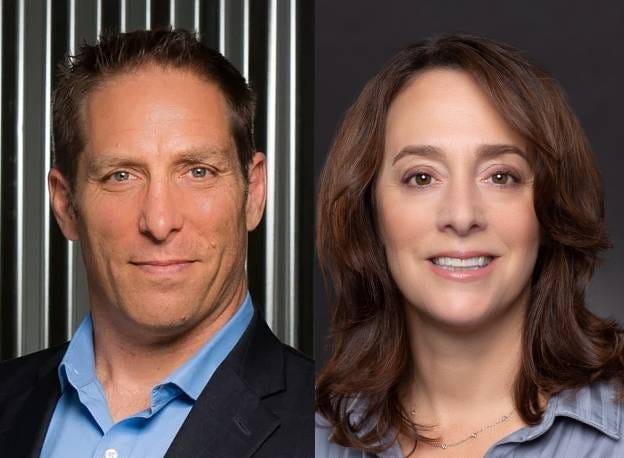
I contacted Mike Casey, the president of Tigercomm, and Robin Pressman, the head of Embold Research, to discuss what the poll found and what it means for clean energy developers engaging these communities.
All right then, with no further ado, Mike Casey of Tigercomm and Robin Pressman of Embold Research. Welcome to Volts. Thank you both so much for coming.
Robin Pressman
Thanks for having us.
Mike Casey
Thank you, Mr. Roberts.
David Roberts
Mike, let's start with you. Let's just talk a little bit about the background here. There are kind of two bits of research here that we're going to discuss today. On the one hand, Robin's firm has done this polling of rural Americans. I hate that I'm going to have to say the word rural over and over again in this podcast. It's my least favorite word to say. But also, your firm has done a bunch of interviews with developers, renewable energy developers, specifically the people at the renewable energy developers who are responsible for going into these communities and developing these projects.
It's sort of the advanced people who are going out to talk with the rural people and live in that world. And I'm interested in both those perspectives. But maybe actually, Robin, let's start with you. So, tell us a little bit about what this poll did, who it polled, and what kinds of things you were asking about.
Robin Pressman
So, we wanted to take a look at your favorite word, "rural," Americans and understand perspectives on renewable energy. We've seen a lot of polls lately that look at the country as a whole, that look at specific communities where projects are being built. We're certainly polling for people in those local communities and areas. But what we really wanted to do was to get sort of a 30,000-foot view across the country of what perspectives rural Americans have, where they are at this point in time, and how they're feeling about the renewable energy transition that is happening. And so we surveyed 2,645 rural Americans across the country, and we were able to have conversations with them, both the quantitative survey and then also the qualitative, get information from them that they could fill in so we could learn a little bit more about their perspective.
So, sort of virtual conversations, not actual conversations. And we were able to really get a look and understand where they are and go beyond just sort of the loudest voices in the room, which has really been a big stumbling block in these communities, to getting these projects built.
David Roberts
In the small handful of items that I would list as threats to the success of the clean energy transition, threats to the success of IRA and all the rest of the bills, NIMBYism and permitting is probably the biggest and most threatening one. And so everybody's thinking about this right now. Everybody in the energy world is thinking about this right now. And one of the big questions I think that's on everybody's mind is this resistance that we're seeing, is it a small handful of people that are being paid by right-wing groups stirring up this trouble, or are they speaking in some sense on behalf of a broader sentiment?
In other words, are they articulating the true sentiments of people in those areas? So maybe the place to start is just what did you find out, that they think about renewable energy?
Robin Pressman
So, to start with, there is support for these projects, both solar and wind in rural communities. And support does outweigh the opposition as a whole. When we ask people, do you support or oppose solar energy and wind energy projects separately being built in the following areas, communities across your state, in your local community, or on a property near yours, we could see that support does outweigh opposition across the board. As you get a little closer to on properties near yours, you would expect to see some of the support drop off —
David Roberts
Your backyard.
Robin Pressman
Right, and the opposition increase, but not nearly as significantly as we thought it would.
And so there is sort of a core group of people that are opposed, certainly, but it's not as strong as one might think. It tends to hover between 10% and 25%, depending on how proximate the project is to you. And we can see that, for example, when we ask in your local community, we can see strong support, 37% strongly support solar and 32% somewhat support it. And for wind, similarly, 30% strongly supporting, 26% somewhat supporting. So, there's real opportunities here for having the conversations. But when we dug in underneath the top line data, what we can see is some real differences.
And interestingly enough, while, as you might expect, Republicans tend to be more opposed to these projects than Democrats, we see a real difference between MAGA Republicans and non-MAGA Republicans.
David Roberts
Are those self-designations? Like, these are people who self-identify as MAGA Republicans?
Robin Pressman
Yes. We ask them their party identification. And for those people who self-identified as a Republican, we then ask them if they identify as a MAGA Republican. And about 28% of the entire sample identified as MAGA Republican. And so what we see with those non-MAGA Republicans, we see real opportunity for growth. And we already have pretty strong support with independents as well. So, there are some groups there that we can talk to that are either already supportive or maybe sort of soft supporters who, when given and educated a little bit more information about understanding th
You May Also Like

The Epstein Chronicles
Bobby Capucci

The MeidasTouch Podcast
MeidasTouch Network

Durango Local News
LNN Durango, Colorado
Bloomberg Intelligence
Bloomberg

Asmongold TV
Asmongold TV

The Alex Jones Show - Infowars.com
John

NPR News Now
NPR

The Howie Carr Radio Network
Howie Carr

Kenny & JT
Kenny & JT

O Antagonista
O Antagonista
The Epstein Chronicles
Bobby Capucci
The MeidasTouch Podcast
MeidasTouch Network
Durango Local News
LNN Durango, Colorado
Bloomberg Intelligence
Bloomberg
Asmongold TV
Asmongold TV
The Alex Jones Show - Infowars.com
John
NPR News Now
NPR
The Howie Carr Radio Network
Howie Carr
Kenny & JT
Kenny & JT
O Antagonista
O Antagonista
Community discussion