Voluntary carbon offsets are headed for a crash
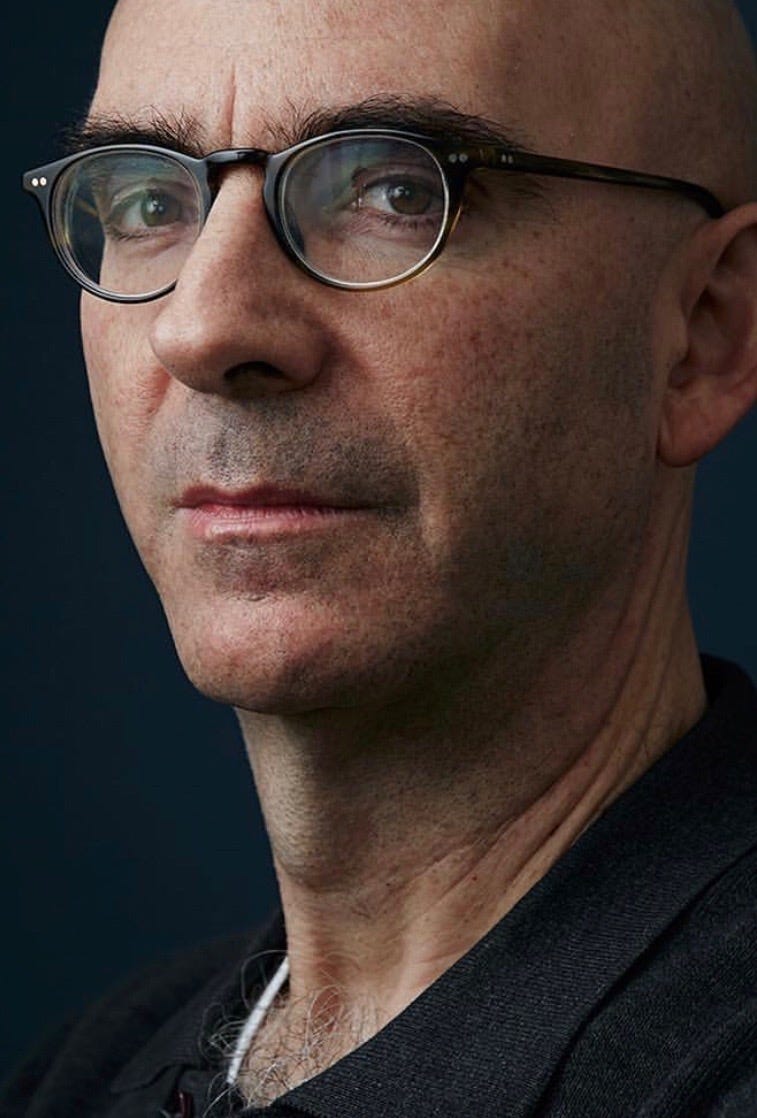
In this episode, influential climate blogger Joe Romm discusses whether carbon offsets are, per the title of his recent white paper, “unscalable, unjust, and unfixable.”
Text transcript:
David Roberts
Carbon offsets — whereby one party pays another party to reduce carbon emissions — are an extremely convenient thing to have for people, businesses, and institutions that have money to spend, want to do something green, and either won't or can't reduce their own emissions.
So offset markets have flourished for decades, even in the face of investigation after investigation, exposé after exposé, showing that the emissions reductions they represent are dubious or outright fraudulent.
Things may be coming to a head, though, especially as it slowly sinks in that the Paris Agreement in many ways renders the entire enterprise of offsets moot. If everyone is trying to get as close as possible to zero emissions by 2050, what is gained by trading those reductions back and forth?
A white paper digging deep into these subjects was recently published by none other than Joe Romm. Romm has a PhD in physics from MIT and worked at the Department of Energy in the 1990s, but most people in my world know him as one of the earliest and most influential climate bloggers. He’s also authored numerous books on climate solutions.
As of earlier this year, he is now a senior research fellow at the University of Pennsylvania Center for Science, Sustainability, and the Media, being run by climate scientist Michael Mann. His first report is on offsets, and it’s a doozy. I called to talk with him about the role offsets have played in the past, the reforms the UN is attempting to make to them, and their future in a post-Paris world.
Okay, with no further ado, Joe Romm, welcome to Volts. Thanks so much for coming.
Joe Romm
Oh, well, thank you so much for having me, Dave.
David Roberts
You know, it's funny. I'm sure you will resonate with this. Probably the number one question I get asked my entire friggin career is people writing in to say, "Hey, such and such, my utility or some firm or some company is offering me these voluntary offsets. Are they worth it? Is it worth it doing this?" And I've been meaning forever and ever and ever to do something squarely on offsets, because what I always want to tell people is, like, "No, they're kind of junkie," but I don't want to exaggerate or stereotype. And I thought maybe I was missing some nuances.
So then I read your paper and realized I was missing a bunch of nuances, but they're all nuances. Showing that offsets are way worse than I imagined. Far worse than I had even dreamed. So let's get into it. Let's just start, though, in case any listeners out there don't know exactly what we're talking about. Just what is a carbon offset? And there's two basic kinds the sort of mandatory kind and the voluntary kind just run real quick through what an offset is.
Joe Romm
Sure. Well, I use a definition from the General Accounting Office: Reductions of greenhouse gas emissions from an activity in one place to compensate for emissions elsewhere. So a typical transaction is the developed country or a company, instead of reducing its own CO2 emissions, pays a developing country to reduce its emissions by an equivalent amount instead. And then if the buyer purchases enough offsets, they've been going around calling themselves carbon neutral or net zero. And I would say the interaction that most people have had with offsets, the most common one is when you're buying an airline ticket and you sort of have that option to spend a few dollars to offset your emissions, usually by planting trees.
And the short answer is don't waste your money.
David Roberts
Right. But the idea behind it originally, and they go way, way back, the idea behind it originally is that it's kind of expensive to reduce emissions in developed countries and wealthy democracies, and there's lots of super cheap reductions waiting to be had in developing countries. So the idea was, let's flow some money from developed countries to developing countries. You'll help do some virtuous projects there and we'll reduce emissions. And it doesn't matter where you reduce emissions, right, because it's all one atmosphere and you'll get cheap reductions. That was the driving idea. And conceptually speaking, it's not crazy.
It just kind of turns out that every particular turns out to be difficult to do in a rational way. So we're going to get to some specifically sort of modern or contemporary issues around offsets relating to the Paris Agreement and how that kind of changes the whole playing field. But before we even get there, let's just talk about the history of offsets and the issues that face them, the difficulties. This basic idea of like, I reduce emissions here and I sell it to you and then you count it against your total, the basic issues that they have faced.
And I feel like every couple of years I see another big comprehensive sort of report come out saying, "Yeah, offsets are still mostly junk." So as far as I know, they've been junk from the beginning. But just talk about some of the basic difficulties facing offsets.
Joe Romm
Sure. And the phrase that there's this lots of super cheap emissions out there in developing countries. This is a very key phrase that we will come back to because it's that misconception that is really screwing up the way a lot of people are looking at how we're going to solve global warming.
David Roberts
Right.
Joe Romm
Because they don't exist. So the first offset was 1988.
David Roberts
Oh, wow.
Joe Romm
Yeah, this is Mark Trexler worked on this. And this was a utility, was just trying to see could they do a project in another country. Because utilities, they figured they were going to be — they thought in 1988 they would be regulated sometime soon. So they wanted to check this out. So there was a voluntary market created and voluntary means it's unregulated. It is the wild, wild west. There is nobody out there who is saying this is a real offset and this isn't a real offset.
David Roberts
So there's no government body that vets these in any way. It's all just private companies making claims.
Joe Romm
Exactly. And working with brokers or verifiers or creditors out there. And so that's sort of problem number one. Whenever you have a market that is completely unregulated, there is generally a race to the bottom. Which is to say, if I told you, "Hey, I can sell you a good carbon offset in Brazil for $20 a ton," but someone else says, "Oh, I'll sell you an offset for $5 a ton," who are you going to buy?
David Roberts
Right. And it's important, I think, to say here, too, like the seller has every incentive to sell as cheap as possible, the buyer has every incentive to buy as cheap as possible. Neither party in that buyer seller relationship has any incentive at all to maintain quality. There's no regulatory backsto
You May Also Like

NPR News Now
NPR
Newshour
BBC World Service

24/7 News: The Latest
iHeartPodcasts and TTWN

Dialogue Works
Nima Rostami Alkhorshid

Asmongold TV
Asmongold TV

共同通信Podcastーニュースの裏側も、多言語学習も、経済もー
共同通信社 KyodoNews(Japan News Agency)

The Political Scene | The New Yorker
The New Yorker

Meet the Press
NBC News

The Epstein Chronicles
Bobby Capucci

Republic Broadcasting Network
Republic Broadcasting Network
NPR News Now
NPR
Newshour
BBC World Service
24/7 News: The Latest
iHeartPodcasts and TTWN
Dialogue Works
Nima Rostami Alkhorshid
Asmongold TV
Asmongold TV
共同通信Podcastーニュースの裏側も、多言語学習も、経済もー
共同通信社 KyodoNews(Japan News Agency)
The Political Scene | The New Yorker
The New Yorker
Meet the Press
NBC News
The Epstein Chronicles
Bobby Capucci
Republic Broadcasting Network
Republic Broadcasting Network
Community discussion