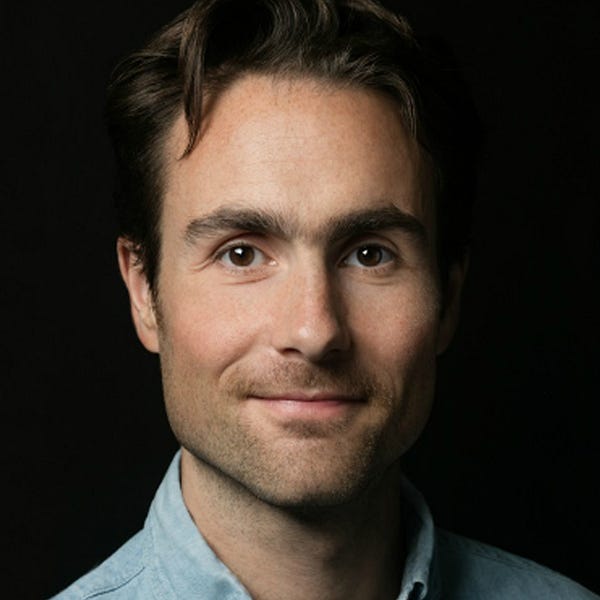
Volts podcast: David Wallace-Wells on the ravages of air pollution
In this episode, journalist David Wallace-Wells raises the alarm about how incredibly unsafe our air is, the impact it’s having on human welfare, and why it doesn’t get as much attention as it should.
Text transcript:
David Roberts
Back in 2020, I wrote an article about some eye-popping new research on air pollution which found that the damage it is doing to human health is roughly twice as bad as previously thought, and moreover, that the economic benefits of pollution reduction vastly outweigh the costs of transitioning to clean energy.
It seemed to me then that the findings should have gotten more attention in the press, and I wasn't the only person who thought so. Journalist David Wallace-Wells, who made a splash a few years ago with his terrifying book on climate change, The Uninhabitable Earth, also dove in to new air pollution research and produced a magisterial overview for the London Review of Books last year. Recently he revisited the subject for his New York Times newsletter, asking why social mobilization against climate change, which promises millions of deaths in decades, is so much greater than mobilization against air pollution, which kills 10 million a year today.
It's a challenging question, and I'm not certain I have a great answer, so I wanted to talk to David about it — what the new research says about the mind-boggling scope and scale of air pollution’s damage to human welfare, how we ought to think about it relative to climate change, and what scares him most about the process of normalization that allows us to live with 10 million deaths a year.
David Wallace-Wells, welcome to Volts. Thanks so much for coming on.
David Wallace-Wells
Oh, my pleasure. It's great to talk. Really good to be here.
David Roberts
So you made a big splash, several years ago, with your article on climate change and the subsequent book, but in the last year or so, year two, you have been writing more and more about just good old-fashioned air pollution. And it seems like you're kind of getting sucked in, like it keeps pulling you in. So tell me kind of the story of how you first interacted with the story and why you keep coming back to it.
David Wallace-Wells
Well, on some level, it's the same answer I give when people ask me how I got worried about climate change, which is just to say I was seeing scientific research that was really quite alarming. And the more that I looked at it, the bigger the story seemed and the more it seemed to demand of me as someone who wrote on anything close to these issues. The slightly more personal version of it is, like, I wrote my book, I spent a lot of time talking about it, talking about climate change, and I found myself again and again in describing the scale of the impact, citing a small handful of data points or projections that I found really useful to communicate what I saw as to scary it all was.
And one of those was this data point that at two degrees of warming, we should expect 153 million additional deaths from air pollution produced from the burning of fossil fuels. And I would always caveat that and say, "no, that's not exactly climate change, but it's caused by the same things that cause climate change." And the more I said it and the more that I thought about it, I was like, "wait, hang on a second. If the most dramatic data point that I can come up with to explain how scary the world that we're going to be living in is ... is not actually about temperature rise, maybe I should spend some time thinking about what that means and how it might change my own perspective on warming and what that's likely to be like."
And so I wrote a piece. It actually was a very slow burn piece, and it was actually, even though it totally contradicts what I just said, was a story that was proposed to me by the LRB. I wrote a piece for the London Review of Books that was published last fall, but which they had actually invited me to write before the pandemic began. And over the course of those couple of years, I was just collecting more and more material. And as I sort of had done with climate, it just felt like the more I looked, the more I saw, the darker the picture got.
Now, there are some really important distinctions, and it's not an easy parallel. We could talk about some of the contrasts, but in general the sort of emotional experience of it, for me, was the same, which is just to say I had my eyes opened out of some amount of horror or fear, and the deeper that I looked into the subject, the bleaker it seemed to get.
David Roberts
Right, well, I want to talk about some of those parallels in a minute, but first let's just dwell on the research for a minute because I feel like there's sort of a popular conception of air pollution in the US, insofar as people think about it anymore. It's like the river used to burn. Then we got the Clean Air Act and the Clean Water Act and more or less tackled that problem and now it's just a problem for overseas. I think that's kind of the folk story of air pollution. But the recent research, it's almost qualitative difference.
I wrote about this for Vox a few years ago, just looking at this new research that's basically like, "it turns out the effects are about double what we thought they were." I'm like, "damn." It seemed like it should have been bigger news then, I kind of wrote a little table-pounding story about it. So just talk about kind of what scientists have concluded in these last few years about air pollution and its effects.
David Wallace-Wells
Well, there's sort of two stories running in parallel, or maybe parallel isn't even the right word. They're kind of running in opposite directio
You May Also Like

24/7 News: The Latest
iHeartPodcasts and TTWN

Dialogue Works
Nima Rostami Alkhorshid

The Political Scene | The New Yorker
The New Yorker

Meet the Press
NBC News

The Epstein Chronicles
Bobby Capucci

IHIP News
Jennifer Welch & Angie Sullivan

The MeidasTouch Podcast
MeidasTouch Network

Durango Local News
LNN Durango, Colorado

Bloomberg Intelligence
Bloomberg

The Sean Spicer Show
The Sean Spicer Show
24/7 News: The Latest
iHeartPodcasts and TTWN
Dialogue Works
Nima Rostami Alkhorshid
The Political Scene | The New Yorker
The New Yorker
Meet the Press
NBC News
The Epstein Chronicles
Bobby Capucci
IHIP News
Jennifer Welch & Angie Sullivan
The MeidasTouch Podcast
MeidasTouch Network
Durango Local News
LNN Durango, Colorado
Bloomberg Intelligence
Bloomberg
The Sean Spicer Show
The Sean Spicer Show
Community discussion