The campaign for public power in Maine
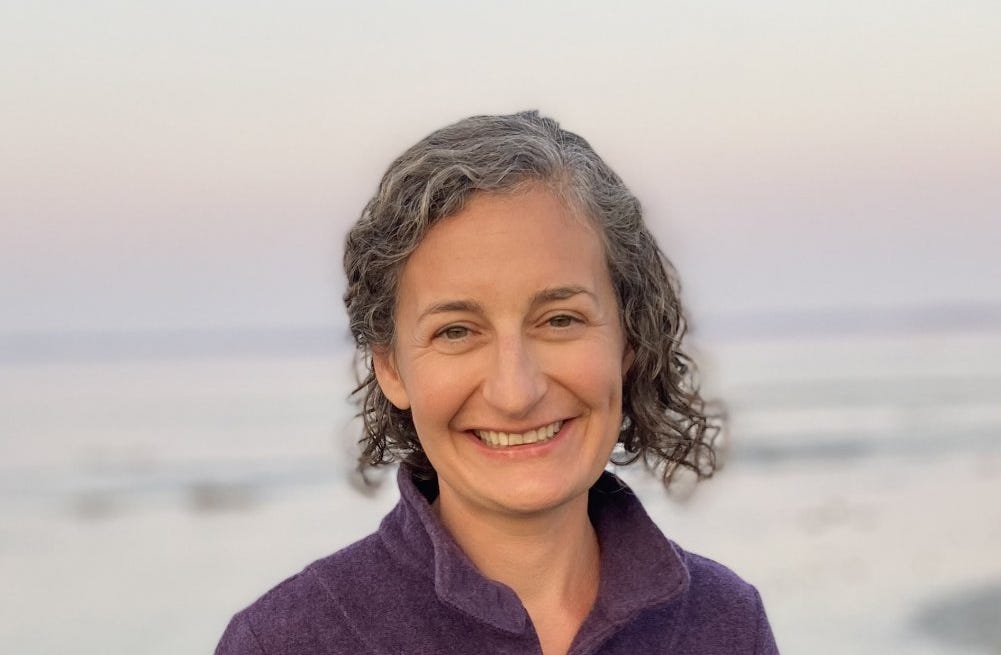
In this episode, Maine State Senator Nicole Grohoski discusses an upcoming ballot measure that gives Maine voters the opportunity to replace the state’s unpopular for-profit utilities with a nonprofit public utility.
Text transcript:
David Roberts
Maine’s two big investor-owned power utilities — Central Maine Power and Versant Power — are not very popular. In fact, they boast among the lowest customer satisfaction scores of any utilities in the country, perhaps because their customers face some of the nation’s highest rates, suffer more and longer outages than average Americans, and pay more to connect rooftop solar than ratepayers in almost any other state.
This November, Mainers will vote on a radical alternative: a ballot measure to replace the two for-profit utilities with a single nonprofit utility that would be called Pine Tree Power. Maine and many other states already have lots of small nonprofit municipal utilities, but this would mark the first time a whole state with existing private utilities decided to make them public en masse.
Naturally the utilities are opposed and have dumped $27 million and counting into a campaign to crush the measure; supporters have mustered just under $1 million.
To discuss this David vs. Goliath fight, I contacted one of its champions, Democratic state Senator Nicole Grohoski. We discussed why she thinks a public utility would perform better, what it would do for clean energy, how it would be governed, and what other states can learn from the effort.
With no further ado, Maine State Senator Nicole Grohoski. Welcome to Volts. Thank you so much for coming.
Nicole Grohoski
Thank you so much for having me. I'm thrilled to be with you today.
David Roberts
I am super excited to talk about this issue. There's a lot of ins and outs I want to cover, but maybe let's just start with a brief history of this thing. So the idea here is, as I said in the intro, to replace Maine's two big investor-owned utilities, Central Maine Power and Versant Power, with a single publicly owned main utility called Pine Tree Power. Tell me who first had that idea? Where did it first pop up? I know it was legislation and then it got vetoed. Just tell us a little bit about how we got to where we are now.
Nicole Grohoski
The history is really interesting, and I'll try to not spend too much time on it, but I think it's really important to start with the reality here in Maine as a backdrop. So a couple of things that are important to know for listeners is that we, as Mainers, find that our electricity isn't really affordable or reliable and our utilities aren't trustworthy. So we have, for many years running now, the worst customer satisfaction in the country, some of the highest rates in the country for electricity, and those just keep going up. We have experienced a 20% increase this summer, with another increase coming in January.
And we also have the most frequent outages in the country. And there are a couple of other reliability metrics that we're not doing so well on, including the length of outages and how long it takes to restore power. So basically what we see here in Maine is that the status quo of these for-profit multinational corporations is just not working for us. About a tenth of our residents in Maine received disconnection notices earlier this year because they just couldn't afford to pay their bills. And it's not working for companies or big corporations that really rely on low cost and reliable electricity to compete.
So that's kind of the background. So a number of us were wondering, does it have to be this way? Is there an alternative to worst of the worst? We are Maine, we are very proud and independent, and we like to be leading, but this is not the way that we wanted to be leading. So there was a lot of grassroots pressure. In 2017 we had a big storm, and the power was out for days. But at the same time, there was a billing fiasco, which resulted in billing errors for over 100,000 customers, which is in a state of 1.3 million people, that's a very big percent.
So there was a lot of pressure, a lot of phone calls to legislators, to the Public Utilities Commission, to the public advocate about these utilities. And so I think that really planted a seed for a number of folks. Specifically, Maine's first public advocate pointed out to some members of the legislature, including Representative Seth Barry at the time, myself, and a few others, that there were other options and that the financial and local control aspects of those options might be really helpful for Maine. So we started meeting in 2019 with the previous public advocate, economists, labor, legislators, people that were part of a group called CMP Ratepayers Unite.
And that's when we formed this idea of creating a consumer-owned utility for Maine that would be non-profit and similar to the ten other consumer-owned utilities we have in Maine. I don't know that we had a name for it at that time, but we do now call it the Pine Tree Power Company. So those were the early days. And then to sort of fast forward, the Legislature commissioned a study which was done by London Economics International in 2019 to learn more about the economics and also legal pathway here. Then, of course, 2020, everybody knows what happened then, things kind of went on pause. And then in 2021, we wrote a bill. And that bill passed in both chambers in Maine with bipartisan support. As you mentioned, the governor did veto that bill.
David Roberts
And that bill was to create the utility or to put the question to voters.
Nicole Grohoski
That bill put the question to voters, and it's very similar to the language that we'll be voting on this November. So we did revise the language based on some feedback from the governor, and that is the language that is now in front of us to vote on this November, November 7. And in order to get the question on the ballot we had hundreds of volunteers working together to collect around 80,000 signatures in total, which is a little bit above the requirement needed to get a question on the ballot in Maine.
David Roberts
I'm a little curious why — this is a Democratic Governor Mills. What was her rationale? I mean, I guess I can imagine her rationale for opposing the public utility, but what was her rationale for opposing asking voters what they thought? Did she have a good rationale?
Nicole Grohoski
Not in my opinion. I'm sure in her opinion it was great. But we read the veto letter for the most part. There was very little in there that was substantive. Some of those minor changes that we made are all things that we would have happily made in advance had we had outreach from her office about them. You know, the unfortunate thing with governors in Maine is that we have yet to elect one that has campaigned using our clean elections, publicly funding campaign option, which is something that most legislators use. So you can draw your own conclusions there about the — money in politics may have been at play.
I can't say for certain.
David R
You May Also Like

NPR News Now
NPR
Newshour
BBC World Service

24/7 News: The Latest
iHeartPodcasts and TTWN

Dialogue Works
Nima Rostami Alkhorshid

Asmongold TV
Asmongold TV
共同通信Podcastーニュースの裏側も、多言語学習も、経済もー
共同通信社 KyodoNews(Japan News Agency)
Jeffrey Epstein: The Coverup Chronicles
Bobby Capucci

The Political Scene | The New Yorker
The New Yorker

Meet the Press
NBC News

The Epstein Chronicles
Bobby Capucci
NPR News Now
NPR
Newshour
BBC World Service
24/7 News: The Latest
iHeartPodcasts and TTWN
Dialogue Works
Nima Rostami Alkhorshid
Asmongold TV
Asmongold TV
共同通信Podcastーニュースの裏側も、多言語学習も、経済もー
共同通信社 KyodoNews(Japan News Agency)
Jeffrey Epstein: The Coverup Chronicles
Bobby Capucci
The Political Scene | The New Yorker
The New Yorker
Meet the Press
NBC News
The Epstein Chronicles
Bobby Capucci
Community discussion