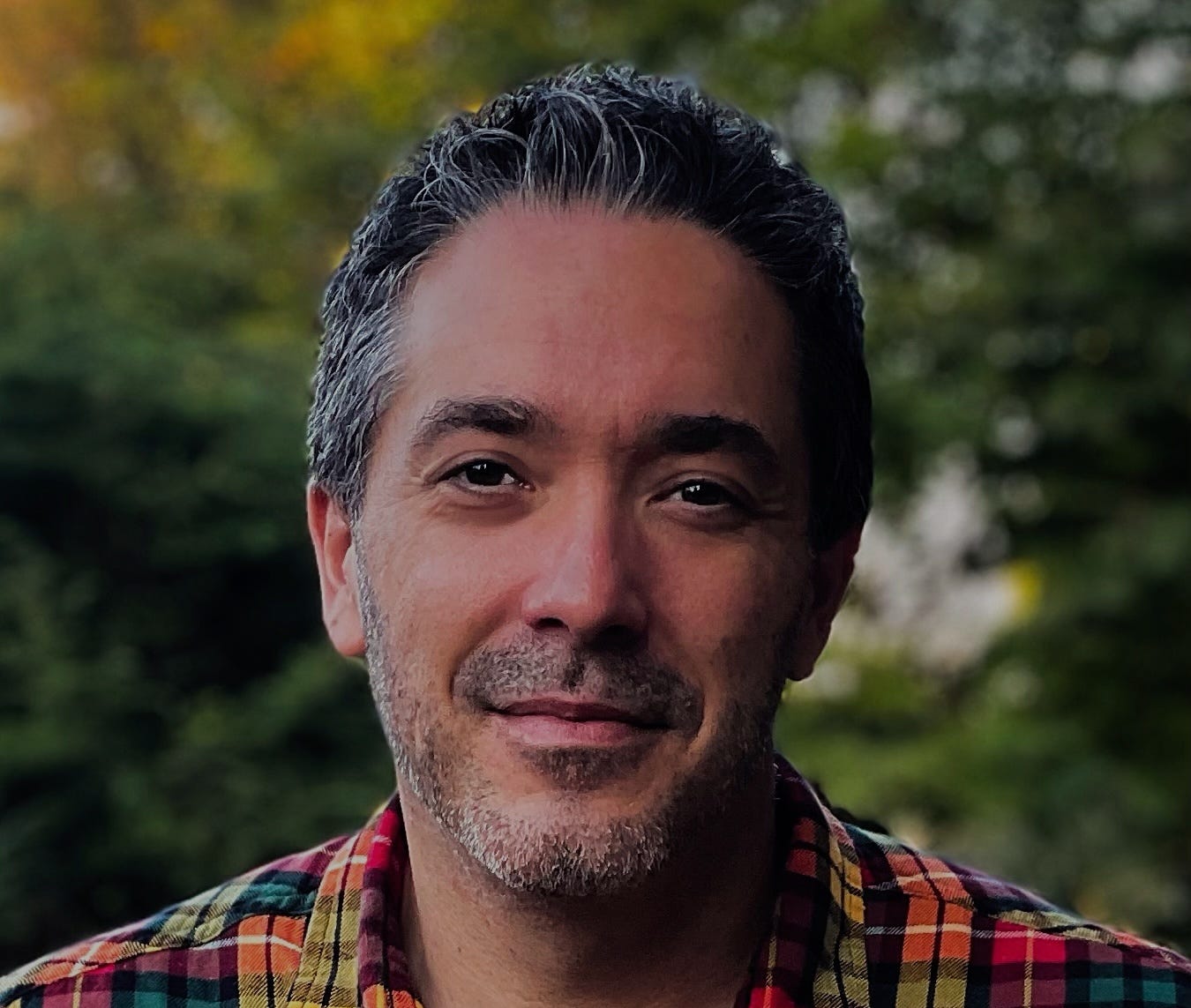
Reflecting on 20 years in political journalism
In this episode, veteran journalist Brian Beutler waxes nostalgic about the past 20 years of political journalism and muses about its future.
I’ve known political journalist Brian Beutler for a long time. We met back in the late 2000s in DC, in the heady days leading up to Obama’s victory, and have kept in touch fitfully ever since.
Brian, one of the smartest and most insightful political analysts writing today, has published in a wide variety of outlets, but this month he followed me into the wilderness — left his job at Crooked Media to launch his own newsletter, Off Message. He’s already written some great stuff and made some cool videos — check them out.
I figured I would take the occasion to catch up with him, wax nostalgic about politics past, discuss partisan journalism, and muse about how opponents of authoritarianism might show a little more vigor. Please enjoy this long and somewhat indulgent ramble down memory lane.
Text transcript:
David Roberts
So I'm sitting here with my good buddy Brian Beutler, who is a political journalist living in Washington, DC. He has been a political journalist for a long time. We've known each other for a long time, been involved in this mess of political journalism for a long time. He has worked, Brian, where all of you worked everywhere. The American Prospect, did you do that one?
Brian Beutler
I didn't do that one.
David Roberts
The New Republic.
Brian Beutler
Yes, I was there.
David Roberts
Did you do an American Progress stint?
Brian Beutler
No, you're misremembering. I was actually with you at Grist. I think I was on a freelance contract for like six months or a year way back in 2006.
David Roberts
Smokes, I forgot about that.
Brian Beutler
I worked at a bunch of places when I was like, a pup. So I think Raw Story still exists. First reporting gig. But I really got my training as a reporter at TPM. I was there for several years.
David Roberts
Right. That's the one I was trying to call to so spell it out for people. It's Josh Marshall's site.
Brian Beutler
Yeah, it used to be Talking Points Memo that's I think still the URL, but it's just TPM.
One of the longest standing, I mean, still going strong.
I rely on it all the time. I'm friends with my old editor there. He's still basically, like, running the day to day there, I think, the world of TPM. And then a very brief stint at Salon, which I enjoyed, but then The New Republic came and was like "join us instead." And so I said yes. And I did that through a really tumultuous period from like 2014, I think, to 2017. And then I was editor in chief at Crooked Media for six years, and now I am independent.
David Roberts
Yes, this is the occasion for the pod is my friend Brian has left Crooked Media and is now launching on his own, launching a newsletter because all the cool kids now have newsletters, a newsletter called Off Message where he is going to continue political journalism. You should all go sign up. I've learned an enormous amount from Brian over the years. And so I thought, on the occasion of Brian's birth as an indie, self-employed journalist, welcome to the fold, that we would sit down and catch up and I guess you could say, does the world really need two white, bearded, middle-aged guys of roughly similar socioeconomic backgrounds and ideological outlooks, affirming one another's priors for an hour?
Maybe not, but this is my pod, and if I want to have an indulgent episode periodically, that is my right as an independent. We got no bosses anymore, Brian to tell us not to do so.
Brian Beutler
My two favorite flavors are waxing nostalgic and vigorous agreement. And we're just going to —
David Roberts
We're going to get right into that.
Brian Beutler
Give your listeners all that.
David Roberts
All right. I feel like one of the signal characteristics of political journalism, and I expect this has probably always been true in all times and places is just that a lot of stuff happens, one thing after another happens, and it's a constant scramble. And so you can do it for a long time. And you really do not get many opportunities to sort of step back and think about kind of the arc of politics as you've experienced it over the course of a career. I guess what people used to do is report their whole lives and then become opinion columnists and write books.
But anyway, so one of the things I want to do is just think a little bit about kind of the arc of American politics that we've experienced and where that leaves you and kind of what you think about it and how you're thinking about politics has changed over experiencing all this. So you — when did you come to political consciousness as an adult, would you say?
Brian Beutler
It was definitely during the George W. Bush presidency, the first term of the George W. Bush presidency. And it was actually, like, less Bush vigor, although in hindsight, once I became politically awake, it kind of reverse incepted me how important it was. We've been on a wild ride since then. That was a moment when the Gingrich revolution could have been snuffed out, maybe, and normalish politics resumed.
David Roberts
My estimation of the importance of that episode has, as you say, risen steadily, more or less ever since, ever since it happened. And now I see it as sort of like the turning point in US. Politics, the pivot point.
Brian Beutler
So it was 9/11 and the Iraq war, and I went through a relatively quick transition as, like, an undergraduate from, like, "Holy crap, what's happening? Wait, we got to do something about this. Oh, George W. Bush is going to do something about it," to like, "wait, these seem like crazy ideas. What did Iraq have to do with that?" And by 2004, I was like, "this is nuts." And I voted for John Kerry that year. And I voted for Democrats ever since. And it was after that that I decided I want to go into journalism. But I knew I would end up being, like, a liberal journalist and that I'd have a really hard time just ignoring everything that had happened, you know, going on TV or writing in newspapers as if I wasn't aware that things had gotten so bad or gone so far off the rails.
David Roberts
But before this, did you have your callow, Libertarian high school, college period? Did you go through that?
Brian Beutler
Not really. I think I did vote for the Libertarian candidate in the 2000 election, but —
David Roberts
I voted for Nader. Confession time.
Brian Beutler
But I was in California. I came from a really reactionary part of California. I think the expectation for most people who graduated high school with me was that they'd vote for Republicans their whole lives, and that se
You May Also Like

NPR News Now
NPR
Newshour
BBC World Service

24/7 News: The Latest
iHeartPodcasts and TTWN
Dialogue Works
Nima Rostami Alkhorshid

Asmongold TV
Asmongold TV

共同通信Podcastーニュースの裏側も、多言語学習も、経済もー
共同通信社 KyodoNews(Japan News Agency)
Jeffrey Epstein: The Coverup Chronicles
Bobby Capucci

The Political Scene | The New Yorker
The New Yorker

Meet the Press
NBC News

The Epstein Chronicles
Bobby Capucci
NPR News Now
NPR
Newshour
BBC World Service
24/7 News: The Latest
iHeartPodcasts and TTWN
Dialogue Works
Nima Rostami Alkhorshid
Asmongold TV
Asmongold TV
共同通信Podcastーニュースの裏側も、多言語学習も、経済もー
共同通信社 KyodoNews(Japan News Agency)
Jeffrey Epstein: The Coverup Chronicles
Bobby Capucci
The Political Scene | The New Yorker
The New Yorker
Meet the Press
NBC News
The Epstein Chronicles
Bobby Capucci
Community discussion