Minnesota forces transportation planners to take climate change seriously
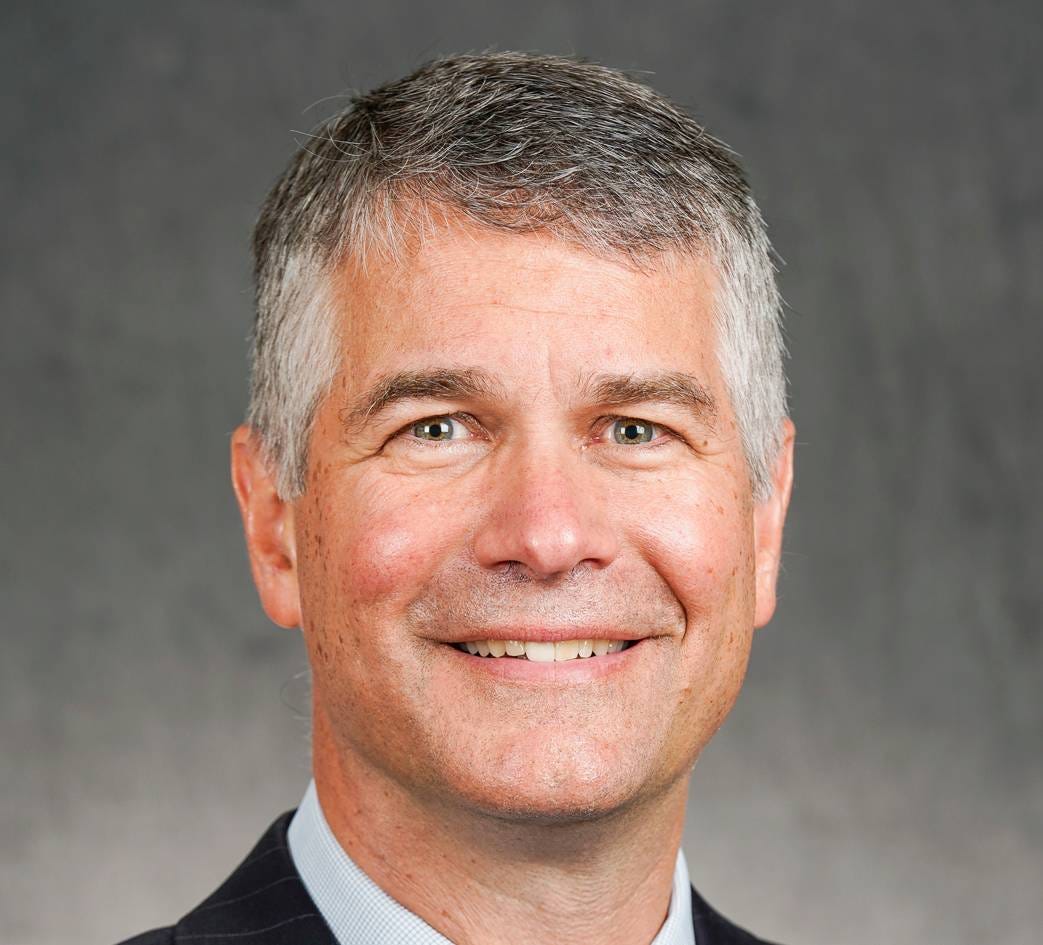
In this episode, Minnesota State Representative Larry Kraft shares about the state’s ambitious, progressive transportation policy, which includes climate accountability measures that no other state has implemented.
Text transcript:
David Roberts
In 2022, Democrats narrowly won a trifecta in Minnesota — House, Senate, and governor — whereupon they launched into an absolute frenzy of activity, passing bills on everything from abortion to paid leave to gun control to free school lunch to clean energy. Vanity Fair called it a “tour de force for progressive legislation.”
I covered the state’s new clean-energy law on a previous pod, but I also wanted to take a closer look at the big transportation bill that was signed in May. It passed somewhat under the radar, but it’s got some very cool stuff in it.
One key feature is that it requires both state and municipal transportation-planning agencies to take the state’s climate goals into account when assessing new projects — to hold themselves accountable to those goals. As obvious as that may seem, it’s not something any other state has done.
To discuss the significance of this and some other provisions of the bill, I contacted one of its primary authors, first-term state Representative Larry Kraft (D). We talked about what these changes mean for transportation planners, the kinds of transportation projects that can reduce emissions, the new money the state will raise for public transit, and the state’s new e-bike incentive (!).
By the way, if you enjoy this conversation, you should know that Kraft co-hosts a podcast of his own, on climate policy in small and mid-sized cities. It’s called City Climate Corner, with co-host Abby Finis. Check it out.
All right, then, with no further ado, Representative Larry Kraft of Minnesota. Welcome to Volts. Thank you so much for coming.
Larry Kraft
Oh, my gosh. Thank you for having me. I'm super excited to be here.
David Roberts
This is cool. You are a freshman legislator. You entered the Minnesota legislature in 2022, last year. It's sort of hilarious to me: You slipstreamed into the most exciting and productive legislative session for Democrats in living memory that I'm aware of. Like, I hope, you know, on some level, this is not what politics is normally like, Larry.
Larry Kraft
Yeah, I have good timing. And I tell you, I hear that. And what I tell people is, you know "I'm sure you're right. But at this point, it's all I know. So let's keep going."
David Roberts
Yeah, you just go in and you start passing bills, changing things right and left, wow. The Minnesota success story, I think people have heard a lot about it by now. There's more bills than you can shake a stick at, more progress, just a wild amount of progress. But let's focus on transportation. So Minnesota is similar to many other states in that transportation has become the largest source of greenhouse gases in the state. I think it's 25% —
Larry Kraft
Yeah, 25, 27%.
David Roberts
— in Minnesota. So this is sort of my overall impression: Especially at the state level, is there's been this sort of, like, parallel tracks going for a while now of on the one side, happy climate talk, which ends up mostly focused on the easy stuff, which is electricity, right? And then transportation over here on this other track just expanding, getting more and more carbon intensive willy nilly, and the twain have not really met. So this is like what's happening in Minnesota, really. To my mind, maybe Colorado got there a little bit ahead of you. But really what's happening in Minnesota is the first time that people grappling with climate change really are taking on transportation in a serious way.
So let's start by just talking about what kind of targets are on the books in Minnesota now, prior to this transportation bill. Let's just talk about sort of like, what targets have been set in terms of greenhouse gases and in terms of VMT, vehicle miles traveled.
Larry Kraft
Right. So in 2007, Minnesota passed. Actually, it was a bipartisan bill on climate that set state goals as 80% emission reductions, greenhouse gas emissions reductions by 2050, and then set some interim targets. In this last session, we updated that to be net zero by 2050. And then on the transportation side, there's been folks that have been working on this for a few years and set a vehicle miles traveled reduction goal of 20% reduction per capita by 2050 and 14% by 2040.
David Roberts
Are those targets, are these sort of aspirational things, or are those binding in some way? Are those statutorily binding?
Larry Kraft
They were not statutorily binding. It was in a climate action framework that the governor initiated that the VMT target started. But I think what we did this session was to give some teeth behind them and some mechanism to actually achieve them.
David Roberts
Right. So before we get to that, let's talk a little bit about RMI. Rocky Mountain Institute did a big study basically looking at what would happen for Minnesota were it to hit those VMT goals, what would be the sort of economic effect, say a little bit about those conclusions and how it came to those conclusions, like why those things would happen.
Larry Kraft
RMI came and did a presentation about what was going on in Colorado early in our session. And then we're doing the analysis on Minnesota. But what they said was, if we could hit the vehicle mile travel goal of 20% reduction per capita by 2050, it would save Minnesotans $91 billion. And that was from a mix of things like just number one, not needing to drive as much and the cost of cars being $10,000 - $11,000 per year. Saving money there, but also a lot on the health side by the fact that you'd see a reduction in air pollution and the savings that would come from that and then also just from not as many people dying on the roads would be a significant savings.
David Roberts
So $91 billion cumulatively for the state, which I think I saw, RMI broke it down. It's like $3 something billion a year, which is not a small thing in a state the size of Minnesota.
Larry Kraft
No, it is not.
David Roberts
So this is a worthy goal. So you passed this big transportation bill. It has a bunch of stuff in it, a lot of things. But what I found most intriguing is the requirements it puts on transportation planning agencies. So explain to us what the Minnesota Department of Transportation has to do now that it didn't have to d
You May Also Like

The Epstein Chronicles
Bobby Capucci

The MeidasTouch Podcast
MeidasTouch Network

Durango Local News
LNN Durango, Colorado

Bloomberg Intelligence
Bloomberg

Asmongold TV
Asmongold TV

The Alex Jones Show - Infowars.com
John

NPR News Now
NPR

The Howie Carr Radio Network
Howie Carr

Kenny & JT
Kenny & JT

O Antagonista
O Antagonista
The Epstein Chronicles
Bobby Capucci
The MeidasTouch Podcast
MeidasTouch Network
Durango Local News
LNN Durango, Colorado
Bloomberg Intelligence
Bloomberg
Asmongold TV
Asmongold TV
The Alex Jones Show - Infowars.com
John
NPR News Now
NPR
The Howie Carr Radio Network
Howie Carr
Kenny & JT
Kenny & JT
O Antagonista
O Antagonista
Community discussion