How to think about solar radiation management
Even if greenhouse gas emissions halted entirely right now, we would continue to feel climate change effects for decades due to existing carbon dioxide in the atmosphere — and warming could accelerate, as we reduce the aerosol pollution that happens to be acting as a partial shield. In this episode, Kelly Wanser of nonprofit SilverLining makes the pitch for solar radiation management, the practice of adding our own shielding particles to the atmosphere to buy us some time while we step up our greenhouse gas reductions.
Text transcript:
David Roberts
One of the more uncomfortable truths about climate change is that temperatures are going to rise for the next 30 to 40 years no matter what we do, just based on carbon dioxide already in the atmosphere and the reduction of aerosol pollutants that are now shielding us from some of the worst of it. That's going to bring about potentially devastating changes that we do not yet well understand and are not prepared for.
How can that short-term risk be mitigated? One proposal is to add particles to the atmosphere that would do on purpose what our aerosol pollution has been doing by accident: shield us from some of the rising heat. No one credible who advocates for solar radiation management (SRM) believes that it is a substitute for reducing greenhouse gas emissions. Instead, it would be a way to buy a little more time to reach zero carbon.
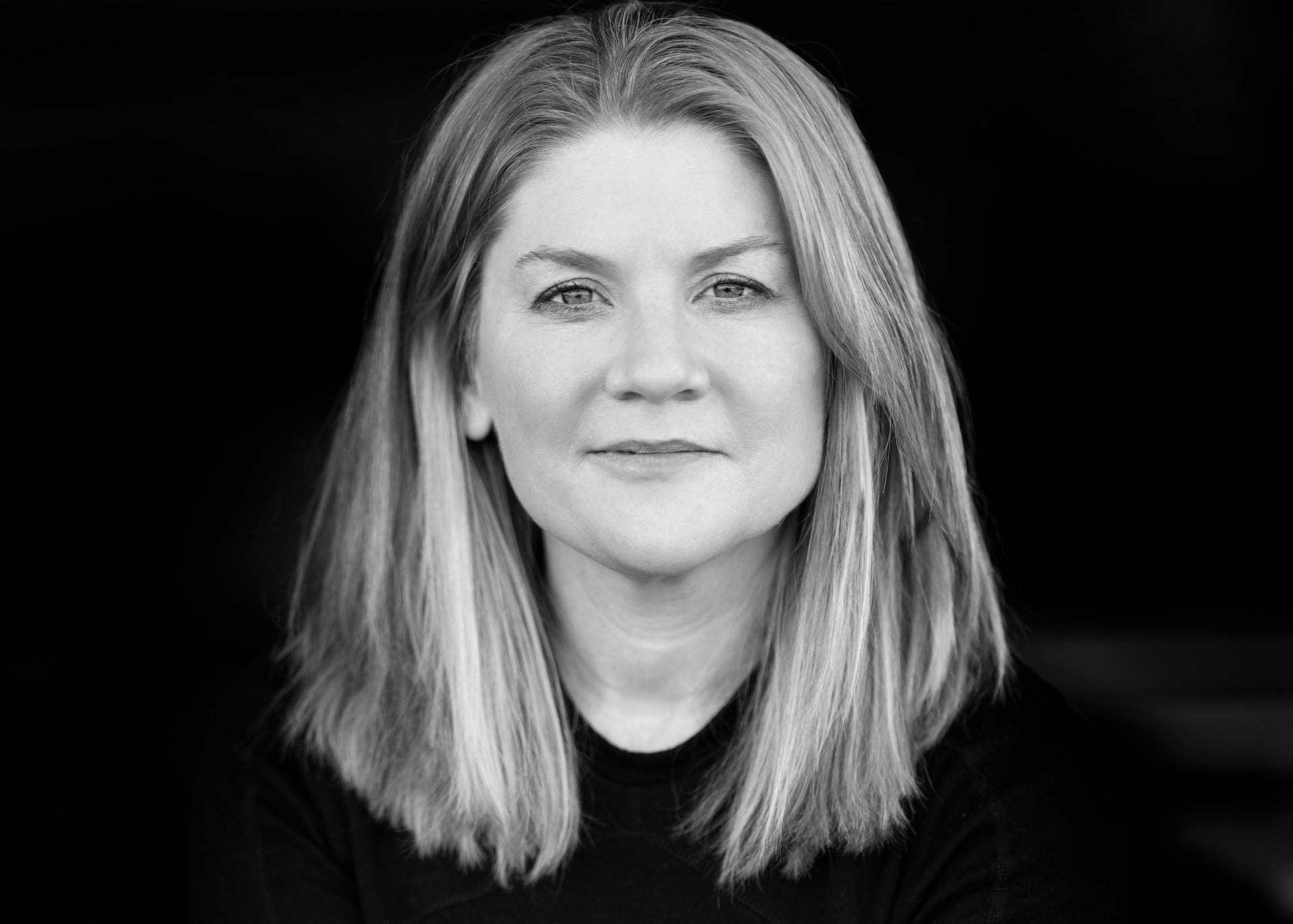
My guest today, Kelly Wanser, is the head of a non-profit organization called SilverLining that advocates for research and policy around near-term climate risks and direct climate interventions like SRM that can address them.
I've long been curious about — and wary of — solar radiation management, so I was eager to talk to Wanser about the case for SRM, what we know and don't know about it, and what we need to research.
Okay then. Kelly Wanser of SilverLining, welcome to Volts. Thank you so much for coming.
Kelly Wanser
Thank you very much, David. I am a fan and it's a pleasure to be here.
David Roberts
Awesome. Well, I have wanted to do a pod on this subject forever. I'm going to try to be focused, but I sort of have questions that are all over the place, so let's just jump right in. The way I'm approaching this is, I think, to average people off the street, and maybe I even include myself in this. The idea of reaching up into the atmosphere and fiddling with it directly, thinking that we can dial in the temperature we want, strikes me as crazy. And I think that's probably a lot of people's intuitive response. Obviously, you have thought your way past that, going so far as to found an organization designed to advocate for this stuff.
So maybe just tell us a little, to begin with, your personal background and how you came to advocacy for geoengineering, which is not a super crowded field.
Kelly Wanser
I'll say first that you're actually not in the business of advocacy for geoengineering and it will give you some context for how I came to be doing what I do.
David Roberts
Sure.
Kelly Wanser
Really it was about — I was working in the technology sector in an area called IT infrastructure, and that's the sort of plumbing of data in the Internet and was looking at problems like how you keep networks operating. And I started to read about climate change, and I was very curious about the symptoms that we were starting to see in the climate system and where the risk really was. And I started to get to know various senior climate scientists in the Bay Area and other places, and I asked them the question like you might ask, how would you characterize the risk of runaway climate change in our lifetime? And this is maybe twelve years ago.
And they said, "Well, it's in the single digits, but not the low single digits."
David Roberts
Not super comforting.
Kelly Wanser
Yeah, I mean, my original degree was economics, so I thought, well, if you had those odds of winning the lottery, you'd be out buying tickets. If you had those odds of cancer, you'd be getting treatment. So that seemed like a really high risk to be exposed to. And then they told me about another feature of what was happening in that carbon dioxide stays in the atmosphere for a long time, keeping things warm. Comes out very slowly. So even if you stop emissions completely and there are other dynamics going on, the system will continue to warm for a while.
And so you've got another few decades of warming. So wherever you are and whatever you see, you've got some additional warming that's going to happen, which means that whatever risk point you're at, you reach a higher risk point over that period of time. And so I became very interested in that problem, because there's a mismatch between the increased risk profile of really serious and catastrophic climate events and impacts and the kinds of responses that we had to reduce the risk. So really my organization is focused on what we call "near-term climate risk," which is the 30 to 40 year time horizon where the things we need to do to ultimately fix the problem, all the ways we reduce greenhouse gases in the system, they don't work in that time horizon to meaningfully reduce the risk.
And so that's how we find ourselves here. Because getting back to your original comment, in the absence of the kind of risk situation that we're in, these ideas would be really extreme and you wouldn't consider them. So we like to use the sort of metaphor of medicine because it has many similarities to medical treatments. And medical treatments require a lot of research and they're as useful as the context of where your condition is.
David Roberts
Right. So maybe the way to phrase this is you looked around, you saw climate change, you saw that our ways of mitigating climate change are sort of slow, if you will, slow acting and long term, which leaves this short-term risk gap.
Kelly Wanser
Right.
David Roberts
So there's going to be warming over the next 30 to 40 years, regardless almost of what we do. And you're focused on how to mitigate those risks.
Kelly Wanser
Yeah. So related to that, and again, you can go to the United Nations Climate Reports, and you can see what they think is happening and going to happen they have these charts that show these curves. And the curves go up all the pathways, all the different scenarios for climate change going up through 2050, some of them bend back down because we've done a good job. But in their reports where they describe that they're projecting what's happening to people and different parts of the world over those 30 years. And right now they've come out and said, well, under their projections, as many as 1 billion people get displaced.
And you can go to websites that have simulations of what's going on and you can see places that get overwhelmed by water, that get overwhelmed by heat. And so you've got a lot of suffering, a lot of dramatic impact that's baked in. And so what we are saying is we need to do really rapid research to find out if we can do better than that. Because in the current projections, it's bad for everyone and it's terrible for quite a few people.
David Robe
You May Also Like

NPR News Now
NPR

700 WLW On-Demand
WLW-AM (WLWAM)

Matices
Central de Radios

O Antagonista
O Antagonista

La Estrategia del Día México
Bloomberg Línea

The Dominic Carter Show
Podcast WABCRadio

The Adam Mockler Show
The Adam Mockler Show

Die Nachrichten
Deutschlandfunk

Bloomberg Law
Bloomberg

Čteme vám Seznam Zprávy
Seznam Zprávy
NPR News Now
NPR
700 WLW On-Demand
WLW-AM (WLWAM)
Matices
Central de Radios
O Antagonista
O Antagonista
La Estrategia del Día México
Bloomberg Línea
The Dominic Carter Show
Podcast WABCRadio
The Adam Mockler Show
The Adam Mockler Show
Die Nachrichten
Deutschlandfunk
Bloomberg Law
Bloomberg
Čteme vám Seznam Zprávy
Seznam Zprávy
Community discussion