Everyone agrees Democrats suck at messaging. How can they do it better?
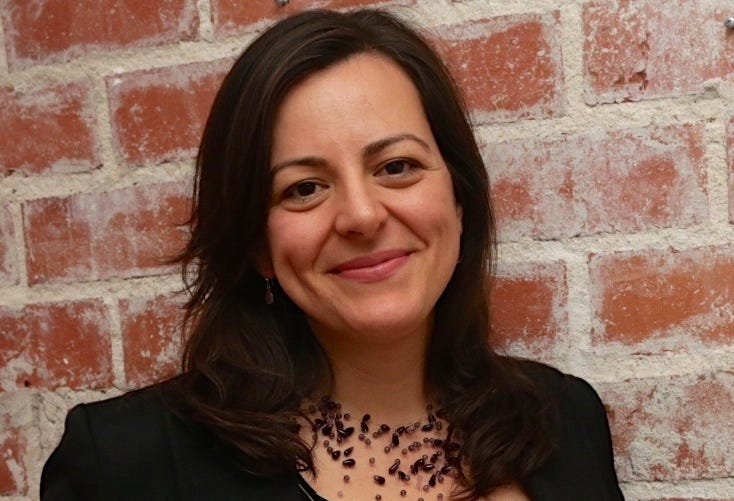
In this episode, Jenifer Fernandez Ancona of Way to Win discusses the ins and outs of Democrats’ notoriously ineffective political messaging, and what needs to be done about it.
Text transcript:
David Roberts
If there is one thing upon which almost everyone in US politics agrees, it is that Democrats suck at messaging. They constantly find themselves on the back foot, struggling to respond on culture war issues that make them uncomfortable. Biden's approval rating remains abysmally low and the enormous accomplishments he and congressional Democrats have secured despite the barest of majorities remain almost entirely unknown to most of the public.
But why? What exactly is the problem with Democratic messaging? That is where the agreement breaks down.
Is it too liberal or not liberal enough? Has a young vanguard distorted the party's perspective and alienated it from swing voters or is an old guard holding back a diverse new coalition? Is Democratic messaging using the wrong words and phrases, or is the problem that it simply doesn't control enough media to ensure its messages are heard?
To dig into some of these questions, I wanted to talk to Jenifer Fernandez Ancona, the co-founder, vice president, and chief strategy officer for Way to Win, a Democratic research, analysis, organizing, and fundraising group that came together in the wake of the 2016 election to make sure its mistakes were not repeated.
Way to Win just released its final report on the 2022 midterm elections, digging into who exactly bought advertisements, where they ran, and what they said, as well as how they performed with various demographics. I’m excited to talk to Ancona about what Democrats are saying, what they’re not saying, who’s hearing it, and how they can do better.
So with no further ado, Jenifer Fernandez Ancona, welcome to Volts. Thank you so much for coming.
Jenifer Fernandez Ancona
Thank you so much for having me.
David Roberts
I'm excited to do this because like anyone who's followed U.S. politics for many years, I have beefs about Democratic messaging and theories about it and all sorts of stuff to say about it. And I found over the years that everybody has a lot to say about Democratic messaging and everyone feels that they're an expert on it. But what I've come to see over time is most people, probably including me, are full of it and are just going off instincts and hunches and projecting their priors overinterpreting their own particular epistemological bubbles on and on and on.
So I'm extremely glad to have, I think, probably the closest thing the world has to an expert on this subject, on the pod to discuss it by way of bolstering that claim. Before we get into the details, let's just talk about Way to Win. Like, why did it come together and what has it been doing since the 2016 election?
Jenifer Fernandez Ancona
Well, we came together essentially in the wake of that election when we felt like the same strategies that led to that complete failure. And honestly, a lot of the losses that we had seen over the course of the last four years across the country at the state level and local level, that we needed new strategies to change, that we weren't going to get out of this crisis using the same strategies that got us into the crisis. And that is what we were hearing as we were in Democratic big, major donor funding circles at that time, a real inability to recognize that major shifts were needed and an unwillingness to even confront what had led to Trump's rise and ultimate power.
David Roberts
And one wonders what could shake people out of that kind of complacency if not that.
Jenifer Fernandez Ancona
Exactly. Yeah. So a bunch of us came together, and it was those of us who had been working in the field of trying to bring more resources to movement building, progressive movement building, multiracial coalition building. Especially. We had Tory Gavito, who was one of our co-founders, who's now the CEO of Way to Win. She came from Texas. She's in Texas and was part of trying to, over time, flip Texas blue and had learned some really important lessons in the past few years. And we just felt like we needed to nationalize this idea of taking the fight to different places.
So we got so stuck in a battleground state world, which was really focused in the Midwest, and yet so much of the population growth is actually happening in the South and Southwest. And we saw the importance of states like Georgia and Arizona coming into power, but not enough resources actually going there. So that was one of the things, is, like, we need to re-imagine the map and actually expand the places where we could go to build power and to take power from Republicans. So we were some of the first coming on the scene to say we need to put major resources into Georgia, just as Stacey Abrams initial campaign was going, but it wasn't on the map of most national political organizations.
They still weren't talking about Georgia or even Arizona. So we were part of that. And we were saying we have to push into places like Texas as well as North Carolina, Florida, places across the South and Southwest that are growing and changing. So that was one thing. The second thing was funding politics in a way that actually leaves something behind. So when you only fund candidate campaigns, as you know, there's nothing left at the end of the day, the candidate wins or loses. There's no infrastructure to keep going, so you have to start over. So we wanted to create a way for donors to fund electoral victories in the short term, but that would also build toward the long term.
David Roberts
I think they call that losing well.
Yeah, exactly. And knowing that if we're going to build in a place like Texas, we're going to lose statewide a few times, but we're winning in local areas, we're flipping counties, we're flipping congressional districts, we're showing how you can build over time. But then funding organizers, leaders, and groups that are going to be there the day after the election to continue to keep fighting. So that was two. And then the third thing was having essentially a three-part strategy, but a comprehensive strategy that would ensure not only we have, like I was saying, base expansion, community builder, power builders working in cities in states and actually growing and building a base over time also that the purpose of winning power is to pass policy.
Jenifer Fernandez Ancona
It's not just about electing a democrat. We want to make sure that we're arming the communities in that place with the tools and the ability to actually push for policy, whether it's democracy, climate education, et cetera. And then the third part, which I know you're interested in, given your intro, is that we have narratives that shape the multiracial diverse coalition that we have. We need to be going toward inclusion. So we want to make sure that we're winning, but not in a way that is more divisive or causing different groups to fall out of our coalition.
We need to continue to grow and forge this multiracial coalition that we have, our winning coalition. And we do that with a narrative strategy that is all about building across those di
You May Also Like

The Epstein Chronicles
Bobby Capucci

The MeidasTouch Podcast
MeidasTouch Network

Durango Local News
LNN Durango, Colorado

Bloomberg Intelligence
Bloomberg

Asmongold TV
Asmongold TV

The Alex Jones Show - Infowars.com
John

NPR News Now
NPR

The Howie Carr Radio Network
Howie Carr

Kenny & JT
Kenny & JT
O Antagonista
O Antagonista
The Epstein Chronicles
Bobby Capucci
The MeidasTouch Podcast
MeidasTouch Network
Durango Local News
LNN Durango, Colorado
Bloomberg Intelligence
Bloomberg
Asmongold TV
Asmongold TV
The Alex Jones Show - Infowars.com
John
NPR News Now
NPR
The Howie Carr Radio Network
Howie Carr
Kenny & JT
Kenny & JT
O Antagonista
O Antagonista
Community discussion