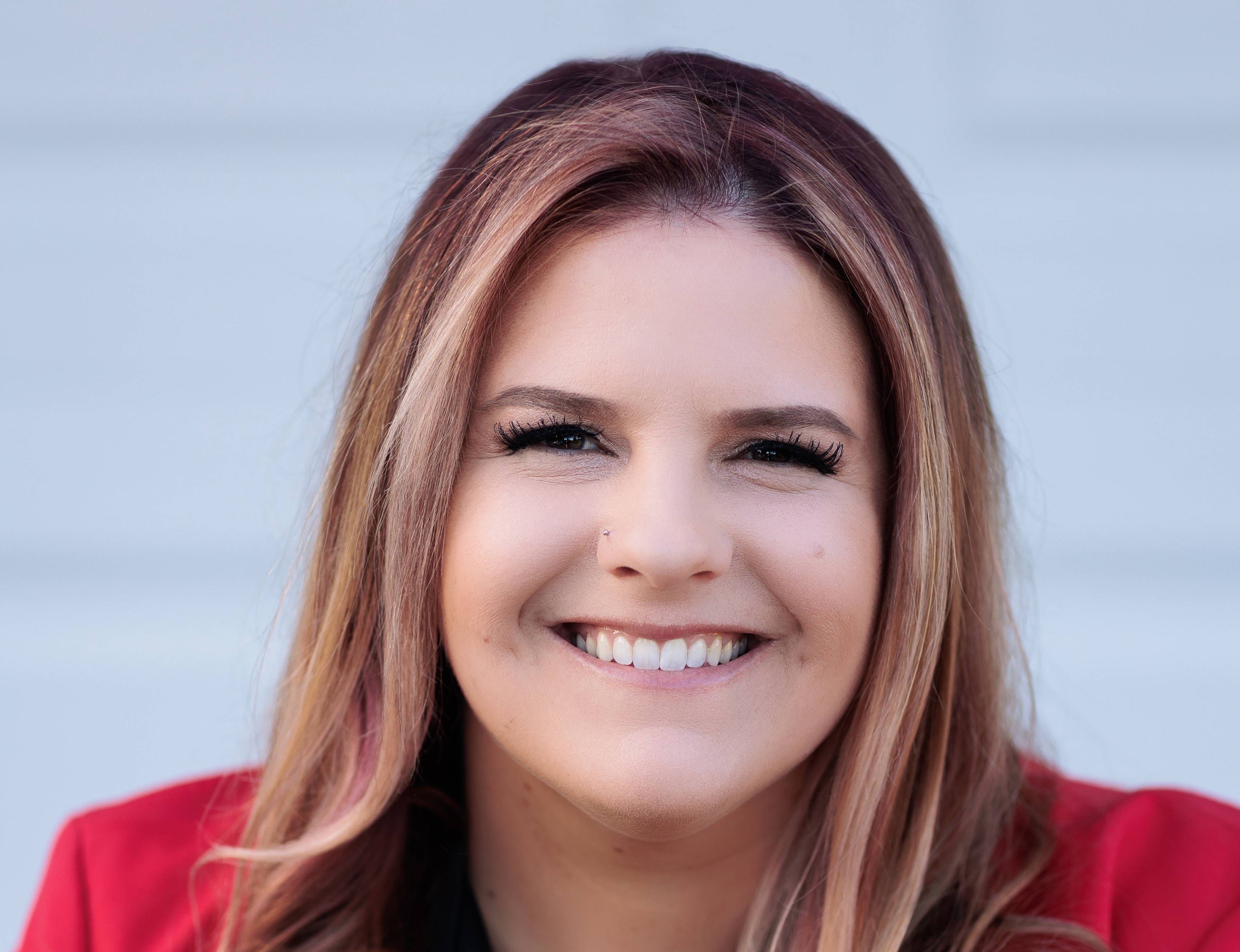
Decarbonizing a sprawling university system
As Chief of Energy, Sustainability, and Transportation at the Chancellor’s Office of California State University, Lindsey Rowell is charged with developing and implementing a plan to decarbonize every aspect of the school system, on all 23 campuses, with minimal use of offsets, by 2045. In this episode, she lays out what it will take to tackle this ambitious goal.
Text transcript:
David Roberts
Contemplate, if you will, the California State University system. It is the largest public-university system in the country — by some accounts, the largest in the world — with more than a half-million students and some 55,000 faculty and staff, spread across a sprawling network of 23 campuses, from the top of the state to the bottom.
What if I told you that it was your job to decarbonize that entire system — the buildings, the energy infrastructure, the transportation, the food, the construction materials, all of it — and you had just over 20 years to do it. Would you panic? Possibly short circuit? I'm pretty sure I would.
As it happens, though, that is someone's job. Her name is Lindsey Rowell and she is the Chief of Energy, Sustainability, and Transportation at the Chancellor’s Office. She is on the hook for developing and implementing a plan to make the entire CSU system carbon neutral by 2045, with minimal use of offsets.
You might think, to accomplish something so vast, she would have a team of dozens and a budget of billions. But this is a public university system, so of course she doesn't — instead it's duct tape, baling wire, and ingenuity. I had a great time talking with her about how to approach this unwieldy project. I think you will find her pragmatism and good humor refreshing.
Every policy or regulation ultimately must be implemented by someone on the ground. This is what that looks like.
All right then. Lindsey Rowell, welcome to Volts. Thank you so much for coming.
Lindsey Rowell
Thank you so much for having me.
David Roberts
This is really interesting, a lot of really interesting stuff here — I have a million questions to get through to ask you. But for starters, why don't you just tell us a little bit about the California State University system, which is different than the University of California system. Just getting that right up front.
Lindsey Rowell
Let's get that out of the way. We are so different. Sure thing. So, California State University system, whether you realize it or not, you probably know it. We are the largest public university system in the country, by some metrics in the world, depending on who you ask on which day. So we have 23 campuses in the system spread across the state, from the very tippy top up in Humboldt and down to the very, very bottom of the state in San Diego. So we cover the entire space in California, and we've been educating students for about 150 years.
So we have really old universities. We also have a few satellite locations that offer specialty coursework in nursing or business. And we educate about half a million students with about 55,000 faculty and staff. So we are a huge, hug organization, and the schools, probably people are most familiar with without realizing that they are CSU schools, are the California Polytechnic University at San Luis Obispo — it's one that a lot of folks don't realize as part of our system. And we have three Cal Polys now, Humboldt is a Cal Poly and Cal Poly Pomona, and then, of course, San Diego State is one of our biggest.
San Diego, Fullerton, and Long Beach are three of our biggest institutions in Southern California. Reason?
David Roberts
Are they all four-year undergrad colleges, or are there some vocational stuff or community colleges?
Lindsey Rowell
So no community colleges. The community college system is a separate but friendly sister organization, complete state organization. And the CSU is a four-year institution and graduate program. So we have masters, and we do have educational doctorate programs at a few of the campuses. So four-plus years.
David Roberts
So 23 campuses?
Lindsey Rowell
Yes.
David Roberts
Across the state. That's a lot. So tell us, then, what laws you are like — what are your mandated goals here? And are they mandated by the state of California, or does CSU have its own separate goals, or are these all just sort of state goals that you're implementing?
Lindsey Rowell
So, without getting too boring into the legislative dynamic of the CSU, we're sort of a quasi-state agency. So what that usually means is that most regulatory and legislative mandates are applicable to us where we're mentioned specifically. Part of that is due to the fact that we are called out specifically in the government code. So we are our own authority having jurisdiction, if you want a technical term, and then we are self support — a portion of our work is self support through student tuition and endowments and so forth. So what that means is the CSU often sets more ambitious goals.
I cannot think of anything off the top of my head where we are not, at the very least, meeting California's goals. As California gets more robust in its challenges towards climate change, I think the gap between California requirements and CSU requirements is closing. But, yes, we align with the state in pretty much everything we do, either by intent or by statute.
David Roberts
The broad framework I've been thinking about this in know, I think a lot about policy and laws and politics and getting laws passed, but every law that passes, someone has to do it, right? Someone has to implement it. And so I've just been giving a lot of thought to, who are the people out on the front lines implementing these things? So part of why I'm asking is, what happens if you don't meet them. Are these self imposed goals where if you don't meet them, for whatever reason, you're just like, "Ah, we swung and missed. Bummer." Or is there some legal penalty if you don't reach them?
Like, what happens if you don't meet these goals?
Lindsey Rowell
That's a fun question because my first answer is the world ends. That's what happens. So government, as you know, is generally a carrot sort of organization, not a stick organization. I mean, punitive response to not meeting legislation is usually reserved for the private sector. And government agencies are, you know, sort of pressured to respond to these mandates, but without, you know, punitive expectations if they don't make them. That said, though, and I'm going to offer a little prediction — this is Lindsey Rowell's prediction, this is not the CSU's prediction, disclaimer — that because the intensity of the climate crisis just ever increases. And it's funny that we're doing this today, David, because I just saw all the news of the massive waves in hitting the California coastline.
I don't think I've ever seen that in my lifetime due to Pacific storms. And so what I predict is going to happen is there's going to be this sort of the incentive approach, right, where there's programs to support government agencies meeting these standards and goals, and then there'll start to be some hand slapping, maybe there will be some tightening of the
You May Also Like

Israel Today: Ongoing War Report
Israel Today: Ongoing War Report

True Crime Today | Daily True Crime News & Interviews
Real Story Media

ABC News Top Stories
ABC Australia

The Glenn Beck Program
Blaze Podcast Network

Jeffrey Epstein: The Coverup Chronicles
Bobby Capucci

O Antagonista
O Antagonista

24/7 News: The Latest
iHeartPodcasts and TTWN

SignalsAZ.com Prescott News Podcast
Talking Glass Media, LLC

BFM Story
BFMTV

SvD Ledarredaktionen
Svenska Dagbladet
Israel Today: Ongoing War Report
Israel Today: Ongoing War Report
True Crime Today | Daily True Crime News & Interviews
Real Story Media
ABC News Top Stories
ABC Australia
The Glenn Beck Program
Blaze Podcast Network
Jeffrey Epstein: The Coverup Chronicles
Bobby Capucci
O Antagonista
O Antagonista
24/7 News: The Latest
iHeartPodcasts and TTWN
SignalsAZ.com Prescott News Podcast
Talking Glass Media, LLC
BFM Story
BFMTV
SvD Ledarredaktionen
Svenska Dagbladet
Community discussion