A clean energy transition that avoids environmentally sensitive land
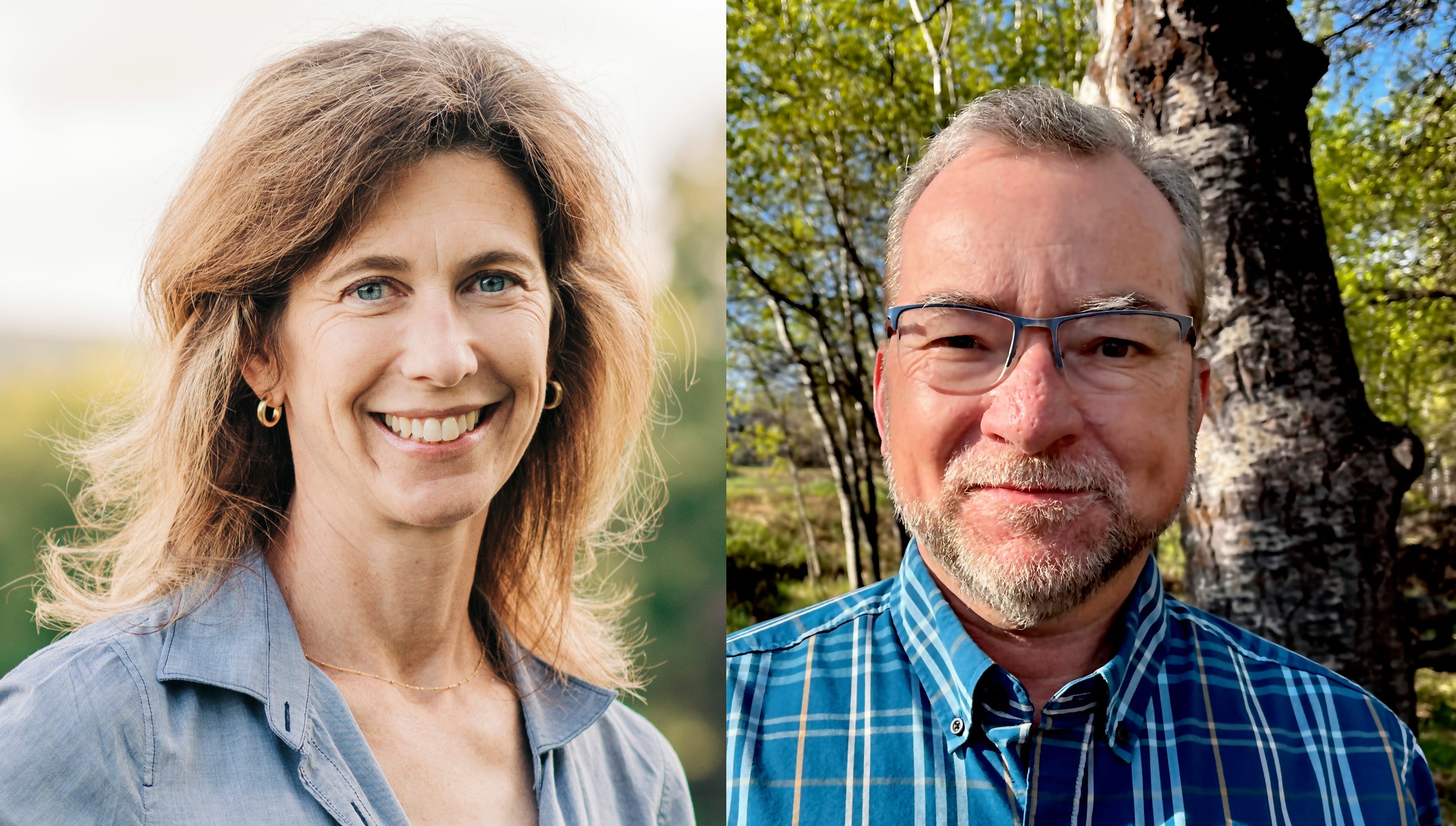
In this episode, Jessica Wilkinson and Nels Johnson of The Nature Conservancy discuss the pathway they see for a rapid, low-cost clean energy transition that minimizes impact on environmentally sensitive land.
Text transcript:
David Roberts
A great deal of confused and misleading information is circulating about the land-use requirements of the energy transition. Everyone agrees that building the amount of clean energy necessary to reach net zero carbon emissions by 2050 will require an enormous amount of land.
But is there enough land? Will the transition require industrializing green fields and virgin forests and other environmentally or culturally sensitive lands? Can the energy transition be done big enough and fast enough while still remaining respectful of natural resources and other species? What mix of technologies will go most lightly on the environment?
To provide a definitive answer to these questions, The Nature Conservancy launched its Power of Place project — first in California, then for the greater American West, and now, this week, for the entire nation.
Using various metrics related to wildlife, ecosystems, cultural resources, and protected natural areas, the Power of Place project attempts to comprehensively map out sensitive land areas. It then tallies up the amount of clean energy required to reach net zero by 2050 and tries to match those needs to the available lands, to see if there is a pathway to net zero that protects them.
The good news is that, with some wise planning, the amount of environmentally sensitive land impacted by a business-as-usual clean-energy transition can be substantially reduced at relatively low cost.
To discuss this and other findings of the report, I contacted Jessica Wilkinson (Power of Place project manager) and Nels Johnson (the project’s science and technology lead) of The Nature Conservancy. We discussed the technology shifts that will enable a lighter footprint, the policies that could help encourage them, and the best ways to avoid community resistance.
Alright, then. Jessica Wilkinson and Nells Johnson. Welcome to Volts. Thank you so much for coming.
Jessica Wilkinson
Thank you for having us.
Nels Johnson
Yeah, thanks for having us, David.
David Roberts
Jessica, let's start with you. The subject of land-use and renewable energy, there's a lot of weird information and misinformation floating around about this, a lot of weird myths, a lot of sort of people with strong opinions who don't know what they're talking about. So what inspired this series of reports, the Power of Place reports? What inspired you to start undertaking this project?
Jessica Wilkinson
Yeah, this is precisely one of the reasons that we were inspired to do this project under sighting, as usual. Like the way that we're proceeding now with a renewable energy build-out, we are seeing an increase in local opposition, and we are seeing concerns about land-use issues. And land-use and environmental issues are indeed kind of one of the obstacles that's popping up in the way of us being able to meet our clean energy goals and meet our clean energy goals rapidly. So we really started this work in California, which was the first time we kind of developed this Power of Place methodology and that refurbished report came out in 2019.
We refined it and then released Power of Place West in 2022. And this is kind of the next iteration where we further refined it. And each time we've kind of added new kind of levels of detail and asked some slightly different questions. But the land-use issue is exactly one of the reasons we've done this. So really what we're trying to do is question the premise of whether or not we really need to make these huge trade offs between conservation and climate.
David Roberts
I think the conventional wisdom is that if we switch from fossil fuels to renewables there are a lot of advantages. But one of the disadvantages is you need a bunch of land and you're going to end up consuming a bunch of crop land or environmentally sensitive land or land that the locals don't want you on. All this kind of stuff. And so your take is that that stuff is exaggerated. So what is the power of place? What is it meant to convey?
Jessica Wilkinson
Yeah, it's not to say that it's exaggerated, it's real, it's happening. The question is how much of it is avoidable?
David Roberts
Right.
Jessica Wilkinson
So what we are seeking to do is ask that question do we need to make all these huge trade offs for nature and for people on the path to decarbonization? So we've asked in Power of Place, it's a modeling exercise and you can ask the model, okay, go achieve net zero emissions by 2050, economy-wide. And model please kind of exclude these environmental data layers and let's see if that changes, whether we can get there, the pace at which we get to that goal and what the cost differential is.
David Roberts
Right before we jump into what you found, how would you describe the status quo of land-use planning and energy?
Jessica Wilkinson
This is a relatively new land-use, right? I mean, this is not something a lot of communities have seen before. They're leasing it for the first time and they may be seeing it come at them really quickly. And so there is a response. Just like local governments adopt local land-use planning and zoning for industrial uses, for commercial uses, for residential uses, they are adopting ordinances to ensure that the renewable energy is going to places where that community would prefer to have it. So we are seeing a lot of local ordinances go up around the country.
There have been projections from NREL. That report they released recently said that there were 3,000 local governments that adopted ordinances. And I think it's important to keep in mind that just because this is happening, just because these ordinance are being adopted doesn't necessarily mean that they're being adopted to block wind and solar. In every case, some of them are again, just a natural reaction to land-use planning and a desire to direct it to places that the community feels is most appropriate. Certainly, and the NREL study from 2022 showed that some of them are overly restrictive and likely intended to be.
But I think it's important not to assume that just because there is an ordinance, it was intended to block renewables.
David Roberts
To what extent is this response and there is a very widespread backlash happening. To what extent is that a fair critique of the way renewable energy has been planned and cited thus far? And to what extent is it just sort of an inevitable reaction to social change?
Jessica Wilkinson
Right. We have looked at this and we do think that more or less about half of the renewable energy that is being deployed now is in areas that at least the Nature Conservancy might consider to be highly sensitive to wi
You May Also Like

NPR News Now
NPR

700 WLW On-Demand
WLW-AM (WLWAM)

Matices
Central de Radios

O Antagonista
O Antagonista

La Estrategia del Día México
Bloomberg Línea

The Dominic Carter Show
Podcast WABCRadio

The Adam Mockler Show
The Adam Mockler Show

Die Nachrichten
Deutschlandfunk

Bloomberg Law
Bloomberg

Čteme vám Seznam Zprávy
Seznam Zprávy
NPR News Now
NPR
700 WLW On-Demand
WLW-AM (WLWAM)
Matices
Central de Radios
O Antagonista
O Antagonista
La Estrategia del Día México
Bloomberg Línea
The Dominic Carter Show
Podcast WABCRadio
The Adam Mockler Show
The Adam Mockler Show
Die Nachrichten
Deutschlandfunk
Bloomberg Law
Bloomberg
Čteme vám Seznam Zprávy
Seznam Zprávy
Community discussion