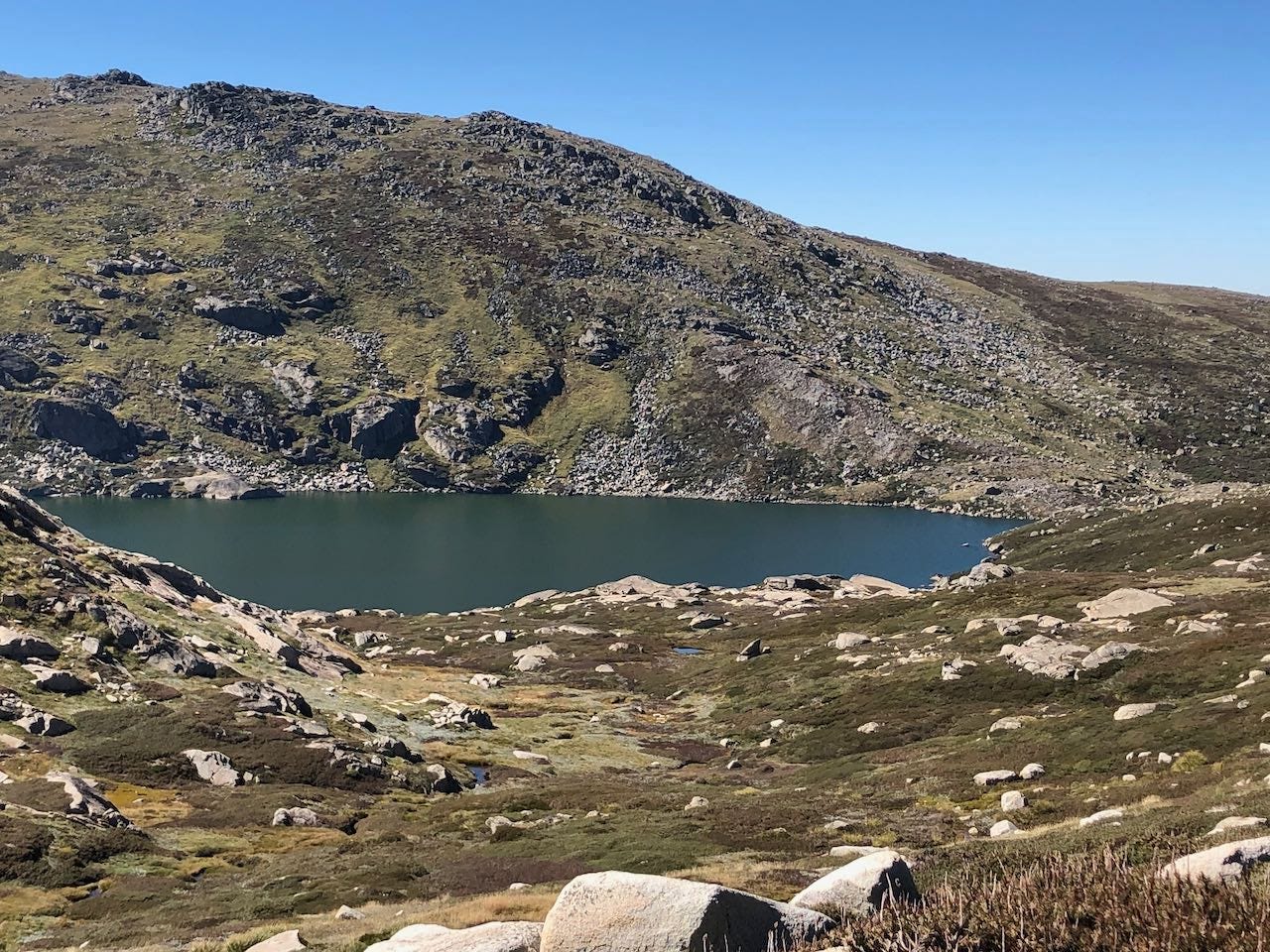
What I did on my holiday
In the tradition of what we had to do in school when I was growing up, here’s my composition exercise on the first day back from holidays.
(Plus some bonus thoughts on preaching at the end from Phil Wheeler and David Jackman.)
Holidays are hardly the time for deep thought.
A bit of quiet musing perhaps, as the miles drift by down the highway, with a favourites compilation playing on the car stereo, and your beloved snoozing in the seat next to you.
But nothing too mentally taxing. No writing of Payneful Truths on the back of napkins.
However, now that I’m back from two refreshing weeks, I’ve been reflecting on why holidays are so good and so important.
Perhaps I’m feeling bullish about holidays because this one was so good. Unlike every previous attempt to take a break over the past two years, this one actually worked. No flood, fire or plague prevented us. The weather was glorious. The mountain trails we tramped were spectacular. The novels I read were diverting and profound. (I’ll share some of them below.)
It was a special time. That’s what a holiday is I suppose. It’s a ‘holy-day’; a special or distinctive day (which is what the word ‘holy’ means). Originally, these were days for celebrating one of the special ‘holy’ days in the Christian calendar.
But even more originally, the idea of setting apart certain special days to stop working goes back to the very beginning. God did it at the creation of the world, and he commanded Israel to do likewise—to have a special ‘stop’ day when no work was done (the word ‘sabbath’ means to cease or stop or rest from doing something).
Interestingly, in the two versions of the Ten Commandments (in Exod 20 and Deut 5), a different rationale is given for observing the day of ‘stopping’.
In Exodus 20, the reason is that “in six days, the LORD made heaven and earth, the sea, and all that is in them, and rested (or ‘stopped’) the seventh day. Therefore the LORD blessed the Sabbath and made it holy.”
Stop working, says the commandment, and remember that everything comes to you from the hand of the mighty Creator. Every single thing you do and work towards, and everything you experience and enjoy as the result of your labours—all of these things come from the God who made everything and then stopped; who completed the entire creation, so that “without him was not any thing made that was made”, as John 1 very precisely puts it.
We can only work and enjoy anything because God made everything. Don’t think for a minute (says the commandment) that you’re self-sufficient; don’t let a week go by without stopping and enacting truth that the majestic Creator made you and everything, and then stopped.
It’s certainly true that pausing to enjoy the fruit of our work is good for us, and refreshing. But the main reason to stop is because God stopped. There’s nothing we can add to his creation, in that sense. It’s all from him. We’re always working gratefully and trustingly with his raw materials. We are inescapably finite andcontingent beings. We need rest. And we are utterly dependent on our Creator for life and breath and everything. Resting from work is a recognition of that, and a celebration of it.
Exodus looks back to God’s finished work in creation, but Deuteronomy looks back to God’s powerful work in redeeming Israel from the slavery of Egypt. The rationale for keeping the ‘stopping day’ in Deuteronomy 5 is this: “You shall remember that you were a slave in the land of Egypt, and the LORD your God brought you out from there with a mighty hand and an outstretched arm. Therefore the LORD your God commanded you to keep the Sabbath day.”
Don’t forget (says the commandment) that everything you are enjoying here in the land of milk and honey is an act of pure grace. It’s God alone who strong-armed you here (so to speak), despite all your weakness and rebelliousness.
In other words, it’s important to stop the relentless round of working and achieving to remember that we don’t deserve any of it. On the contrary, we deserve something entirely different from God, and the fact that we enjoy so much goodness from his hand is because of his generosity and mercy, not our merit.
I’d like to say that these profound theological underpinnings to the importance of ‘holidays’ were at the absolute forefront of my mind over the past two weeks. But to claim that would be to infringe another of the commandments.
All the same, on this first day back at work, I can seeing why ceasing from work is so important—not just to respect my created limitations but to rely on and rejoice in the goodness of my Creator.
So what I did on my holiday was to enjoy the blessing of God, creator and redeemer—the God who made a world so full of beauty and goodness to enjoy; who made us with the ability to create beautiful and good artefacts (like movies and novels); and who blesses us with these things, and gives us the ability to enjoy them, not because of our works but in spite of them.
PS
For me, a good holiday involves not only leaving my own home and temporarily inhabiting another, but also taking a rest from my own mind and reality, and inhabiting another. Reading good novels, in other words.
The best novels take you to a different world, seen through the mind of its creator (the novelist). And if that world is compellingly drawn, and the action that takes place within it artfully managed, you not only receive the pleasure of experiencing a story well told but of perceiving something true or insightful about the real world; or of having a question raised that leaves you pondering.
The two novels I enjoyed most this time were:
* Silence by Shusaku Endo, an extraordinary and beautifully written story about the persecution suffered by Christian missionaries in 17th century Japan. Where or how does God speak in the midst of unimaginable suffering and persecution? And if you were given the choice to trample (literally) on the face of Christ in order to save other believers from a slow, agonizing death by torture, what would you do?
* Never Let Me Go by Kazuo Ishiguro (an English author of Japanese heritage); a haunting story set in a world in which human clones are created and raised for organ donation. The key questions: What does it mean be human, or to have a soul? Who is the more human: the clones who try to come to terms with their purpose and destiny (a death in their late 20s or 30s after multiple donations), or the society that has created them for this chilling purpose?
In the rush to get things finished before hols, I forgot to pass on a recommendation to listen to Champ Thornton’s great little podcast, In the Word, On the Go. Aimed at individuals and families, each ten-minute episode looks at a single Bible verse, with a different guest each time talking about what this verse means and why it is important to them. And if you listen to this particular episode, you might hear a familiar voice talking about a very unusual favourite verse …
One more thing to catch up on as I get back in groove—a couple of excellent responses came in to my piece on a ‘newish definition of preaching’. They are too good not to share.
First from Phil Wheeler, who runs Evangelism and New Churches here in Sydney, and is also connected with WordPartners (formerly LRI), an organization that trains preachers around the world:
I think the movement from exegesis (what is this passage about, what does it teach?) to the preached word (what does
You May Also Like

Let the Bible Speak Radio
Dr. Alan Cairns
Daf Yomi: The 35 minute Daf
Daf Yomi

Renewing Your Mind
Ligonier Ministries

Café Com Deus Pai | Podcast oficial
Junior Rostirola
Rabbi Yaakov Wolbe Podcast Collection
TORCH
Your Daily Prayer
Your Daily Prayer

The Protestant Libertarian Podcast
Alex Bernardo

Moriel Ministries
MorielTV

Onwankelbare vreugde - een dagboek van John Piper
Geloofstoerusting

WGKM
KGOR Radio
Let the Bible Speak Radio
Dr. Alan Cairns
Daf Yomi: The 35 minute Daf
Daf Yomi
Renewing Your Mind
Ligonier Ministries
Café Com Deus Pai | Podcast oficial
Junior Rostirola
Rabbi Yaakov Wolbe Podcast Collection
TORCH
Your Daily Prayer
Your Daily Prayer
The Protestant Libertarian Podcast
Alex Bernardo
Moriel Ministries
MorielTV
Onwankelbare vreugde - een dagboek van John Piper
Geloofstoerusting
WGKM
KGOR Radio
Community discussion