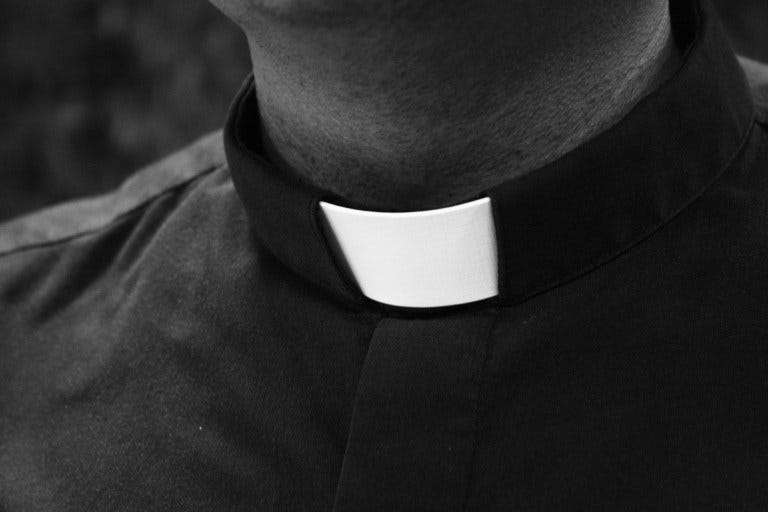
The kind of pastor that's hard to find
(Click the player to listen to the podcast version of this post, or read on …)
Here’s the third (and final for the time being) of a little ‘Back to School’ series on what I’m learning by being back in campus ministry. In the first two posts, I talked about the centrality of the Word and the power of patient culture building.
The kind of pastor that's hard to find
It’s amazing how many different kinds of pastor there are these days.
There was a time—it didn’t seem so very long ago—when there were only a few options. You could be a plain unadorned ‘Pastor’ or ‘Minister’, or you could put a few simple modifiers in front of that if you had to—like ‘Assistant’ or ‘Associate’ or maybe ‘Youth’.
But today, the possibilities are endless. You can be a Lead, Senior, Executive, Discipleship, Children’s, Youth-and-Children’s, Children-and-Families, Middle School, High School, Young Adults, Women’s, Men’s, Campus, College, Worship, Creative Arts, Mission, Evangelism, Community, Maturity, Membership, Ministry or Magnification Pastor—and I’m sure many others besides.
This is all a bit bemusing (and in some cases amusing), and might lead to a discussion about the nature of ‘pastoring’ and which roles or activities really deserve that description.
But I want to focus on a positive if rather mundane lesson from this proliferation of pastors—the perfectly reasonable point that if you want to make progress in a particular area, it usually involves commissioning Someone to take responsibility for it, whether in a paid or voluntary capacity (and whether they are called ‘pastor’ or not).
The Unmodified Pastor, on his own, hasn’t the time or the gifts to do everything. He needs appropriately gifted people to step up and take the lead in different areas—whether that’s with a particular group of people (like ‘youth’ or ‘seniors’) or a particular purpose that we pursue as a church (like ‘evangelism’ or ‘membership’). If we want some group or ministry to thrive, we can’t just hope it will sort of happen as a natural consequence of everything else we’re doing, or that an already over-worked pastor will somehow get to it after everything else. Someone needs to be thinking and praying and organizing and working hard under God for it to happen and improve and grow.
So far so obvious. What has this got to do with me being back in campus ministry again?
Well, when I was negotiating with Carl Matthei about exactly what my role would be back at Campus Bible Study (CBS), and what we would call it, I looked around at all these various pastoral titles for some inspiration. But the strange thing was that in all the big staff teams I looked at, with their many and various role descriptions, and in all the lists and discussions of pastoral titles I found online, there was one kind of pastor I couldn’t find—that is, I found virtually nothing that described the particular role or focus area that I was about to embark on.
Which of course was training.
My role at CBS is to help drive those activities that equip or train the students in aspects of Christian life and ministry—how to read the Bible themselves or one-to-one with someone else; how to really know the gospel well, and be able to talk about it with others in conversation; how to understand and live out biblical ethics; and so on. And on top of this, my job also involves the ongoing coaching and training of the ‘trainees’—the 25 young men and women doing a ministry apprenticeship at CBS at the moment.
We toyed with the idea of calling me a ‘Training Pastor’, but since that sounded a bit too much like ‘pastor-in-training’ we ended up going with ‘Ministry Trainer’.
The title doesn’t matter very much—what does matter, and what I’ve appreciated afresh since being back at CBS, is that if ‘training’ is to be a normal and effective part of church life, it’s difficult to see how that will happen unless we make it a conscious focus, and appoint some people to drive it and champion it. CBS has done this effectively for a long time. I’ve joined a sub-team of pastors who have been responsible for this area for some years, and have made it part of the CBS culture.
This has led me to ponder a number of questions.
First and most obviously, where are all the other ‘training pastors’ out there?
Is it that ‘training’ is not really worth focusing on as an area of ministry (like mission or membership or youth)? Is it too niche or peripheral? Is that why it’s almost impossible to find any ’pastors of training’ among the proliferation of pastors in churches today?
Or is it really happening a lot, but just not being acknowledged or named or reflected in people’s role descriptions in any way? (I somehow doubt it.)
Or is ‘training’ perhaps something that can only really happen on university campuses?
So that this remains a shortish set of reflections rather than an essay, here are five brief responses to these questions.
* I’ve already written on this recently, but to clarify first of all—what I mean by ‘training’ is the process of teaching, modelling, repetition, prayer and encouragement by which someone learns a new practice. That practice might be generosity, or prayer, or rejoicing, or encouraging others with the word of the Bible, or sharing our faith with others, or raising our children in the discipline and instruction of the Lord, or any of the other myriad ways in which ‘learning Christ’ means learning a new way of living and acting. It’s what Paul describes in Titus, when he talks about the older women training the younger women to be godly wives and mothers (in 2:3-5), and also when he speaks of God’s grace ‘training’ us for a new life of godliness and uprightness (in 2:11-14). ‘Training’ is often thought of as imparting ‘ministry skills’, and in part it is. But only if we see ‘ministry skills’ as an important subset of what the gospel trains us to do: which is to be zealous for good works (Titus 2:14). This is perhaps the key mindshift that is needed—to see ‘ministry training’ as one vital facet of training every member in ‘maturity’ or ‘discipleship’.
* In this sense, I wonder if all those ‘maturity pastors’ and ‘discipleship pastors’ out there might actually be ‘training pastors’ without realising it—if their goal is to see the Word take root in the lives of each congregation member and bear increasing fruit in everyday practice. The practical ministry side of ‘training’ is one important aspect of this. When we train people to, for example, know the gospel really well and be able to talk about it in conversation, or to be able to encourage another Christian with the Word—these are essential aspects of the godly, loving speech that should mark our new lives (‘speaking the truth in love’, as Eph 4:15 puts it). However, if training is not acknowledged or named as a key facet of this work, how will it be focused on, championed, or improved?
* A question, then, for any ‘maturity pastors’ or ‘discipleship pastors’ who are reading this: What would be different about your role if you re-imagined it as a ‘training pastor’? What if you saw it as your particular focus to drive the process of teaching, modelling, repetition, prayer and encouragement by which congregation members grew in their ‘practice’ of the Christian life—including their confidence and ability to minister to others? What if it was part of your role, for example, to equip congregation members with a basic knowledge of the gospel and how to share it with others in conversation? (These
You May Also Like

Let the Bible Speak Radio
Dr. Alan Cairns

Theology Central
Various Speakers

Allen Jackson Ministries
Allen Jackson Ministries

The Family Bible Journey Podcast
familybiblejourney

Kloostercast
NPO Luister / KRO-NCRV

Charles Stanley Sermons
WatchersPod

Daf Yomi: The 35 minute Daf
Daf Yomi

Commuter Bible OT
John Ross

Renewing Your Mind
Ligonier Ministries

Mission 66
TWR
Let the Bible Speak Radio
Dr. Alan Cairns
Theology Central
Various Speakers
Allen Jackson Ministries
Allen Jackson Ministries
The Family Bible Journey Podcast
familybiblejourney
Kloostercast
NPO Luister / KRO-NCRV
Charles Stanley Sermons
WatchersPod
Daf Yomi: The 35 minute Daf
Daf Yomi
Commuter Bible OT
John Ross
Renewing Your Mind
Ligonier Ministries
Mission 66
TWR
Community discussion