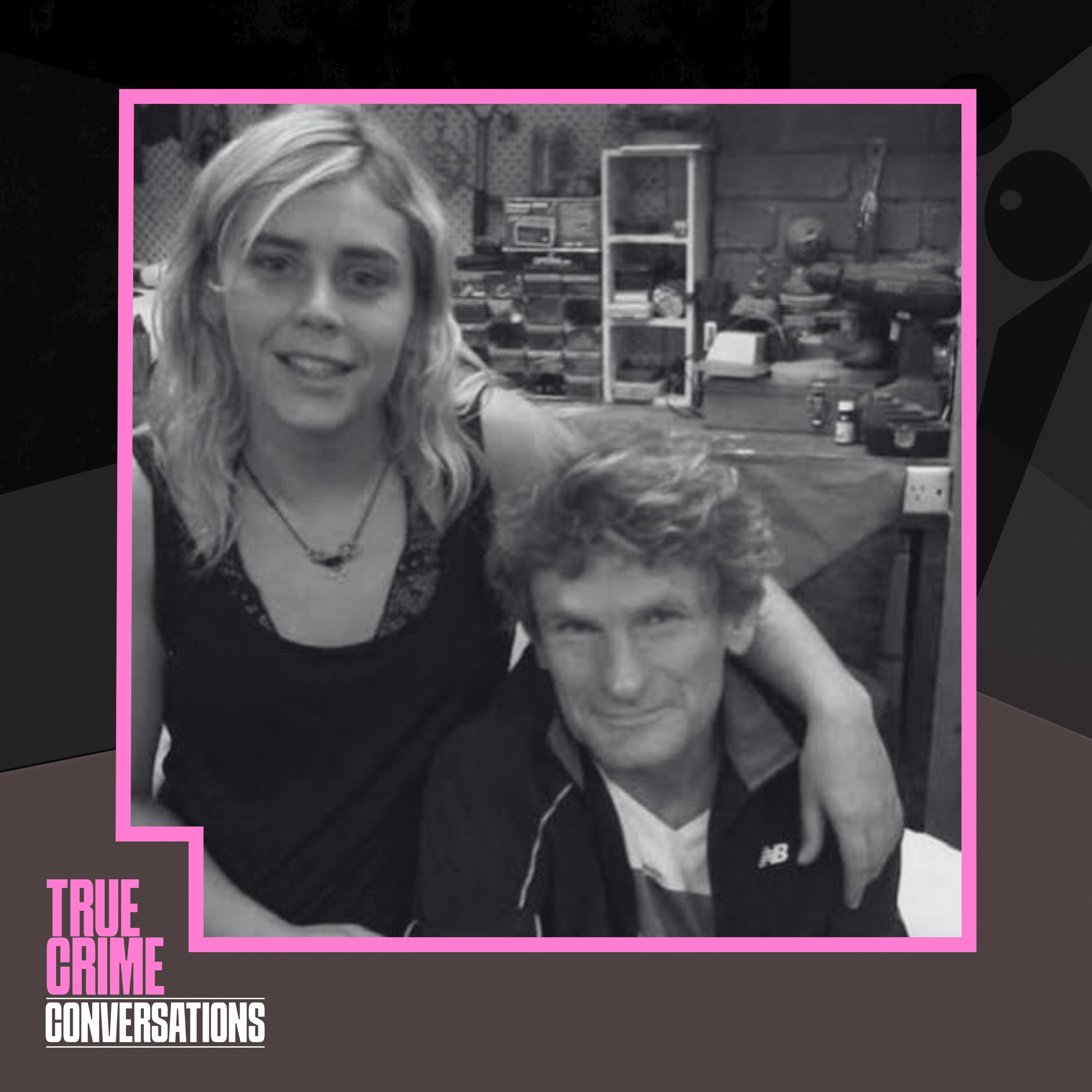
0:02 Hi there, Gemma here, dropping into your ears with a bit of a follow-up to one of the cases we covered earlier this year, the murder of Melbourne woman Ellie Warren in Mozambique. We interviewed her dad, Paul, who has dedicated the last 10 years to trying to find her killer, 0:18 unhappy with the lack of investigation being done by both the African and Australian police. If you haven't listened to that episode yet, I highly recommend doing that first to get some context. because Paul was kind enough to share 0:32 with us footage from his book launch, where he had a conversation with one of Australia's most respected former homicide detectives, Charlie Bezina, who has been helping him with his daughter's case since 2018. Listening to these two men talk is fascinating. 0:48 A dedicated, heartbroken dad and a police veteran, both determined to not only solve Ellie's case... but make it easier for Australian families to navigate investigations overseas in the future. 1:01 They've helped to uncover so much evidence, so many holes, so many missed opportunities, and their knowledge and experience in dealing with the intricacies of Ellie's case is a lesson for all of us, because this could happen to any 1:16 of us. These two men have come up with a solution, a robust one, that'll actually help Australian families that will inevitably have to keep dealing with this scenario. They just need the authorities to listen. I'll let them explain. Please 1:31 enjoy this intimate conversation between Paul and Charlie. 1:35 I just happened to be reading the paper this particular day and saw a story that a Paul had done, and clearly knowing the angst and the. 1:45 Frustrations he would have been going through. 1:46 So through the journalist, I touched base with Paul and the recent history. 1:51 It was Nandy's fire. Yeah, that's right. So I basically loaded the gun. And Paul Biden, I. 1:58 Said, look, when you go overseas, it was a bit of secret agent stuff. He was covering the recording, the chief of police over in Mozambique. 2:07 That's why I didn't want to go back to that. 2:10 That's exactly, but I can understand. And I was hoping, thank goodness, I said, I hope he doesn't ask me to go over with him. Because I'll shit myself. 2:19 So, ultimately, you know, the things that Paul has gone through, he'd bring me up and he and even through Ali's mum and the family, again, associated with it. And we met quite a number of years ago at a certain chapter where we had dinner together out in. 2:42 Birdwood. Birdwood, yeah. 2:44 So ultimately, that's the relationship you build because you know, and I've seen from victims, they're pretty much cut loose in relation to the whole support agency. Once the police have done their job and going to damage Vindrol and 2:58 then saying, well, okay, we've done what we've done, but you didn't do it well enough. 3:02 What have you learned from it? 3:03 They're not going to tell us what they've learned from it or what they're going to do. 3:06 But I've got a proposal which we've put together. 3:09 Yeah, yeah, yeah. 3:10 That's right, I sent you, and we've worked on it, and it's actually on the website. 3:15 It's actually a. 3:15 Very good proposal that I think the government should take up, and. 3:19 It actually puts the coroner at the centre of the operation. 3:24 I think the coroner should move in and take more responsibility when a death happens overseas, and the coroner can actually use the resources of the homicide detectives, because... The coroner's assistant is already employed by the Victoria Police. 3:47 Yeah, that's right. 3:48 So ultimately, just for the uninitiated, the state coroner here, if an Australian citizen from this state dies overseas, he or she has the power to hold an inquest into their death or coronial hearing into their death and causation, 4:04 et cetera, et cetera, and all the circumstances in relation to it. So one of the proposals that Paul has put together. 4:10 We've put together. OK, we'll put together. 4:15 And it happened with the Bali bombing, and we know the result of that, where the state homicide squad were called upon, along with our resources, that went over to Bali, along with some federal police officers, in relation to assisting them. 4:31 Now, only because that was so high profile. 4:34 But any death of a loved one Overseas is high profile. 4:40 We've had a number of them. I was spoken to quite a significant number of years ago. We had a lovely young lady, I forget her name, in Dubrovnik. She was found murdered over a cliff and I met with the family in relation to that and they were about to, 4:55 or I was going to get involved with that, but which way it went, but they then went. 4:59 On a different angle on that. 5:02 So what we're saying, putting together, is that when we do have a Victorian citizen in particular, who will deal with an Australian citizen, in representation for the. 5:11 Family, now the coroner represents the family. 5:14 The homicide squad investigators here are agents of the coroner. 5:18 We are the ones that put the coronial brief together, along with other police officers, if it's a suicide or any other unnatural death. 5:26 But in doing that, and it's quite simple. 5:29 That the federal police, because the federal police have agencies, or agents as they call themselves, at different locations throughout the world, and they become the liaison people in relation to it. So the very basic things that we're proposing 5:42 is saying, well, Why can't the Coroner then direct Victoria Police to say, can you now send a homicide investigator over as an advisor? Not as an investigator, as an advisor, because the formalities are getting involved. You need to be 5:57 invited by the host country. to be involved to get the investigation filed. And that's the whole difficulty about it. 6:04 And initially, when Ali's death was reported, they were protecting their tourism, et cetera. 6:12 So Alton had become, what was it, overdosed, or she was a. 6:15 Drunken tourist, put the victim at blame. 6:19 And that was the whole issue. 6:20 But when you start, you know, the crime scene was significantly adulterated. And once you start losing the crime scene, and when Paul picked up about the T-shirt being ripped and then the injuries to the face and even the speckles of sand on her buttocks in relation to that. 6:36 And one of my first, from my experience, has said to Paul, well, do we know where Alice Close are? Well, they've gone into the ether in relation to it. So there wasn't a process. Had someone of my experience or someone in people with the federal, because federal police are 6:52 not homicide investigators. You know, they're not. So someone like me over there can say, right. through the local police once you've got a local. 7:03 But you can't go over and take over the investigation. 7:07 What I was basically saying is that we can send them over to do a fact-finding mission so the coroner gets this first-hand information. gets a report from that pilot study, and then what happens then is the coroner is in a better position to be able to make decisions on the case. 7:26 Now, if the coroner decides that, yes, just say this has happened in a... third world country like it has the galley and the coroner decides that they haven't got the resources to uh adequately do a proper investigation and 7:40 our resources through dna testing and everything because we're more advanced here in australia and because the federal police have got one of the top forensic. 7:49 Labs in in melbourne haven't. 7:51 They and um you know, to use those facilities for a third world country would be an advantage. So if the coroner got that report and then he could say to the Attorney-General here, look, I think that there is reason here for us to get further involved with the 8:08 mutual assistance request. So then the coroner can say to the Attorney-General, let's send the request to the other country and see what happens. 8:17 Now, if they say no, that's it. That's all we can do. 8:20 But if they say, yeah, look, there are areas that you can help us, then that mutual assistance request will come into effect. Then the AFP get involved because they're the ones that are legally... Lead agency. Lead agency, aren't they? 8:36 So a homicide detective can then, I think, assist, can't they? 8:43 Yeah, as an advisory capacity because. 8:46 You know, it's the basic stuff to support where we are today. The fact that it was written off basically by the Mozambique government, the investigators, they didn't want that. 8:55 And it culminated, by that stage, we've lost. 8:57 Significant evidence off Ali, her clothing, forensically. 9:03 She had two postmortems in Africa. And then her remains were. 9:07 Brought back here, and she had a third post-mortem. But 9:12 as we know from my experience, and certainly from one of our esteemed guests here, Byron Collins, who is a pathologist in his highest regard, having a third post-mortem, you've almost got... Her body's been adulterated with evidence. You've lost 9:29 all that. And even down to the track, all the sand down the throat. Paul went over there and we were able to establish all through Paul that the sand in Ali's airways was different. 9:41 From the sand where she was found deceased. So clearly the body had been moved. And the surface too was firm. Yeah, absolutely. 9:49 And that's when I went over to Mozambique on my trip, 9:54 and it was rocky and I thought well in two years it could change but when I told my translator, Tony, when I told him that Ellie's lungs were packed full of sand from what Dr. Klepper told me over the phone, because I rang her only days after her autopsy. 10:17 He said that that's not possible. She couldn't do that at that location. Trying to write off that she inhaled the sand or, you know, we could. 10:24 conclusively say that's impossible through a medical. 10:27 Report in relation to that. 10:29 And Paul became the forensic examiner, forensic collector. He went over and got samples of sand and brought back to Australia. 10:36 Because I said, everything we need to do, Paul, needs to be evidence-based. And that's what exactly he's done. And taking... 10:44 the individuals, and he's certainly not been battling coming forward and being critical. 10:49 And sometimes he's on the phone and saying, you can't say that. 10:52 You know, and I think the trepidation of the lawyers that went through his book. 10:57 Everything is ample. There's plenty of evidence. That's right. Everything he says has got to be evidence-based. At the end of the day, you know. 11:06 It's how he said, but when you get the scientific evidence, and bringing Warren into the equation and the radiologist. 11:15 There it is there in black and white. She didn't inhale the sand. It's impossible. 11:20 And that's what the locals were trying to say in relation to, oh, another drunken tourist. And they actually attacked Ellie's character. 11:31 Which is absolutely a nonsense in relation to it. 11:44 The politics of policing will tell you every investigation. 11:48 Is done at the same level. Once anyone loses, we investigate. 11:52 The death of Carl Williams or Jason Moran or Graham Kinnaburra at the same level because any loss of life, we put that aside. 12:01 But the more high-profile the case, and the only reason this has. 12:04 Become high-profile is because of Paul leaving a high profile and he's been a thorn in the side of the federal police. But that's why I say they've gone into damage control. 12:14 And the hardest thing is to say, Paul, we're sorry, we did muck it up. 12:18 But you then can't go back. Or we go, okay, you've done that. We can't then replace it. But for the future, when another loved one dies overseas, if they come back and say, as a result of Ali's case, this is what we have changed because we find the shortcomings, we don't. 12:36 Want to be there again. But they haven't even done that. 12:38 No. 12:39 Well, do you think they should apologise? I think they should. Yeah, very much so. Don't let us down. You, the family and the community of Victoria, because we could be, any one of us in this room could be in the same position. So, you know, it's a matter of, you know, 12:51 our kids want to travel, but, you know, they might get the federal warnings, the DFAT warnings, don't go to this country. 12:58 But don't think for one minute you're going to get the support, significant support from our government. We're more too politically correct to say, well, we don't want to make waves. 13:07 These major crimes don't go away. There is no time limit. 13:11 There is no statute of limitations on serious, indictable offences of murder, armed robbery. 13:16 Rape, et cetera, et cetera. They stay in forever and a day. And that's why we keep it alive in relationship. 13:22 Sure, when it comes to the 100 years, there's an uncertain past and we've got difficulty thereafter. So it becomes very frustrating in relation to that. But all you can say to the family is, this is what we believe. 13:34 but we just fell short in playing the system of being able to prove it beyond reasonable doubt. 13:39 And as we know, it's got to be 12 out of 12. It has to be unanimous. It was hard. 13:44 And that brings you sort of back to the time where I was at a situation where I was pretty depressed and I had. 13:52 Come to a standstill in the case and. 13:54 I remember ringing you and you told me that, Paul, what we do when we feel we've hit a big wall is we go back under. 14:05 The evidence and we look at it all. It's a game changer. I'll never forget you saying that to me, that needle in the haystack, you know. And I found it, yeah, yeah, with the ripped part shirt. Because looking, when I discovered the clear photo from my first. 14:34 Trip, Charlie, I couldn't look at that photo. 14:39 Devastated to see my daughter lying down there. And it was just heart-wrenching, really. I just can't explain it. The dirty feet. 14:51 It's just terrible. 14:53 And I couldn't. 14:56 Look at it at all. 14:58 And I didn't see the Richter Park top because I didn't know the dots. there was a blurred version and that was the only version the coroner got from the AFP and they never passed a clear photo. And then I, after speaking with you, I decided to go over the evidence. 15:22 I needed to look at that photo properly. And I did. 15:27 And that's when I discovered, I'll run you, and then I'll go to the coroner. 15:31 Because the coroner's court said there was no physical. 15:35 Damage, you know. That was the police. That was Ken Taylor from Victoria Police. Yes, coroner's assistant. And someone will. 15:42 Make out that they've made a mistake. 15:45 That's brand protection. 15:46 Because it's their credibility, and hence even from different aspects, expert witnesses. particular pathologist with this lady who found deceased and he said, well, Charlie, it's either accident or it's an assault. He had symmetrical fractures to the face and she passed. 16:06 But I had, you go where the evidence takes you, as you did, Paul. Yeah, go where the evidence takes you as this particular case. 16:13 And the evidence taught me that she fell off a fence and then she bled out and then went to. 16:18 The side of a house and died. 16:20 But I had to go, again, but these experts will put a foot in each can because they can protect their reputation. 16:27 And I was able to stay strong with my. 16:30 Investigation and believe in what I found evidence was and said, this is an accident, went through a coronial hearing, And the coroner then sighted on me and said, yep, I accept the evidence that it was an accident, it was misadventure, 16:42 it was not a homicide or foul play because of the symmetrical factors to the skull, to the face area. 16:49 And I could account for that. I accounted for everything. 16:52 And even though she was found on the blind side of the house, I was able to account for that because remember we had the entomologist come in there. 16:58 We found her house keys, and that accounted for the last thing that I had. 17:02 So you go where the evidence takes you, and with the finding of the facts, you can't knock that out, because you can say, there's a photograph of the sand, there's a radiology report. 17:13 And you gave me a new lease of life. And then I was on another tangent. I was in another area. 17:22 And that's when you put me in contact with Dr. 17:27 Collins, you know. 17:28 And that sort of set me off with getting a second opinion on some of the medical evidence. 17:37 And Dr. 17:40 Collins also submitted another review report for the. 17:45 Inquest, which was. 17:47 which was very positive and contained a lot of really good information and I really appreciate that. 17:55 So that's why you've got to be tenacious and dogmatic in getting what you want. If you're not happy with a particular investigation, eventually when they come to me and say, don't bother writing to the Chair Commissioner, Go to your 18:09 local member of parliament. They represent you, the constituents. I am not happy with this. You're my representation. I want you to be mentioned in the parliament. And clearly, Ali's been mentioned in parliament. 18:20 Oh, I tried, though. Even they wipe their hands of it. 18:23 The local lady here, what's her name? 18:27 No idea. In Labor? The MP here, Jodie. Yeah, no, she didn't want anything to do with it. Just turned her the other way, yeah. Well, that's when you got to go to the media. 18:40 You told me the next thing to do is to go to your minister, and I went to her. And she went to the Attorney-General and the Attorney-General said he couldn't do anything about it. 18:49 So then she just wiped it. She just said, well, we can't do anything. 18:52 And that's the frustrations family has, but that's what I'm saying. 18:55 But then I get tenacious and dogmatic about it all and. 19:00 That's probably why we get along so well. 19:05 Thank you to Paul and Charlie for allowing us to be flies on the wall for this conversation. You can find a link to Paul's book, Hunting Ellie's Killer, and his website in our show notes. Thanks so much for listening. 19:17 I'll be back later this week with another true crime conversation.





Community discussion