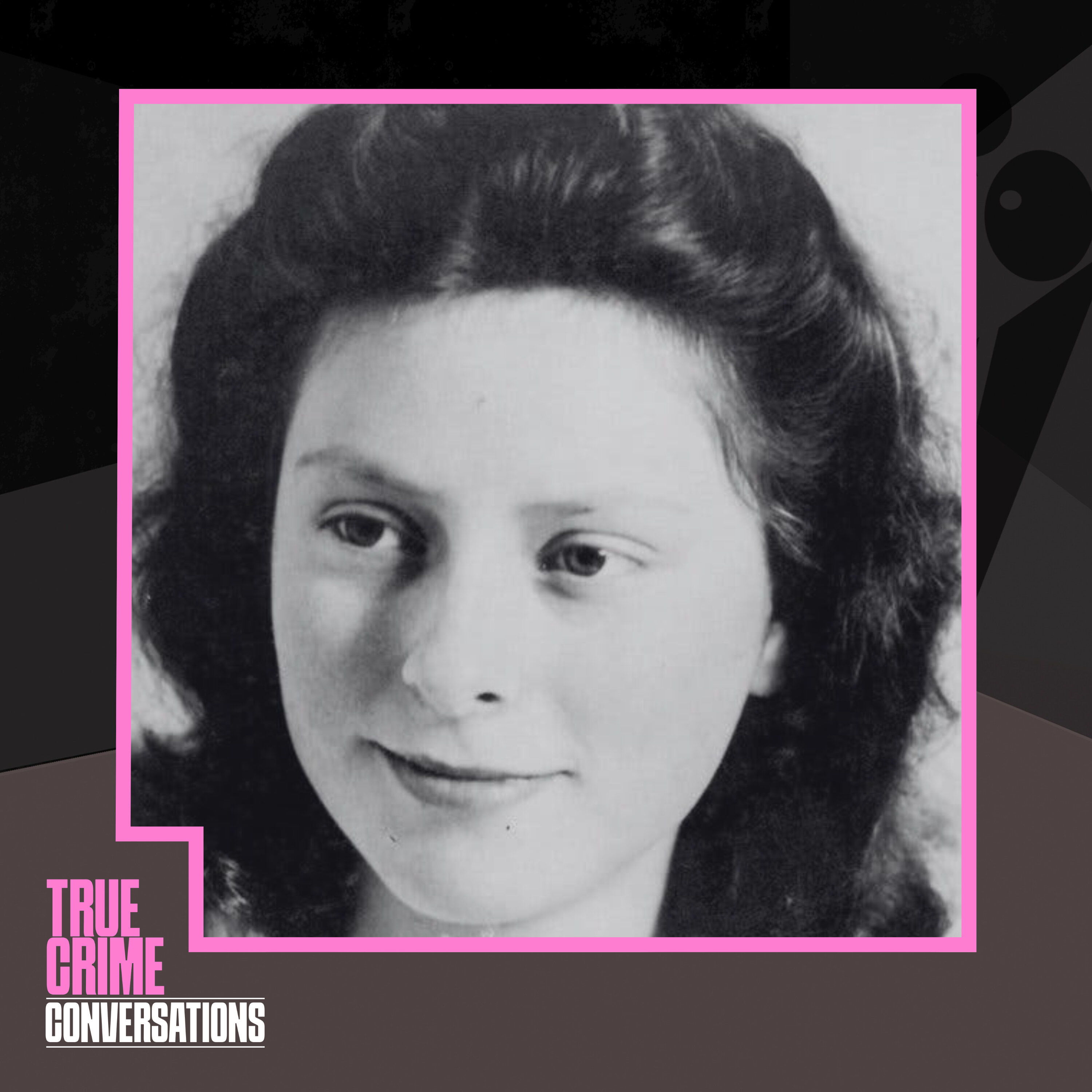
0:00 Hi everyone, dropping into your feed with an extra full-length episode of True Crime Conversations to start your week. Due to some video issues, we're releasing this one purely as an audio experience, so we thought we'd share it with 0:12 you as a special extra conversation. We'll be back again on Thursday with another fresh episode. Happy listening. It's a freezing Christmas Eve in 1944 and arriving quietly on bikes is Three young women crawl towards a bunker in the 0:29 Netherlands where Nazi soldiers are currently holding a party. They duck their heads to avoid a sweeping German searchlight, holding their yelps in as they pass swarms of rats and puddles of mud in the darkness. They're here on a 0:44 mission to steal five boxes of ammunition. After successfully locating them, they strap the firepower to their backs and then haul them back to the Dutch resistance. These three women... Truist and Freddie Overstegen and Honey Shaft make up one of 1:00 the most unlikely and effective resistance units the organisation has. Young, beautiful and unassuming, they can occupy the streets in ways adult men simply cannot. Scouting, sabotaging and executing Nazis right under the enemy's nose for years. I'm Gemma Bath and 1:25 you're listening to True Crime Conversations, a podcast exploring the world's most confronting crimes by speaking to the people closest to them. Nazi Germany launched its invasion of an unprepared Netherlands early on the morning of May 10, 1940, attacking 1:41 the neutral nation on multiple fronts. While other nations in Europe had been building military forces for the past few years, the Dutch didn't have a single working tank in their arsenal in 1940. The army was so under-equipped that some 1:56 of its troops went to war on bicycles. Three days after the invasion, the Dutch Queen and the entire government had abandoned its citizens, fleeing to England. It took the Nazis just five days to win a fight that was expected to last five months. On the day Hitler officially 2:15 occupied the country, the number of suicides was so large that the local Department of Health didn't have enough ambulances. 2:23 Plenty of Jewish refugees from other countries had been seeking shelter in the Netherlands and they knew what was coming. 2:30 For the 140,000 Jews living in the country, Hitler incrementally started to increase his discrimination on the population. You'll probably recognise the name and devastating story of Anne Frank, whose family hid in a secret annex before being caught in 1944. 2:46 But today we're focusing on another incredible tale out of wartime Netherlands. the daring exploits of sisters Truus and Freddie and their friend Hannie. Tim Brady is the author of Three Ordinary Girls, the remarkable story of three Dutch teenagers 3:02 who became spies, saboteurs, Nazi assassins and World War II heroes. 3:08 He joins us now. Tim, thank you for joining us on True Crime Conversations. This story... of these three young women is extraordinary. How did you first come across their lives and what they did? 3:28 Well, you know, it was sent to me by my, sort of jointly by my agent and my editor, both of whom had seen an obituary in the New York Times for Freddie. The two sisters, Freddie and Truce, lived well into the 21st century. Freddie died in 2018, and 3:58 Truce had died a couple of years earlier. So there was an obituary in the New York Times. Freddie was the younger sister at the time of her death, and it told in outline, flashing symbol for my eyes, you know, that this was a story that needed to be looked at. 4:20 The whole notion of teenage girls going out and murdering Nazis and traders, Dutch traders, just struck me as remarkable. 4:33 I had done several books on World War II and studied it to some extent, never heard of anything like it. 4:43 Well, most people will think of Anne Frank when they think of the Netherlands in World War II. And she did grow up and live in the same time as these girls. 4:54 Yes. 4:55 So it's the same world that we'll be describing. 4:56 Yes. And not far from them, you know, Anne Frank was in Amsterdam and they were in Haarlem, which if you've ever been to the Netherlands, you know that Haarlem is a 20-minute bicycle ride from Amsterdam. So they're neighbours. 5:12 Well, Tim, take us inside the Netherlands just prior to Nazi occupation. What did life look like for those that lived there? Because it seems that the entire country was was caught quite unaware despite what was happening just across the borders. 5:32 Well, like much of Western Europe at the time, the Netherlands was unprepared for what was happening in Germany and how that would affect them. The enormous military buildup and sort of muscle flexing that went on and Hitler's Germany 5:51 was seen and noted by Western Europe, but there was little that stirred people enough to do much about it in real politic terms. Both the Netherlands and Belgium and Denmark and even France, to some degree, were aware of what was happening in Germany, but they didn't have the 6:16 wherewithal to consider what they would have to do ultimately to defend themselves against the aggressiveness of Hitler's Germany. 6:28 Tell us about the Overstiegen family, because the sisters, Truss and Freddy, they grew up with quite a progressive single mum for the times, didn't they? 6:38 Yeah, she was a communist. She was a member of the Communist Party. And for those who are unaware or sensitive to that sort of labeling, it should be noted that it was commonplace in the Netherlands. There were many communists. 6:58 I mean, it was not a majority by any stretch of the mind. But it was not unusual to be part of a strong leftist ideology. Their mother and their father were both avowed socialists, actually, they called themselves. But they took place and they took part in In demonstrations, 7:18 they were opposed to the Dutch monarchy. There's an anecdote in the book that as a very young girl, Troost, the older sister, was dragged to a march with her father. 7:37 And it turned into a chaotic riot scene in which she was scooped up by the Dutch police and taken to a station while their father was hauled off to some other unknown apprehensions. And she had to be ultimately picked up by her mother. So early on, they had 8:00 an understanding that their family was politically active and politically active on the left. 8:07 Their dad left at some point, didn't he? Because a lot of their childhood was just with their mum. 8:12 Yeah, soon after that incident, he was sort of, he left singing them some sort of French ballad. They lived on a boat on a canal in Harlem. And it's sort of this romantic picture of him saying goodbye to his family by serenading them. But then he was gone. 8:34 But he remained. Interestingly, Harlem is not that big of a city. And he came from a somewhat politically prominent family in Harlem. So he was around and would pop in and out of their lives throughout. 8:49 So before the Nazis invaded, the family was already doing things like taking in refugees from other countries, Jewish refugees, having leftist political meetings in their lounge rooms. So the girls were really kind of exposed to all of this 9:05 from a young age. Were they themselves involved at that stage prior to the occupation? 9:11 They did things like their mother enrolled them in camps. 9:16 socialist summer camps and that sort of thing, which was, again, another likely thing for people who were in a leftist movement like this. It was like a family with a religious background or something going off to a summer camp 9:40 with like-minded spirits and So they went off to camp with other socialists. And I don't want to use the word indoctrinated, but they were immersed in a socialist life, which included good times and probably some politicization. of who they were and what they thought. 10:04 Yeah, it seems to be, you know, they were brought up, it was part of their values as a family. So I can imagine when the Nazis actually did come to the Netherlands, that would have been very hard for them to witness as a leftist family. 10:19 It was, I think that that sort of really deeply defined who they were all their lives. I know that to be a fact, but the sisters were inclined to be anti-fascist in the strongest ways. 10:36 Can you tell us a bit more from what you've learnt about Truce and Freddie as individuals? What were they like? 10:43 They were, I see them as young girls and I see them in a sort of younger, older sister relationship. 10:55 They were pretty constant companions growing up together like that. 10:59 And I think that Freddie was the pretty younger daughter with sort of a sweet face and precociousness about her. 11:13 And I think of her as being sprightly bouncing around Harlem. 11:20 And Truce, I think, as more of the responsible older sister, steering Freddie here and there and perhaps being a little bossy with her younger sister and Freddie being precocious and Truce being a little bit domineering. 11:39 A typical firstborn then, hey? 11:41 Yeah, yeah, yeah. 11:43 I want to bring in Hani Shaft here because she, I mean, she didn't know the sisters at this point. 11:48 Tell us about her life and upbringing at the same kind of time, just prior and as the Nazis were invading. 11:55 Well, I think the contrast I tried to draw was the sisters were part of a working-class family. Hani was part of the middle class, solidly middle class. Her father was... 12:12 a teacher at a school in Harlem and was an intellectual. 12:20 He wrote for some leftist newspapers himself. And Harnie was sort of raised as a progressive individual within a middle-class family. 12:33 And she had an older sister who died when Hani was just a girl herself. And the death of that sister deeply affected the family, died from some illness that profoundly affected the parents. So they became very protective of Hani. 12:57 And so Hani was... uh, uh, was, uh, was watched over very closely by her parents and, uh, set off to school with feeling as if eyes were upon her and everything she did. And she was prototypical, good student, uh, uh, 13:19 nicely dressed, nicely coiffed, pretty sweaters, uh, uh, nice shoes and, and, uh, just a pretty girl and with bright red hair all her life. And that sort of was her trademark. And she always had the red hair and it was always noted by everyone in her life. 13:46 Including the enemy. 13:49 She became very famous for her red hair. 13:53 Well, she was referred to as the girl with the red hair, wasn't she? 13:56 She was. By the end of her life, it made her a marked woman. 14:02 To give listeners an idea of the ages here, Harney was a bit older. She was around 19. She was at university when the Nazis invaded. She continued to try and keep her studies up as the occupation kind of took hold, whereas the sisters were a bit younger. They were, 14:17 if I'm correct, around 15, 14, 16? 14:19 Yeah. Yeah. Freddie, the youngest, was 15 and Truce was, I think, 17 when when the Nazis invaded, which would make them as the war progressed, it would put them. 14:39 You know, I don't know if Freddie was ever in her 20s at all during the war, but Hany, of course, would move into her 20s and Truce would be in her early 20s during the course of the war. 14:56 Well, there was a phrase that you wrote that really stuck with me, especially as I learnt what the girls ended up doing, which was their youth was being robbed from them by the Germans. 15:09 Yeah. Yeah. I, you know, I was in so many ways. 15:13 I wasn't, and it wasn't just the Germans. It was what they wound up doing that, that robbed the three of them of their youth. 15:22 And their innocence. 15:23 You know, as I was, as I was looking at the book this morning, I was thinking, I had forgotten just how busy they were in all of the things that they that they had to do for the resistance. And, and, you know, I, I, I sort of was a little 15:45 astonished myself at how much they were asked to do at their, given their, their young ages and, and immaturity, you know, they were, they were just, they were kids. 16:00 Well, let's talk about before they kind of joined a more formalized movement, they were still doing things like distributing anti-Nazi magazines, counterfeiting IDs, which I think was Hani's kind of thing. Tell us about that because it started a 16:17 bit more innocent in terms of what they were doing in resistance. 16:20 I've looked at the resistance movements in a couple of countries now and it always begins with with the resistance begins in just everyday living. One of the ways that people approach it is by taking the avenues of least resistance to do things that benefit your cause. Hani was 16:45 a student at the University of Amsterdam, and that presented the first opportunities for her to to do things, like you mentioned, is stealing. This is after the Nazis assumed control in the identification was so important to the way 17:05 they ran things. People needed IDs. And so Hani was doing that. And the sisters were likewise doing, as you mentioned, passing out newsletters and Their mother had a stenciling kit that she would use to help create posters exhorting leftist 17:30 causes and anti-Nazi posters. And the sisters would run around Harlem pasting these up as their mother was home rolling them off on the stenciling kit she had. really the sort of cottage industry, family cottage industry of resistance and leftist causes. 17:56 I think most people will know at least a little bit, I hope, about the Jewish experience during World War II and the concentration camps in Auschwitz. But can you give us a little bit of context? Because the incremental discrimination, 18:12 watching it through the eyes of the Netherlands, of how quickly... 18:16 it all happened, was quite astonishing because their discrimination against the Jewish population started within kind of four months, didn't it? 18:25 And it just got worse and worse and worse. Can you give our listeners a bit of context of what that looked like in the Netherlands? 18:31 Yeah. The Germans invaded the Netherlands in May 1940. They made no promises about how they were going to treat the Jewish people in the Netherlands. But there was already, it was well known how they had treated their own 18:52 Jewish citizens in Germany. Kristallnacht was still fresh in the memory of every Western European Jew. And there were already whispers of concentration camps and camps. And it was well known that this sort of prejudice and religious beatings that 19:17 were taking place in Germany, there was no misunderstanding about what was going on. So the Jews of the Netherlands understood that this was a horrible thing that had happened. 19:34 And And so they sort of waited for the worst to come down. And as you suggest, it happened gradually in the sense that, there were, first of all, the Germans required IDs. They limited what Jews could do in the public realm. In time, they would ban Jews from 19:59 public parks, making an income. They started limiting where they could go, what they could do, who they could associate with. 20:09 There was no inter-association between Jews and non-Jews. And soon it just became more and more oppressive as the months and years passed. 20:24 February 1941, so not too far after the occupation, the Germans did exercise their strength and power against the population with a bunch of firepower, violence, deportations, even public executions. 20:39 I'm guessing that was to try and get the Dutch population to behave or to get some control. Did it work? 20:48 Did the Dutch kind of do what they say or was there a lot of resistance? 20:53 The resistance came gradually. slowly, it built over time. And there were groups of Dutch who started to organize to a certain extent. There were a group of people called the Oindendorkers, forgive my Dutch there, but it literally translates 21:17 as the underground people. And these were people who quickly went underground to escape burdens of living in Nazify, Netherlands. 21:31 And there were groups of Dutch who aided them by hiding them in their homes, by creating these fake passports, fake IDs, and just helped enable people to survive. in an underground fashion. 21:51 Coming up, Tim tells us more about the man who recruited the sisters into a more dangerous resistance movement. Well, the Overstegan sisters, and excuse my... Dutch as well with my lovely Australian accent. But I guess that all kind 22:09 of changed for them from more of that covert stuff into much more overt resistance when they met a man named Franz van der Veel who came knocking on their door wanting to recruit young women like them. 22:23 That was when I first read that scene, which was fascinating first related to me through Truce's memoir, which became a very pivotal story for my purposes. I was just sort of astounded to read about it. This is an adult man. They thought he looked like a movie star 22:50 when he first walked into their living room. He was a handsome man, and he came in And he had been brought to the family by their mother, who his bona fides had arrived by way of her associations with her socialist groups, who said he was a legitimate resistance man. 23:17 And so he came in and started to talk to these, again, these teenage girls, feminists, 15 and 17 year old girls and said to them, basically, would you like to become a part of a resistance movement? And they were, you know, they didn't know what to say. Can you imagine being 23:40 15 or 17 years old and this grown man comes into your living room and says, do you want to, you'll have... And he says at that meeting, we're going to teach you how to shoot guns. You may have to work with explosives. It's just hard to fathom. 24:02 Well, didn't he say, do you think you could shoot someone? 24:05 And he said that at the end of the conversation. 24:08 He said, just think of that. You know, think of that. 24:12 According to Truce, the response was she actually considered it. 24:17 She'd had... experiences already that were so frightening to her that she thought, you know, maybe I could. Freddie, you know, who has a lesser voice in this narrative because it's truth supplies so much of it. I had to more imagine what she would be thinking. And again, as a 24:41 younger sister, I just thought she would just have to be blown away by this conversation. 24:48 Well, they did join his group and at the very start, which again is wild to think about, it was them, so two teenage girls and four grown men and one gun basically. 25:01 Yeah. You know, there was a moment in that story that I just, it's just so far-fetched I find it almost comical. They were in a park at their first gathering, the group, At the start, they're just sort of a 25:22 far-fetched group. There's two sisters. There's this movie star, handsome guy. 25:29 There's a guy who is described as not much taller than Truce, and he's a grown man, too. And then there's a fourth guy. And they're gathered here to talk about what they're going to do. And the only weapon they have is a pistol that has been in someone's 25:49 backyard and can't really shoot. And Franz Vanderville says to him, you know, if anyone comes by, let's pretend we're an exercise group. And I just thought that was so preposterous, but they were there, all these fish out of water, and they were going to be an exercise group. 26:21 Why did Franz want these teenage girls? He obviously had a vision. 26:25 Yeah, and it's really, it makes a certain amount of sense. 26:31 The teenage girls represented just as you would suspect, but if their innocence is so obvious that if they have an underlying steeliness like the sisters have and a commitment to the cause like the sisters had, then you've got 26:51 sort of a perfect recipe for people, for individuals who can traverse the city and do underground stuff without being suspected by the Nazis. 27:04 And it's the 1940s, so, you know, you've got on top of that all the layers of women being underestimated. 27:11 Exactly. 27:12 And people not thinking that women could be dangerous and all of that. 27:16 Yeah. 27:17 So at the start, a big portion of what they were doing was ferrying Jewish children to safe houses, transporting, and this visual really got to be transporting weapons and guns on their bikes, hidden in their clothes and on their bikes. 27:33 It got to me too. There are a few photos in the book of the sisters and Hani in costumes they assumed when they would ride the bikes, which was basically sort of a newsboy cap a long overcoat. And if you've ever been to the Netherlands, you know how 27:55 prevalent the bicycle culture is. And you can just imagine these girls riding around in their overcoats with pistols knocking against their thighs as they're pedaling. And it just, again, is a striking sort of image. 28:18 I want you to explain to us the scenario, which I think they did a few times, but particularly that first time was harrowing for the sisters, where they helped to lure soldiers into the woods. 28:29 Oh, yeah, yeah. They were, again, this is the innocence coming into play. They were ultimately given assignments by Vanderbilt. 28:47 The idea was that they were... to basically seduce German officers out into the woods by the hideout that the resistance group used. The idea was they needed weapons, as I mentioned early on, and they wanted to get these 29:06 German officers, who were the only armed people in the city, basically, out into vulnerable places. And the way they were going to do this was to send the girls out have the girls suggest that these officers take them to a 29:24 wooded area outside their hideout where other members of the gang would use whatever weapons were available, meaning knives and 29:40 and dug up revolvers and accost the German officers and get their weapons. So the first time this happened, the girls were sent into a tavern and they knew that they looked like they were 15 and 17 years old, and they didn't look like young women who might be 30:06 out on the street trying to seduce these German officers. 30:12 They gussied them up in makeup and rouge and painted red lips, and they sent them into a tavern. It didn't really work very well. The girls sat down and were sort of snickered at by the people in the bar who recognized them for what they were. But, you know, 30:36 on the other hand, there are some people and German officers were more than good possibilities for this. At any rate, it didn't work exactly as they had hoped initially. But soon enough, they actually were successful in getting one of 30:54 the German officers off into the woods. And they actually did have someone come up and knife him in the woods as he was accosting truce. 31:08 And he died during that altercation. 31:10 Yes. 31:11 Being involved in, I mean, that was one of the first executions that they were involved in. And that really affected them. They cried for days. 31:18 Yeah. Yeah, yeah, yeah. Well, you can imagine. These are not insensitive girls. They're fully human. And again, to be that age and have to do these sorts of, or feel like you must do these sorts of things to free your country, to free your city from this menace is, again, 31:44 it's a remarkable thing. 31:47 But fast forward, and these are women, usually truce, who are riding on bikes executing soldiers at point-blank range. They became soldiers, really. 31:57 That struck me too. I kept asking myself as this story was reeled for me that how could they do it? 32:08 And in my mind, you hit the nail on the head. 32:11 They considered themselves soldiers. They were at war. And not only were the Germans the enemy, but also the people who were turning in their comrades and other Dutch people, they were also more than willing to assassinate Dutch citizens 32:35 who were traitors, people they considered traitors. 32:40 Well, in Freddie's own words many, many decades later, she said, it was a necessary evil. I feel no pity, or I felt no pity. So they definitely got hardened to the war. 32:49 Oh, they definitely did. I thought of the soldier's mindset, and I thought of the soldier's innocence. And I think of all of the people who participated in World War II, all of these young kids who went off to the front lines at the 18 19 20 years old and 33:13 and took up arms and you know what what they must have been thinking and how they must have been hardened in time and and it's it war is a bad thing it's a horrible thing. 33:26 Yes very much so. 33:28 But it's happened it happens it's happening. 33:32 Yeah Up next, Tim explains how Harney entered the group, turning the trio into one of the most dangerous units the resistance had. So the girls joined in 1942. Harney comes into the picture into their resistance group, which was much, 33:50 much bigger by the time she joined in 1943. So they'd already been doing this for about a year. 33:55 Yeah, yeah, yeah. 33:57 Tell us about when the three of them got together because they kind of formed this... really dangerous unit within the resistance. 34:06 They did. The sisters had been involved in an action in Harlem where they sort of pimped NSB, which was the conservative group aligned with the German Nazis, Dutch fascists involved in this. They were called the NSB. And the 34:28 girls did this sort of prankish thing action against them. 34:35 They dropped a huge communist flag from the headquarters of the NSB. And that caused all sorts of outrage amongst these fascists. And so it was thought that the sisters had to get out of Parliament. And they were sent to a town in eastern Netherlands, along with their mother. 35:06 But they were sent there, and they were working at a hospital for a few months, just sort of being put somewhere where they could hide out and not be pressured. 35:23 While there, Hani had gone from— she had been living— in Amsterdam, but she was originally from Harlem. She returned to Harlem after the school that she was going to in Amsterdam, the University of Amsterdam, had essentially closed down because the 35:43 Nazis had sort of prescripted the learning possibilities there. Hani went back to Harlem. She was looking for resistance action, so to speak. And she got hooked up with the RVB and was sent to go fetch the sisters from the hospital that they were working at, saying that they 36:11 were needed back in Harlem to resume their role in the resistance movement. So there was a scene where Hani travels to where they were staying in eastern Harlem. Netherlands. 36:24 And she has a pistol in her pocket. Truce has a pistol in her pocket. And they're doing this sort of eyeball-to-eyeball thing as they first meet, wondering who might be telling the truth and who might not be. They both have hands on their pistols in those long, coated pockets. 36:44 There's sort of a showdown between Between the two and they finally determined that both are good and they both wind up believing honesty and forthrightness of the other. 37:03 Well, the three became fast friends, and I can imagine for the sisters who'd only had each other in the resistance, surrounded by a bunch of adults, you know, having this young girl, similar age... It allowed them to have a little bit of fun amongst it all, especially Truson and 37:17 Harney were quite close. And I know in a lot of the kind of operations that they were involved in, they were the ones doing the killing and the big stuff, while the younger sister, Freddie, was often the lookout or more of that kind of role. Right. When you kind 37:33 of put together the kinds of operations these girls were involved in, they spied on soldiers while dressed as German girls... 37:41 They helped derail a military train. They smuggled ammunition from a bunker while German soldiers were having a party and put it on their bikes and rode away. Like it sounds fantastical, doesn't it? Like what these girls were doing and the danger they were putting themselves in. 38:03 It was fantastical, you know, it's, again, it's sort of this expediency of war thing that's going on. They did it because they felt they had to do it. And, you know, it's just remarkable what people can do under those circumstances, even girls, young girls. They just sort of 38:25 felt obliged to do it. You know, they just felt like it was their duty and they wanted to do it. 38:32 You know, they were Throughout, I was struck by this sort of unwavering sense that they were doing the right thing. 38:43 And they felt all along that they were doing the right thing. There was little doubt. And, you know, when I started to research this book, I found, as I mentioned earlier, the sisters lived well into the 21st century. 39:00 And they were thus interviewed in a number of instances by Dutch television. And so you got a real sense of, as old ladies, you could get a sense of them as young girls. And neither of them were big, tall women, but you could still see the spirit in them. And 39:23 I didn't understand a word of what they were saying in Dutch, but just their their spirit sort of emanated from their voices and their expressions and their mannerisms. 39:37 I've seen the same interviews and they look like kind old grannies. 39:42 They do. 39:43 But you see this spark in their eye where they're like, you don't mess with me. I'm ruthless. 39:49 Yeah, there is a sense you can imagine those girls with pistols in their pockets, you know, and you don't doubt it. 39:58 Just how much damage did these three girls do or inflict on the Nazi regime? Because they ended up taking out, and by taking out I mean executing, quite a number of high-ranking officers. They derailed a military train, as I mentioned. 40:15 Did they do a lot of damage in terms of the resistance in the Netherlands? 40:20 I would say nothing that was serious. The people that they assassinated were sort of local villains. There were some assassinations that And I hate to use this word, but deeply meaningful to the Nazis. There were a couple of 40:39 ministers in the early stages of the resistance who were gunned down by Dutch resistance officers. Those were more serious to the movement in general. And this especially pertained toward the end of the war. when there was sort of 41:03 a sense of revenge, killing, and getting even with people who had turned in resistors. And some people in the Netherlands question a number of the killings, as you can imagine. 41:22 And in circumstances like this, there are people who think that it was just excessive, and especially excessive towards the end. 41:31 But everything had grown excessive by the end of the war, even Hani's execution. 41:39 Well, yeah, listeners will have noticed that we've been talking about the sisters in their old age, but Hani never made it to old age. So in 1945, towards the end of the war, which was the most devastating part, like really close to the end of the war, Hani was captured. 41:54 What happened? 41:55 How was she captured? 41:56 Given what she had done prior to her capture... It was really kind of prosaic, the way that she was ultimately grabbed. She had been distributing newsletters, and she just got grabbed for having those newsletters in her satchel. But 42:16 by this time, she was notorious. She was genuinely notorious because she had been involved in enough assassinations that And that fiery red hair had been commented on and seen by many people. And even though at one point she died sort of a pitch black, she was known as 42:46 the girl with the red hair. And so when she was apprehended at just a common check point, by the Nazis and taken to a holding cell and then to prison in Amsterdam. She was arrested for distributing these papers. 43:07 But she was notorious in prison. I mean, people from the Dutch administration and the Nazi administration came to visit her at the cell just to see the notorious girl with the red hair. 43:24 And they tried to break her in terms of getting information, which she didn't give. 43:30 She did not do. And her death became sort of iconic in Dutch history. And it happened, she was executed on the dunes off near the North Sea. She was hauled off there, driven out to the dunes, and then marched a few paces into the dunes, which are sort 43:58 of these scruffy seaside, sandy terrain. There's a harsh beauty about where she was executed. And she was shot in the back of the head. 44:14 Am I right in saying that of the hundreds that were executed in those dunes, she was the only woman? 44:19 Yes, you are right. 44:21 That really struck me because she's not only a woman, she was in her early 20s. Like she was a young woman, basically a teenager in terms of what she experienced in life. 44:32 But she. 44:35 Was an assassin. 44:36 Yeah, she was an assassin. She was, you know, her death was... struck a chord with the people. And her life is still celebrated in the Netherlands. The place where she was shot and killed has become a cemetery. Visiting it, again, to my mind, it's sort of a fitting place for 45:09 an iconic martyr like she was. And I think she could fall into the martyr category because she is, just as you might suggest, because she's a woman, because she was the only woman and she just was symbolic of the resistance itself. 45:35 They might not be household names worldwide, but in the Netherlands they are, aren't they? 45:40 Yes. Yeah, yeah. They are. Hani in particular is very well known. And the sisters are too. Truce went on to become a rather renowned sculptor in the Netherlands. And all three became part of the Jewish Yad Vashem in Israel. 46:03 They have been celebrated for their work for the Jewish people. 46:10 You said that Truce became a sculptor. Can you tell us a bit more about the lives they created? I know both of the sisters became mothers. One of them married a fellow resistance fighter. 46:21 Yeah, yeah, Truce did. As I said, both lived well into the 21st century. Freddie was, I'm going to say, led a quiet life, and she was hesitant to talk about what she had done in the past. Truce, as I mentioned earlier, wrote a memoir of her experiences during 46:43 the war. I used extensively in my book. And she was much more willing to talk about it and much more willing to be a part of any publicity or any rehashing of what happened in those years. 47:04 Tim, after writing this book, after living... in this world and the world of these three ordinary women. What are your thoughts on their incredible lives? 47:17 I just felt it was something that it was a story that I had to tell because as I hope I've implied, I just found so much of this astounding. 47:29 I just found it remarkable that these, I call them three ordinary girls, And I do that fully aware that they did extraordinary things. But to me, they were just young people whose circumstances tugged into a horrible conflict. And 47:52 they responded as if they were ordinary girls. You can imagine, but you want to dig deeper into their stories. You want to understand better who they were, how they could do it, what drove them. But at the outset, they were just these young people trying to live their lives 48:12 and trying to get by in war-torn Europe. 48:17 Well, thank you for sharing Truce, Freddie and Hani with us. 48:21 And thank you so much for coming on the podcast. 48:23 We really appreciate it. 48:24 It's been my pleasure, Gemma. Thank you so much for having me. 48:28 Thank you to Tim for joining us on this episode. 48:31 You can find a link to his book, Three Ordinary Girls, in our show notes. Make sure you head to our socials at True Crime Conversations to see photos of the three girls in action during World War II. Thanks so much for listening. I'll be back later this week with 48:46 another True Crime Conversation. True Crime Conversations acknowledges the traditional owners of land and waters that this podcast was recorded on.









Community discussion