737-Collision(525)
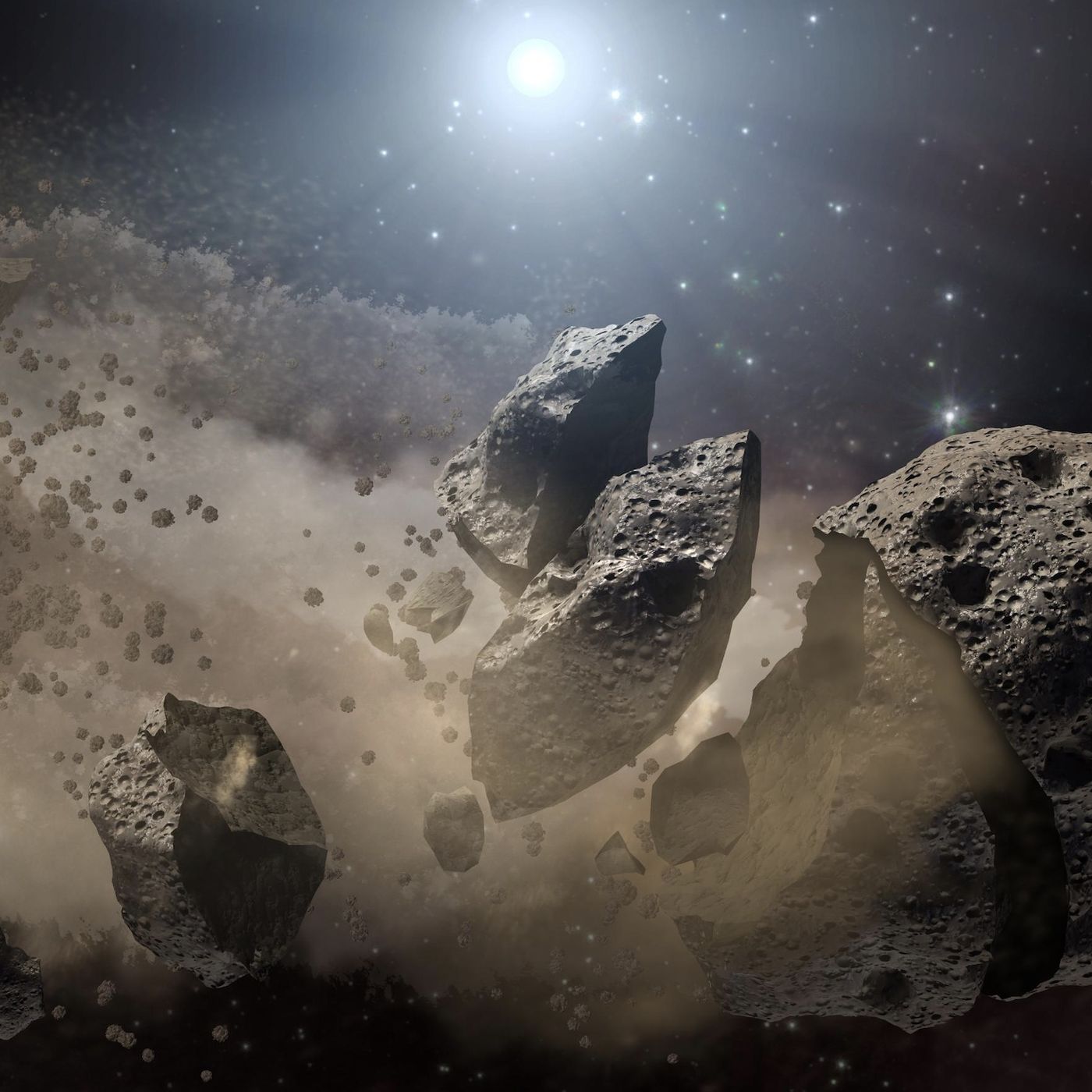
I was asteroid hunting with our 60 inch telescope on Mt. Lemmon, Arizona when my Catalina Sky Survey teammate Steve Larson sent me an email requesting that I obtain some images of the asteroid 6478 Gault. Several days earlier, using mountain top telescopes in the Hawaiian islands , astronomers working with the ATLAS project reported that the perviously normally appearing asteroid 6478 Gault now has a 250,000 mile long straight tail. I added together four 60 second images which revealed a point of light with a tail which appeared to be similar to a long straight contrail left by a jet airplane high above the Earth. Images taken of 6478 Gault over the past several months suggest that it hit another object in the asteroid belt. If this idea is correct the collision fragments are what are giving this asteroid its long thin tail. Asteroid Gault is approximately 2.3 miles in diameter and thought to be a member of the Phocaea [Pho e ah] Family of main belt asteroids which themselves were formed by a violent collision about 2.2 billion years ago. This swarm of 2,000 space rocks , orbit the Sun once about every 3.5 years, between Mars and Jupiter.The object which the 2.3 mile diameter Gault hit is likely to have been a third of a mile diameter space rock. This celestial crash left Gault with a 250,000 long straight tail.
You May Also Like

Human Factors Minute
Human Factors Cast

Dr. Chapa’s OBGYN Clinical Pearls
Dr. Chapa’s Clinical Pearls

Eye On The Sky
Vermont Public

Farm Small Farm Smart Daily
The Modern Grower Podcast Network

Stuff To Blow Your Mind
iHeartPodcasts

MinuteEarth
Minute Earth

Bedtime Astronomy
Synthetic Universe

Something You Should Know
Mike Carruthers | OmniCast Media

BirdNote Daily
BirdNote

IQ - Wissenschaft und Forschung
Bayerischer Rundfunk
Human Factors Minute
Human Factors Cast
Dr. Chapa’s OBGYN Clinical Pearls
Dr. Chapa’s Clinical Pearls
Eye On The Sky
Vermont Public
Farm Small Farm Smart Daily
The Modern Grower Podcast Network
Stuff To Blow Your Mind
iHeartPodcasts
MinuteEarth
Minute Earth
Bedtime Astronomy
Synthetic Universe
Something You Should Know
Mike Carruthers | OmniCast Media
BirdNote Daily
BirdNote
IQ - Wissenschaft und Forschung
Bayerischer Rundfunk
Community discussion