336E-355-2 Suns
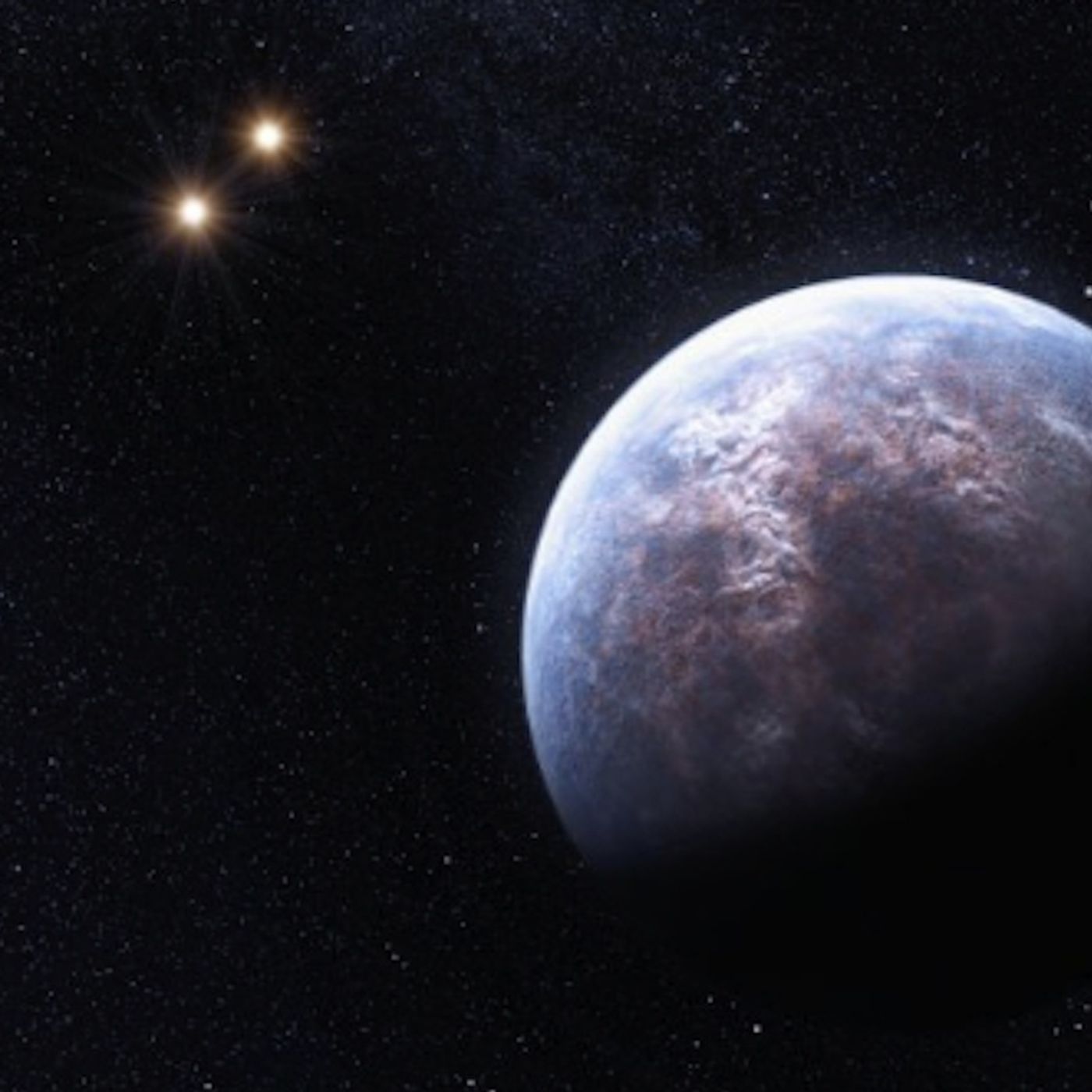
The NASA Kepler Spacecraft has discovered more than 2,000 planets which have been confirmed to be orbiting distant stars. It performs this remarkable feat by imaging more than 145,000 stars simultaneously to observe and measure the tiny dips in light which occur as a planet passes in front of its star. Astronomers have long known that many of the solar systems in the Milky Way have more than one star. To investigate the possibilities for life in a double star system, Dr Max Popp a scholar at Princeton University and Dr. Siegfried Eggl of Germany's Max Plank Institute substituted the real giant planet orbiting the stellar pair Kepler 35A and B with an Earth sized one orbiting the Kepler AB pair with periods between 341 and 380 days. Their detailed analysis is published in the journal Nature Communications.
You May Also Like

Stuff To Blow Your Mind
iHeartPodcasts

Bedtime Astronomy
Synthetic Universe

BirdNote Daily
BirdNote

IQ - Wissenschaft und Forschung
Bayerischer Rundfunk

Real Ghost Stories Online
Real Ghost Stories Online | Paranormal, Supernatural & Horror Radio

Paranormal Mysteries
Nic Ryan | Paranormal Mysteries Podcast

This Week in Virology
Vincent Racaniello

FM4 Science Busters
ORF Radio FM4

Vedanta Cast
Jonas Masetti

Intelligent Design the Future
Discovery Institute
Stuff To Blow Your Mind
iHeartPodcasts
Bedtime Astronomy
Synthetic Universe
BirdNote Daily
BirdNote
IQ - Wissenschaft und Forschung
Bayerischer Rundfunk
Real Ghost Stories Online
Real Ghost Stories Online | Paranormal, Supernatural & Horror Radio
Paranormal Mysteries
Nic Ryan | Paranormal Mysteries Podcast
This Week in Virology
Vincent Racaniello
FM4 Science Busters
ORF Radio FM4
Vedanta Cast
Jonas Masetti
Intelligent Design the Future
Discovery Institute
Community discussion