310E-329-Near Neighbor
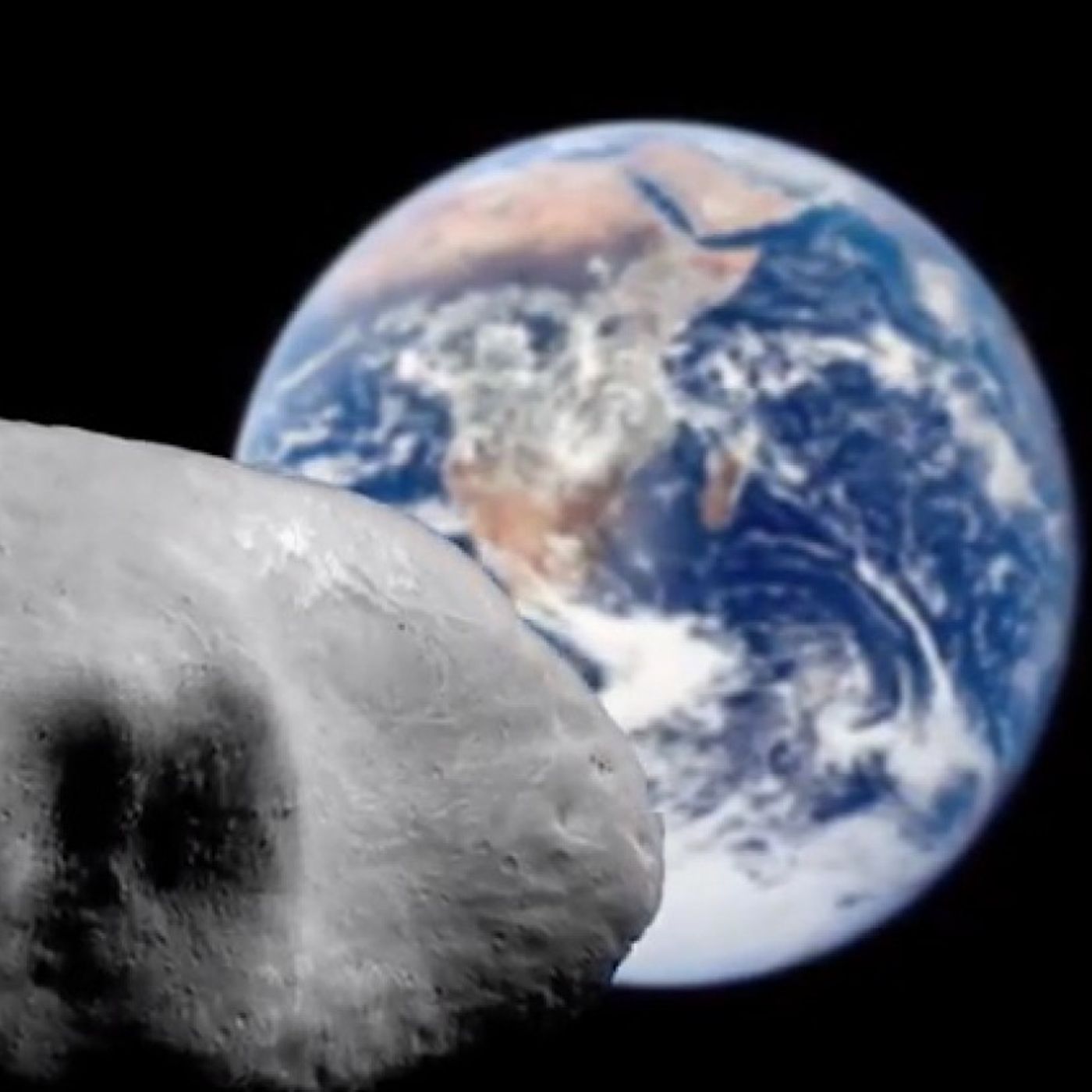
My Catalina Sky Survey teammate Carson Fuls was using the new hundred million pixel camera on our team's Schmidt telescope located on Mt. Bigelow, Arizona, when he discovered 2017 AG13. It passes near the Earth's orbit twice a year on its own 345 day path around the Sun. When Carson spotted it, 9 lunar distances from him it was heading in our direction at about nine and a half miles per second. Three days later it came to less than two times the distance the Moon's distance from us. Carson's new space rock, 2017 AG13's orbit, can bring it to less than 2,000 miles from the surface of our planet. It will not come near the Earth again until 2091 and will not strike the Earth in the foreseeable future. 2017 AG13 is slightly larger than the small asteroid which exploded over Chelyabinsk Russia, creating a sonic boom that injured nearly 1,500 people in February of 2013. If it had been on an impact trajectory, Carson's early discovery, would have given humans the time to calculate where it would hit and thus be able to put out a warning for people in the affected area to stay away from doors and windows. Less than three weeks later Carson was using the same equipment when he discovered another small space rock, 2017 BH30, which came to a bit more than an Earth's circumference from our home planet.
You May Also Like

Stuff To Blow Your Mind
iHeartPodcasts

Bedtime Astronomy
Synthetic Universe

BirdNote Daily
BirdNote

IQ - Wissenschaft und Forschung
Bayerischer Rundfunk

Real Ghost Stories Online
Real Ghost Stories Online | Paranormal, Supernatural & Horror Radio
Paranormal Mysteries
Nic Ryan | Paranormal Mysteries Podcast

This Week in Virology
Vincent Racaniello
FM4 Science Busters
ORF Radio FM4

Vedanta Cast
Jonas Masetti

Intelligent Design the Future
Discovery Institute
Stuff To Blow Your Mind
iHeartPodcasts
Bedtime Astronomy
Synthetic Universe
BirdNote Daily
BirdNote
IQ - Wissenschaft und Forschung
Bayerischer Rundfunk
Real Ghost Stories Online
Real Ghost Stories Online | Paranormal, Supernatural & Horror Radio
Paranormal Mysteries
Nic Ryan | Paranormal Mysteries Podcast
This Week in Virology
Vincent Racaniello
FM4 Science Busters
ORF Radio FM4
Vedanta Cast
Jonas Masetti
Intelligent Design the Future
Discovery Institute
Community discussion