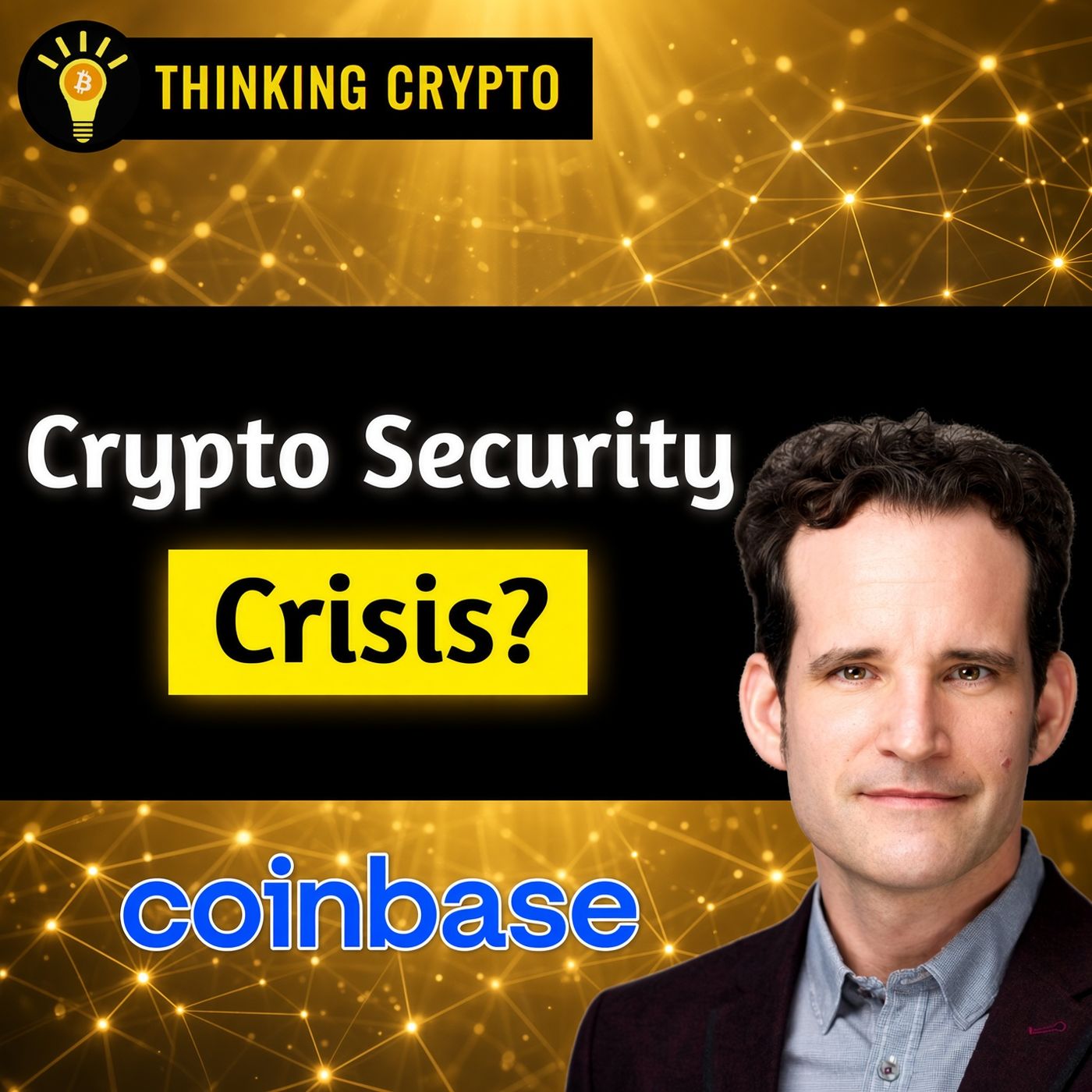
0:05 Hey folks, we are recording at Ripple Swell and joining me is Mike Sikorsky, who's the Chief Information Security Officer at Coinbase. 0:13 Mike, great to have you. 0:14 Thanks for having me. 0:15 So Mike, lots to talk about as it relates to security and crypto. 0:20 It's been a hot topic because you're dealing with new frontiers of AI and potentially quantum. 0:26 Tell us about your role and what you're doing at Coinbase. 0:29 Yeah, so I'm new to the role, Chief Information Security Officer at Coinbase. really focused on how to protect our customers, how to protect our network. And then part of it is also the entire ecosystem. So I'm really lucky that 0:43 I have a team that is exceptional and wants to innovate. 0:46 But we also get to jump in, collaborate with law enforcement, put people in handcuffs. So I get sort of both worlds of like, there's the Web 2 world that everybody has to secure, and then all of Web 3. And then a lot of that is jumping in and figure 1:00 out how we can help others as well. 1:02 Now, you spent your years, or career, I should say, investigating cyber threats and helping companies to respond to attacks. 1:10 What makes crypto different from the traditional sense of traditional security? 1:15 I mean, there's a lot of parallels to the history of incidents that I've worked. So I was doing incident response for 20 years. So any incidents that come up, it's sort of like I've seen a lot of things that have transpired. In fact, I remember the first time 1:32 that crypto was used during a ransomware attack. It was actually a law firm was hacked. And it was the early days, so early that in fact that we didn't even know what Bitcoin was. It was that early. People were like, what is that? And the law firm was like, well, 1:47 the hacker is asking us for that. And we just said, oh, we'll get it. We'll figure it out. And so that was actually my first experience with crypto was I had to figure out how to get a wallet, figure out how to get money in it. and then get it 1:59 to transfer so that they could be safe in the end. 2:02 And it was also at a time when things were going up and down and they actually made money on the deal because of the fluctuation, because the threat actor asked for dollar amount, not Bitcoin amount, which is kind of an interesting scenario. And then that sort of started 2:17 the process and then, yeah, sort of went into it from there. 2:20 When people hear the term crypto hack, they often assume someone broke the blockchain. Where are attackers actually finding the most success today? Is it software vulnerabilities, compromised employees, or tricking customers? 2:37 I think it's all of the above is probably the best way to put it. Any one of those attack vectors are something that I'm concerned about, especially with the rise of AI. So if you go through that list that you just gave, it's like, well, first off, well, 2:50 deep fakes, right? We just saw, we actually just recognized, I'll give you an example, is our customers... really the world, you all know about the Tesla flying car, right? 3:02 Yeah. 3:02 Remember we saw that this past week? Well, there was a deep fake of Musk, right? Saying that if you give money to this wallet, I will double it. Half a million people saw that scam. 3:16 Wow. You know how much? 3:17 $ 5 million worth of Coinbase customer money immediately started flowing to that wallet. 3:25 However. 3:26 Using the systems we have and security we've put in place, it actually put a stop to it and halted the scam. 3:32 The vast majority of that $ 5 million never even made it to that wallet because we were able to pick up on it. So that's one piece. You're also mentioning vulnerabilities. Well, we're using the frontier models, trying to find any and 3:44 all vulnerabilities in our code. So that's how hopefully we're going to get in front of it. And there's going to be light at the end of this tunnel where we've already removed all the vulnerabilities before the attacker is even able to find them. 3:55 And then finally, you mentioned social engineering. Huge, right? 3:59 And insider threat is another big area of concern I have, where it's like, if you could social engineer people to become insiders or you hire people that are insiders, specifically in North. 4:10 Korea, that's a problem. And that's where we're stepping up our game in a variety of areas. 4:14 Are you using AI to combat AI deepfakes to help you spot trends? Similar to, you know, you see a lot of people are removing funds, sending it to a specific wallet. Or, you know, there's a video circulating that an AI can pick up and say, yeah, this is fake. 4:31 Yeah, exactly. 4:31 That's how we actually found that scam is using AI to identify it and then lock it down. And then we provide friction to the customers such that their money is not going to move out. And we explain to them, hey, we recommend you don't move it to this wallet because 4:45 this is a scam. We see it unfolding and we've proactively done something about it. You could apply that same AI for the scams we're seeing. We're collaborating with law enforcement, other partners, threat intelligence companies to get as much information 5:00 so that we could more proactively actually protect customers as things are being transacted. 5:05 That's really great because there's so many. 5:09 Challenges for consumers and investors because there's so many technological innovations that a lot of people still don't understand. 5:17 But it's great that you guys are doing this to flag these things because. 5:20 I, you know, we all have busy lives and then all of a sudden you get a call or you see a video and it's like, oh, but we got to pause and step back and wait and wait. 5:28 Is this real? 5:28 Is it not real? You say, take a deep breath. 5:31 Somebody calls you, hang up the phone, you know, think through what is unfolding because these attacks can happen very quickly if you're not careful. And that's where it's also important to have defense in depth and thinking through, okay, 5:43 what are the different things I need to do to secure my account? How can I have it in different places, different chains, different networks, list goes on and on so that I don't have all my eggs in one basket, right? 5:54 Absolutely. 5:55 Now, Coinbase has described efforts to detect North Korean operatives posing as legitimate job candidates. How has that threat changed the way you approach hiring and third party access? 6:07 Yeah, so DPRK has been a huge problem for tech companies throughout the world. where North Koreans are either getting the jobs themselves through deepfakes and applying in that manner. 6:21 And now they're even coaxing people. You've heard of like the Reddit overemployed. Have you heard of this before? Where it's like, you know, it's a tech worker who wants to have like two, three, four or five jobs. Well, North Korea is reaching out to them and saying, how 6:36 would you like to have another five jobs and I'll work the job for you? and then having them get jobs for them. So this is a massive undertaking, a lot of takedowns. Originally, it was kind of centered on people getting the jobs, and then there was these server 6:50 farms all plugged in with the laptops, right? And you saw a lot of takedowns. And I was actually part of the work on some of that in the past. 6:58 But one of the things we've focused on at Coinbase is, well, how can we detect this at every step of the chain? 7:04 Number one is becoming super great partners between security, and the function that's doing recruiting, right? And doing hiring. How do we become one team and operate as one team? 7:14 So it's not, they're just off doing interviews and we're off doing security. It's integrated part of the process. So our threat intelligence team is actively part of the hiring process, which is a huge part of it. And so we're 7:26 able to recognize if somebody is, you know, maybe doing this with other people and we could catch it and stop it. There's other things we could do like, oh, you're taking this interview from a location that is very different from the one you're applying for. Let's have the 7:39 threat intel team jump in, deep dive that, figure out what's happening. And then you go through every step of the chain, but then it's not done in the hiring process. 7:48 It's also, what is our DLP, data loss protection program that we have? We've invested a ton in that area to say, how can we watch over our employees to realize when we do have an insider? When are they moving things? When are they accessing customer accounts they shouldn't? 8:04 and be able to catch those things and stop. 8:06 It very quickly. And that program's been very successful for us as well. Wow. 8:10 You've got your hands full. 8:13 It's never not a busy day, that's for sure. 8:15 Now, in addition to AI, there are talks of quantum computing. 8:18 Bad actors may want to use that technology. How are you prepping for that as well? 8:23 I see it as one of these things where that day is, it will come at some point. None of us really know when there's going to be a quantum computer that's capable of breaking encryption, like When that date is, I think it's pretty far in the future, but it's coming. 8:36 So what do we do? 8:37 We got to prepare ourselves and make baby steps towards that goal of actually making sure everything is quantum safe across the board. 8:45 What does that mean? 8:46 Well, number one is our network itself. So just Coinbase as a whole, the code that we're building and shipping, interacting with customers, so on and so forth. What about securing the assets we have? So we're really focused on how to make that quantum safe, how to take our 9:04 core KMS, which actually protects, you know, a quarter trillion worth of assets we have on cold storage. How do we make sure that is quantum safe, right? So that's sort of the focus on the Coinbase side. But then there's also the whole ecosystem. And that's the great thing 9:21 I think is special about my role at Coinbase is it's not just hyper focused on my own security and worrying about Just us. It's more of a we situation of the entire ecosystem and saying, how can we actually partner with others? So we helped stand up the Bitcoin 9:35 security accordion, right? 9:37 And that helped with that. 9:38 We also did a independent advisory board on quantum computing combined with blockchain and really brought together a diverse set of experts to the table to really hash this out and figure out what roadmaps do we all need to be on as a collective to get to that point 9:58 way before it's ever. 9:59 Actually a problem. 10:01 I forgot to ask you about AI agents because we were just talking about AI. What happens when a user has 10 AI agents doing different things? One or two get compromised and there's some activity there. What state guardrails do you have in place to flag those things? 10:17 Yeah, so AI is just so multifaceted from a security perspective, which I find intriguing because there's so many different, right? 10:22 It's like the attackers are going to use AI to attack us. There is the use of AI, which I think what you're getting at, either by my customers or by my employees that I'm trying to secure. And then it's like, how do we actually roll out protections to 10:36 make sure that those things aren't going off the rails? 10:38 And that's where I think you got to have, again, it goes back to my defense and death point earlier, which is, well, what guardrails are in place? How are we limiting these agents to make sure they're only able to get access to the information they need when they 10:51 need it? How do we actually think through what are the limits? If it's an AI agent that's going to be accessing your account and making decisions, maybe it should be gated out how much money you're giving it. Maybe it should only be you're focused on using it to 11:06 book travel for you. Well, then it should have enough money to do that, but not access to everything. And there should be a human in the loop for critical or new decisions. that that agent's going to make, where it stops in its tracks, flags to the human who's saying, okay, yeah, 11:20 I know you need to do, you're going to decide to book insurance with the travel. 11:23 Well, that's, I want to make that decision, right? Flag me on that. Right. 11:27 Yeah, that absolutely makes sense. Now, Coinbase obviously has institutional customers. 11:31 And I'm curious, you know, as more institutions enter crypto, what evidence do they want that their assets are secure? 11:40 And what should, you know, what should they. 11:42 How is Coinbase looking to facilitate and make sure that all the bells and whistles and moving parts and components are in place for that? 11:49 Well, they want to know that you're investing in security. 11:51 And then also you have a lot that you're holding and protecting because then you're going to really focus your whole ecosystem around that, which is what we've done. And then furthermore, show on your own and also via third 12:04 parties showing what you've really done to secure that information. 12:08 And having it be multifaceted. So I mentioned our core KMS system, which is really focused on how to protect all of that such that it's not one person, not one computer, not one anything can have access. It's all coming together to actually get access to that in a 12:26 very unique way. We're pretty lucky at Coinbase. We have some really amazing cryptographers like Yehuda Lindell, who's like, you know, one of the biggest names in crypto. I mean, my first week here I actually got to sit down with 12:39 him and whiteboard on that whole system, which is really a highlight for me and really, really fun to do to kind of geek out on, on how, how things are done here, you know, as part of my onboarding process, which was, it was pretty awesome. 12:52 And so, yeah, those are some, some ideas. Wow. 12:55 It's a brave new world. 12:57 Uh, lots of challenges ahead, but certainly we have the technology to help counter that. So I'm sure you're, you're going to be very busy as this AI and quantum grows and all these things. 13:06 But, uh, It sounds like you guys are making a lot of progress. 13:10 Yeah, no, it's been so far fun, my first 100 days, and it's sort of never quiet. And it's also been really fun to put on, look at the innovation in the team. The team I have is really strong and really pushing the envelope when it comes to using AI. 13:26 So that's the third one, right? AI is attacking us. 13:28 AI is being used by customers. How do we protect them? 13:30 And then the last is, how do we use AI to defend our network? And we're really pushing the envelope there as well, which has been fun. 13:40 I don't know if you can speak to this, but are you using different AI models as part of your defense? 13:45 Because there's obviously a lot out there. 13:48 There's Claude, there's Grok, there's OpenAI, ChatGPT. 13:52 How do you use all those models? 13:54 Oh, yeah, we use. 13:56 The model for the job is how we say it. 13:59 Sort of like if it's for scanning code for vulnerabilities, there's always going to be the hot hand, right? It was, you know, Anthropic with their glass wing and Mythos you probably heard of. 14:09 Yes. 14:09 And then it was Astra on the. 14:13 Open AI side. 14:14 So there's always going to be a hot hand on like sort of the best model for the job when it comes to finding vulnerabilities. But then we do a lot of other things with AI like I say we're building the Terminator like an attack capability. So we're going 14:28 to hit ourselves using AI before an attacker out there builds it. So I have a red team. Our red team is amazing, offensive security, right? They're actually building that system, but they're using models that an attacker might use, which 14:41 would be like open source, stripped, so it's able to not have the guardrails in place that would prevent it from taking offensive actions. But then taking that, really containing it, focusing it on different parts of our network, so we 14:53 could shore up before the attacker comes and starts doing the same thing. 14:57 So to answer your original question, it really varies. 15:00 But the cool thing is I have access to all of those models, and I'm not sort of stuck with one or the other. 15:06 I could kind of use the right one for the right job. 15:08 Oh, that absolutely makes sense. 15:10 But, Mike, I definitely want to do a longer-form conversation with you as things progress in the security world. And, look, threats will continue, but you guys have the tools to fend off a lot of this stuff. But thank you so much for joining me. 15:23 Yeah, thanks for having me. I look forward to joining you again in the future. 15:26 This episode is brought to you by Kalshi. You probably know Kalshi for prediction markets, but now you can also trade crypto perps with a free $ 25 bonus. You can trade on crypto up or down with up to 6x leverage, meaning you can put down $ 100 and control a $ 600 position. 15:45 And the big one for us in the United States, it's the first CFTC regulated perps exchange in the country, which means no VPN and no offshore nonsense to deal with. 15:56 To claim your $ 25 bonus, all you have to do is make your first $ 50 trade through the special Thinking Crypto link, which is calchi.com slash p slash Thinking Crypto. 16:08 Link will be in the description for tuning in. Please hit the like button. Subscribe if you haven't as yet. 16:14 If you're listening on a podcast platform such as Spotify or Apple, please follow and leave a five-star rating. 16:20 Thank you so much.






Community discussion