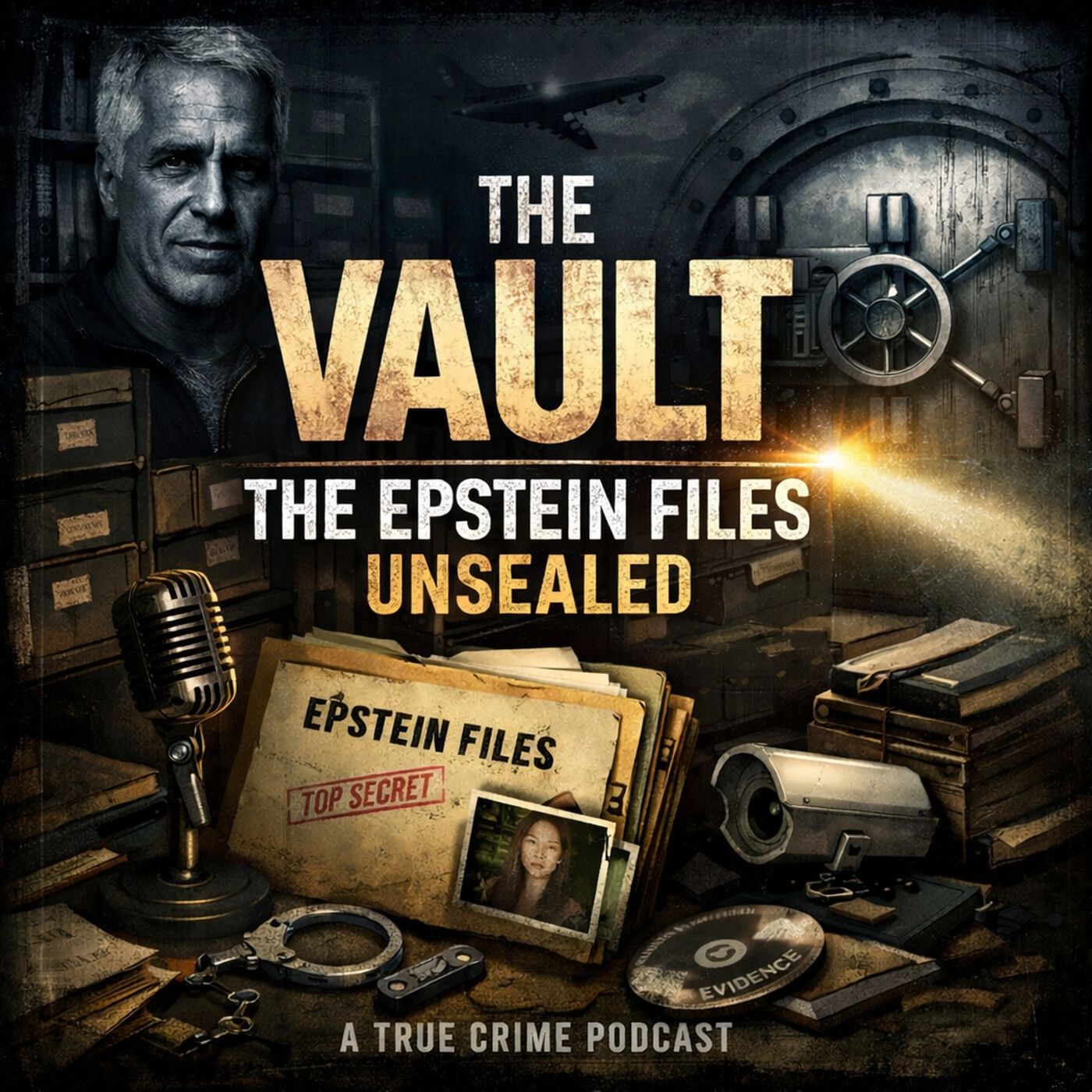
Why Didn’t Authorities Press Larry Visoski for More Answers (Part 2) (8/12/26)
Larry Visoski was far more than Jeffrey Epstein’s longtime pilot. For nearly three decades, he occupied a critical logistical position inside Epstein’s world, flying him between New York, Palm Beach, New Mexico, the Virgin Islands and other destinations while gaining firsthand familiarity with Epstein’s properties, travel patterns, employees and associates. Visoski’s importance was underscored by his testimony at Ghislaine Maxwell’s trial, where he described Maxwell as essentially Epstein’s number two and helped prosecutors explain the internal structure of Epstein’s operation. His connection to Epstein also extended beyond the cockpit, including reported property and financial ties involving roughly 40 acres connected to Zorro Ranch. None of that, by itself, proved that Visoski knowingly participated in Epstein’s crimes, but his extraordinary longevity, access and proximity made him one of the most potentially valuable witnesses for reconstructing how Epstein’s operation actually functioned.
The larger unanswered question was why the government never provided a comprehensive public accounting of what Visoski knew and whether investigators seriously explored the possibility that his knowledge went beyond innocent employment. Epstein’s criminal enterprise depended heavily on private aviation to connect his secluded properties, transport employees and guests, and maintain the mobility that allowed him to operate across multiple jurisdictions. A chief pilot serving him for decades would have been positioned to observe recurring passengers, unusual travel patterns, scheduling practices and the employees responsible for coordinating Epstein’s movements, even if he never directly witnessed sexual abuse. Prosecutors would have needed evidence of criminal intent to charge Visoski, and proximity alone was never enough, but that did not lessen the need for exhaustive scrutiny. His role ultimately highlighted one of the enduring failures of the Epstein investigation: the public learned an enormous amount about the machinery surrounding Epstein, yet still received remarkably few answers about what his longest-serving insiders knew, what they told investigators and why so little accountability extended beyond Epstein and Maxwell.
to contact me:
[email protected]
You May Also Like

BIRNABEATZ
BIRNABEATZ

SmoothJazz.com Global
SmoothJazz.com, Inc

Voices from the Field
NCCIH-CCNSA

Teneki
Teneki
Worship & Wonder Daily Devotional
Westminster Presbyterian Church

NGN Radio
osa777

Scrolls & Secrets
Scrolls & Secrets

AZense Guideline Updates
Azense Medical Education

Faith Outreach
Faith Outreach Center International

Renascença - Pergunte ao Pe. Paulo Franco
Renascença
BIRNABEATZ
BIRNABEATZ
SmoothJazz.com Global
SmoothJazz.com, Inc
Voices from the Field
NCCIH-CCNSA
Teneki
Teneki
Worship & Wonder Daily Devotional
Westminster Presbyterian Church
NGN Radio
osa777
Scrolls & Secrets
Scrolls & Secrets
AZense Guideline Updates
Azense Medical Education
Faith Outreach
Faith Outreach Center International
Renascença - Pergunte ao Pe. Paulo Franco
Renascença
Community discussion