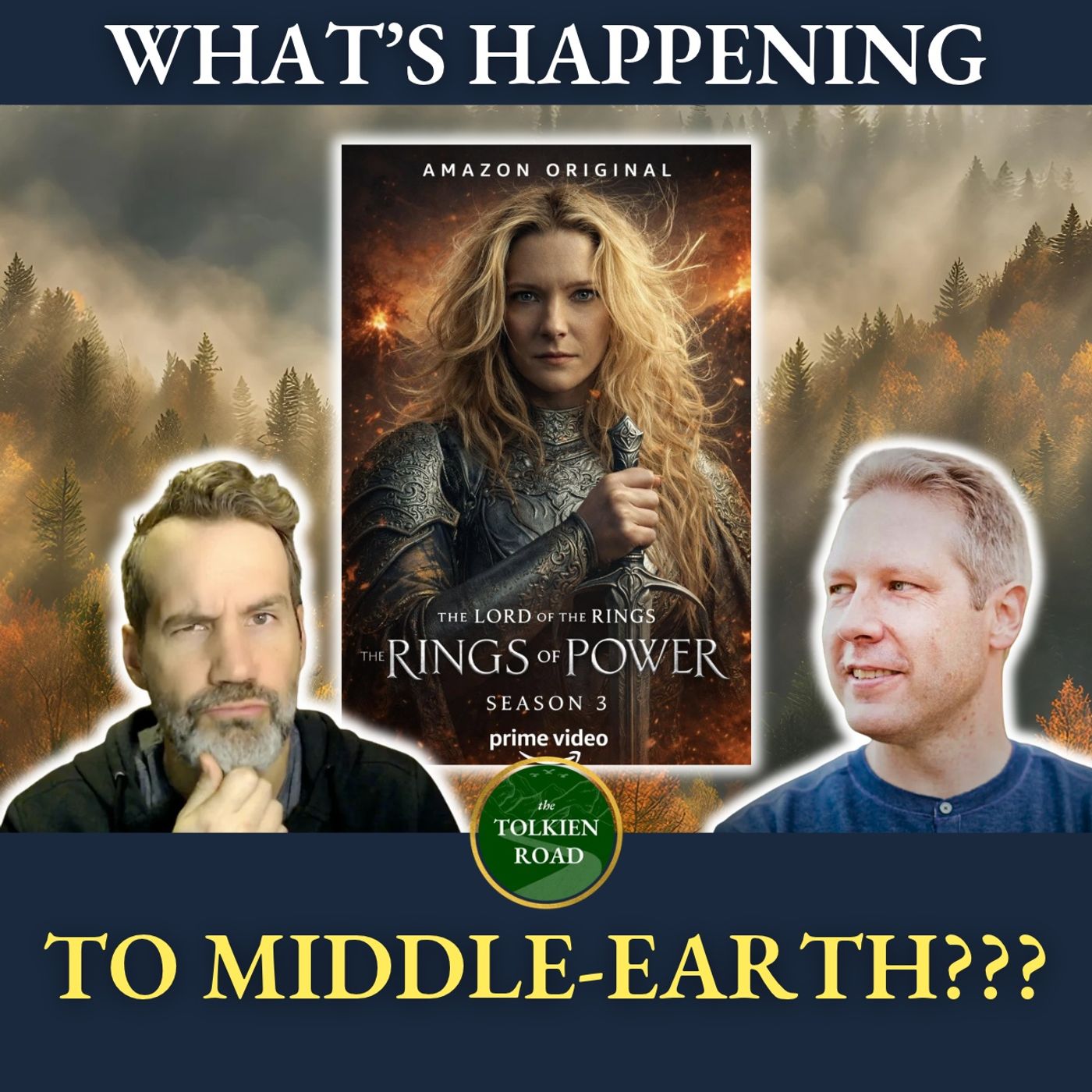
0399: The State of Tolkien Fandom » Rings of Power, Hunt for Gollum & What Comes Next
Jonathan Watson of TheOneRing.com and Exploring Tolkien joins John for a wide-ranging conversation about Tolkien fandom past and present, The Rings of Power Season 3, The Hunt for Gollum, Shadow of the Past, The War of the Rohirrim, Netflix’s Narnia, HBO’s Harry Potter, and what makes an adaptation succeed or fail.
━━━━━━━━━━━━━━
CHAPTERS
00:00 — Introduction
01:21 — “Fellow Travelers” vs. “Fellowship”
02:25 — Jonathan Watson & TheOneRing.com
04:08 — Launching TheOneRing.com in 1999
04:44 — Tolkien Purism & Peter Jackson
05:55 — Early Online Tolkien Fandom
06:40 — Returning to Fandom
07:51 — Exploring Tolkien
08:50 — How Fandom Has Changed
12:19 — Jonathan’s Favorite Tolkien Passage
13:35 — Tolkien and Sub-creation
16:04 — “I Want to Go to There”
19:34 — Tolkien’s Love for Details
21:51 — Deep Tolkien Appreciation
22:58 — Rings of Power Season 3
24:48 — What Went Wrong?
25:14 — Compressing the Second Age
26:02 — Ham-Fisted Changes
27:03 — Middle-earth Geography
28:47 — The Writing Problem
31:40 — Why We’re Still Watching
33:30 — Why Peter Jackson Worked
35:46 — What Modern Franchises Are Missing
36:30 — “Member Berries”
41:56 — The Hunt for Gollum
43:44 — The War of the Rohirrim
48:43 — LOTR and Star Wars
49:29 — Could Gollum Be Middle-earth’s Rogue One?
49:58 — Shadow of the Past
50:11 — Why Not Aldarion and Erendis?
57:53 — Tolkien-Adjacent Territory
58:01 — Netflix’s The Magician’s Nephew
1:00:57 — “We Want Our Grandparents’ Narnia”
1:03:26 — HBO’s Harry Potter
1:04:39 — One Book Per Season
1:05:02 — LOTR as Prestige TV?
1:06:48 — HBO, Apple & Adaptation Quality
1:07:28 — Brandon Sanderson & the Cosmere
1:08:17 — Silo
1:10:10 — “When It Comes to Tolkien, Get It Right”
1:14:10 — Decades of Tolkien Fandom
1:14:34 — Where to Find Jonathan
1:16:25 — Final Thoughts
━━━━━━━━━━━━━━
THE STATE OF TOLKIEN FANDOM
Jonathan launched TheOneRing.com in 1999, before social media transformed online fandom.
Fans gathered on message boards and chat rooms while following the production of Peter Jackson’s films.
Jonathan remembers a fandom where people could criticize adaptations without every disagreement becoming personal.
The internet has changed considerably since then.
━━━━━━━━━━━━━━
WHY TOLKIEN STILL WORKS
Jonathan’s favorite Tolkien passage comes from Frodo listening to music in Rivendell.
Tolkien does not simply tell us what Frodo feels.
His language creates images that invite the reader to participate imaginatively.
That is part of Tolkien’s sub-creative power.
He creates Middle-earth.
We participate by imagining it.
━━━━━━━━━━━━━━
RINGS OF POWER
John and Jonathan discuss their disappointment with The Rings of Power:
• Compressed chronology
• Awkward geography
• Weak dialogue
• Questionable character choices
• Plot problems
• Too much reliance on familiar Tolkien imagery
The frustration comes partly from how much potential the Second Age contains.
━━━━━━━━━━━━━━
WHY PETER JACKSON WORKED
Peter Jackson changed Tolkien too.
But the original trilogy possessed a strong creative vision.
Modern franchise storytelling can instead become a corporate exercise built around committees, callbacks, and familiar imagery.
Great adaptations need someone who understands the source and has a coherent vision for translating it.
━━━━━━━━━━━━━━
HUNT FOR GOLLUM
The pedigree behind The Hunt for Gollum gives reason for hope.
But the fundamental question remains:
Why this story?
We already know where Gollum ends up.
Could it...
The Tolkien Road
SubscribeSign in
Playback speed
×
Share post
Share post at current time
Share from 0:00
0:00
/
1
0399: The State of Tolkien Fandom » Rings of Power, Hunt for Gollum & What Comes Next
Jonathan Watson joins The Tolkien Road to discuss Rings of Power S3, Hunt for Gollum, War of the Rohirrim, Tolkien fandom, Narnia, and more.
John Carswell
1
Share
Transcript
What’s going on in Tolkien fandom right now—and should we be excited or worried about where things are headed?
In this episode of The Tolkien Road, John is joined by Jonathan Watson of TheOneRing.com and the Exploring Tolkien podcast for a wide-ranging conversation about Tolkien fandom past, present, and future. Jonathan shares the story of launching TheOneRing.com during the earliest days of online Tolkien fandom, his experience with Peter Jackson’s films, and a favorite Tolkien passage that captures the extraordinary power of Tolkien’s language.
Then they turn to the current state of Tolkien adaptations: The Rings of Power Season 3, The Hunt for Gollum, Stephen Colbert’s Shadow of the Past, The War of the Rohirrim—and the larger question of what makes an adaptation succeed or fail. They also venture beyond Middle-earth into Netflix’s Narnia, HBO’s Harry Potter, and the challenge of adapting beloved stories for a new generation.
CHAPTERS
00:00 — Introduction
01:21 — Why “Fellow Travelers” Became “Fellowship”
02:25 — Jonathan Watson and the Story of TheOneRing.com
04:08 — Launching TheOneRing.com in 1999
04:44 — Being a Tolkien Purist During the Peter Jackson Era
05:55 — A Very Different Era of Online Fandom
06:02 — The Hobbit Movies
06:40 — Returning to Tolkien Fandom During COVID
07:51 — The Beginning of Exploring Tolkien
08:50 — How Online Tolkien Fandom Has Changed
09:20 — The Toxicity Around Rings of Power
12:19 — Jonathan’s Favorite Tolkien Passage
13:35 — Tolkien, Language, and Sub-creation
16:04 — The “I Want to Go to There” Effect
19:34 — Tolkien’s Love for the Small Details
21:51 — Deep Tolkien Appreciation
22:58 — Rings of Power Season 3
24:48 — The Biggest Problems with Rings of Power
25:14 — Compressing the Second Age Timeline
26:02 — Ham-Fisted Changes to Tolkien
27:03 — When Middle-earth Geography Stops Making Sense
28:47 — The Writing Problem
31:18 — Celeborn Returns?
31:40 — Why John Is Watching Season 3 Anyway
33:30 — Why Peter Jackson’s Lord of the Rings Worked
35:46 — What Modern Franchise Adaptations Are Missing
36:30 — “Member Berries” and Corporate Storytelling
41:56 — The Hunt for Gollum
43:44 — The War of the Rohirrim
46:06 — The Hobbit Movies Revisited
48:43 — Lord of the Rings and Star Wars: A Strange Parallel
49:29 — Could Hunt for Gollum Be Middle-earth’s Rogue One?
49:58 — Stephen Colbert’s Shadow of the Past
50:11 — Why Not Adapt Aldarion and Erendis?
53:00 — Are We Running Out of Middle-earth Stories?
57:53 — Tolkien-Adjacent Territory
58:01 — Netflix’s The Magician’s Nephew
1:00:57 — “We Want Our Grandparents’ Narnia”
1:03:17 — Pessimism About Netflix Narnia
1:03:26 — HBO’s Harry Potter Adaptation
1:04:39 — One Book Per Season
1:05:02 — Could Lord of the Rings Work as Prestige TV?
1:06:48 — Why HBO and Apple Inspire More Confidence
1:07:28 — Brandon Sanderson and the Cosmere
1:08:17 — Silo and Successful Adaptation
1:09:46 — Foundation
1:10:10 — “When It Comes to Tolkien, You Better Get It Right”
1:11:19 — Why We Still Want New Tolkien Adaptations to Succeed
1:12:15 — Balrogs, Mithril, and the One Ring
1:14:10 — Looking Back at Decades of Tolkien Fandom
1:14:34 — Where to Find Jonathan
1:16:25 — Final Thoughts
THE EARLY DAYS OF ONLINE TOLKIEN FANDOM
Jonathan has been involved in online Tolkien fandom since before social media.
TheOneRing.com began in 1999, shortly after Peter Jackson’s Lord of the Rings films were announced.
Within months, the site grew from essentially nothing to tens of thousands of weekly users, with bulletin boards, chat systems, and a community of fans following the films as they developed.
Jonathan’s group developed a reputation as Tolkien “purists”—fans who were excited about the movies but willing to criticize changes from the books.
That experience also highlights how different early internet fandom felt.
Disagreement existed, but criticism did not automatically require treating the other side as morally suspect.
TOLKIEN’S LANGUAGE AND SUB-CREATION
Jonathan’s favorite passage comes from Frodo listening to music in Rivendell’s Hall of Fire.
What fascinates him is the way Tolkien creates an emotional and imaginative experience without explaining what the reader is supposed to feel.
Images of golden mist, seas, foam, and the margins of the world prompt readers to construct the scene inside their own minds.
Jonathan connects this with Tolkien’s idea of sub-creation.
Tolkien creates Middle-earth.
But the reader participates by imagining it.
That shared imaginative act is part of why Tolkien can feel so much richer than fiction that simply tells the reader what is happening.
WHY READ TOLKIEN SO SLOWLY?
Both John and Jonathan return to the sheer density of Tolkien’s work.
A seemingly insignificant description can reward an entire discussion.
A couple of pages can support a full podcast episode.
That is not stretching the material.
It is appreciating just how much history, language, beauty, and thought Tolkien packed into the text.
RINGS OF POWER SEASON 3
Neither John nor Jonathan hides his disappointment with The Rings of Power.
Their criticism centers less on isolated lore changes than on the accumulation of problems:
• Massive compression of Tolkien’s Second Age chronology
• Geography that sometimes seems meaningless
• Exposition-heavy or awkward dialogue
• Character choices that feel disconnected from Tolkien
• Plot mechanics that fail under scrutiny
• Repeated reliance on familiar Tolkien imagery instead of developing something organically
For Jonathan, the problem is “death by a thousand” bad decisions.
John agrees that the disappointment is heightened by what the series could have been.
WHY PETER JACKSON WORKED
The conversation contrasts Rings of Power with Peter Jackson’s original trilogy.
Jackson changed Tolkien too.
But he approached the project with a strong creative vision.
He was an idiosyncratic filmmaker attempting something most people thought impossible.
That individual vision matters.
John and Jonathan argue that modern franchise storytelling can too easily become a corporate exercise designed by committees, familiar callbacks, and attempts to satisfy audience categories.
The result can be technically impressive without possessing a real creative center.
THE HUNT FOR GOLLUM
That concern carries directly into The Hunt for Gollum.
The pedigree creates some reason for optimism.
But the bigger question is:
Why this story?
The audience already knows where Gollum ends up and what happens afterward.
The challenge will be making the journey feel compelling even though the destination is completely known.
Could it become Middle-earth’s Rogue One—a story whose outcome is known but whose execution justifies the telling?
Maybe.
THE WAR OF THE ROHIRRIM
Jonathan is considerably more critical of The War of the Rohirrim than John.
His objection is that Tolkien already provided a powerful story centered upon Helm Hammerhand, yet the adaptation chose to create a different center for the narrative.
John enjoyed the movie more, while acknowledging its problems.
The disagreement provides a useful example of the larger conversation:
How much freedom should an adaptation take when Tolkien has already supplied the bones of a compelling story?
SHADOW OF THE PAST — AND THE STORIES NOT BEING TOLD
The proposed Shadow of the Past project raises the same question.
Why keep returning to familiar characters and familiar stretches of history when Tolkien left behind so many other stories?
Jonathan points particularly to Aldarion and Erendis.
That unfinished Númenórean story contains marriage, ambition, political tension, voyages, Elves, Middle-earth, and the beginnings of Númenor’s larger involvement with the world.
There is plenty of room to adapt and expand without simply revisiting familiar ground.
NETFLIX’S NARNIA
The conversation then moves into Tolkien-adjacent territory with Netflix’s adaptation of The Magician’s Nephew.
Neither John nor Jonathan sounds especially optimistic.
Their concern is broader than any single casting or production choice.
They worry about adaptations approaching beloved stories with the assumption that the material needs to be substantially reinvented for modern audiences.
Sometimes readers actually want something much simpler:
The story they already love, told extraordinarily well.
HARRY POTTER ON HBO
Both are somewhat more intrigued by HBO’s Harry Potter series.
The planned book-per-season structure creates the possibility of including material the films necessarily omitted.
That raises an interesting Lord of the Rings question as well:
Could Tolkien’s novel eventually work as a prestige television series with enough room to include the Old Forest, Tom Bombadil, the Barrow-downs, and the countless quieter moments the movies passed over?
The possibility is appealing—but only if the adaptation is entrusted to people who understand why the original work succeeds.
THE REAL ADAPTATION PROBLEM
Throughout the conversation, a theme keeps resurfacing.
The problem is not simply changing things.
Adaptation requires change.
The question is whether those changes come from a deep understanding of the source—or from the conviction that the adapters know better than the author.
A successful adaptation needs craft, attention to detail, and a coherent vision.
Most importantly, the creators have to love the thing they are adapting enough to understand what makes it worth adapting in the first place.
THE BIG TAKEAWAY
Tolkien fandom has changed enormously since Jonathan first launched TheOneRing.com in 1999.
The internet changed.
Fandom changed.
Movies changed.
And Middle-earth itself became one of the most valuable entertainment properties in the world.
But the thing at the center of all of it has not changed:
Tolkien’s writing.
However many shows, films, reboots, and spin-offs appear, Tolkien’s extraordinary language, depth, and imaginative power remain the standard against which everything else is measured.
And perhaps that is why Tolkien fans care so much when an adaptation gets it right—or gets it wrong.
Discussion about this video
CommentsRestacks
The Tolkien Road reply rules
Podcast
Embark upon a wondrous journey through the realms of Middle-earth and beyond with the Tolkien Road, a podcast dedicated to the enchanting tales and writings of JRR Tolkien. Come, join John, Greta, and our mighty Fellowship as we delve deep into the magic that lingers within the pages of these timeless legends. And always remember: DO NOT BE HASTY!!! Become a supporter of this podcast: https://www.spreaker.com/podcast/the-tolkien-road--5222755/support.
Embark upon a wondrous journey through the realms of Middle-earth and beyond with the Tolkien Road, a podcast dedicated to the enchanting tales and writings of JRR Tolkien. Come, join John, Greta, and our mighty Fellowship as we delve deep into the magic that lingers within the pages of these timeless legends. And always remember: DO NOT BE HASTY!!! Become a supporter of this podcast: https://www.spreaker.com/podcast/the-tolkien-road--5222755/support.
Subscribe
Authors
John Carswell
Recent Posts
0235: Books of Lost Tales II » Tolkien’s First Great Tales
• John Carswell
0394: The Lord of the Rings » Foreword & Prologue » Mailbag
• John Carswell
0234: Book of Lost Tales I » A Completely Different Silmarillion
• John Carswell
0008: Illustrating Ainulindalë
• John Carswell
0007: The Silmarillion - Ch03 - Of the Coming of the Elves and the Captivity of Melkor
• John Carswell
0393: The Lord of the Rings » Prologue » Mathoms
• John Carswell
0006: On Enjoying Tolkien, Or Reasons Why
• John Carswell
Ready for more?
Subscribe
© 2026 John Carswell · Privacy ∙ Terms ∙ Collection notice
Start your SubstackGet the app
Substack is the home for writing, podcasting, and media founders.
<style> #nojs-banner { position: fixed; bottom: 0; left: 0; padding: 16px 16px 16px 32px; width: 100%; box-sizing: border-box; background: red; color: white; font-family: -apple-system, "Segoe UI", Roboto, Helvetica, Arial, sans-serif, "Apple Color Emoji", "Segoe UI Emoji", "Segoe UI Symbol"; font-size: 13px; line-height: 13px; } #nojs-banner a { color: inherit; text-decoration: underline; } </style> <div id="nojs-banner"> This site requires JavaScript to run correctly. Please <a href="https://enable-javascript.com/" target="_blank">turn on JavaScript</a> or unblock scripts </div>
You May Also Like

Art Problems
Paddy Johnson

dc
Salai Dawtcemsang

The Newest Olympian
Mike Schubert
RISK!
Kevin Allison
Tony Katz Today
Tony Katz

The Splendid Table: Conversations & Recipes For Curious Cooks & Eaters
American Public Media

All Of It
WNYC

Mahlakung
Thobela FM

The Losers' Club: A Stephen King Podcast
Bloody FM
War Nerd Radio — Subscriber Feed
Gary Brecher
Art Problems
Paddy Johnson
dc
Salai Dawtcemsang
The Newest Olympian
Mike Schubert
RISK!
Kevin Allison
Tony Katz Today
Tony Katz
The Splendid Table: Conversations & Recipes For Curious Cooks & Eaters
American Public Media
All Of It
WNYC
Mahlakung
Thobela FM
The Losers' Club: A Stephen King Podcast
Bloody FM
War Nerd Radio — Subscriber Feed
Gary Brecher
Community discussion