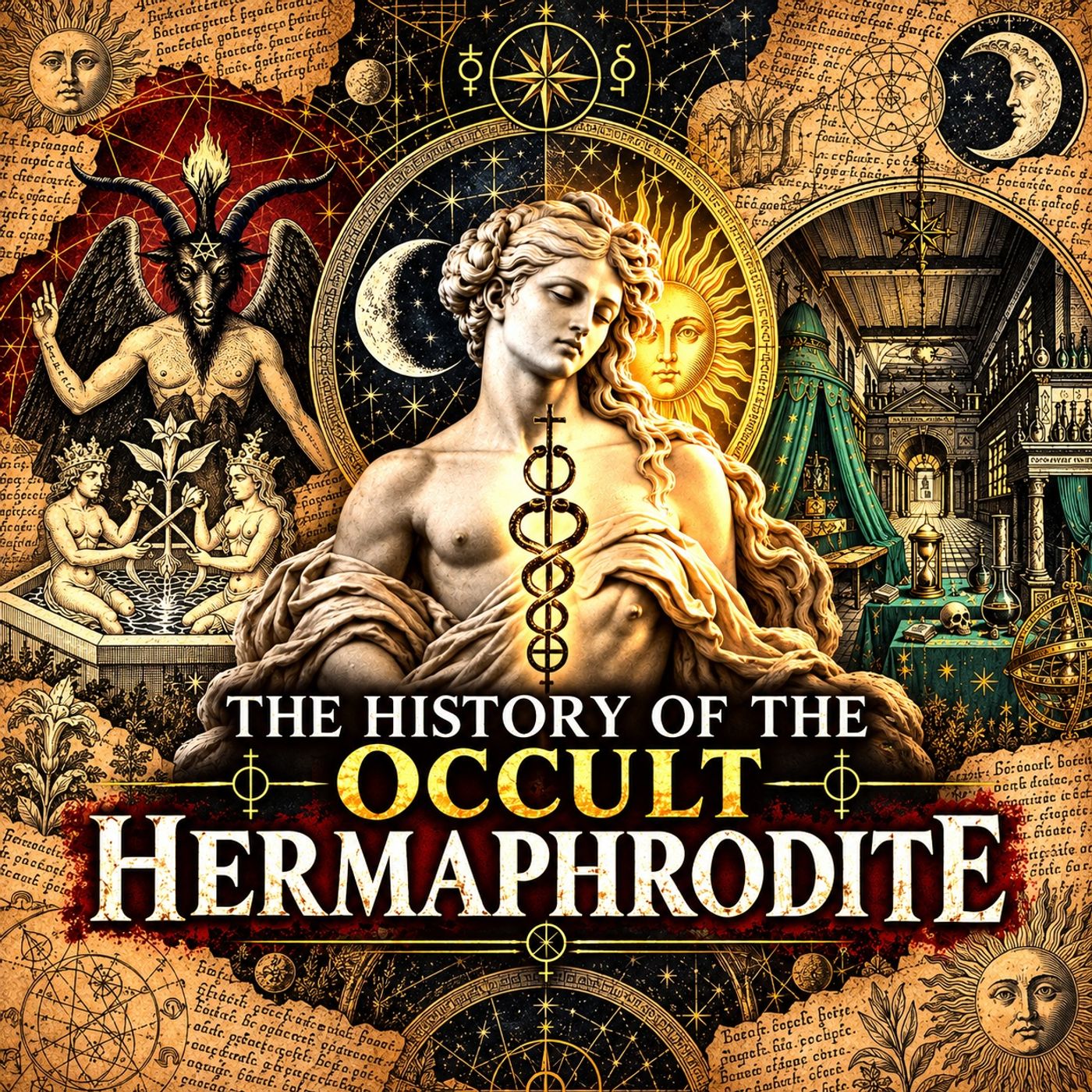
The History of The Occult Hermaphrodite
Links For The Occult Rejects
https://linktr.ee/theoccultrejects
Occult Research Institute
https://www.occultresearchinstitute.org/
Substack
https://substack.com/@theoccultrejects?r=7auau0&utm_campaign=profile&utm_medium=profile-page
Cash App
https://cash.app/$theoccultrejects
Venmo
@TheOccultRejects
Patreon
https://www.patreon.com/TheOccultRejects
BIBLIOGRAPHY
ANCIENT GREEK AND ROMAN SOURCES
Diodorus Siculus. Bibliotheca Historica (Library of History), Book IV. Especially the discussion of Hermaphroditus as the offspring of Hermes and Aphrodite and as possessing combined male and female characteristics.
Ovid. Metamorphoses, Book IV, especially the episode of Salmacis and Hermaphroditus.
Plato. Symposium, especially Aristophanes’ speech, 189d–193d, for the myth of primordial male, female, and androgynous human beings and their division by Zeus.
Theophrastus. Characters, especially the discussion of the “Superstitious Man,” traditionally connected with early evidence for Hermaphroditus.
Posidippus. Hermaphroditus. Surviving fragment/testimonia concerning the lost Hellenistic comedy.
Ajootian, Aileen. “The Only Happy Couple: Hermaphrodites and Gender.” In studies of ancient representations of Hermaphroditus and erotic sculpture. Useful for the Hellenistic and Roman iconographic tradition.
Brisson, Luc. Sexual Ambivalence: Androgyny and Hermaphroditism in Graeco-Roman Antiquity. Berkeley: University of California Press, 2002. Important for the broader ancient history of androgyny and hermaphroditism.
JEWISH, RABBINIC, AND KABBALISTIC SOURCES
Genesis Rabbah 8:1. Especially the teachings concerning Adam as androgynos and du-parzufim.
Babylonian Talmud. Berakhot 61a and Eruvin 18a. For related rabbinic discussions of the original human as double-sided or possessing two faces.
Philo of Alexandria. De Opificio Mundi (On the Creation). Relevant to earlier Jewish-Hellenistic speculation concerning primordial humanity and sexual differentiation.
Sefer ha-Bahir. For early medieval Kabbalistic material contributing to later gendered sefirotic symbolism.
The Zohar. Especially passages concerning masculine and feminine divine configurations, the Shekhinah, Tiferet, Adam, and supernal union.
Tishby, Isaiah. The Wisdom of the Zohar: An Anthology of Texts. 3 vols. Translated by David Goldstein. Oxford: Littman Library, 1989.
Scholem, Gershom. Major Trends in Jewish Mysticism. New York: Schocken Books.
Scholem, Gershom. On the Kabbalah and Its Symbolism. Translated by Ralph Manheim. New York: Schocken Books, 1965.
Idel, Moshe. Kabbalah: New Perspectives. New Haven: Yale University Press, 1988.
Wolfson, Elliot R. Circle in the Square: Studies in the Use of Gender in Kabbalistic Symbolism. Albany: State University of New York Press, 1995.
Wolfson, Elliot R. Through a Speculum That Shines: Vision and Imagination in Medieval Jewish Mysticism. Princeton: Princeton University Press, 1994.
Wolfson, Elliot R. Language, Eros, Being: Kabbalistic Hermeneutics and Poetic Imagination. New York: Fordham University Press, 2005.
Brown, Jeremy Phillip. “God as Androgyne in Medieval Kabbalah: Toward a History of the Doctrine.” Traditio 80 (2025). Particularly important for reassessing older claims concerning the antiquity of fully developed divine-androgyny doctrines within Provençal Kabbalah.
CHRISTIAN CABALA AND RENAISSANCE OCCULT PHILOSOPHY
Pico della Mirandola, Giovanni. Conclusiones Nongentae (900 Conclusions). 1486.
Reuchlin, Johannes. De Verbo Mirifico. 1494.
Reuchlin, Johannes. De Arte Cabalistica. 1517.
Agrippa, Heinrich Cornelius. De Occulta Philosophia Libri Tres (Three Books of Occult Philosophy). Complete edition, 1533.
Copenhaver, Brian P., ed. and trans. Hermetica: The Greek Corpus Hermeticum and the Latin Asclepius in a New English...
You May Also Like

Let the Bible Speak Radio
Dr. Alan Cairns

Satsang - Sant Shri Asharamji Bapu Satsang
Sant Shri Asharamji Bapu Ashram

Quazi Johir
Quazi Johir

Guru Viking Podcast
Guru Viking

Juanribe
Juanribe Pagliarin

TRUNEWS with Rick Wiles
Morning Manna with Rick Wiles

Next Level Soul Podcast with Alex Ferrari
Alex Ferrari

The Bible Study Hour on Oneplace.com
Dr. James Boice

Our Daily Bread Evening Meditations
Our Daily Bread Ministries UK

The Light
Touch Canada
Let the Bible Speak Radio
Dr. Alan Cairns
Satsang - Sant Shri Asharamji Bapu Satsang
Sant Shri Asharamji Bapu Ashram
Quazi Johir
Quazi Johir
Guru Viking Podcast
Guru Viking
Juanribe
Juanribe Pagliarin
TRUNEWS with Rick Wiles
Morning Manna with Rick Wiles
Next Level Soul Podcast with Alex Ferrari
Alex Ferrari
The Bible Study Hour on Oneplace.com
Dr. James Boice
Our Daily Bread Evening Meditations
Our Daily Bread Ministries UK
The Light
Touch Canada
Community discussion