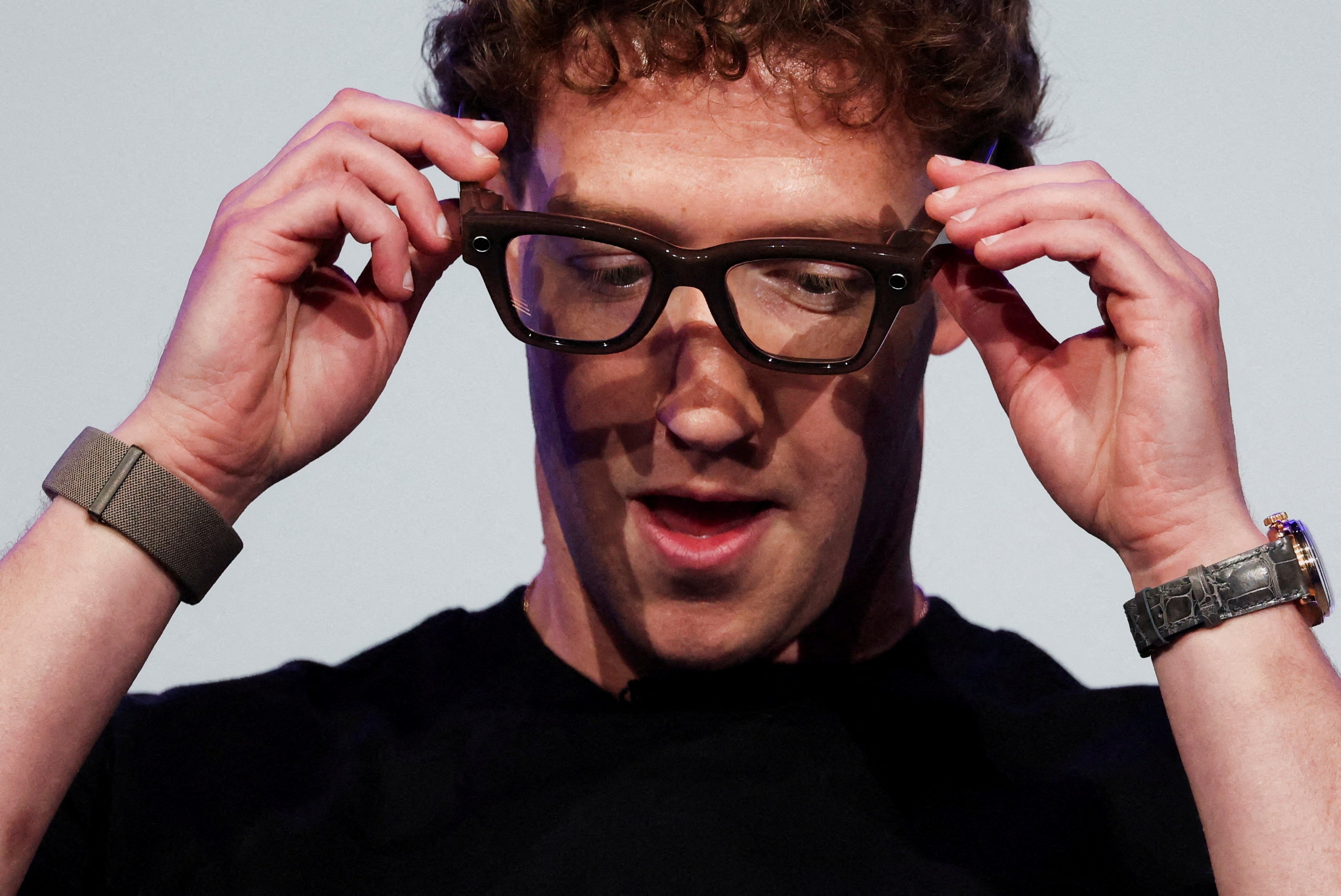
Smart glasses — a new frontier of foreseeable digital harm?
There has long been a gap between the emergence of new forms of technology and the development of laws designed to mitigate their dangers. But with the rapid advances in artificial intelligence and immersive technologies, that gap is becoming increasingly problematic. Take the example of wearable technology, such as smart glasses. Companies like Meta, in particular, have poured vast amounts of money into the development and commercialisation of augmented reality (XR) headsets. This would seem to represent the natural extension of the decades-long ambition to commodify and capture the attention of users — combined now with seamless search, audio, call, image/video and geolocation functions. But quite apart from their troubling military and law enforcement applications, there are a range of ethical problems presented by the widespread adoption of smart glasses. For example, on the side of the wearer/user, the interposition of technology directly into one’s field of vision — thereby making the technology the immediate object of one’s gaze — corrupts the ethical concept of attentiveness and further erodes our capacity to be morally present to others in a technologically unmediated way. Smart glasses also erode the concept of a shared reality by imposing prompts from interested parties and advertisers directly into users’ field of vision. And speaking of interested parties, don’t these forms of wearable technology represent new means of acquiring vast amounts of data for advertisers and the training of large language models? What about those who are being observed by wearers of smart glasses? We are assured that safety measures are in place to indicate to non-consenting parties that they are being recorded. But even if those safeguards are trustworthy, the mere possibility of misuse imposes a degree of suspicion between persons that cannot help but be corrosive. And this doesn’t approach the opportunities for abuse that are presented by the technology itself — not least due to embedded facial recognition technology. Then there is the wider issue of the prospect of the inescapability of technology itself, even for those who attempt to opt out or evade the datafication of their lives by tech platforms. It is clear that legislation needs to catch up in order to encompass the vast new possibilities for harm presented by wearable technologies with AI integration. But are we prepared for what that same technology might do to our moral conceptions and habits? Guest: Milica Stilinovic is a Post-Doctoral Research Associate at the University of Sydney, where she is working on the ARC-funded project “Governing Immersive Technologies”. You can read her analysis of the social harms of smart glasses on ABC Religion and Ethics. — The Minefield — Live at the Sydney Writers’ Festival 24 May 2026 “The Return of Nationalism and the End of Democracy” With each new election, geopolitical deal and technological advancement, it seems like the ideals of democracy are slipping away. In this special live recording of ABC Radio National’s The Minefield, hosts Waleed Aly and Scott Stephens discuss the state of democracy today with Canadian podcaster and political scientist David Moscrop. When: Sunday, 24 May 2026, 4-5pm Where: Carriageworks, 245 Wilson Street, Eveleigh, NSW, 2015 To get tickets: https://www.swf.org.au/program/festival-2026/abc-the-minefield-live — UPCOMING EPISODE: CHRISTOPHER MARLOWE’S “DOCTOR FAUSTUS” Expressions like “deal with the devil”, “selling one’s soul” and “Faustian bargain” are woven through our language. And popular culture is filled with variations on the unsavoury theme of attaining wealth, fame and pleasure by permanently corrupting one’s soul. In the third week of May, Waleed and Scott will be turning their attention to the source of these tropes: Christopher Marlowe’s play “Doctor Faustus”. It was first performed in 1592, just a year before Marlowe’s own untimely death. It is neither a long nor an over
You May Also Like

Worship & Wonder Daily Devotional
Westminster Presbyterian Church

Scrolls & Secrets
Scrolls & Secrets

Renascença - Pergunte ao Pe. Paulo Franco
Renascença

Darrers podcast - Ràdio Cubelles
Ràdio Cubelles

Darrers podcast - Ràdio Ciutat de Badalona
Ràdio Ciutat de Badalona

CHURCH on SermonAudio
Various Speakers

Church Unity: The Forgotten Treasure
Paul J. Bucknell

Unter Büchern mit Katrin Schumacher
Mitteldeutscher Rundfunk

Podcast Paris United
Paris United
Baptists on SermonAudio
Various Speakers
Worship & Wonder Daily Devotional
Westminster Presbyterian Church
Scrolls & Secrets
Scrolls & Secrets
Renascença - Pergunte ao Pe. Paulo Franco
Renascença
Darrers podcast - Ràdio Cubelles
Ràdio Cubelles
Darrers podcast - Ràdio Ciutat de Badalona
Ràdio Ciutat de Badalona
CHURCH on SermonAudio
Various Speakers
Church Unity: The Forgotten Treasure
Paul J. Bucknell
Unter Büchern mit Katrin Schumacher
Mitteldeutscher Rundfunk
Podcast Paris United
Paris United
Baptists on SermonAudio
Various Speakers
Community discussion