Last Words: The ‘Farewell Sermon’ of the Prophet Muhammad
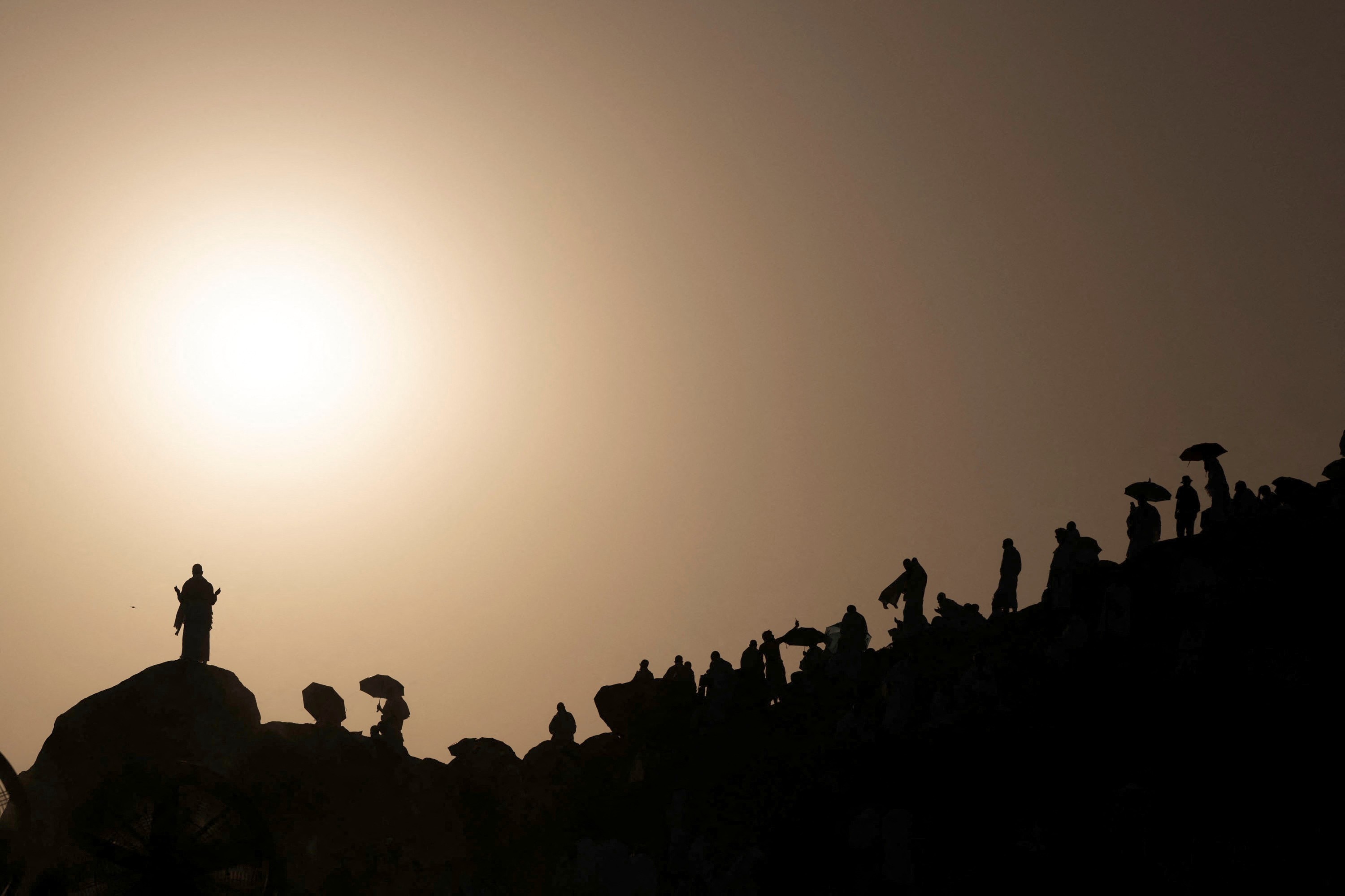
It could be said that human beings reveal who they most truly are as they approach the end. For the end of one’s life is not simply its terminus ad quem; it is also its telos, its goal or meaning. A life that has been lived in the thrall of egotism, whose fundamental pursuit has been the safeguarding and satisfaction of the self, will almost certainly, at the end, turn inward upon itself and find itself grasping, desperately, at something like immortality — as the indefinite prolonging of the self. It would not be surprising for such a life to be shrunken, fearful, petty, suspicious, diminished at the end, rather than open-handed, open-hearted, at peace. Consider the example of Shakespeare’s King Lear, who craves flattery and reassuring falsehoods, who obsesses over small offenses and slights to his ego, who remains unconcerned with truthfulness and unnourished by the love of his youngest daughter. On the other hand, a life that is lived meaningfully — which is to say, a life that serves a purpose beyond itself — is able to approach the end without fear, not only because a certain humility has become a habit of life, but because the prospect of the end brings what is most important into sharper focus. This is perhaps what Socrates had in mind when he said that “the one aim of those who practice philosophy in the proper manner is to practice for dying and death” (Phaedo, 64a). Here we could think of Martin Luther King, Jr’s final sermon at Mason Temple in Memphis, Tennessee, on 3 April 1968, during which he reflects on threats made to his life. “Like anybody, I would like to live a long life”, he admits. “Longevity has its place.” Then he immediately says, “But I’m not concerned about that now. I just want to do God’ will … And I’m happy, tonight. I’m not worried about anything. I’m not fearing any man.” Or consider the philosopher Stanley Cavell, writing tenderly in his memoir that, “anticipating the ending of my life, I am becoming freer than ever of the desire to persuade”. Or Toni Morrison, after surveying modern literature’s fascination with evil (“Evil has vivid speech; Goodness bites its tongue”), affirms “these last forty years, I have become more and more invested in making sure acts of goodness (however casual or deliberate or misapplied or … blessed) produce language”. Only lives spent renouncing egotism, and pursuing what matters most, could speak such words. So occasionally over the coming months, we’re going to spend some time in the presence of those who are approaching the end, listening to what they have to say. It may not be the end of their lives, but their lives will, in each instance, be approaching a pivotal moment for which their habits of life, their daily devotion to a cause bigger than themselves, will have prepared them. Perhaps the most historically consequential of these moments has just been observed by millions of Muslims around the world. In February 632 CE, twenty-three years after receiving his first revelation in a cave near Mecca, the Prophet Muhammad would lead tens of thousands of his followers back to the city of his birth with the intent of guiding them through the full ritual of the hajj. It was to be his final pilgrimage. Over the course of several days, Muhammad led them in the seven processions around the Ka‘aba — the simple square structure believed to have been constructed by Adam, and then rebuilt by Ibrahim/Abraham, the first monotheist, and finally by Muhammad himself — followed by the journey back-and-forth seven times between the nearby hills of Safa and Marwa, thus re-enacting the frantic search of Hagar, wife of Ibrahim, for water for their dying child Ismail. The Prophet then led them to the plain next to the rocky hill of Arafat and addressed those gathered. His message has all the marks of finality about it. Here is part of what the Prophet said (the translation comes from Yahiya Emerick): “O People, listen to my words, because I don’t know if I will ever be with
You May Also Like

BIRNABEATZ
BIRNABEATZ

SmoothJazz.com Global
SmoothJazz.com, Inc

Voices from the Field
NCCIH-CCNSA

Teneki
Teneki
Worship & Wonder Daily Devotional
Westminster Presbyterian Church

NGN Radio
osa777

Book Friends Forever
HachetteAudio

Scrolls & Secrets
Scrolls & Secrets

AZense Guideline Updates
Azense Medical Education

Lumin
Geoff Lumley
BIRNABEATZ
BIRNABEATZ
SmoothJazz.com Global
SmoothJazz.com, Inc
Voices from the Field
NCCIH-CCNSA
Teneki
Teneki
Worship & Wonder Daily Devotional
Westminster Presbyterian Church
NGN Radio
osa777
Book Friends Forever
HachetteAudio
Scrolls & Secrets
Scrolls & Secrets
AZense Guideline Updates
Azense Medical Education
Lumin
Geoff Lumley
Community discussion