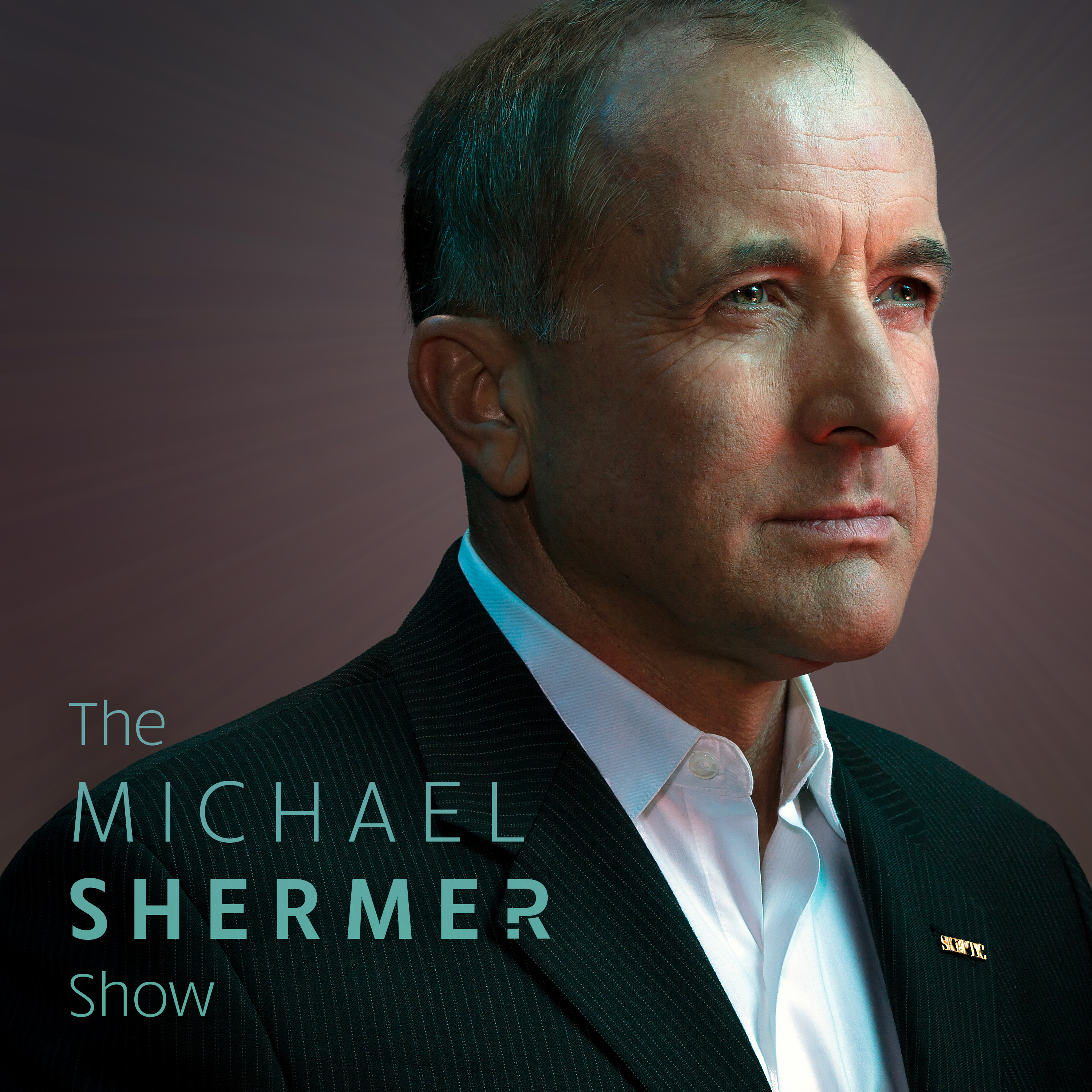
Purpose in the Eyes of a Psychiatrist
Generations have been taught that evolution implies there is no overarching purpose to our existence, that life has no fundamental meaning. We are merely the accumulation of tens of thousands of intricate molecular accidents. Some scientists take this logic one step further, suggesting that evolution is intrinsically atheistic and goes against the concept of God.
With respect to our evolution, nature seems to have endowed us with competing dispositions, what Wilkinson calls the dual potential of human nature. We are pulled in different directions: selfishness and altruism, aggression and cooperation, lust and love.
By using principles from a variety of scientific disciplines, Yale Professor Samuel Wilkinson provides a framework for human evolution that reveals an overarching purpose to our existence.
Wilkinson claims that this purpose, at least one of them, is to choose between the good and evil impulses that nature has created within us. Our life is a test. This is a truth, as old as history it seems, that has been espoused by so many of the world's religions. From a certain framework, Wilkinson believes that these aspects of human nature—including how evolution shaped us—are evidence for the existence of a God, not against it.
Closely related to this is meaning. What is the meaning of life? Based on the scientific data, it would seem that one such meaning is to develop deep and abiding relationships. At least that is what most people report are the most meaningful aspects of their lives. This is a function of our evolution. It is how we were created.
Shermer and Wilkinson discuss: • evolution: random chance or guided process? • selfishness and altruism • aggression and cooperation • inner demons and better angels • love and lust • free will and determinism • the good life and the good society • empirical truths, mythic truths, religious truths, pragmatic truths • Is there a cosmic courthouse where evil will be corrected in the next life? • theodicy and the problem of evil: Why do bad things happen to good people?
Samuel T. Wilkinson is Assistant Professor of Psychiatry at Yale University, where he also serves as Associate Director of the Yale Depression Research Program. He received his MD from Johns Hopkins School of Medicine. His articles have been featured in the New York Times, the Washington Post, and the Wall Street Journal. He has been the recipient of many awards, including Top Advancements & Breakthroughs from the Brain and Behavior Research Foundation; Top Ten Psychiatry Papers by the New England Journal of Medicine, the Samuel Novey Writing Prize in Psychological Medicine (Johns Hopkins); the Thomas Detre Award (Yale University); and the Seymour Lustman Award (Yale University). His new book is Purpose: What Evolution and Human Nature Imply About the Meaning of our Existence.
You May Also Like

懂心理,調出好關係 《Healthy Relationship》
姜尚文心理師,朴世光心理師

The Grave Talks | Haunted, Paranormal & Supernatural
Ghost Stores, Haunted, Paranormal & Supernatural Stories

Chris Skinner's Countryside Podcasts
High Ash Farm

Real Ghost Stories Online
Real Ghost Stories Online | Paranormal, Supernatural & Horror Radio
The Art of Range
Tip Hudson

Arroe Collins Forest Stories
Arroe Collins

Accès au Marché Mondial des Dispositifs Médicaux
Pure Global

Jack's Backyard
830 WEEU "The Voice of Berks and Beyond"

UAP Files Podcast
UAP Files Podcast

Eye On The Sky
Vermont Public
懂心理,調出好關係 《Healthy Relationship》
姜尚文心理師,朴世光心理師
The Grave Talks | Haunted, Paranormal & Supernatural
Ghost Stores, Haunted, Paranormal & Supernatural Stories
Chris Skinner's Countryside Podcasts
High Ash Farm
Real Ghost Stories Online
Real Ghost Stories Online | Paranormal, Supernatural & Horror Radio
The Art of Range
Tip Hudson
Arroe Collins Forest Stories
Arroe Collins
Accès au Marché Mondial des Dispositifs Médicaux
Pure Global
Jack's Backyard
830 WEEU "The Voice of Berks and Beyond"
UAP Files Podcast
UAP Files Podcast
Eye On The Sky
Vermont Public
Community discussion