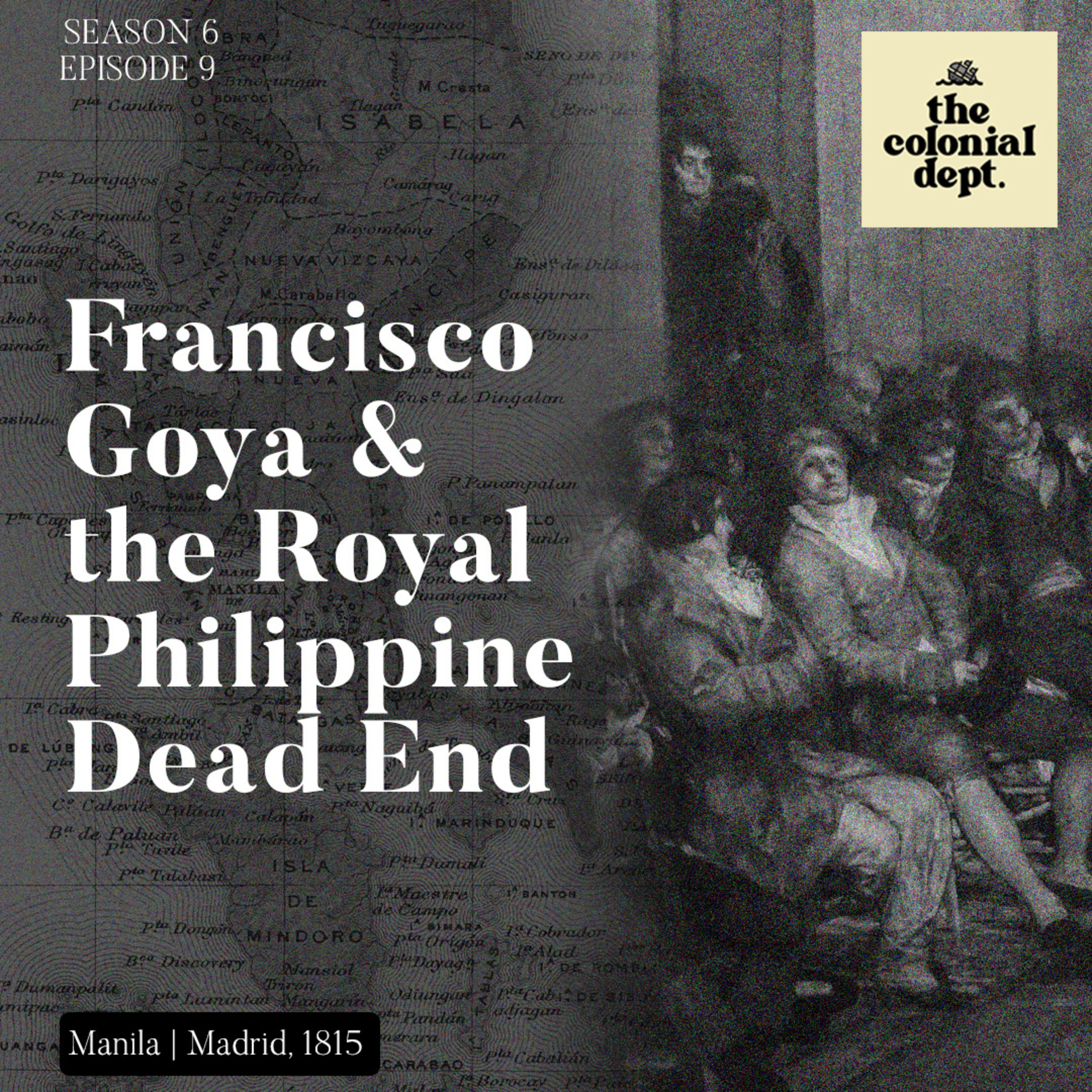
In Francisco Goya’s painting Junta de Filipinas , sinister, shadowy figures preside over a stockholders’ meeting of the Royal Philippine Company. What was this Royal Philippine Company—and what was so important about it that Goya made a painting of one of its meetings? And more than that, what was Goya trying to say about this tumultuous period in Spanish and Philippine history? Follow us on IG: @thecolonialdept Follow us on TikTok: @thecolonialdept Email us:
[email protected] Additional audio from the Ville de Castres YouTube page, and The Social Network, © 2010 Columbia Pictures. References: Legarda, Benito J. (1999). After the Galleons: Foreign Trade, Economic Change and Entrepreneurship in the Nineteenth-Century Philippines. Ateneo de Manila Press. Miranda-Chou, Teresita (1996). “Art as Political Subtext: A Philippine Centennial Perspective on Francisco Goya’s Junta de la Real Compañía de Filipinas.” Philippine Quarterly of Culture and Society, 24 , pp. 187-215. Alford, Roberta M. (June 1960). “Francisco Goya and the Intentions of the Artist.” The Journal of Aesthetics and Art Criticism, 18 (4), pp. 482-493. Ville de Castres (26 April 2022). “L'OEUVRE A LA LOUPE : La Junte des Philippines #1.” [Video] YouTube.com. https://www.youtube.com/watch?v=pdv9bs207cs Prodger, Michael (26 September 2015). “From princes to paupers: how Goya’s portraits tell the story of Spain.” The Guardian . https://www.theguardian.com/artanddesign/2015/sep/26/francisco-de-goya-portraits-national-gallery-london Dalrymple, William (2019). The Anarchy: The Relentless Rise of the East India Company. Bloomsbury Publishing. Harai, Yuval Noah (2015). Sapiens: A Brief History of Humankind . Harper.