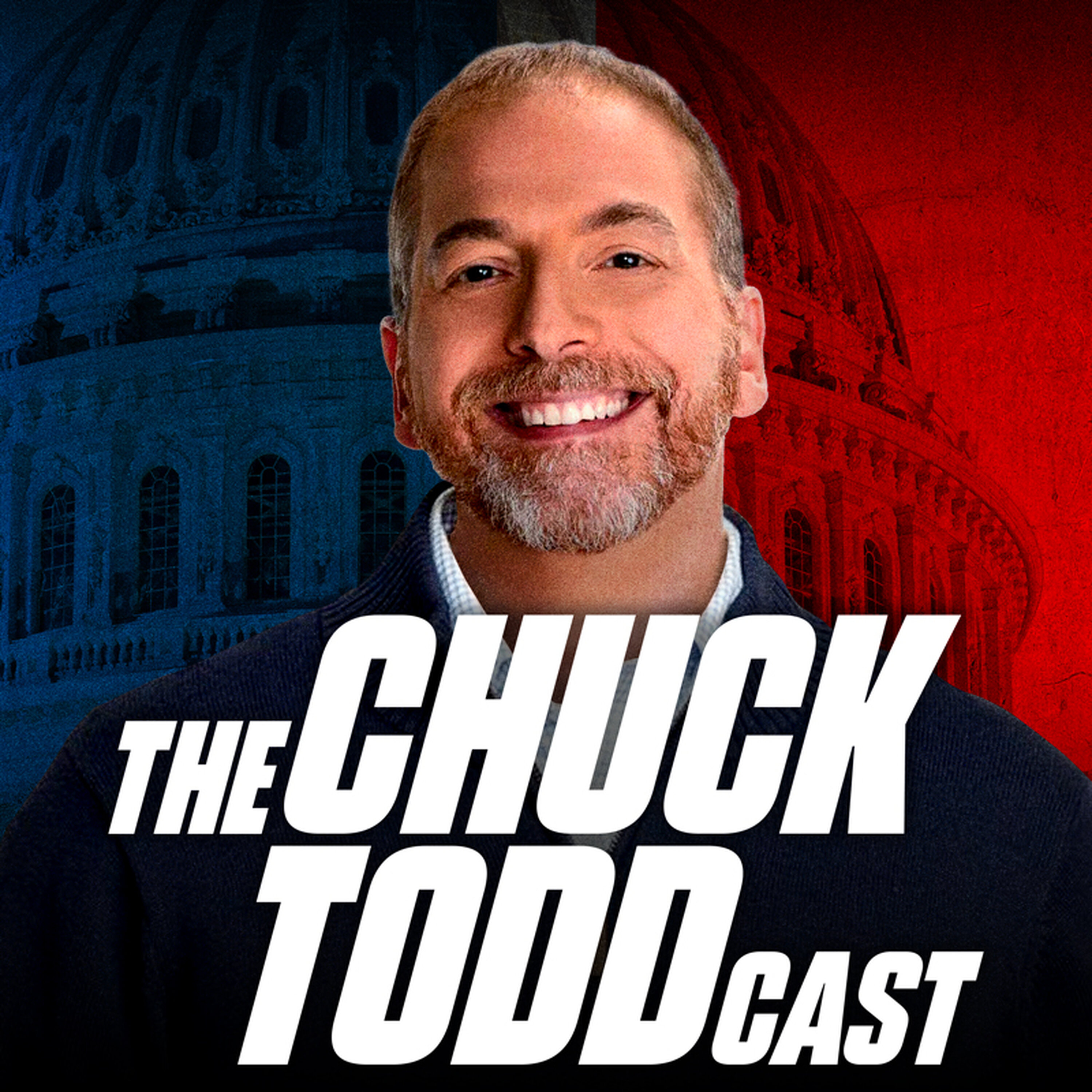
Full Episode - Trump Can’t Defend His Bad Economy + Can Government Effectively Regulate The AI Arms Race?
Chuck Todd opens with Trump getting visibly defensive with reporters over a brutal new inflation report — and argues the bad economy is in worse shape directly because of Trump's policies, with the president himself having zero answers for the data. He notes that AI investment is essentially the only thing propping up the economy, and that we are at least weeks away from the end of the Iran war. He warns we're only at the beginning of the inflation problem and that Democrats can simply point to Trump's broken promises of lower costs and no wars — they don't even need to make a "for" case, just a sustained "against" case — but cautions that despite all of this, Democrats still have a serious brand problem that no economic data alone will fix. He argues the failed Virginia redistricting effort exposed the deeper issue: Democrats talk like the resistance but are viewed as institutionalists, while Republicans still behave like raw partisans, and the rise of independent voters represents a fundamental protest against both available parties — something that should worry Democrats more than Republicans because the GOP has already shown a willingness to blow up the system. He makes a sweeping argument that until the last decade, Democrats were a reform-focused party, but the Trump era has pushed them into becoming defenders of institutions at exactly the moment when public trust in institutions had collapsed. He closes with observations from the Musk-Altman trial, which he says has been revealing about the personalities actually building AI — with OpenAI employees testifying to Altman's lying and the internal chaos, and so much tech ego on display that the public, already feeling burned by big tech, is only going to grow more skeptical.
This episode of the Chuck Toddcast features a deep dive into the AI governance crisis with two of the leading experts in the field. First, Miriam Vogel — president and CEO of EqualAI — joins the show to explain her organization's mission of establishing meaningful AI guardrails at a moment when American consumers are deeply skeptical of big tech and less than 1% of companies have anything resembling strong AI governance policies. Vogel argues that good governance means corporate leadership must take direct responsibility for AI deployment, walks through her five best practices for responsible AI adoption, and pushes back on the idea that federal preemption should override state-level regulation — noting that companies are pushing hard against state regulation precisely because they know most of the actual rules will be written in court cases over the next few years. She warns that we're seeing tremendous investment in AI without commensurate ROI so far, that gender and regional gaps in AI adoption are already emerging, and that the public urgently needs to be empowered with real knowledge about AI's upsides as well as its risks. Vogel asks the question that should keep every executive up at night: are we actually ready for AI to make decisions without humans in the loop? And she argues that transparency — letting employees and consumers see how AI errors play out — will be absolutely essential to safe deployment.
Then former Deputy National Security Advisor Anne Neuberger joins to discuss what global AI governance should look like between superpowers, and whether the arms race framing between the U.S. and China is actually helpful or harmful. Neuberger argues AI is fundamentally different from nuclear regulation because it's being developed by the private sector rather than by governments, and questions whether it was a mistake to let the private sector spearhead this technology in the first place. Drawing on her cybersecurity background, she walks through how governments learned to combat ransomware: extending existing rules for fiat currencies to cover cryptocurrencies (which had helped criminals evade detection), disincentivizing ransom payments, and helping companies recover without paying — a template she argues could apply to AI regulation. Neuberger says AI drug development should be an international win-win rather than a zero-sum arms race, but acknowledges the national security applications make competition unavoidable, with advantages now measured in months rather than years and dangerously inadequate military-to-military communication between the U.S. and China. They debate whether an "FDA for AI models" might be necessary, that existing regulations can be updated to cover AI without requiring new legislation, and that AI will ultimately transform defensive cybersecurity by allowing companies to double-check their infrastructure at scale. Her bottom line: laws always trail technology, but governments have key roles to play in identifying cyber risks, helping companies patch their infrastructure, and ensuring America's defenders aren't left behind as Chinese models close the six-month gap.
Finally Chuck reveals his bonus TWO ToddCast Top 5 lists, the top 5 2028 Democratic hopefuls who have run for president before, and the top who haven’t. He also answers listeners’ questions in the “Ask Chuck” segment.
Try ShipStation free for 60 days with full access to all features, No credit card needed! Go to https://ShipStation.com and use code TODDCAST for 60 days for free!
Thank you Wildgrain for sponsoring. Visit http://wildgrain.com/TODDCAST and use the code "TODDCAST" at checkout to receive $30 off your first box PLUS free Croissants for life!
Link in bio or go to https://getsoul.com & enter code TODDCAST for 30% off your first order.
Timeline:
(Timestamps may vary based on advertisements)
00:00 Chuck Todd’s introduction
01:30 Trump gets defensive with reporters over bad inflation report
03:00 Economy is in worse shape directly because of Trump’s policies
03:45 Trump has zero answers for the bad state of the economy
04:45 Dow still hasn’t gotten back over 50k since Bondi’s viral moment
05:45 AI investment is the only thing propping up the economy
06:30 We are weeks away from the end of the Iran war… at minimum
07:45 Despite the bad economy, Democrats still have a brand problem
08:30 We are only at the beginning of the inflation problem
09:15 Dems can point to Trump breaking promise of lower costs & no wars
10:00 Dems don’t even have to make a “for” case, just an “against” case
11:00 Another variable is what the political maps look like by the midterms
12:15 The issue for the Dems is what the party stands for… what’s its identity?
13:00 Dems ‘28 hopefuls need to, and will jump in early
13:45 Dems failed redistricting in VA exposed a problem with the party
15:45 Dems talk like resistance but are viewed as institutionalists
16:30 GOP still behaves more like raw partisans
17:15 South Carolina would have risked disaster by carving up Clyburn’s seat
18:45 Backlash to SCOTUS gutting Voting Rights Act could juice Dem turnout
19:45 Why do both parties seem against reforming the system overall?
21:15 Politics has become completely nationalized and it’s a problem
21:45 Until the last decade, the Democrats were a reform focused party
23:00 The Trump era has pushed Dems into becoming defenders of institutions
23:45 Biden ran on preservation when trust in institutions had collapsed
25:15 The rise of independent voters shows protest for the two available parties
26:30 Rise of independents should worry Dems more than Republicans
27:45 Real reforms to the system would help rebuild trust with the public
29:30 Dems risk becoming custodians of a system
You May Also Like

24/7 News: The Latest
iHeartPodcasts and TTWN

Dialogue Works
Nima Rostami Alkhorshid

The Political Scene | The New Yorker
The New Yorker

The Epstein Chronicles
Bobby Capucci

The MeidasTouch Podcast
MeidasTouch Network

Durango Local News
LNN Durango, Colorado

Bloomberg Intelligence
Bloomberg
The Sean Spicer Show
The Sean Spicer Show

Asmongold TV
Asmongold TV

The Alex Jones Show - Infowars.com
John
24/7 News: The Latest
iHeartPodcasts and TTWN
Dialogue Works
Nima Rostami Alkhorshid
The Political Scene | The New Yorker
The New Yorker
The Epstein Chronicles
Bobby Capucci
The MeidasTouch Podcast
MeidasTouch Network
Durango Local News
LNN Durango, Colorado
Bloomberg Intelligence
Bloomberg
The Sean Spicer Show
The Sean Spicer Show
Asmongold TV
Asmongold TV
The Alex Jones Show - Infowars.com
John
Community discussion