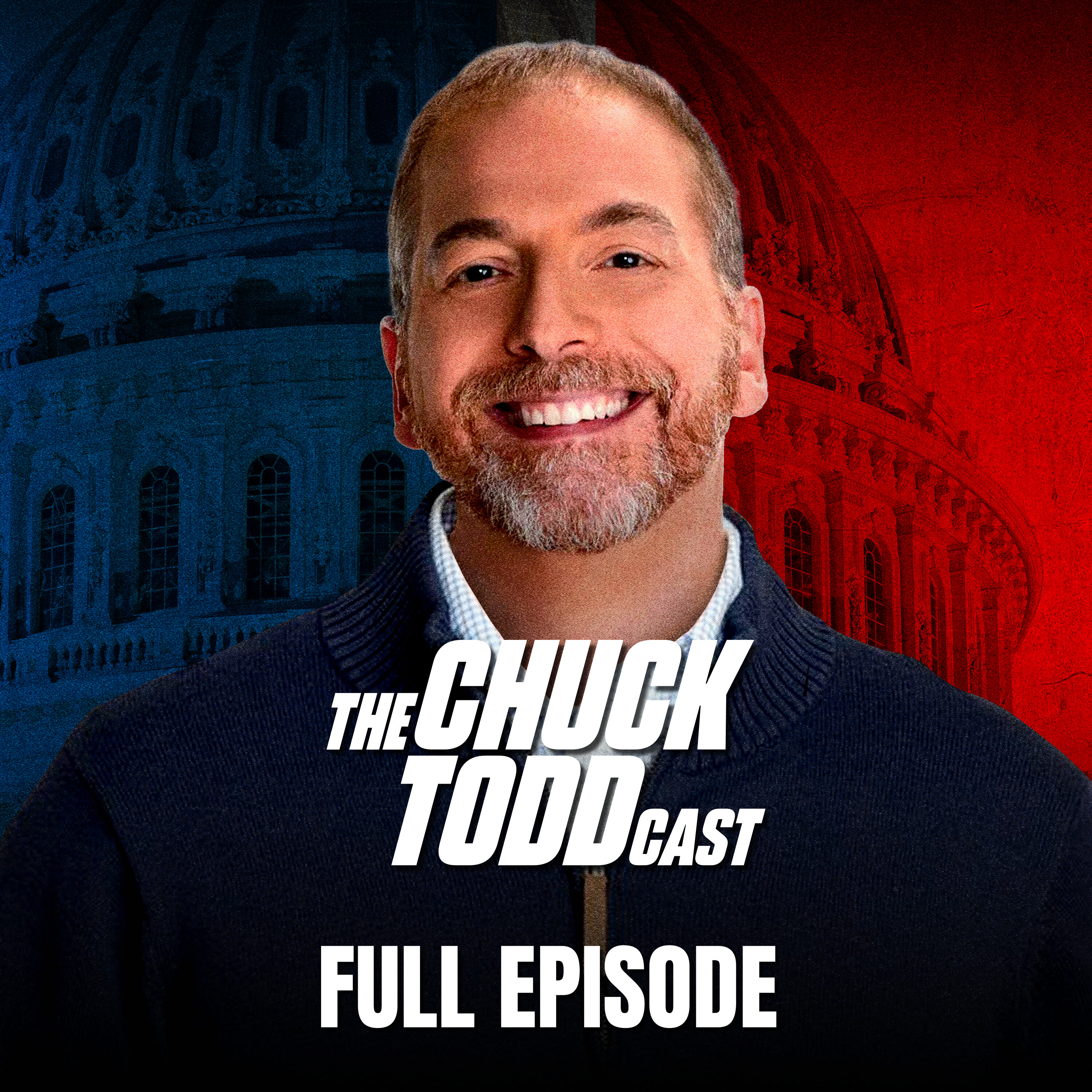
Full Episode - South Carolina Delayed Trump's Lame Duck Status... For Now + Why Trump Is Losing In Iran & Trying To Break The West
Chuck Todd digs into Darline Graham's 52-48 runoff win over Ralph Norman in South Carolina — a result that snapped Trump's ugly endorsement streak but only barely, and only because Trump personally recruited her, endorsed her, flew to Myrtle Beach for a rally, and dropped more than $800,000 in MAGA Inc. money on a race his PAC had sat out all cycle elsewhere. Chuck's read is that Trump clearly still moves Republican primary voters, but that a four-point squeaker for an appointed newcomer carrying one of the most recognizable names in state politics is not the show of strength the White House wanted. Graham inherited Lindsey's negatives with voters without inheriting his positives, remains an amateur candidate prone to gaffes, and may be dragged down further by resentment over how she got the seat in the first place. Against her is Democrat Annie Andrews, a pediatrician with a real organization raising real money — and while no Democrat has won a Senate race in South Carolina since 1998, Chuck asks the honest question about a favorable environment: what's Andrews' actual ceiling, and can 48% be a winning number in a state where the Supreme Court gutting the Voting Rights Act has produced a surge in Black turnout? If the blue wave turns into a tsunami, South Carolina lands on the map. A Graham loss in this environment would be a genuine disaster for Trump.
That leads into the broader strategic picture, where Chuck reports Trump met with advisors about how to deploy his enormous war chest — with the advisors trying to keep the midterms from becoming a referendum on him, and Trump insisting MAGA Inc. spend on ads touting his record. It's a plan built on turning out voters who show up only for Trump, which could either backfire badly or, Chuck concedes, prevent a tsunami. The deeper problem is that Trump is being told what he wants to hear: he thinks the economy is great, voters emphatically don't, and charts are meaningless to people staring at their grocery bills. Unlike Obama, who inherited a mess, Trump's central problems — the tariffs and the Iran war — were his own choices, which is why blaming Joe Biden won't land with any credibility. Chuck also notes that conservative media has spent the week obsessing over the WNBA, a classic look-over-here tactic from outlets that can't discuss the cost of living, and observes something genuinely changed about Trump's second-term psychology: more countries and institutions are willing to push back, and people simply aren't as afraid of him anymore. He is appalled by the reported plan to tear down the Kennedy Center — calling it disgusting to want your name on someone else's tombstone, noting the Kennedy Center was doing fine, and marveling that the Justice Department put any of this in writing. He closes with his argument that America no longer has two functional parties: Democrats are paralyzed, the GOP is owned by Trump, both are held together only by fear of the other side's extremes, nearly half the public identifies with neither, and state law now protects the duopoly from competition. We demand more choice everywhere else in life. His pitch: stop protecting the two parties, let them divorce, and let voters build something that actually looks like the country.
Then, former Trump White House Communications Director and author of the upcoming book All the Wrong Moves: How Three Catastrophic Decisions Led to the Rise of Trump, Anthony Scaramucci joins the Chuck Toddcast, picking up a conversation the two started in Abu Dhabi just before the Iran war — back when the gulf states were considered one of the safest places on earth. They discuss why America's military industrial complex is badly out of step with modern warfare, and that the circuit running between defense contractors and Washington is why nobody fixes it. He walks through Iran's mosaic defense doctrine and its decentralized command structure, the damage Iranian strikes did to U.S. naval logistics in the Gulf — reporting has traced the USS Abraham Lincoln's resupply crisis back to the destruction of the Navy's main Bahrain hub, which forced operations out to Diego Garcia — and the Pentagon's response to that story, which was to go after the press rather than answer for any of it. Hegseth's Pentagon fired Stars and Stripes publisher Max Lederer, editor-in-chief Erik Slavin, and reporter Lara Korte, citing insubordination months after the department had already forced out the paper's congressionally mandated ombudsman, who sued over it. Firing the journalists at a publication created specifically to give troops independent information is, as Scaramucci frames it, exactly the instinct of an institution that can't withstand scrutiny. The structural problem underneath: a defense industry consolidated down to five giant companies that function like a cartel, operating in a post-Citizens United Washington where corporations reliably get what they want and lobbyists will smother any real reform. We spent enormous sums, he argues, to get embarrassed by Iran — and the countries hosting American bases are quietly concluding it isn't worth it, which means new defense pacts are going to form without the United States in them.
From there the conversation widens into competition with China and the fracturing of the western alliance. Scaramucci argues China can plan for the long term in ways America simply doesn't, and that the Pentagon still can't pass an audit with nobody ever held accountable — but he's not a declinist: America's freedoms remain a real advantage over Beijing if the country gets its act together, which is precisely the argument in the op-ed on press freedom that started his rift with Trump, and precisely what the Stars and Stripes firings put at risk. He calls Mark Carney the leader of the western world now, credits Carney with understanding that Trump wants to sever the U.S. from the west, and offers the episode's sharpest line: if Trump were a Putin agent, he'd be getting an A+. On the collapsed Canada trade talks, Scaramucci thinks the dispute gets resolved within a couple of weeks, but he's clear that the Carney path — standing up to Trump directly — is not a path Democrats can simply copy. New coalitions have formed since 2016, and he doesn't see a coalition builder anywhere in the current Democratic Party; Gavin Newsom has been pilloried by conservative media for a decade, and the person capable of assembling something genuinely new may have to come from outside politics altogether.
Finally, Chuck presents his ToddCast Top 5 list of 2028 GOP presidential candidates and answers listeners’ questions in the “Ask Chuck” segment.
“Pre-order All The Wrong Moves now
https://www.scaramucci.net/books
Protect your family with life insurance from Ethos. Get up to $3 million in coverage in as little as 10 minutes at https://ethos.com/chuck. Application times may vary. Rates may vary.
For free and unbiased Medicare help, dial (980) 734-3985 to speak with my trusted partner, Chapter, or go to askchapter.org/chuck / *Paid Partnership
Chapter and its affiliates are not connected with or endorsed by any government entity or the federal Medicare program. Chapter Advisory, LLC represents Medicare Advantage HMO, PPO, and PFFS organizations and stand alone prescription drug plans that have a Medicare contract. Enrollment depends on the plan’s contract renewal. While we have a database of every Medicare plan nationwide and can help you to search among all plans, we have contracts with many bu
You May Also Like

CNN 5 Things
CNN Podcasts

Unholy: Two Jews on the News
Unholy Media

Asmongold TV
Asmongold TV

Squawk on the Street
CNBC
Democracy Now!
Democracy Now!

Le journal d'Europe 1
Europe 1

America Out Loud News
America Out Loud News

Mr News
Vco 24

Regional Media Podcast Network
Regional Media

IHIP News
Jennifer Welch & Angie Sullivan
CNN 5 Things
CNN Podcasts
Unholy: Two Jews on the News
Unholy Media
Asmongold TV
Asmongold TV
Squawk on the Street
CNBC
Democracy Now!
Democracy Now!
Le journal d'Europe 1
Europe 1
America Out Loud News
America Out Loud News
Mr News
Vco 24
Regional Media Podcast Network
Regional Media
IHIP News
Jennifer Welch & Angie Sullivan
Community discussion