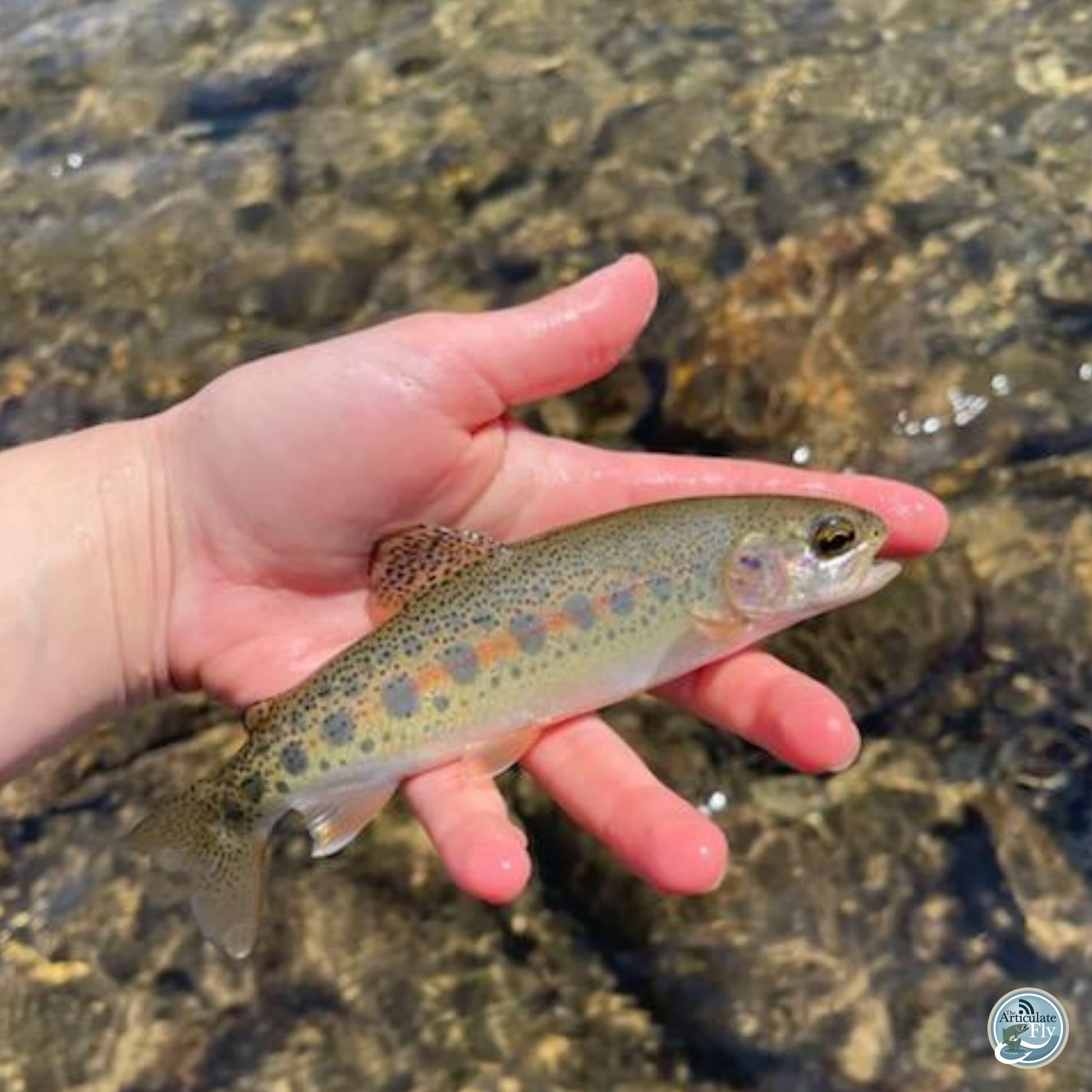
S8, Ep 41: Offbeat Seasons and Terrestrial Tactics: Mac Brown's Fishing Strategies
Episode Overview
In this episode of The Articulate Fly's Casting Angles series, host Marvin Cash and Mac Brown — owner of Mac Brown Fly Fish and Fly Fishing Guide School in western North Carolina — deliver a timely early summer conditions update for the Tuckaseegee and Nantahala drainages. With the 2026 season running approximately 60 days ahead of schedule, Mac and Marvin unpack what that means for trout anglers trying to calibrate their approach as delayed harvest season closes and technical summer fishing begins.
Mac reports that terrestrial activity — inchworms, beetles and ants — is already in full force weeks ahead of its typical July–August window, a direct result of an unseasonable hatch progression that accelerated through spring. The duo walk through the mechanics behind this shift: as aquatic insect biomass declines after the spring hatch season, fish increasingly depend on land-based food sources. Mac's practical adjustment is to fish as though you're two months further into the year than the calendar says, a principle Marvin distills to "add 60 days to whatever date you get on the water."
Observation emerges as a unifying theme, with Mac sharing a long-held pre-fishing ritual of reading spider webs and noting dace and creek chub activity as real-time indicators of what's in the system. Their earlier-than-normal presence in early June signals an accelerated biomass cycle and points anglers toward the low-food-chain mindset typical of later in the season.
Key Takeaways
- How to recognize when the terrestrial game has turned on using field indicators like inchworm drops, beetles, ants and spider web checks before rigging up.
- Why applying a "60-days-ahead" mental calendar helps you select flies and tactics that match actual on-the-water conditions rather than the date.
- How dace and creek chub activity in western NC streams functions as a real-time biomass indicator, signaling the shift toward terrestrial and baitfish tactics.
- Why reduced aquatic insect biomass in summer demands the same patient, deliberate approach used in fall and winter when the drift is sparse.
- When to transition from hatch-matching to pure terrestrial presentation after the spring hatch cycle runs its course on freestone streams.
Techniques & Gear Covered
The core tactic is terrestrial fishing with patterns that match what's currently in the streamside canopy and terrestrial zone — inchworms, beetles and ants presented as dry fly or near-surface offerings. Mac and Marvin frame this as a biomass-aware strategy: when aquatic food sources thin out after the spring hatch cycle, fish shift to land-based prey, and tactical fly selection should follow. The episode also references the low-biomass presentation philosophy drawn from fall and winter nymphing — slow-water, deliberate drifts that work when food density is low. Underpinning all of it is Mac's emphasis on observation as a systematic pre-fishing discipline: reading spider webs near the water to identify trapped insects, and tracking baitfish species composition (dace, creek chub) as a proxy for how far the biomass clock has advanced. The approach Mac describes is less about pattern-matching a specific hatch and more about reading the full ecosystem before you ever make a cast.
Locations & Species
The episode is anchored in the freestone trout streams of western North Carolina, with specific reference to the Tuckaseegee River drainage and the Nantahala River — two of the region's primary trout fisheries. Mac also references the Great Smoky Mountains Park watershed and the Wesser Creek and Silver Mine Creek confluence on the Nantahala, where his early observation habits were formed during years at the Nantahala Outdoor Center. The primary target species is trout, but the conversation gives notable attention to dace and creek chub as ecological indicators — their appearance in fishable numbers during early June 2026 confirms a biomass cycle running roughly 60 days ahead of a normal season. Seasonal context is central: delayed harvest on the Nantahala and Tuckaseegee has just closed, and the transition to technical dry fly and terrestrial fishing is being compressed by an anomalous spring across the Eastern Seaboard.
FAQ / Key Questions Answered
How do I know which terrestrial flies to use when traditional hatch charts don't apply?
Mac advises going directly to streamside observation before rigging up. Look for inchworms dropping on silk threads from overhanging trees, beetles and ants in spider webs near the water, and match what you actually see rather than what the calendar says should be active. In 2026, that means fishing inchworm patterns and terrestrial beetles as early as June — flies that in a normal year wouldn't become primary until mid-July through September.
Why does summer trout fishing require thinking about fall and winter tactics?
As the spring hatch progression winds down, total aquatic insect biomass in the river drops sharply. Mac and Marvin explain that this low-biomass condition parallels what anglers encounter in fall and winter — fish aren't keying on active hatches so much as opportunistically taking what's available. Anglers who bring the patient, deliberate presentations of fall nymphing into their summer terrestrial game tend to see more consistent results than those who keep chasing hatch windows that have already passed.
What does it mean that the 2026 season is running 60 days early, and how should anglers adjust?
Mac and Marvin observe that hatches, terrestrial activity and baitfish biomass signals are appearing roughly two calendar months ahead of normal schedule. The practical advice: mentally add 60 days to whatever date you're fishing when selecting flies and tactics. If it's early June, fish as if it were early August — heavy terrestrial focus, lower-profile presentations and an expectation that dace and creek chub are already mixing into the catch alongside trout.
How do dace and creek chub help you read western NC stream conditions?
Mac explains that the presence of dace and creek chub in significant numbers is a reliable indicator of where the baitfish biomass cycle stands. In a normal year, you don't see these species actively competing in the catch until mid-July; their appearance in early June 2026 confirms the accelerated season. When they're catching alongside your trout in numbers, the system's food chain has progressed to a summer biomass profile — time to shift strategy accordingly.
Related Content
S7, Ep 28 - Warming Waters and Active Fish: A Spring Fishing Update with Mac Brown
S7, Ep 41 - Navigating High Water: Strategies for Success with Mac Brown
S6, Ep 145 - Navigating Winter Waters: Unconventional Strategies with Mac Brown
S6, Ep 130 - Casting in Color: Mac Brown's Fall Fly Fishing Strategies
Connect with Our Guest
Follow Mac on Fa
You May Also Like

Mully & Haugh Show
Audacy

PHLY Philadelphia Eagles Podcast
ALLCITY Network, PHLY Sports

In De Waaier
Hidde van Warmerdam en Thijs Zonneveld

Braves Today
Bleav

PlayerProfiler Fantasy Football Podcast Network
Fantasy Football, PlayerProfiler, NFL Stats

LawVS - The Ladder Man
LawVS

Shan and RJ
Audacy

Split Zone Duo: College Football Podcast
Richard Johnson and Alex Kirshner

MLB Morning Lineup Podcast
MLB.com

Blood Red: The Liverpool FC Podcast
Reach Podcasts
Mully & Haugh Show
Audacy
PHLY Philadelphia Eagles Podcast
ALLCITY Network, PHLY Sports
In De Waaier
Hidde van Warmerdam en Thijs Zonneveld
Braves Today
Bleav
PlayerProfiler Fantasy Football Podcast Network
Fantasy Football, PlayerProfiler, NFL Stats
LawVS - The Ladder Man
LawVS
Shan and RJ
Audacy
Split Zone Duo: College Football Podcast
Richard Johnson and Alex Kirshner
MLB Morning Lineup Podcast
MLB.com
Blood Red: The Liverpool FC Podcast
Reach Podcasts
Community discussion