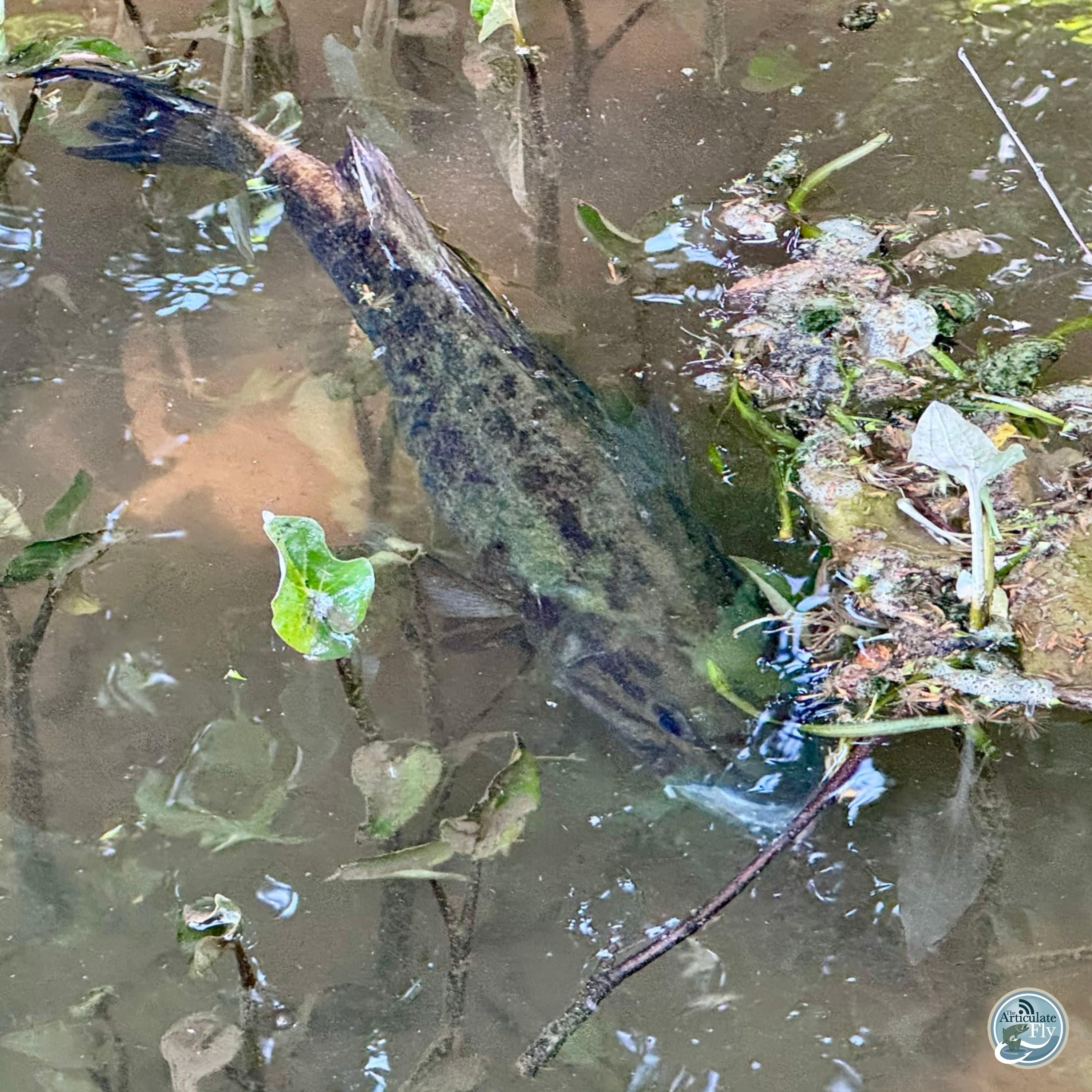
S8, Ep 39: High Water Strategies: Captain Brian Shumaker's Pennsylvania Smallmouth Insights
Episode Overview
In this Pennsylvania Smallmouth Report on The Articulate Fly fly fishing podcast, host Marvin Cash reconnects with Captain Brian Shumaker of Susquehanna River Guides for an early-June conditions check on the Susquehanna and Juniata rivers in Central Pennsylvania. Recent heavy rainfall pushed both systems well above normal — the Susquehanna approaching 12 feet, the Juniata topping 10 — and Brian breaks down how he's fishing the receding flows and what anglers can expect as the post-spawn transition plays out through summer.
Brian walks through his high-water strategy in practical terms: pounding banks where rising water has pushed smallmouth tight to structure, reading fish mood through fly rotation, and knowing when to abandon streamers in favor of crayfish patterns on the bottom when visibility collapses. He explains his color logic for stained water — bigger profiles, darker tones when the water is heavily colored, lighter options as clarity returns — and how he uses river gauge readings in feet rather than CFS to make positioning decisions on the water. The conversation also looks ahead to the summer outlook, contrasting the good-conditions scenario if periodic rains continue with the low, clear, finesse-game reality that sets in by mid-July in a dry year, and confirms that Fourth of July remains the reliable benchmark for prime topwater smallmouth fishing with poppers on the Susquehanna system.
Key Takeaways
- How to keep smallmouth in play during high flows by targeting bank structure where rising water has concentrated fish.
- Why fly color selection should track water clarity — blacks and purples in heavy stain, transitioning to olives and lighter colors as visibility improves.
- When to commit fully to bottom-fished crayfish patterns rather than continuing to work streamers in severely off-color conditions.
- How Brian Shumaker uses river gauge height in feet — not CFS — as his primary decision tool for positioning anglers relative to bank structure and grass beds.
- Why rotating through as many as a dozen and a half fly patterns in a single session is sometimes necessary to crack the post-spawn "June funk."
- When to expect prime topwater action on the Susquehanna system, and how a dry summer shifts the game to long casts, stealth and finesse presentations by mid-July.
Techniques & Gear Covered
Brian Shumaker's approach to high, dirty water on the Susquehanna and Juniata centers on two core tactics: larger-profile streamers fished tight to bank structure and mid-river features, and crayfish patterns worked on the bottom when visibility drops low enough to make streamer fishing inefficient. Fly color selection is deliberately calibrated to water clarity — blacks and purples in the dirtiest conditions, with oranges, olives and lighter tones becoming viable as the water clears. Brian notes he doesn't rely heavily on rattles despite the conditions, keeping his confidence in profile and color adjustments instead. On the topwater front, he and Marvin discuss poppers, Murdich Minnows and Shimmering Minnows as the primary summer surface and near-surface options once fish fully exit the post-spawn doldrums. Across the board, Brian emphasizes a high-volume fly rotation — sometimes six flies on a good day, sometimes eighteen — as the diagnostic tool for reading fish mood under the unpredictable early-summer conditions.
Locations & Species
This report centers on two of Central Pennsylvania's premier smallmouth systems: the Susquehanna River and the Juniata River. Recent rainfall events pushed the Susquehanna to nearly 12 feet and the Juniata past 10 feet; at recording time the Susquehanna had receded into fishable shape with good water from the west bank to mid-river, while the east side remained off-color and the Juniata was still heavily stained but dropping. The target species throughout is smallmouth bass, with fish spread across a spectrum of post-spawn recovery stages in early June — some already fully recovered, others still normalizing. Brian's outlook for late July and early August hinges on whether the eastern seaboard's dry pattern reasserts itself: adequate rainfall means prime conditions, while a dry stretch could produce bony, clear, low-water rivers by mid-July that demand a completely different approach.
FAQ / Key Questions Answered
How do you approach streamer fishing when the Susquehanna or Juniata is running high and dirty?
Brian Shumaker focuses on a bigger fly profile and adjusts color based on how much stain is in the water. In the heaviest color, blacks and purples are his go-to; as visibility improves, he moves toward olives and lighter tones. He targets banks where rising water has pushed fish tight to structure, while also covering mid-river features when conditions allow.
When is it time to abandon streamers and go to crayfish on the bottom?
When water is severely off-color and visibility is minimal, Brian moves straight to crayfish patterns fished on the bottom. In those conditions, the streamer game becomes inefficient, and a bottom presentation where fish are holding near structure is the more reliable path to bites.
How does Brian use river gauge readings to make fishing decisions?
Brian tracks both rivers by height in feet — old school, as he puts it, rather than CFS — which tells him where the water sits relative to bank structure. That reading determines whether he needs to fish hard against the bank or can pull off slightly, and on the Susquehanna it factors in whether emerging grass beds are worth targeting as conditions clear.
What should anglers expect from the post-spawn "June funk" on Pennsylvania smallmouth rivers?
The June post-spawn period produces inconsistent fish behavior as smallmouth recover and begin feeding more actively. Brian describes it as a rotation game — he may cycle through six flies on a cooperative day and eighteen on a tough one, simply working through options until something triggers a response. Patience and a deep fly selection are the keys.
When does reliable topwater smallmouth fishing begin on the Susquehanna, and what changes that timeline?
Brian pegs the Fourth of July as the traditional start of prime topwater action with poppers and surface patterns. That holds if periodic rainfall keeps flows reasonable through summer. A dry stretch that leaves the river bony, skinny and clear by mid-July shifts the game entirely — long casts, stealth and finesse presentations replace the aggressive topwater bite.
Related Content
S8, Ep 31 – Chasing Smallmouth: Brian Shumaker's Adaptations for Unpredictable Spring Weather
S8, Ep 27 – The Pre-Spawn Puzzle: Captain Brian Shumaker's Tips for Pennsylvania Smallmouth
S8, Ep 29 – Fishing in Flux: Matt Reilly's Take on Spring Trends and Techniques
S7, Ep 52 – The Summer Shift: Adapting Your Fly Game with Brendan Ruch
S1, Ep 97 – All Things Smallmouth with Mike Schultz
Connect with Our Guest
Follow
You May Also Like

The Dan Le Batard Show with Stugotz
Dan Le Batard

Purple Daily - A Minnesota Vikings Podcast
SKOR North

ESPN SportsCenter Update
ESPN

Shan and RJ
Audacy

Mully & Haugh Show
Audacy

The JD Bunkis Podcast
Sportsnet

Filmstudy - Baltimore Ravens Talk
Ken McKusick

The CanesInSight Podcast
CanesInSight.com

The Ken Carman Show with Anthony Lima
Audacy

Pat Mayo Experience
Mayo Media Network
The Dan Le Batard Show with Stugotz
Dan Le Batard
Purple Daily - A Minnesota Vikings Podcast
SKOR North
ESPN SportsCenter Update
ESPN
Shan and RJ
Audacy
Mully & Haugh Show
Audacy
The JD Bunkis Podcast
Sportsnet
Filmstudy - Baltimore Ravens Talk
Ken McKusick
The CanesInSight Podcast
CanesInSight.com
The Ken Carman Show with Anthony Lima
Audacy
Pat Mayo Experience
Mayo Media Network
Community discussion