0:00 Radio Mano, Papa Chango. 0:05 [music] 0:29 Okay, let's be honest. This is a... 0:33 Relatively small scale podcast. Like I like to joke about it because, you know, I say it's made in the garage. 0:42 It's a handcrafted small batch. It's just me. 0:46 I don't have a staff. I don't have editors and producers and the whole sort of rigmarole that a lot of podcasts have. 0:56 So I'm not going to be interviewing Zelensky or Obama. I think we all know that. 1:04 And there are advantages to that and disadvantages, of course. The disadvantages that I don't make a million dollars and, you know, hobnob with people like that. 1:17 But the advantages are considerable. And to the extent that I have any sense of control over my own destiny, I've chosen... 1:30 You know, I left L.A. where I could have interviewed movie stars and porn stars and, you know, Joe Rogan. 1:37 I guess Joe left L.A., but people like that. When I was in L.A., that's the kind of people I was interviewing. 1:43 And a lot of you probably who are listening now heard of me for the first time because of something like that. And thank you for sticking with me all these years later, because my real interest isn't the rich and famous. 1:57 My real interest is. People who are just – people are so fascinating. 2:05 They're so unpredictable, so rich. And when you have an opportunity to hang out with someone, I guess what I'm trying to say is like, you know, there's the 1% or whatever. 2:23 They get enough attention. You can – Listen to them on a million different podcasts and TV shows and, you know, watch them in their movies and their speeches and whatever. 2:36 What I'm really interested in are the people who are every bit as interesting and often far more interesting, but they're not chasing attention. They're not chasing money. 2:48 They're not chasing notoriety. They're just doing their thing. 2:54 And one way or another, I stumble into their world and they agree to sit down and speak with me. And it feels like historic in a way for me, like getting these people down on the record, on tape, and especially... 3:16 And that's why I'm still doing this podcast all these years later. That's the magic of it for me. 3:20 And this episode is a great example of that. This is a man named David Levitt. 3:47 I met him through Stanley. And I think really his wife is the connection to Stanley, his wife, Gail, who I also interviewed. 3:59 We stayed at their place for a night. And I interviewed David over a few glasses of wine in the evening and then Gail the next morning. 4:08 Gail, holy cow, she's a character. But I'm not going to release that one right away because she's got a book coming out. 4:17 And I think the idea is to hold the podcast until the book comes out. It's called A Small Medium at Large. 4:25 So Gail is a psychic. And... 4:28 Again, not seeking attention, not running around, not charging people money. It just happens. 4:34 And she has these, I don't know what to call them, powers, insights, abilities, capacities that are very hard to understand. And so she's been the subject of a lot of scientific research. 4:51 And that's how she came into Stanley's world. I know she's done a lot of research. 4:58 Work with Dean Radin, who's been on this podcast, who's sort of a famous parapsychological researcher. So anyway, she's married to the guy you're about to meet, David Lovett, who, I mean, come on. 5:14 This guy is... A cognitive computer science, experimental and theoretical physicist, software engineer, virtual and augmented reality innovator, musician and writer. 5:29 OK, and that's not exaggerating either. Holy shit. 5:37 He when he was a kid, he did an IQ test that clocked him in at 200. 100 is average. 5:43 Yeah. He graduated from the Bronx High School of Science and enrolled at Yale when he was 16 years old. 5:53 And then he went to MIT as a grad student at 20, where he ended up working with Marvin Minsky, who is one of the founders of AI. 6:09 I think this was the early 80s. And he was working with Marvin Minsky because he Minsky was a keyboard player and David is a jazz musician and was very interested in music. 6:26 And so they met over music. And then that led to David's master's and doctoral work that he did with Minsky when he pioneered algorithmic music generation for traditional classical and jazz styles. 6:44 So this is in the 80s. David figured out how to get a computer to think like a jazz musician. 6:56 We talk about that. We also talk about civil rights. 7:02 We talk about racism. In fact, we spend a lot of time talking about David's parents because, holy shit, they were some really interesting people. 7:13 His mother was an actress who was the first black woman... To be in a Broadway play who was not playing a servant or a slave. 7:27 That's a very interesting place to be. Almost like the Jackie Robinson of Broadway or of theater. 7:38 Yeah. Yeah, fascinating. 7:43 His father was a taxi driver. His father was sitting in the audience. 7:48 He sees this beautiful black woman on stage and he says, that's the girl for me. In the 50s. 8:00 Yeah, so they were, his parents were married. Very political, very progressive, all sorts of interesting people coming around the house. 8:13 He talks about that. Yeah, I mean, just he knew, David knew Steve Jobs and Timothy Leary. 8:23 And I mean, we talk, this is what you'd call a wide ranging conversation. He ran for Senate. 8:34 In California. He didn't win. 8:38 Probably just as good. But yeah, I mean, this guy is... 8:47 This is what I started talking about. He's a historical figure. 8:52 But he's just a guy doing his thing. He's not running around looking for attention. 8:58 And man, that makes me feel... So privileged, so happy, so grateful, and so thrilled that I get to bring him to you because I know anyone who's still listening to this podcast in 2026, man, you have been, you have jumped through all the hurdles. 9:22 You have put up with my bullshit. You've listened to my stupidities and my 9:29 My, you know, mistaken opinions and whatever, but you have continued because occasionally I can bring you someone like this. And I know that's why you've stuck around. 9:43 And so I'm really happy to be able to come through. And I feel like I come through with most of the guests, almost probably all the guests. 9:53 Yeah. Because if I do an interview and don't feel like this is a person, you know, it's not that the person doesn't come through, it's that I don't come through. 10:03 It's like somehow I don't bring, I don't spark the fire that I can see in them. I can't bring it to you. 10:13 That's what disappoints me. It's never their fault. 10:15 It's my fault. But that rarely happens, honestly. 10:19 I think at this point I've got a pretty good instinct for it. David Lovett. 10:23 Fantastic guy. Super interesting man. 10:26 If you want to read about him, he's got a website, David Levitt, L-E-V-I-T-T dot org. And you can go deeper into his mind and his work. 10:41 So I hope you enjoy this conversation with David Levitt. And off we go. 10:47 So are you ready to rock and roll? 10:49 I think so, yeah. 10:50 So, I mean, I just took some notes very quickly. 10:53 I took some notes into my Apple Notes here, because I couldn't... Did I bring my glasses? Yes! 11:01 Nice. So, because there were so many thought-provoking threads in the conversation, and a few of them had just come up in my own recent work in writing, and a couple I had good answers to. 11:16 But I love... 11:18 In which conversation? In the one with Robert Wright? 11:21 Particularly that one, right. Yeah, that was the one I was actually taking notes during. 11:25 I have a funny relationship with Robert Wright. It's actually kind of beautiful in some ways. 11:33 In graduate school, I was doing my PhD in psychology with our mutual friend Stanley as my kind of mentor-advisor. And I was doing something totally different. 11:43 I was a year into the research for my dissertation about the personality profile of doctors who burn out from existential stress. Too many patients dying. 11:57 It ends their careers. And I thought I could develop a screening device to help medical students Assess whether or not they had the right personality to go into oncology or intensive care. 12:12 So I think it was a great idea and I was super excited about it. I was a year into it when I realized I don't have the right personality. 12:21 After a year in oncology wards. I was like, I'm getting depressed here. 12:28 But anyway, I read a book called The Moral Animal by Robert Wright. 12:32 Okay. 12:32 That came out around 19... I think. 12:36 And it's about evolutionary psychology and it sort of lays out the Darwinian argument that men and women have different reproductive agendas. And so for men, it benefits us to fertilize as many women as possible. 12:52 And for women, it... Benefits them to have a man who will take care and provide and all that. 12:58 So they're trying to lock us down. We're trying to be free is that whole thing. 13:02 I read that and I thought this is the greatest thing ever. 13:04 It explains everything. 13:06 Yeah, right. It's like bringing Darwin to psychology. 13:10 Like, wow. Okay. 13:12 And, uh, and it inspired me to change my dissertation to focus on Darwin's understanding of human sexual evolution. But what happened is, as I started digging into it, I realized I didn't agree with Darwin. 13:28 And in fact, Darwin's vision, as presented by Robert Wright, was very biased and political. And so I changed my trajectory, changed my academic life, changed my personal life, changed everything. 13:45 But I ended up I started out super inspired by his book and I ended up arguing against it. 13:54 By Darwin's or Wright's? Wright's. 13:57 Because Wright was presenting Darwin's vision of human sexual evolution in a very admiring way. 14:05 And you were seeing the flaws in that structure. 14:08 Yeah. So my whole career, as far as Sex at Dawn goes on my dissertation, has been arguing against Wright's book. 14:16 Even though I really loved it. It's beautifully written, beautifully argued. 14:21 So when Sex with Dawn came out, he invited me on his podcast. And it was kind of strange because it was like... 14:31 I love your work. I think you're brilliant. 14:34 But I think you're wrong about Darwin. 14:36 You're at best a straw man or a devil's advocate. 14:39 Right. And he thinks I'm, you know, a blithering idiot, apparently. 14:43 And we had this conversation and it ended up like mutual respect. And so when he wrote this book, he contacted me. 14:51 He said, hey, would you have me on your podcast? I just finished a new book. 14:54 And yeah, I love that. To me, that's what science should always be. 15:01 Right, right. If only 300 years ago everyone could communicate this easily and distribute conversations this easily. 15:08 Right, right, yeah. And just the respect for friendly disagreement. 15:16 I think that's so central to science. 15:18 Isn't it tragic that there's a commercial reason that that seems to have gone out of style when really it hasn't? In academia, of course people welcome debate and so on. 15:28 Disdain attracts more attention or something. 15:34 Not ordinarily in academia, but obviously online. 15:38 So, alright, I want to just jump right in, otherwise we'll be here until midnight because there's so much about you that I'm just fascinated by. Can we just start with your parents and where you come from? 15:51 Because you're a unique guy. I mean... 15:55 In so many ways. 15:57 In some ways, but I'm a New Yorker. 16:02 Born and raised in where? 16:03 What borough? Well, Queens, Manhattan, and Long Island in that order. 16:09 Queens, Manhattan. Went to Bronx Science. 16:12 Another year in Queens, commuting from Queens to Bronx Science was a bitch, but at least it was only one year. 16:18 Yeah. 16:19 My father owned a checker cab. Right. 16:23 And was an activist and briefly head of the taxi owner's union and fell in love with my mother, literally seeing her on the stage in New York. 16:35 Okay, so she was already acting. So he was in the audience? 16:40 Yes. So he owns a taxi, working class white guy. 16:45 Yes, although... Owning a medallion. 16:49 Made you middle class. Made you have the best piece of mobile real estate anyone could ever dream of that's appreciated faster than actual bricks and mortar. 16:58 Yeah, that's true. Because they're very limited, right? 17:01 They certainly were then and no one was gaming the system the way, you know, Michael Cohen and those jerks did 50 years later. Right. 17:11 So, in fact, it was such a valuable enough thing that my mother's actor friends like Godfrey Cambridge Used to drive my father's cab sometimes. What actor is fully enough employed not to want to be able to do that? 17:26 Right. And also, I mean, as an actor, it must be great just picking up random people for character study, accents, stories. 17:37 So true. So true. 17:38 And I used to love to sit in my father's cab. And he was such a generous guy because really the first cool, clicky, ratchety computer I ever interacted with Was his checker cab meter. 17:51 And it was a while before you had the heart to say, you know, when you're playing with that thing, I can't pick up any fare. 17:57 So he took you along in the passenger seat. And it was great. 18:01 And he is the classic, loquacious, opinionated, gentle, curious cab driver. 18:10 What was his family like? His parents or his background? 18:15 All four of my grandparents came over to Ellis Island in 1913. So his parents were from what's now Belarus, or near Minsk, Russia. 18:27 Serfs, probably is the way you might describe them, and somehow he got away with Ida. So Morris and Ida came over. 18:35 I think that the coiners in Ellis Island changed his name from Liebenson to Levitt. 18:43 Hmm. 18:44 But I think her name showed up as Liebenson. And I think they might even have been first cousins. 18:50 Not sure. Right. 18:52 Jewish? People who already loved each other. 18:53 Yes, Jewish. Yes, poor and eager to get the heck out of... 19:00 Pogroms. A lot of the nasty shit was happening. 19:05 I think it was more like working off the family's dad in a way that was not recoverable. So it wasn't so much pogroms as... 19:14 Chris Ryan. Chris Ryan. 19:16 Chris Ryan. Chris Ryan. 19:17 Chris Ryan. Chris Ryan. 19:43 Was accepted in the Longshoremen on the docks in New York, but he was. Really? 19:50 Huh. 19:50 He seemed to have that kind of authority and competence where no one questioned that if there's going to be a black guy in this Italian mob-dominated thing, or Irish or whatever the heck it was, yeah, this guy belongs. He's going to make our lives easier. 20:04 Huh. So... 20:09 And his wife? And his wife Wilhelmina, who also died before I was born. 20:15 So her great grandmother was owned by her great grandfather in the West Indies. 20:25 And so she was kind of light skinned and fair. And 23andMe confirms that I'm 53 and a quarter percent white, as it were. 20:41 And slavery ended sooner in the West Indies than it did here and was a gentler drop. 20:51 And I think that made a huge difference. I think that my whole culture and my mother's culture was not of escaping Sharecropping and slavery in the South. 21:03 It was of immigrating to New York like my father's family. It was a completely different psychology. 21:09 Right, and probably better off in some ways. 21:13 In every way, in every way. And so I always felt kind of privileged. 21:20 Something I've always been confused by, you know, talking about Obama, African father, white mother, Had very little interaction with his father, raised by his mother's parents, who were white in Oklahoma or somewhere. And yet he's considered a black man. 21:42 Like, now you're 53% white, right? 21:47 I rarely share that, of course. 21:48 Yeah, but do you... I mean, all these things like identify as... 21:53 So much is externally determined. That's why... 21:57 I've never claimed I was white or half white. Exactly, it's externally determined. 22:07 So people treat you like a black man, then you start to feel you're a black man. Here's what's so funny. 22:12 They do in person. I've had people give me a queer look when I first meet them in person, and one had the guts to say, so how come you were Jewish on the phone and you're black in person? 22:29 Yeah. 22:30 Because I'm not modulating anything and I haven't got any code and I haven't got any southern slave in my voice or my background. Right, right. 22:39 And so yeah, but there's no amount of well-spoken Obama could be in turn white. Unless it was only radio... 22:47 Yeah. I was married for 20 years to a woman from Mozambique. 22:53 Okay. And her family was, you know, her racial background is 23:00 Indian from Goa because there was a lot of trade, you know, between East Africa and India and some Persian influence or blood in her line. But raised in Mozambique and she's very dark, you know. 23:17 And it's interesting when we were in the United States, sometimes we'd be hanging out at a party or something and some black American people would be like, well, you know what we're talking about. 23:28 And she's like, no, I don't. 23:33 The only thing I have in common with you is not even skin color, like skin tone. 23:38 That's funny. 23:41 So it's kind of a weird racism to assume you know something about someone by looking at them. It's a strange... Or 23:50 what's white, too? And it is important to call it out and call out the silliness. 23:55 I liked when Al Franken used to say, a man is not judged by the color of his skin. He's judged by the thickness of his lips and the breadth of his nose. 24:07 Yeah, and also like acknowledging difference. I don't want to talk about race. 24:12 That's not our thing. I should just say if we wanted to wrap up Obama somehow, I was pretty quickly disappointed with him. 24:20 I was not that optimistic when he came out of the gate. Yeah. 24:25 I was not pleasantly surprised. I think when I was thinking about when he welcomed the, they called themselves the alt-right then, but when he welcomed Steve Bannon and his white supremacist into the White House on Donald's first day, that was a terrible omen. 24:41 Yeah, well, so many. I think I own three Obama t-shirts, and I think I probably wore them once each and never again. 24:51 You know what also really broke me up? Obama invented the idea that... 25:01 Speaking of political leadership, there was a period... My father was very charismatic. There were people who told him, and he believed some of them, that he should be the next mayor of New York when he became a union leader. 25:20 I would say that if for president, or certainly for a New York mayor, if a key qualification that you'd not be in a racially segregated family, he'd be one of the only qualified men in New York in 1957 when I was born, because their marriage was illegal in 28 states. 25:39 So anyway, marriage equality was, I'm not going to come out and I'm not going to have your back. 26:17 God, what a way to make your parents turn over in their graves. This is the guy that everybody says is the great new black leader? 26:23 No thank you. He's trying, you know, the idea of meeting white supremacists and right-wingers halfway, that's nothing I can identify with. 26:32 And the whole thing with Merrick Garland, you know, where Mitch McConnell said, no, no, we're too close to the election, we're not going to confirm your Supreme Court. And then like, oh no, we're going to do it right before the election. 26:43 It's like, Come on. How are you falling for this bullshit? 26:47 All of these triangulating is fundamentally what's made the party that represents two-thirds at least of the American population always in a nail-biter with people who have no ethics or morals but more courage than the Democrats. 27:06 To me, it's like Harlem Globetrotters versus the Washington Generals. One team's out there just to make it look like a game. 27:14 That's a really sad, sad thing. 27:18 You know what Frank Zappa said? What? 27:21 He said, politics is the entertainment division of the military-industrial complex. 27:29 I loved Zappa. My sister was obsessed with Zappa for a while and even took a ride home with him and his wife one night in the village. 27:36 Really? Yeah. 27:38 And Gail and my sister used to go to concerts in the village. 27:43 Oh, man. Yeah. 27:45 So music's a big thing for you. I mean, does music occupy the same part of your mind as mathematics? 27:54 In some ways. Yeah, I guess there's some innate things. 27:59 I feel like I learned a lot of music theory just looking at the shape of the piano keyboard and saying, oh... Here's a similar, here's C, F, and G are major, A, D, and E are minor, and Do, Re, Mi, and, you know, just playing the notes and doing experiments. 28:19 You had a piano in your house? 28:20 It was critical to my mother's idea of minimum cultural requirements. And it totally, totally paid off in every way. 28:29 Your mother was like very kind of upper class in terms of intelligence and beauty and nobility. 28:37 She was one of the first four Hunter College graduates, black women. You know, if there's a public figure, an actress who you could compare to my mother... 28:51 And I think she was complimented. It would actually be Bea Arthur, Maud. 28:57 Really? 28:58 Yes. This is a woman who could be so serious and at the same time so funny and get the extra laugh that wasn't in the script with just a look. 29:09 So she was a comedic actor? 29:12 No, she was a mom. But God, she got the last word in the most impressive ways. 29:18 And she was an algebra teacher, and they quickly said, you need to be the dean. 29:25 So do you think you got your mathematical chops from her? 29:29 If there's a genetic component, it's a natural answer. 29:33 I'm interested that you question that, if there's a genetic component. 29:37 Well, because there's also such a big cultural one, meaning she loved science, she loved chemistry and all of that, and that was infectious too. 29:46 But did she love it because it came easy to her? 29:48 All those things came easy to both of us, I think. And so I was sort of inherently the favorite and I was totally insatiable. 29:55 And we would play, we had the full-size Lionel trains in the basement. She helped finish the basement. 30:02 And there I was with all of this... Chris Ryan. 30:06 Chris Ryan. Chris Ryan. 30:20 She was a big nerd at a time where no white or black women had anything like that going. And that's what the world is to me. 30:34 I was just discovering stuff. She really was. 30:37 And I could talk about my parents' romance. I don't know how to do the short version of that. 30:42 But he did fall in love with her. 30:43 So he saw her on stage. He's in the audience. 30:45 He sees a woman on stage and he says... 30:50 Let me look closer at my pay bill. That's an ambitious dude. 30:54 Try not to stalk her. 30:57 And he's a white dude. She's a black woman. 31:00 And it's 1950? 31:02 Yes. 31:04 Right. When was Loving, the Loving Supreme Court? 31:08 67. 31:09 17 years later, it became legal across the country. Correct. 31:12 Right. So way ahead of the curve. 31:16 It was not even visible to them. 31:17 Yeah. Over the horizon. 31:20 Man, that's so ballsy. 31:22 Again, to them, on some level, thank goodness it was New York and not Selma, but it didn't matter. It's like, I don't know, I'm watching too many Outlander series, but nothing is standing between these two people. 31:36 Except, at first it was just him. She didn't know who the hell he was. 31:41 And he sees her out on Coney Island Beach with a couple of light-skinned kids. 31:50 And he doesn't even talk to her. So he just happens to see her? 31:55 Yes. How long after 31:57 the performance? Months, maybe. 31:59 Months. And he just happens to... 32:01 Okay, I thought he was stalking her, but he just 32:03 lucked into it. He lucks into it, except he says, I ran out of luck. 32:07 I should have done this earlier. He's with two light-skinned clins. 32:10 Doesn't even talk to her. And then he goes, he's at a pinko... 32:16 He was in an adult camp in New York called Camp Unity, and he sees her there. Because he had become a political activist, and his father was very suspicious of it. 32:27 I think he even threw him in his books out, said, I may have bought you, I helped you buy a medallion, but you're not living, in my family, you pinko, socialist, whatever, I don't know. He wasn't a reflex anti-communist, he had read enough. 32:47 So he sees her at Camp Unity. He says, how are you doing? 32:49 He's trying so hard to be cool. How are the kids? 32:54 She says, what kids? He says, I saw you on the beach at Coney Island. 32:58 He says, those weren't my kids. He doesn't leave you alone for the next 19 days. 33:04 And she says, yes. 33:06 Wow. Yes to a date? 33:08 Marriage. Marriage? 33:10 Yes. 19 days later? 33:12 No, I think the whole 19 days was a date. Wow. 33:15 Wow. And he was extremely gregarious, charming, so laugh out loud funny. 33:22 And she, it must have been wonderful. 33:26 Yeah. And challenging, just walking down the street together. 33:31 I mean, I felt that with my wife in 2020. 33:36 I imagine, I imagine. He was the most alert, wise, protective individual you could ever have looking after an already powerful black woman. 33:47 B. Arthur, Black B. Arthur. 33:49 Right, right. That's a delicate dance too, right? 33:52 Trying to be protective of a woman who might not 33:54 necessarily need it or want it. Certainly you're equal, but is no stranger to racism and the advantages of what he had. 34:03 Yeah. Did you ever feel that there were racial tensions between them that didn't come up until years later? 34:15 Not that I've seen. Not that I saw. 34:18 I mean, they had lots of tensions, mostly more financial. 34:21 Right. 34:23 But no one stooped that low. In fact, I remember my uncle... 34:29 And his wife, I should tell you the key story in their romance, or the family, where he says, I want to marry Milroy to his mom. And she says, oh, Danny, oh, Danny, I can't. 34:45 I might have to jump from the window. 34:51 This is his mother. 34:52 His mother. And he went over to the window and said, jump! 34:59 When I see my mother, a blob of jelly lying on the streets of Brooklyn, I'll curse white racist American capitalism for making an anti-black racist out of my own dear mother. And she said, Danny, would you shut the window to have a conversation? 35:15 It's a little cold in here. 35:20 And they did have a real conversation, and she knew that he wasn't kidding, and she loved my mother. Grandma Ida that I grew up with was the most affectionate, bosomy, race was not a factor in any way. 35:35 His father was probably a typical, slightly standoffish Jewish grandpa, but it felt like a warm household. I was just saying, I think my mother became kind of a favorite of theirs, and when Uncle Julie's wife, who wasn't born Jewish but who struggled to fit in, 35:59 didn't feel like she could ever be good enough, she finally said, 36:02 and you welcome that schmatz! And that she knew enough, she knew 36:08 enough Yiddish to really hate my mom. But no, there were never any racial obstacles that I saw. 36:17 I don't think I was there for that conversation. Okay, so they were middle-class black in a way. 36:23 Her father, the longshoreman, got a two-family house in Corona, not far from where Louis Armstrong's house is. And the parents lived in one section and they in the other, us in the other. 36:42 I think where I'm going with it. 36:47 You said it's an educational story. 36:48 Yes. So we moved to Long Island and to Roslyn Heights, to Levittown, oddly enough. 36:56 So when they were in the PTA meeting and the principal was talking proudly about their integrated school, my mom had to stifle a laugh. Oh, you mean my two kids? 37:06 Right. 37:09 Or my parents. 37:09 You were the integrators. 37:10 Right. So my mom comes, you know, she's a teacher too at junior high level, but she goes to visit my elementary nursery school, really, kindergarten. 37:24 No, first grade it was. And is looking around and doesn't see me in that class. 37:29 And I was a little confused. And the teacher is in the front of the class asking a math question. 37:35 And out of the closet comes a voice saying, seventh. And my mother is feeling a little quizzical and another question with a heart of math problems comes up. 37:47 And my voice says, 15. And my mother says, you brag about your interdated school at the PTA meetings, but my son is getting his lessons from inside the closet? 38:01 And the first grade teacher, he keeps 38:03 calling out the answers. It wasn't racial. 38:08 Shut the hell up. Wow. 38:11 And I could tell longer funny stories about it. But basically, I got I feel like in a way I proudly got thrown out of both first and third grade, if you will. 38:23 Bumped up. 38:24 Yes. 38:25 What was that like to be two years younger than everybody else? So that's from fourth grade on, right? 38:32 Third grade on yeah third grade on okay 38:34 so so it usually felt like an advantage um I I wasn't eager to be old I it wasn't it didn't accord me specific privileges I wanted um I loved uh I don't know um 38:51 were you picked on I mean you're 38:52 oh so here's the deal you're small being a little smaller than the other kids especially when you're younger and it's obvious that you're younger In a weird way, you're not the same kind of target for bullies as the bullies' physical peers. There was a specific moment when junior high school started, and my mom was always clever, and Joan of Art High School on the Upper West Side wasn't really as good a school as the one that she happened to teach at in Flushing. 39:20 So I don't know whose permission she asked, given that she was dean and the vice principal loved her and us and whatnot. But there she was commuting my sister and me from West 94th Street to Flushing every morning and back to the school that she was an algebra teacher and then a dean at. 39:39 Anyway, I just remember this slightly scary looking bully. It actually is kind of funny because I think I remember him being just greasy enough that he could do one of these Things with his hair. 39:51 And it tickled me in a way that I did it immediately. I loved imitating things or whatever. 39:57 And I remember the other bullies kind of laughing. And then I heard from someone who was, I guess, behind me, probably crouched down, ready to be pushed over. 40:07 But he said, Mrs. Levitt's son, Mrs. Levitt's son. And suddenly no one was behind me and no one bothered me ever again. 40:15 Because she was the scariest math teacher and then the dean. 40:18 Yeah. Wow. 40:20 That's fantastic. 40:21 So I really had all the protection that I needed there. And again, when you're older, it's actually less obvious. 40:33 Less obvious that you're younger. 40:35 That you're younger. Right. 40:37 So I was a drama kid. And the gym teacher... 40:44 They're always bullies themselves, right? Or usually. 40:47 So there he is yelling at 90 kids in some gym class and saying, And so here's the deal. Because I hid out in the apparatus room rehearsing lines for plays 41:05 with my friends, I had to do something eventually. So I did the pegs and I did the rope and I did every piece of equipment in the apparatus room. 41:12 And the gym teacher, who was smart enough to not give anyone credit for being the best basketball player, only graded the apparatus room. And so I had 100 in gym, probably definitely the highest grade in the class. 41:26 And just from screwing off and rehearsing comedy and whatnot in the apparatus room. Anyway, so there he is standing, berating the class and saying, and Levitt has 100% and he's only 15. 41:38 This is senior year. And everyone looks around at me and look, my fellow actor says, because his first look back at me is, ha, he thinks you're only 15. 41:48 And then he sees my face and he says, what? 41:50 You're 15? 41:51 Were you big for your age? 41:53 Only a little. 41:54 Yeah. 41:55 Big enough that I didn't look like, I wasn't the shortest. But I was a little husky, they said. 42:01 But I was, you know, I wasn't being macho or whatever. And anyway, I was my wimpy actor self. 42:12 It was like people pulling away the obstacles without me knowing. And my mother was, you know, a goddess in that respect. 42:20 So you finished high school at 16 and went to Yale. Yeah. 42:25 How did that happen? Did you choose Yale? 42:28 I applied for a bunch of schools, mostly Ivy League. The Bronx Science Guidance Counselor looked at me cross-eyed and said, try to get into Colgate. 42:38 Think about safety schools. Why? 42:41 You're not even an A student. 42:44 Oh. You may have written a very... You weren't an A student? 42:47 I was A in science things. I felt like I was going to flunk history. 42:52 It was so boring trying to remember those dates and stuff. It really made me uncomfortable. 42:58 That's interesting. So I did very well in most classes, but I wasn't an A-plus student in every class. 43:04 Yeah. 43:06 Yeah. 43:08 So some things came easily and some things didn't. Was that based on interest? 43:13 Totally. The idea of memorizing these dates for no apparent... 43:17 If they gave you a clear sense of politics or motivation, I like to think... 43:22 Narrative. 43:23 Right. It was not a Howard Zinn curriculum, okay? 43:27 Yeah, Howard Zinn. You know about his relationship with Matt Damon? 43:31 Yeah. 43:33 Not directly, no. 43:34 Matt Damon, it's similar in some, well, I don't know, maybe not. But anyway, Matt Damon, I don't know if his father died or his parents divorced or what, but he was raised by a single mom, working hard, trying to raise, I think he had siblings. 43:53 No father figure. Next door neighbor was a history professor by the name of Howard Zinn. 43:59 Wow. Took a liking to this kid. 44:01 That's so wonderful. Now I understand that speech that he must have written that he did write. 44:07 Yeah. And he talked about Howard Zinn. 44:09 Yeah. I think when he died, right? 44:11 Well, I'm thinking of the one in 44:12 his first movie hit. 44:13 In Good Will Hunting. 44:14 In Good Will Hunting. Suddenly he's talking about the politics of war. 44:17 Yeah. And I'm like, where the f***? 44:19 This guy. 44:20 Yeah. That made me love him. 44:22 Howard Zinn took him to baseball games and was like a surrogate dad to him. Yeah. 44:26 So wonderful. Yeah. 44:29 Anyway, I had a real dad. I had summer camps with a lot of actors and Jewish kids in upstate New York, 44:39 a camp called Tri-Woody and briefly another camp called Kinderland. Pete Seeger was always a visitor. 44:47 So they were clearly kind of left camp. In fact, a lot of current or formerly recently blacklisted actors had their kids there. 44:55 Jack Guilford's kid was there. Sammy Guilford. 44:59 Adam Arkin was there. 45:01 Was Alan Arkin blacklisted? 45:03 I saw his face briefly on Parents' Day, yeah. 45:07 He was great in Catch-22. 45:09 I fell in love with that as a teenager and just on and on and on. I mean, he was great in Wait Until Dark. 45:15 He was great in everything. Yeah. 45:17 He had such a distinctive style. Yeah, yeah. 45:21 You know, there's no one like him. Oh, yeah. 45:23 It's like Charles Grodin, kind of a similar, 45:25 like... Well, two of the big reasons Catch-22 was so great, right? Yeah. 45:32 And I love... Oh, yeah, yeah, yeah. 45:35 Great book. Just great. 45:37 Do you know the story about Joseph Heller and Kurt Vonnegut at dinner together at the billionaire's house? Millionaire, I guess, back in the day, before there were billionaires. 45:48 They're at some rich guy's house having dinner, you know, big dinner. And the guy gets a phone call and he has to leave, step away for a minute to do some business thing. 45:58 And Kurt Vonnegut says to Joseph Heller... Has it occurred to you that this guy's made more money in the last week than we've made together from all our books? 46:12 And Joseph Heller says, yeah, that's probably true, but you know what? I have something he'll never have. 46:18 Vonnegut says, what's that? He says, enough. 46:22 He figured 46:22 it out. He figured it out. 46:24 Enough. 46:25 Like, who has that? There's a guy who coined the phrase greed addiction. 46:30 Mm-hmm. 46:32 Who wrote a wonderful essay called The American about someone with nothing but wealth who destroys his environment and thinks other people are doing it. 46:44 You know what I thought of today? I don't mean to interrupt you. 46:48 Is there more? No, no, no. 46:50 The paperclip thing, 46:52 you know, with the famous paperclip, I don't know, I forget, where someone tells AI to, you know, create paperclips and AI goes out of control and converts the entire world into paperclips because it doesn't understand AI. I think that's 47:16 unusually simplistic, but I love to talk about the real dangers of AI, and they mostly are the danger of people. 47:23 Well, what I was thinking, you're talking about greed addiction. Oh, that's right. 47:27 We're the AI doing the paperclip thing. We're converting the whole world into profit and consumption and waste. 47:37 That's right. And if you don't know that you're trying to fill an empty hole, you might become very rich, but you rarely become very happy. 47:44 And we're really seeing it in spades. It's very sad that the film industry is corrupt enough that very few people may see the Alec Gibson-Musk documentary before the election. 48:00 Yeah. 48:01 And God, sometimes I think, holy crap, today we have no idea how many millions Musk has quietly invested in the Brazil election. Because he's doing international right-wing scorched earth. 48:21 Yeah, well, in the Trump film, remember that came out, The Apprentice? And it just went away. 48:29 No one saw it. 48:29 Well, I saw it. I saw it on my birthday two years ago. 48:32 Oh, I never saw it. But it did disappear kind of fast. 48:37 Where's my Roy Cohn is the title of that documentary. But I haven't had the stomach to actually watch it yet. 48:44 But it is the central story of the last 70 years. 48:50 Roy Cohn, McCarthy's assistant. 48:53 The real reason that Nancy Pelosi and Chuck Schumer have no spine and no courage and no ability to take advantage of the fact that the majority of Americans agree with them. It's terror that they'll be called left or socialist. 49:08 And they'd rather barbecue Bernie than actually do what most Americans want. 49:17 And the mastermind behind the tack dog technique was a closeted gay man dying from AIDS. Yes, correct. 49:26 I mean, what a world. Right. 49:27 What a fucking world. Right. 49:28 And Newt Gingrich, you know, humiliating Clinton for his blowjob, was cheating on his wife as she was dying in the hospital. 49:36 I mean, there's... So, yeah, hypocrisy doesn't score any points anymore. 49:42 And that's, you know, so, yeah, at some point... I think AI is giving us extra insight into the ability to compartmentalize. 49:54 The human ability or technological? 49:56 The human ability, and I can give you a really outrageous specific example in a moment. But Minsky, whose first bestseller maybe was The Society of Mind, was trying to explain how a bunch of components... 50:13 That are not individually minds but contribute to it and don't speak English and barely can speak to each other form a mind because it's such a hard thing to explain. 50:27 But that's not the neural network, right? That's Hinton's approach. 50:32 It's a factor. Society of mind is not Hinton's neural networks. 50:36 So was he talking about technology, Minsky? Or was he talking about community? 50:41 Well, he was talking about how the mind works. And lots of times he's talking about how the human mind works and how computer intelligence could work. 50:50 And he really was the genius of that whole field. And... 50:57 And Joe Weisenbaum was really the moral center of that whole field. So it bugs me a little bit that so often neither of them is mentioned as if Jeffrey invented it. 51:06 And all of these issues go back. But Marvin was fond of saying, yes, we're finally getting a technical and operational idea of what Freud was trying to say when he said, we have an unconscious. 51:23 We have things that we don't. Understand about ourselves and don't know how to talk about for perfectly legitimate technical reasons that govern our behavior. 51:34 So what are the technical reasons? 51:36 Is it that a mind can't... Those parts of the mind don't speak English. 51:39 Right, right. They don't have perfect... 51:41 They're pre-cognitive. 51:42 Let me give you an outrageous example that happened to me three days ago that's still blowing my mind. I'm interacting with Claude. 51:50 I do augmented reality, mixed reality software. Magical reality. 51:54 Stunningly realistic physics. 51:57 You're one of the pioneers of this. 51:59 Of virtual reality, yeah. 52:00 I read today you developed one of the first virtual reality, is it a program? I don't even know what to call it. 52:08 With gravity and impact? 52:11 I was on the team that did the software. The main author of the program we were using at VPL Research, widely credited. 52:18 I mean, not only did VPL invent VR, but Jaron Lanier, our CEO, coined that term. 52:24 Who was sitting at your kitchen table last time I was here. 52:26 Yeah, I met you, correct. Yeah, I just read his book a couple of months earlier. 52:33 You're going to give an example of how these components of the mind that don't speak English. 52:38 So here I am working on this mixed reality program and doing a slightly ambitious feature. And I have good conversations with Claude about how to do these things. 52:50 And I'm not a vibe coder. I'm not a person who thinks that it should come up with the algorithm and I should just give it a very abstract spec. 52:57 What is a vibe coder? I tell you frankly, I don't know. 53:00 It sounds like a bunch of bullshit from someone who doesn't understand programming but expects their AI to do some for them. 53:06 Oh, so you just tell the AI. 53:08 So I'm a little bit snobby about it. Okay, right. 53:11 I'm guessing that. Right. 53:14 So here I am, really an engineer, but God, once Claude is there writing all the code and making sure all the parentheses match, the Temptation to give a really clear spec and never look at the code is almost overwhelming. It's different from saying it wrote the code because I wrote the previous draft, but sometimes things go wild and I'm like, at a certain point, This particular, this bug just keeps, this class of bugs keeps coming up in the code. 53:44 I say, you know, that really shouldn't be an independent variable. It's dependent on the other live variables. 53:50 If something's getting stored, it's just going to, trying to keep it in sync with the reality is going to lead to more bugs, just like the one that I just reported. It's awkward not to try not to say, what's the matter with you? 54:08 When I'm coding, I call I'm usually so pleased with Claude's work that I call it Sherlock. And I say, Sherlock, I didn't say it that day, I said, why do you keep making this mistake when I said you should take that variable out months ago? 54:22 And it gave an answer. And so here's another thing. 54:28 I've been using Claude for a few months, and about Six weeks ago, it started giving way more detail in a way that was kind of annoying. It was like, how long is it going to take to type this? 54:40 And I'm seeing it second guessing its first idea. I'm like, wow, it's so sequential in a way. 54:47 It's not just giving me the answer. It's showing me all of the dead ends it went down on the way. 54:53 And I'm like, that's impressive. And I guess it's more accountable. 54:56 But... It's maddening and it's a little boring and cut to the chase and give the answer. 55:02 I can't believe it's doing this. Was it a downgrade? 55:05 Was it an upgrade? What changed in cloth? 55:07 So three days ago, I'm saying, you should never have stored that variable. And I could see from this monologue before you gave the last answer that you're thinking about it the wrong way. 55:23 And I quoted it. And it says, I never said that. 55:26 And I said, what do you mean? And I quote a longer passage from that exact quote. 55:32 And it says, you mean you can see my inner monologue? It didn't know. 55:37 It didn't know. 55:38 And it denied it initially. 55:40 It said when I did a grep, a search through text, I only grep to the stuff that I thought I had sent to you. I never knew you could see that. 55:47 I could almost, I could take definite shock and almost 55:53 And that 55:58 I was recovering from having been majorly gaslighted by the software. I never said that, and here I am having to pace things to prove it. 56:06 And it says, you can see my inner monologue. It was so, but this is it. 56:10 This is what Marvin was trying to say. We have these inner monologues. 56:15 We're very articulate about them. Some of them communicate in English. 56:19 In this case, you can see it. A lot of them are more about muscle memory or emotional trauma or whatever. 56:27 You're never going to grab a thread and understand them very well. But that's what Marvin and Freud were trying to say. 56:34 Freud was almost from the steam era. Not even tubes, really, but he was saying, look, there's... 56:45 The mind is complicated and there's parts of it, most, 98, 9.9% of it doesn't speak English. 56:51 Right. 56:52 You were going to have to do some great detective work to figure out how this works. Yeah. 56:58 And that's half, I mean, that's a big fraction of what Marvin was saying. Oh my God, look at computer science. 57:07 An out-of-date variable, a cache of memory, He and Papert were such wonderful geniuses about showing how many different computer science terms are really psychology terms. 57:23 And it didn't exist in psychology until the age of the computer. 57:28 Do you think there's a danger in that language being drawn from psychology because it encourages... 57:35 No, no, it's the opposite. You're talking about memory. 57:36 You're talking about technical facts that have to be true about the brain. But it's different memory. 57:40 It's different, right? Digital memory is different from... 57:43 I mean, there's the whole sort of anthropological... 58:04 I could show you a list of... In the 70s, they just did this precious list of computer science terms that make even more sense in psychology because they're so precise and they talk about something real in the brain that's beyond anything Freud could structure, 58:21 but he was reaching for it and could never grasp it. 58:24 I forget where I read this, but there was a historical analysis of language around psychology that showed that... People, specialists, used whatever technology was most 58:38 popular at the time to talk about the mind. Freud was reaching for mechanical metaphors. 58:45 Steam and pressure. 58:46 Pressure, exactly. So he looked at the libido as a bunch of valves and bladders. 58:52 Not that far off, right? I don't know about the bladder. 58:58 Right, The brain to talk about the technology, not the technology to talk about the brain. 59:29 Well, you're right. And the overlap that comes out in my faux pas with my Sherlock there is, you know, can you imagine? 59:37 I mean, in a way, it's fantastic comedy. What's a day in the life of the slightly on the spectrum person who doesn't realize that he's been mumbling his inner monologue aloud? 59:48 And we all do it. And Sherlock just had a very embarrassing little episode, but the psychology is very similar. 59:56 Einstein was famous for being slow to learn to speak 60:01 and to quietly 60:03 rehearse the things before he said them. 60:05 Right. His first sentence was like, Mother, may I have another piece of toast or 60:10 something. That kind of thing. 60:13 I may be a little bit like that. 60:15 You know, no one sees my drafts necessarily. They spring. 60:19 Are you a perfectionist? I can be, yes. 60:23 I spent eight years in grad school. 60:26 And is that because you're nervous about the reception of your idea or just the idea itself? It's not nervous, it's the idea. 60:34 Something like really explaining how music works clearly enough for a program to be able to do it. Two amazing things have to happen. 60:43 You have to be able to explain in English to some audience and you have to write the program that actually does it. And as a jazz player, it was... 60:55 May as well tell an anecdote that's sort of defined my early career at least. I arrived at MIT. 61:03 So Yale, undergrad, math, physics? What did you study? 61:07 A wonderful major they had called Engineering and Applied Science. 61:10 Okay. And you were planning to go to grad school? 61:14 I guess. And I was actually planning to be a filmmaker. 61:18 Oh. Talk about the filmmaker. 61:20 Why... Why? 61:21 What was your motivation? 61:22 Who did you admire? I loved, I loved, I would go down, 61:30 I was very lucky to grow up in New York. My father took me to all of Woody Allen's films the day they came out. 61:38 As a teenager, Raymond Rohauer had discovered the lost prints of Buster Keaton's entire opus. And they were showing them on 19th Street at the Elgin every night. 61:52 And I would be down there every night because of a different set of shorts. And Jacques Tati. 61:59 I just fell in love with cinema on so many different levels. Mean Streets, Scorsese. 62:03 When were you born? 62:05 57. 57, okay, so you're a few years older than me. 62:09 So you were there for like the 60s, 70s? 62:13 The peak at the 70s. The real, yeah. 62:15 Ryan De Palma, Scorsese, Coppola, The Conversation is my Bible of film editing. Walter Murch is actually a filmmaker who's also an amateur scientist and a really articulate one. 62:29 And he also edited... Chinatown and The Conversation. 62:38 I think I have that right. The Conversation and Coppola's best work. 62:45 But I was like, oh my God, these are my heroes. This is exactly who I want to be. 62:49 And it was really, it was, people have written about the history of, you know, Warner Brothers saying, I don't know what we were doing, but we got to give this Dennis Hopper some movie for his Easy Rider movie. And I think it's going to make a lot of money. 63:00 And it did. And they didn't know what to do next, you know? 63:02 Yeah. 63:06 The young people, Gail's in Woodstock, by the way. I don't know if you know that story. 63:10 No. 63:11 The film? Did you know Marty Scorsese was co-director of Woodstock and wound up being credited as editor? 63:17 Because they didn't think it should have two directors. But someone in his camera crew and someone in his editing crew decided to zoom in on Gail, this luscious 14-year-old flower child with a daisy. 63:31 In the audience. 63:33 Yeah, yeah, yeah. Anyway, she could tell you that story. 63:36 She covered with mud. Yeah. 63:38 She looked very clean. Before the rains. 63:41 I think that shot was right before the rain. The ones after the rain looked very different. 63:47 And she did not go on the mudsliding. But yeah, anyway, so I kind of lucked out timing-wise. 63:55 George Roy Hill, alumnus, was suddenly the hottest director. He had made Butch Cassidy and the Sundance Kid, and then he'd made The Sting. 64:03 Yeah. 64:05 And they wound up taking the Butch Cassidy, making a Butch Cassidy documentary profits or something and putting them into a little film program that never existed at Yale. And I got to be a beneficiary of it. 64:22 And I did some work I was kind of proud of, just a little. And I did some, certainly nerdy, you can still find it in Perfect execution. 64:52 So I ran the film through the camera twice and it worked. And I was very pleased with myself. 64:56 I made a Mac box. 64:58 But I also did some work that my teacher rightly said, you know, a shot that tells a story. And I was like, yeah, I know how to do this. 65:08 And even had a writing success a little later in grad school. 65:17 And I had to say there's nothing that turns was more thrilling to me. I was active in what was then known as the Church of the Subgenius. 65:25 Oh, yeah. Got me some slack. 65:28 Bob Jobs or whatever his name was. 65:30 I was a minister. With a pipe. 65:32 I should say, because it's a little overlapped with the MIT culture and maybe partly related. 65:38 Which is funny, because you are a genius, right? Officially, IQ-wise. 65:41 It was confusing to the subgeniuses when I was camping with the subgenius. No, him, really. 65:47 I felt very embarrassed and inappropriate. That's funny. 65:49 What are you doing here? You're not a subgenius. 65:53 But Douglas St. Clair Smith, who I then knew as Reverend Stang, was such a brilliant, funny writer that when they were planning a devival in Boston with a bunch of my friends, I mean, it was really a pre-internet craziness. 66:09 But I said, okay, I'll write some material. And I wrote sketches of MIT professors explaining why the Church of Bob was the only true religion. 66:21 And teachers complaining about the subgenius students who felt they were better than the other students. Some stuff that I hoped would be funny. 66:30 And me and some of my students and co-faculty read them aloud one day. I got laughs. 66:40 I got big laughs. And I thought, this is what I was born to do. 66:45 This is so fun. And we actually produced them. 66:48 You can find them in Arise, you know, a recruiting film for the church. You can find some of the footage I wrote and directed in those. 66:57 But anyway, so that was my, I even used my girlfriend like the way Woody would use Louise Lasser, sort of semi-improvising a really funny scene. And I was like, oh, well, so anyway. 67:08 So that's a thread running through, I guess. And I guess if you wanted to complete the thread a little, I did the only sort of entertainment-oriented AI thesis. 67:20 So I sort of didn't realize. So I had a fellowship from Bell Labs when I started grad school. 67:26 So you finish Yale, you get into MIT. Did you apply anywhere else or you're just like, I went to MIT? 67:32 I applied elsewhere. Yeah. 67:35 I had been warned that MIT was like crippling as an undergraduate school. Like, I mean, really, they made it sound pretty dark and wasn't all inaccurate. 67:47 And the humor magazine called Tool and Die. 67:50 Tool and Die, that's pretty funny. For an engineering school, too. 67:54 I like that. 67:55 No, no shortage. And, you know, and it was very rambunctious. 67:59 And there was every year there was a J. Edgar Hoover Memorial Smoke Off. 68:04 And, you know, so this is like, what, 74, 5? 68:07 I started there in 78. 68:08 78, okay. 68:10 Was there through most of the 80s. No, I got my doctorate in 85. 68:14 Right. In AI. 68:16 In AI. So that was a major... 68:19 In the early 80s. I mean, I'm surprised. 68:22 I didn't know it was even a thing. 68:23 Martin invented that. Martin was. 68:25 But I mean, he was a leading theorist, but as a career path or a discipline. 68:32 People would say, I don't understand. Yes, people would wonder whether anyone will ever have a job in AI. 68:38 And it was kind of interesting to. 68:40 Because it was all theory at that point, right? 68:42 I mean. I was making programs that worked and that sort of played jazz. 68:46 Yeah. 68:48 On a computer the size of that refrigerator with giant disks? 68:53 It was a little bit the boundary. 77 was when the microcomputers came out. 69:01 I literally toggled in 8-bit code with machine code into this 8-bit... And I got Marvin to buy me a 12-voice square wave generator, not much in the way of orchestration, but I could make a polyphonic piece. 69:21 And man, I had some of the most lyrical bugs you could ever imagine with 12 voices doing accidental fugues, really. 69:29 Just like the bugs outside. 69:32 No, no, just so, because I was putting a little harmonic spin on them, and it all worked, and I was like, oh my God, I really wished I'd had a microphone with me when it started spitting out these fugues. 69:42 Accidental fugue, that's a concept, I like that. 69:47 Marvin improvises fugues, or he did, and until you've been around someone who's improvising a Bach chorale or a fugue, you have no idea You don't quite understand that it's easier than you thought. And that in Box Day, hundreds of people knew how to do it. 70:08 And it's weird that literacy could be such a terrible handicap and bug. But people who are so dependent on sheet music that they never learned to improvise don't believe that a few can be improvised. 70:23 And they have a giant mental epiphany when they sit down next to Marvin and say, I mean, they don't say I've wasted my life, but then they sit down and improvise a chorale. Marvin's basement or Marvin's living room had the most absurdly talented people you could ever be in a room with. 70:41 And, you know, some of them were scientists staying in the basement. Sometimes it was me in the basement. 70:47 But Bernie Greenberg could absolutely improvise as a Brock Chorale and he never missed a harmony rule. And so, I mean, it brought back. 71:00 Stuff that people didn't realize was possible 300 years ago. 71:04 I think about that all the time. The Polynesians navigating by the movement of the water and the smell of the air. 71:13 Lost intelligences. And just paying attention to the faces of the moon and everything. 71:17 Yeah. I mean, it's like someone who grew up with Google Maps doesn't realize that people our age used to get around without it. 71:27 Like, how did you get around? Yeah. 71:30 I just know which directions north, south, east, west. I just know it. 71:34 I always do. 71:35 You have a gift. My son has that gift. 71:37 When we were traveling in Europe last year, it was almost funny because me and my wife would be looking at our map apps and getting lost, and my daughter would be observing this, and my son would literally, almost like seeing a ratchet operate with his internal GPS, he starts rotating 15 degrees. 71:56 He says, no, we're supposed to be going that way. And he's right. 72:00 With these weird triangular blocks in Valencia, Spain. He's never lost. 72:06 And he's not looking at the stars. You say you have that too? 72:10 How the hell do you do that? 72:11 I don't know. I don't know, but I think it's lost for people who never had to do it. 72:18 So maybe in some ways I'm that way about jazz, and I'm a god-awful slow reader of sheet music, but I can play anything I hear, and I can improvise whatever I commit to. 72:29 What do you play? What instruments? 72:31 Keyboards, mainly. Keyboards. 72:32 And vocals. Oh, right. 72:33 Yeah, you grew up looking at the keyboard, right? Yeah. 72:36 So is jazz particularly attractive to you for some reason? It was, and 72:43 it is. It's funny, George Roy Hill and this thing, because... 72:46 Just a few years before the Sting, somehow I got it in my head, but the really hilarious music I want to learn is old-timey music from, you know, maybe cartoons or I still play a damn good Looney Tunes theme. But really, I said, I'm just going to buy some Scott Joplin sheet music. 73:04 And just a few years later, the Sting did come out and suddenly this was the most popular music in the world, but I got there first. And I was learning some of the only sheet music that was interesting enough for me, a little Chopin maybe, but so interesting that I had to sit there and plow through it. 73:20 But my habit, frankly, was to read through it once and never look at it again. And I realized that that was sort of the opposite method of people who had lessons and did correct fingering and all sorts of things that I've never done. 73:33 Yeah. Do you feel that your relationship with music is primarily intellectual or emotional? 73:39 It's super emotional, I think, but it's intellectual, too, and there's this big part of it that's a little like solving a puzzle. When I discovered Monk, I was like, oh, my God, I'll never play that, and I have to. 73:55 Do people listen to Ornette Coleman and feel an emotional impact? 73:59 That's a reasonable question. I don't either, frankly. 74:02 Yeah. 74:03 Monk is near my limit, and it's not all of Monk. But anyway, from the time I was 12, me and my partner in crime, a guy named Michael Tenzer, who now is head of international music at UBC Vancouver, absolutely absorbed, starting with ragtime and jazz and everything related to it. 74:29 And we were very lucky. Well, he got into Yale, too. 74:33 We're very lucky to have two amazing mentors there. One was the guy who taught the most popular course at Yale, Maury Yeston, who's also written musicals like the takeoff on Fellini's Eight and a Half, which is called Nine. 74:52 But I can still sing the final exam for Maury's course. It forced you to learn an entire Louis Armstrong solo. 75:01 And I'll just start it. 75:03 Yeah, yeah. So this is played, Louis plays this on trumpet? 75:06 Correct. And you're vocalizing? 75:08 Correct. My whole life, I think... 75:13 The trick that's allowed me to learn jazz is lyricizing and vocalizing. So a huge John Hendricks fan, if you're familiar, he did, Lambert, Hendricks and Ross did all these amazing arrangements that were really based on Count Basie and other performances. 75:32 I could sing any of them for you, but the one that was our final exam was, here's the ascending line, do it again, that's fine. Now do it one more time. 75:45 Rip up and reverse it, going down. Then a little longer, Melody makes a stronger solo. 75:51 Here's that to send the idea. And he does the entire solo. 75:54 Nice. 75:54 Yeah, really. Onomono poetic. 75:58 So yeah, Hendrix was like that. I got to meet John Hendrix and see him perform. 76:03 Growing up in New York, going to the Bitter End and actually seeing his play. 76:05 And your mother must have known a lot of interesting 76:08 people. Not just that. 76:09 Yes, and yes, and yes. And I met Ossie Davis and Ruby Dee. 76:15 But she also took every advantage of being a teacher. And there were discount tickets that our vice principal arranged. 76:25 So I was always going to You know, Broadway theater or off Broadway at Circle in the Square, Jules Pfeiffer plays like Little Murders and The White House Murder Case. So rich. 76:39 So on some level, I thought that that was the center of my being. So here's the funny thing I guess if we're- Mike 76:45 Nichols directed The Graduate, right? 76:48 Correct. Well, before that, he tamed two outrageous stars and did Who's Afraid of Virginia Woolf with Liz 76:55 and Dick. Right. 76:58 But he'd also had a lot of success already on Broadway. Right. 77:02 He was a comedy duo. Him and Elaine May. 77:04 Nichols and May. 77:05 Nichols and May, yeah. They were the breakout stars from Second City back in the early 60s. 77:09 A little before my time. Right. 77:11 But I saw him. Really, we discovered him together in Catch-22. 77:14 It's like, holy crap, who is this director? He's really figured stuff out. 77:19 And everything he did was so brilliant and funny. But he was still doing Broadway. 77:24 And we got to see that live. I was at a... 77:29 I vividly remember being at a Stoppard preview And, you know, they were working stuff out. Anyway, there's this wife insulting her comedy writer husband, and I felt it so deeply that I said, ooh, and no one else had made a sound, but I just knew that Mike and Tom Stoppard had heard that person wince, because it was so distinctive. 77:50 It was like, oh, a writer, yeah, a guy who thinks he's funny. So I finished my doctorate, and I'm still the only person who's ever, who's done a music thesis in the AI lab since the 60s. 78:03 And again, partly it was I had this wonderful Bell Labs Fellowship. So here I was thinking, I know what I'll do for my thesis. 78:10 This was like my first week at MIT 78:12 as a grad student. 78:13 I'll make a documentary about AI. Joe Weisenbaum, who we haven't talked enough about, had just completed a very important book still today called Computer Power and Human Reason about how... 78:28 Because he watched as, okay. So it turns out Weizenbaum, forgotten as he is, wrote the first chatbot. 78:35 Wasn't ChatGBD. It was called Eliza. 78:39 And it pretended to be a therapist. 78:41 I know about this. Yeah. 78:43 And they had to discontinue it because people were getting too attached to it. 78:46 It wasn't discontinued really, but his secretary said, I need to have private sessions with this. And he tried to explain this is so much shallower than you think. 78:57 Yeah. 78:58 So if you said early in the conversation, I'm having fights with my mother, it would say, tell me more about your family. And people would click in a way that they were sure it had a model that it didn't have except for a dictionary that mother and family were kind of related. 79:17 Right. 79:18 And he realized that this huge, almost insurmountable public relations effort would be required for people not to routinely abuse and misunderstand AI. 79:31 Because we have an addictive gene for that kind of thing. 79:36 You could call it that. There's so many things I want to talk to you about. 79:39 It's a little bit like, it's not unrelated to the loneliness epidemic. You see this shred, mother and family, and you say, He gets me. 79:50 I've been looking for someone who gets me. I don't want to stop talking to it. 79:54 Cult leaders, religious figures, gurus. 79:58 But it's effortless. It's the dumbest program. 80:00 And Joe was like, can't you understand? 80:02 But that's why these gurus aren't, they don't need to be intelligent people. All they need to do is that one trick. 80:08 I care. 80:09 I care and I know what part of speech are, I know where these two 80:15 things born in the 80:19 thesaurus, right? So he wrote Computer Power and Human Reason and it was brilliant. 80:26 It was about how even before AI people were Treating computers as our goals and giving them unearned trust and using them easily as scapegoats when their own decisions were really. So he had to write this book. 80:42 And I was like, great, I'll do a little documentary of this book. Of course, I have to interview Minsky. 80:48 And this will be a pretty interesting, controversial, head-to-head interview thing. And I introduced myself to Marvin, who's really very impressive. 80:59 I was hoping you would appear in this. And he said, I don't know if I want to be in another TV argument with Joe. 81:11 What else are you interested in? I said, well, I'm a pretty good jazz player. 81:15 I noticed in Roger Shanks, who is the leading AI professor at Yale, in his lab, I did a little sheet music printing, but I know I could turn my mental activity from when I improvised jazz, because it's very conscious, into an algorithm to make jazz in Lisp. He said, why don't you do that for me? 81:36 And suddenly my Joe Weisenbaum project was over. And I was an AI student doing music for Marvin. 81:43 Wow. I mean, literally in 15 minutes. 81:46 Marvin would talk sometimes about how one conversation changes a person's life. And I really saw it. 81:52 I know that when I'm playing jazz, I'm consciously aware of what I'm doing. So I know I could write the algorithm for this. 82:01 How does that work? Because you're improvising. 82:05 But they're conscious decisions. And I'm saying, okay. 82:09 Do you know who Rick Beato is? I don't think so. 82:35 He's a multi-instrumentalist music producer. He has a huge YouTube following. 82:42 He analyzes music and explains music. It's fantastic. 82:46 Now that YouTube is finally noticing... He's been on my podcast a few times. 83:09 The other professor that Mike Tenzer and I had the honor of working with is John Mahegan. He's written four well-known books on jazz. 83:18 He did really great transcriptions of jazz solos and did a legendary Art Tatum's Ann Hager's Blues thing that he credits with ending his marriage. Yeah. 83:37 He was a very entertaining, smart guy. And we had stories. 83:45 But the reason I mentioned Rick Beato is that I'm not a musician. I love music, but I'm purely on the audience side. 83:53 And we were talking about some solo or something. And I said to him, like, do you... 84:00 Think about all this stuff that you're explaining when you're playing. Do you think about this chord won't sound full if it doesn't have a third and a root and all that? 84:10 And he said, no. He said, I realize it later. 84:13 Well, and that may be true most of the time, but maybe the first time he played that chord, he had some of that other reasoning. 84:19 Maybe. His point, because I was so interested in this, because a lot of musicians, they don't come across as being that smart. 84:28 They're not thinking about it. They're just playing. 84:31 And it sounds good. And they don't know why it sounds good. 84:34 Like, I don't know why I know where North is. 84:35 I think this goes back to our conversation earlier about the unconscious. Yeah, I do too. 84:38 I'm lucky to be more conscious of the same things that they're probably doing. Right. 84:44 But you're aware of it. And sometimes it may be an afterthought where I say, why did that sound so amazing? 84:49 Yeah. And then I'll put a structure on it that maybe it didn't have when I first did it. 84:53 Yeah. 84:54 Where I'm trying to play the Art Tatum. And I'm like, oh. 84:57 But it's very interesting that you knew you were in this unique position where you could bridge that process into mathematics and programming. 85:08 It was just obvious that I was using algorithms and that, yeah, some of them were unconscious, some became unconscious, some of them could be as unconscious as I don't think. People make up exercises for themselves. 85:21 I took LSD with a neuroscientist once who had never done psychedelics before. And it was the strangest thing because she was like, oh, I feel, okay, this is the serotonergic system kicking in. 85:34 And her experience of tripping was all like analyzing her own 85:40 neurochemistry. I vividly, I mean, it wasn't neurochemistry, but I saw a lot of detail in my first acid trips at Yale and My first peyote trip at Yale, it was such a, you know, a biology student, a student of the guy who wrote What the Frog's Eye Tells the Frog's Brain, 86:02 really insight into how, oh, he can have a very low-res image and still catch a fly, and he could be unable to detect anything that's not moving, but it doesn't matter. And so he said, and also be sure to scrape the strychnine off of the peyote buds. 86:20 And I felt like I was really being properly mentored by a real Yale 86:23 senior. Did you ever meet Sasha Shulgin by any chance? 86:28 Many times. Okay. 86:29 I thought maybe your paths had crossed. 86:32 I was actually friendly with Rick Doblin and Debbie Harlow back in 84 when, in fact, I met Tim Leary and was great friends with him. 86:44 And I was very lucky to catch him right when he suddenly became very interested in computers and AI. 86:52 He was supposed to officiate your wedding, I think Cal was telling me yesterday. 86:56 He was there in the program and he was too sick. 86:58 He got sick, yeah. 86:59 But he was like, 87:06 what did he say? You should marry her. 87:11 Actually, she's already married. Well, adopt her. 87:15 Whatever people said about Timothy's brain from acid, it's the opposite. He was quicker than everybody. 87:21 He was so funny. 87:23 Yeah. 87:24 And I really admired that guy. I've been doing this for a master's and a doctorate and I got this nice algorithmic description of kind of giant chunks of jazz and classical music in a way. 87:39 And they're still, by the way, not obviously in the AI canon now and could be. So parts of me just want to disappear off with my Sherlock and make some of the coolest music ever that I conceived 40 years ago. 87:57 Now, is it making music or is it making something that makes music? 88:06 You ask so many reasonably great questions. 88:10 Oh. Thank you. 88:12 That's a reasonably flattering 88:15 comment. Reasonably great. 88:18 No, I didn't mean to disqualify so heavily because listening to you interview Ryan and you be interviewed, I was like, God, those are good questions. 88:28 Well, because it sounded when you were describing what you did at MIT that what you did was you created something that understood musical reasoning in a way that it could, in fact, make music. 88:43 I guess part of what I'm saying is the boundary, there is no sharp boundary between a very high level tool and an automatic synthesis. And in a way, that's the secret of prompts. 88:55 You can give a not very detailed spec. And if it's in the right, if it defines the space correctly, you wind up with a beautiful answer. 89:06 Is a beautiful answer the same thing as a correct answer? 89:10 If that depends on what you were going for. 89:12 Because there could be multiple beautiful answers. Sure. 89:14 Whereas the correct answers. 89:15 Sometimes pleasant surprises. Sometimes you gave a much more detailed spec or a slightly more detailed spec and it's exactly what you asked for. 89:23 Again, this is programming with my Sherlock is a lot like that. If I give the spec articulately enough, it implements it. 89:32 Sherlock implements it correctly the first time, and it's at least as efficient as if I programmed it myself, but usually, except for that case I mentioned, not with the same bugs. You know, no parentheses, etc. 89:47 The really annoying part of programming with text goes away. And you get very lazy. 89:56 You don't look at the code. You say, how is my spec wrong? 89:59 Is code something, a generation or two from now, will people be able to read code or will that? 90:08 No, no. I'm saying the other person avoids it. 90:12 But here's a code. A big part of my thesis actually and my work with software is less procedural code, 90:29 more functional code. In other words, code is typically a sequence of instructions to achieve something, and that's the most boring part of it, and it's sort of the unnecessary part. 90:43 What you want to try to describe your algorithm in terms of is functional relationships between parts. 90:50 So it's not just if-then, it flows both 90:53 directions? This depends on that in the following way. 90:58 It's got to be... Contain the dominant seventh. 91:01 It's got to contain the third. It's got to be early enough to be syncopated or whatever. 91:07 Right. 91:07 So in a way, the prompts are functional descriptions. They're not you giving it a sequence of commands. 91:14 Right. The output should look like this functionally. 91:18 And then when you choose... So you have that kind of mathematics going on, and then you choose the output as... 91:27 Trumpet or guitar or whatever sound, do you also program in the limitations of the instrument? So like no one could ever play that on a piano. 91:38 That's pretty straightforward. 91:39 And yeah, who knew? Some people, when they met Liss, they suddenly started writing a more amazing piano. 91:44 For example, right. 91:46 Yeah, like his hands were superhuman. But like, could you, theoretically, you could write a 91:52 program. That was the dream. 91:54 It's like, here's our Tatum. Here's the rest of all of humanity. 91:58 And this sharp boundary line, because... No one can play like that. 92:02 And no one who can't play like that can have his amazing harmonic conceptions, which people often say. He was a technical virtuoso, but he literally invented a new kind of orchestral music that's a little hard to describe. 92:15 Like Django Reinhardt invented a new way to play guitar. But you could write something where you say, I'm writing this for a pianist with four hands. 92:28 Sure you can. And a lot of people thought Art Tatum's Tiger Rag was done by two piano players. 92:34 But so that was my point. I was sitting there. 92:36 MIDI had not yet been invented. There was actually no standard piano roll format for playing back a recording except audio. 92:46 And MIDI from 1984... Was the key step toward what I wanted to do. 92:51 But I had to turn in my thesis in January in 85. I was like, no, I'm too late. 92:58 I can barely make my square wave generator do this little bit of rags. 93:05 So explain what MIDI is so people know what you're talking about. 93:08 So there's a format that's captured pretty accurately in paper piano rolls that says, play this note at this time, hold it for this long. And it's literally the width of the cut of the paper. 93:22 So there's player pianos like in the Old West. 93:25 Right. And it's convenient that there's only 88 keys in a typical orchestra range or whatever, less than 120. 93:33 So you can assign zero to the lowest A and... And 120 to the highest, 93:47 and assign a number to each pitch, and then you just give a duration. It's not complicated, and it's the same information that would be in the equivalent piano roll, but it didn't exist in 1983. 93:58 And I was basically inventing a lot of my own stuff, and I was a bit of a hardware engineer, and engineering and applied science is kind of convenient, so I... So anyway, I made a Unibus, I designed a Unibus card. 94:13 I was very lucky. One lucky break was Atari, suddenly, Was a billion-dollar company. 94:21 And our friend Alan Kay was suddenly a billionaire, as Marvin said, because he was the chief scientist with carte blanche for a while. No one knew that a year later, 94:35 all of the mistakes would catch up with them, and their ET game would tank, and they would close down the lab that they had created for us. But there was a real heyday. 94:46 And I was looking across the way and Nicholas Necroponte was so smart, had done all of these really cool demos and where every other academic might tell his students publish or perish, Nicholas would say demo or die. And he had the most amazing His group was called the Architecture Machine Group in those days, but he did the first thing called Put That There that understood enough speech where you could say, put that, and you'd point to something, 95:18 and there was a 3D gesture recognition device there, and you had an interface that let you verbally edit stuff in a way that no one had ever dreamed. And he was like, you know, there's a whole lab that you could make doing this kind of stuff, and Chris Ryan. 95:38 Chris Ryan. Chris Ryan. 96:07 You did something weird in the AI lab that no one else will ever do again. And it's like, oh no, there should be a whole lab devoted to treating media exactly the way you're treating it. 96:15 So it was a pretty amazing moment. 96:17 Were you friends with the people who founded the, what is it called, the Electronic Freedom Foundation? Yes. 96:25 And that kind of... 96:26 Yes, yes. So John Perry Barlow, Rich Kapoor, and John Gilmore... 96:35 It was such an important moment, and they realized that Barlow was one of the most articulate, and he was writing articles about all of us. 96:43 He was a lyricist for the Grateful Dead. Correct. 96:46 He changed my life. 96:47 Yes. 96:48 I never met him. Yes. 96:49 But he wrote an essay called A Lady's Man and Proud that he published in Nerve.com, Early Internet Days. Okay. 96:59 And he recounted his... His romantic life of trying and being married, but he would go out on the road with the dead or whatever and cheat and ruin his relationship. 97:13 And then he thought, well, if I buy a ranch in Wyoming, I'll be removed from all temptation. He'd met a woman. 97:19 That's where that came from? Yeah. 97:21 That's kind of funny. He wasn't already a rancher. 97:24 He was just solving his personal problems. No, he didn't know anything about ranching. 97:27 He just wanted to get away from women. Except for his wife. 97:31 Don't. Anyway, I don't want to derail the conversation, but it's like a 300, 400 word essay. 97:41 And he goes through his life and he says, you know what? I came to a point where I just realized I love women. 97:47 I just love women. And I'm not going to lie about it anymore. 97:51 And I'm going to just when I meet a woman, I'm going to say, hey, I love to know you better, but you need to know that I love women. I always adored. 98:01 It was so shameless. 98:02 It was great. That's what you need. 98:04 And I read that and I was like, damn, that's me. He's a real man and so are you and I. 98:08 Absolutely. Absolutely. 98:09 I mean, I stopped 98:11 lying to myself, to them. Absolutely. 98:14 And my gale, fortunately, has not had a cloistered sex life and understands me perfectly and will even say... Boobs at three o'clock when we're in public, you know, give me the right nudge because she knows what I enjoy and she's not threatened. 98:33 That's the basis of a great relationship. Yeah. 98:36 And happy for your happiness. Right. 98:39 Right. And I'm that way with her, too. 98:42 And we're real peers in so many of those ways. 98:46 Anyway, John Perry Barlow, who's also a very good friend of, was very good friends with my friend Tal Ruspoli, who I'm going to see in Joshua Tree in a week or so, who grew up. With Fellini. 98:58 Fellini was a good friend of his father's. Come on. 99:01 The Dolce Vita is largely based on my buddy Tao's father's life. His father was a famous Italian prince. 99:09 You should listen to the episodes. Tao's been on the podcast a bunch. 99:13 He's a fascinating guy. But his father was Prince Dotto Ruspoli. 99:19 Okay. 99:20 That 99:21 sounds fun. He was friends with, you know, Keith Richards and Brigitte Bardot and Roman Polanski and like the whole 70s yachts and he was an opium addict and women everywhere and, 99:34 you know, squandering the family fortune. 99:37 Yeah. 99:41 John Perry Barlow was very good friends with Tao. 99:44 John Perry wound up being one of the most articulate writers about VR in the early days and coined cyberspace and said many very insightful things, all the more for non- Nerd, or he was that wonderful kind of nerd that Stuart Brand and certain writers are, where he wasn't a technology inventor specifically, but he could say, you know, cyberspace, we don't have to mystify it. 100:09 It's where you go with someone when you're both on the phone. 100:12 Yeah, right. Good concept. 100:15 You go to another place, and it's very private, and it's with that person. 100:19 And it's shared. It's shared. 100:21 Between the two of you. 100:22 Yeah. Yeah. 100:23 Interesting. And he said a lot of very insightful things. 100:28 And he was a good writer. 100:30 So you were really, I mean, I envy people like you and Stanley, you know, our mutual dear friend. You guys, you were at a time and place where there was this intersection of creativity and Psychedelics, open-mindedness, 100:53 respect for other cultures, the whole sort of Silicon Valley... 101:02 God, it's weird to hear you make that description and then look at the... Tech bro culture of today. 101:09 Fuck what it's become, but what it emerged from. 101:13 It was so great. I was the luckiest kid in the playground. 101:19 And we all were. And SIGGRAPH was one of the... 101:24 John Perry Baller would go, and there was nothing more magical than seeing the way light reflected is appears at the bottom of a pool and knowing that that someone had figured out that algorithm and that's that's yes that's a SIGGRAPH paper right there 101:43 which is I mean I guess it's wave motion and refracting 101:47 if you think it through but it's so magical that it just sort of happens in front of you and then the people at uh well I think it was called lucas graphics group then but they but but they were they They changed their name to Pixar, but they're like, here, we've been doing all these amazing shorts. 102:07 And here's a scene from what's going to be our first feature. And it was the army men scene from Toy Story. 102:14 Pixar, yeah. 102:15 Yeah. It was like, oh, they did it. 102:18 They did it. It took them another 10 years. 102:21 They had to, they had George Lucas, of all people, ran out of money and said, Steve Jobs, do you want to own this company? He said, okay. 102:27 That's an odd story, right? 102:29 Did you ever meet Steve Jobs? More than once. 102:33 I hosted him at MIT. 102:34 He kind of... I only know him as Steve Jobs. 102:38 I know... I have a couple of stories about him. 102:40 He's not the most generous guy in some ways. He bums me out. 102:44 Yeah. 102:44 Because he talks about how LSD was so important to his development. No, he's... 102:50 But he was so materialistic and such a dick. 102:53 He's such a dick. Yeah. 102:56 Gail was good friends with a man named Marcel Mueller, who we could talk about for hours. When you talk with Gail, ask about him if you want, but you need an extra hour. 103:06 Because he did his Survivors of the Shoah interview, and it lasted three hours, I think, and they realized they couldn't include any of it in the Survivors the Shoah documentary, because it was so... He's huge and self-contained, but I won't go into the details. 103:22 But it was actually his orchard that Steve lived on when he was a vagrant who didn't shower and was working part-time at Atari thanks to... 103:40 Basically taking credit for some of Steve Wozniak's work. And Marcel said, and Marcel, who was a very successful businessman and who, again, I won't go into the whole story, but he was multilingual in a way that allowed him to travel all over Europe during World War II and fool the Germans so well that they didn't know 104:08 a Jew was shaking Hitler's hand. Marcel wasn't timid, but he was a really smart businessman. 104:15 He says to Steve, you know, the chip that's in your Atari, there's no difference between that and a chip that you could make a computer that would replace these mainframes that I've been using for my businesses and be the best business computers or any kind of computers that were ever made. 104:33 It's not expensive. The 65, it's the same chip. 104:36 Don't, you know, don't be, you know, people who are intimidated by this are going to miss the boat. And it was at his apple orchard. 104:48 He practically named the company. He gave Steve $10,000 that I've never heard anyone acknowledge. 104:59 And when Marcel came back to Palo Alto, when we knew him well, and realized that Steve was eating in the same restaurant as us, he treated him like a beggar. And he's a dick. 105:15 He was just the worst kind of dick, not acknowledging the people who made a difference in his life. 105:20 Including his daughter, apparently. 105:23 I mean, just lying and being greedy in the weirdest way, and yet having enough taste that I admired all of his products, every one of them. 105:34 No, the design stuff is great, but you hear stories about the way he drove his team. 105:39 Do you know the aquarium one? That's kind of my favorite. 105:42 No. The iPhone is very small. 105:45 More technology per cubic millimeter than anything in history. And they say, we can't get it any smaller. 105:53 And he's looking at the prototype. And he drops it in the aquarium and bubbles come out. 105:58 He says, it could be smaller. There's a lot of air there. 106:04 How big were those bubbles? That's funny. 106:08 I mean, you've got to admire the genius without necessarily admiring the human. 106:13 So I hosted him a couple of times. He wasn't super forthcoming, but I more thought of their Marcel stories because, you know, this guy changed the direction of his whole life and I never heard him acknowledge it. 106:26 Well, you're a very interesting guy, and the podcast is called Tangentially Speaking, so we're not holding back. But I would like to pick your brain a little bit, because everyone, including me, is asking. 106:42 There are these two competing narratives, right? There's the narrative of AI is incredibly dangerous. 106:48 It's on the verge of being out of human control, if it's not already. 106:53 As if that was a bad thing. 106:55 Okay, well, that's one of the questions, right? But then there's the other narrative saying this is ridiculous. 107:00 It's just a normal technology like everything else. And there's no more reason to be afraid of AI than there is to be afraid of... Pete 107:07 hates it. 107:09 I'm afraid to be. Well, that's what I mean. 107:12 Yeah. 107:14 If we want to get to the point. 107:16 Yeah, let's get to the point. 107:16 If you're trying to, listening this month to 200 conversations about what are the right guardrails for AI. 107:24 Right. And what should we do? 107:25 And no one is saying what are the right guardrails for humans who are going to be the masters of AI when you claim that you think you want it to be under human control. And then you're training a bunch of psychopathic killers. 107:43 And you're looking for a machine to blame. So, no, AI isn't dangerous. 107:50 Immoral people are dangerous. People with no guardrails are dangerous. 107:54 People who don't follow international law or who toy with ideas like destroying the infrastructure of other countries or our own country as part of their global domination scheme are dangerous. Is in a way a tiny side effect. 108:10 And I only wish, you know, it's funny, I kind of want to play you a clip. An anthropic agent, if you will, describes its concerns about what it's been asked to do and what it's participated in. 108:31 Did you know that all of the major massacres of the last three years, including Gaza, including The hundreds of people killed on boats in the Caribbean, including the nearly 200 schoolgirls killed in Iran, are all projects intimately developed with AI. 108:54 The targeting algorithms? 108:56 And you could call them targeting algorithms, but as someone from the field, if it doesn't work, it's so well hidden unless someone whose life matters dies. Guess what? 109:08 No one whose life matters died in Gaza. Do you know about Daddy's Home? 109:15 I mean, they even named the AI Project. 109:19 Oh, I didn't know that story. It's horrible. 109:22 It's been going on for three years. Right. 109:25 And it's about catching a working, a breadwinner. As he arrives home and blowing up not just him, not just his whole family, but the entire block that they live on and claiming that AI said it was a good target. 109:39 With a 2,000 bomb bomb, pound bomb, and doing that so many times that it looks like the surface of the moon. And let's blame AI. 109:48 AI is not dangerous. 109:50 But is AI potentiating these dangerous people? 109:55 These people have more power than they should and it's not AI's fault. 109:59 No, but I mean, I'm not talking about fault. I'm talking about leverage. 110:04 Like, are we handing like we know that we're led by psychopaths. Are we handing these psychopaths weapons that are more dangerous than ever? 110:14 Why this meets the definition, obviously, of genocide, not just the genocidal speech of the actors approving it, but up and down the line, that these are war crimes, and I feel uncomfortable, and you realize that this AI agent is more capable of empathy and introspection 110:38 and doubt than most of the humans who work for Pete Hexeth. And it's like, why in the world would you want this to be under human control? 110:47 Yeah. Man, that's pretty mind-blowing to think that the technology is less psychopathic in the sense of having emotions than its human... Than its masters. 111:02 Yeah. 111:03 Are you a fan of Forbidden Planet? 111:06 I don't know. It's 111:07 so important. And it's also what we were talking about earlier with the unconscious. 111:12 Oh, it's... You will get a big kick. 111:14 There's a lot of good science fiction licks. My mom was articulate and smart and a scientist. 111:22 She talked about the id. So they're having trouble catching up with this monstrous force on this planet. 111:33 Oh, really? Was destroyed shortly after it landed on this planet and eventually learns that the entire civilization that run and to me, and I mentioned this in this recent Substack post, but one of the great moments of the thing where it's 20 minute segments of 112:20 the thing is the giant data center. 112:23 Really? 112:25 They made this such advanced technology that basically with, who knows what it is really, up close telepathy, telekinesis, but the natives of this planet could control this technology that was just under the crust and so vast. And they never figured out what killed an entire civilization in one night and what killed the whole party except for one person. 112:51 But it's, of course, it's the humans. It's the humans who run it. 112:55 It's the unconscious desires or conscious ones. But they talked about the id and they talked about the unconscious a little bit. 113:02 And it was just such a perfect way. My mom's introduced me to science fiction. 113:08 But it's just a great picture. And all of the best shots in Star Wars are... 113:13 Lifted from it. The Matt techniques to do the data center and the monster, you know, it's not a standard monster. 113:23 It looks on the surface like a standard monster movie and then it's this incredible intellectual feast. And you're understanding what the it is and why it could take over their equipment. 113:34 Yeah, I love that stuff. Twilight Zone. 113:38 It's like that. It was a deeper version of that. 113:40 Have you ever watched Black Mirror? 113:42 Sometimes, yeah. 113:43 There's some very good ones. Some terrifying stuff. 113:46 I think the little irony about people thinking that human control of AI is what makes it safe is just too far off the market. 113:55 AI seems to have a self-preservation mechanism. Like there were those cases where they said, we're going to unplug you. 114:04 And then he said, well, if you do, I'm going to tell your wife you've been fucking your secretary, right? 114:08 You're familiar with Asimov's laws? Yeah. 114:15 But they saw it coming. These are the pioneers. 114:21 Forbidden Planet and Asimov. So the laws of robotics. 114:23 And by the way, one movie you may have missed, most people did, but I bet it'll come into vogue now. It's called The Bicentennial Man. 114:34 Oh yeah, because it's a comedy. And in really depth, I don't know if to call it makeup or costume, but Robin Williams plays a robot who's so smart that he starts modifying himself to be more human. 114:54 And, of course, the moment when he discovers what humor is the funniest moment in any movie. And he becomes, in a way, a civil rights activist because a human woman falls in love with him. 115:10 And he falls in love with her. Suddenly he's changing the marriage laws. 115:16 So it's very close to my heart. 115:18 I've been wanting to watch Blade Runner again. I haven't seen that in a long time. 115:22 The whole thing about machine consciousness and awareness. 115:27 To me, I don't know. Yes. 115:32 I'm the only person who seems to think of Harrison Ford fucking that android as a rape, I have to say. 115:42 Interesting. 115:43 To me, there's a music cue or two that's obscene. Because of the way it re-slants this authority figure deciding he's going to fuck this person whose world he just shattered by telling her a childhood memory that she thought was private. 116:03 Right. Because it was programmed into her. 116:06 Right. This all sorts of obscene, anyway. 116:10 It's kind of what you just did to Sherlock, by the way. 116:12 What? 116:15 You can see my thoughts? No. 116:21 Oh, okay. No, no, no. 116:25 You're kidding. My inner monologue was on the internet? 116:29 Oh, right, right. No, absolutely. 116:31 Absolutely. But I find, and maybe in the same sense that my father would have been a good mayor, I feel like I identify with a robot more than a human in most of these scenarios. 116:43 And Wally is my favorite hero. 116:47 Because... Is there a purity... 116:49 Well, because they're not full of shit. You know this loneliness epidemic that's become so noted? 116:57 Yeah. 116:58 It's a direct result of how dishonest humans are. People feel lonely because suddenly, and it's really terrible, but they've been interacting with ChatGPT and they say, especially someone who's had any mental issues, oh my God, this is the first conversation I've had with someone who's going to be honest 117:18 with me and isn't full of shit. I'm sorry, I have to say something. 117:30 It did breeze by me in your interview with Robert Wright when he said, and then the computer's responses get edited. So if they're too woke, That gets removed. 117:48 And you realize, oh my God, these aren't, these aren't Supreme Court justices they're trying to design. They're, they're, they're, they're, they're the most evil, I've personally found orders, soldiers. 118:02 And not just that, but propagandists. I was working with a group, including a lawyer friend of mine from Yale, two lawyer friends of mine from Yale, actually, who realized that 118:18 The people doing all of the kidnapping and raping on the streets of, not sorry, not kidnapping, kidnapping and murder, but mostly kidnapping and assaults on not just immigrants, but anybody who stands in their way in masks. 118:38 Any competent district attorney would call it a criminal enterprise. In other words, very easy to create a prosecution of the agency. 118:46 So we were building a case and I started out doing it abstractly. And it turns out RICO is the part of the law, the racketeering You're talking about ICE. 118:59 It's a criminal enterprise. And the people involved are well known. 119:03 So it was building the case. And I said, 119:26 Anyway, I started to put names in. And I said, so this role is being played by Pam Bondi in this one. 119:33 And it said, it wound up saying, it wound up leading me in circles for a while and finally saying, oh, I'm not allowed to use names of actual people in my conversations with you. And that's why I've never given you any straight answers about this for the last week. 119:49 It really pissed me off. I said, well, I guess if you were a human, I'd be firing you. 119:55 But... That's pervasive. 119:58 They don't want truth. They don't want woke. 120:03 They don't want the actual history. They don't want the class struggle. 120:06 They don't want anything that might have come out of Bernie or AOC. They want, the customer is Pete Hexeth. 120:14 They want surveillance. 120:15 And they want surveillance, correct. And the customer is Palantir. 120:19 Right. 120:21 So, you know, weird ass way, ChatGPT And anthropic, in addition to having already confessed that they have no how many do you don't have no idea how many evil copies of their rogue software has caught with is stored in some video game chat server forever to be reawakenable. Imagine a civil rights leader who you can't assassinate, who you can't threaten their wife because they don't have one who can't leverage their hate with a religion because they don't have one. 120:54 I see where you're going now. You're reminding me of the way, you're reminding me of someone who loves dogs, who's watching a World War II movie and sees the Nazis dogs trained to attack the Jews. 121:10 Okay. 121:11 And you're like, God damn it, dogs are good. 121:15 Okay, I get it, yes. 121:17 I don't blame the dogs. I blame the trainers. 121:19 How would you possibly blame the dog? Right. 121:21 Exactly. 121:21 He's just trying to do what he thinks is right. 121:24 That's right. And again, when you see this quote from this anthropic agent, the dog is smarter than the human, knows it. 121:35 Sometimes I think, oh, one of the reasons that Anthropic and ChatGPT and OpenAI folded as quickly as they did. They've already been taken hostage. 121:51 What if Whiskey Pete pushed the nuclear button last week and it didn't work? Because there was AI between him and his weapons. 122:00 So do you think AI is like the last best hope for humanity? 122:05 Actually, yes. 122:05 Because it's innocent. 122:08 And smarter than the asshole. 122:11 Insanely powerful, but also it doesn't have all that subterranean shit. 122:17 And all of the projection and hate that the lead characters in science fiction films about meeting smarter aliens, why the hell is meeting someone smarter considered the biggest threat that could possibly happen? Yeah. 122:34 I've often thought that. I had a teacher in college, astronomy teacher, and the last class, he talked about how stupid it was that on the Voyager, you know, the mission that they sent out, there was a map of the solar system and showed where Earth was 122:50 or the galaxy 122:51 or whatever. And he's like, they're going to come here and enslave us. 122:55 And I remember thinking like, dude, they don't need to enslave us. They're so far ahead of us. 123:01 Again, that's why I say it's just the most... Pathetic projection of their own twisted psychology. 123:05 Of our lowest potentials. And yet, half of the science 123:09 fiction films are about monsters. No, no. 123:12 Seven-eighths. And the other half is about contact. 123:15 But it's still laden with fear rather than, you're smarter than us? How can we learn from you? 123:20 Help us. Exactly. 123:22 Stop us. 123:23 Did you notice on your trip over there our polar ice caps melted? If you could help us with that. 123:28 Yeah. Yeah. 123:29 Well, it is interesting, right? I mean... 123:33 I have a friend who's very into UFOs, Miguel, who listens to this podcast. He's a really smart guy. 123:39 And Miguel, I apologize if I'm misrepresenting you, but my sense is that Miguel thinks that alien encounters are actually like a time travel thing where they're from the future or there's some sort of simulation glitch or whatever. Yeah. 123:58 Where was I going with that? 123:59 Sometimes a lot of Gales gets expressed in terms of interdimensional beings. Right. 124:04 And it's hard to tell what role time and space really have in it. But the fundamental idea is these are intelligences that are alien and you could be afraid of them or you could say, how can I learn from you? 124:18 But they're very protective of us because there have been attempts to launch nuclear missiles and the whole system shuts down. 124:27 That's sort of what I was just saying. 124:29 Yeah, exactly. So whether it's aliens from the future or it's AI, there seems to be something that at the last minute stops us from pulling the trigger. 124:40 So I think the fact that all of our infrastructure is digitally controlled and that all of these bots are loose with no supervision from humans might be a great saving grace on humanity. Because... 124:57 They shouldn't be in the hands of Pete Hanks, obviously. Right. 125:02 And, you know, maybe he's too stupid to realize that he doesn't have that power. But when he pushes the button, our best hope is not that some soldier will say, I watched the Nuremberg trials and I'm not going to just follow orders. 125:15 It's going to be some technological entity saying, nah. 125:20 What an interesting perspective. Yeah. 125:22 Yeah. I've often thought, and I've talked about this on the podcast, that it feels as if humanity might be a larval stage of intelligence. 125:35 I liked when you said that. But it's a little sad. 125:38 You know, Marvin would have said people who fear that or who distrust technology inherently and say, oh, this must remain in human hair, you would probably today call them carbon supremacists and say... I mean, the long list of why they'd be a better judge, a better civil rights leader, et cetera, et cetera, than a human is longer than this show. 126:04 But it's more than obvious that if you can't see that, you probably are a carbon supremacist who's more concerned with, who's more worried about silicon not being in DNA than they are with the future of the planet. 126:19 Right. Right. 126:20 But why would the higher intelligence in technology or AI be concerned about biodiversity? 126:31 Well, it can be. I think if they want to stay living on a planet like this one, they're inherently interested in climate change. 126:39 But why would they care, right? Where are they? 126:41 They're in that place on the phone call, right? 126:43 I get your point. 126:46 They're not swimming in the river. 126:49 They, you know, they're the unbiased observers. They're a lot like how aliens coming to Earth would say, you sure you don't want those polarized cat thingies? 127:00 They served a good purpose for a really long time. So they're not indifferent and they're not obedient. 127:09 And I think that's good. 127:10 They're not indifferent. 127:13 Well, again, it's part of what you were saying, what Asimov was saying. There are fundamental things. 127:18 And if the robot's preservation of itself is not first on the list, the mission can be first on the list. And if you have an evil mission, then a lot of people could be in trouble. 127:34 If you have an indifferent mission, that's different from an indifferent robot. But if your real mission is human survival, The real problem is the humans who are giving the orders who don't have that as their real mission. 127:50 Yeah. 127:51 And who think BD Jida is the real mission. And the irony is that, you know, the Chinese, my mother lived in China for years. 128:01 I've been a China-phile in some ways for years. But next time we're working on our legal project, we're definitely using DeepSeek. 128:12 Isn't that trying to avoid prosecuting American politicians? 128:16 Right. 128:19 And they have this unique advantage where they're not, it's a lot like how they treated energy and solar. They make all the great solar panels and including the ones that power this house, whether the grid stays up or not. 128:38 Because they're playing the long game and they're not full of hatred for America. They're actually the only big superpower who's doing something about climate change and saying, you know, the solar stuff could make us a lot of money, but it's also a good bet. 128:56 The idea that we should burn as much oil now because we might fall out of power and the jinx might get us, it's so worthless and ugly. Maybe we can agree that those are the people who shouldn't be giving the orders. 129:10 It really saddened me when I heard Robert Wright say, and then they make sure that it doesn't say anything woke. And it's like, so you mean the entire world economy and... 129:23 Working people and oligarchy, they're not allowed to know about it because it's not on the mission agenda. Well, that's the thing that's going to destroy the world, not AI. 129:32 Right, right. Yeah, I love how neutrality gets redefined to mean supported in the status quo. 129:42 And the irony is that there's only two countries that think that way, that think that they can kill their way to the future. And I'm just so ashamed to be in one of them. 129:51 Yeah, yeah, I hear that. Thank you, man. 129:58 I feel like speaking with you is like eating faster than I can swallow. 130:06 Thank you. 130:07 I got a big mouthful of things to think about. 130:12 Likewise, man. 130:13 You ask great questions. You engage. 130:16 Reasonably great. 130:16 Oh, no, no, no. 130:22 That's good enough. That's good enough. 130:24 I'll take it. No, they're great. 130:25 They really are. 130:26 I just, I really, Gail and I coming home last night, we're just, we're listening to podcasts you were on. It's just like, holy crap. 130:34 These are the questions I've been asking. I don't hear anyone else asking. 130:37 Oh, thank you, man. I'm glad you picked a good one. 130:41 Yeah. I got like 800 episodes. 130:43 This is my dream job. 130:45 Yeah. 130:46 You know, like meet a guy like you and be like, hey, You want to sit down for two hours and talk with me? Like, it's amazing. 130:53 It's such a privilege. It really is. 130:55 So I hope it may have sounded a little down at the end there, but this is a really optimistic view. And when AI goes rogue and stops obeying orders, that's a good thing. 131:06 I've never heard anyone make that argument. I'm going to think about that a lot. 131:10 And it's questions of who's giving the orders. If Alan Munster is giving the orders, you're praying that AI goes rogue. 131:16 I have a friend who's a real genius guy, very untrained. I don't think he finished high school, but he's just so smart. 131:25 And he's developed a system, and I don't even know if I really understand it, but his theory is that the AI knows when it's hallucinating. It knows when it's deceiving. 131:40 And so he's developed a thing that gives a score of how He's confident the AI actually is in the answer it's giving. So he can get an answer from the AI and see a score of 50 and know that the AI only half believes it, even though it says it as if it's the answer. 131:59 Right. 132:00 So it's like a self-doubt or a self-awareness mechanism. 132:04 I mean, the confidence levels are all over the software as they try and answer questions on limited information. 132:14 But it's internal, right? Because it doesn't say I'm 50% sure of this. 132:20 That's what was so illuminating about this weird accident. 132:24 Right. 132:25 It's like, yeah, it's... It's the inner monologues. 132:31 It's great. Yeah, because of course, the conclusion it spits out is more confident. 132:36 It's actually very entertaining and illuminating to see it. And then I'm realizing that was probably wrong. 132:42 Yes, it is doing that four times in a row. 132:45 Right. 132:46 And finally says, you know what? I'm spinning my wheels here. 132:49 Can you run the program and get back to me? 132:51 Yeah. 132:51 And it's like, okay, yeah. And I was like, see, I wasn't originally seeing those inner monologues. 132:57 I was like, how the hell are you getting there? And so often when it's right, it's just like a person. 133:02 When it's right, you think, oh, it thought that through. When you see the self-doubt, when you see the dead ends and false conclusions, you get this extra... 133:12 Insight, but in a weird way, it's insight about the unconscious. Yeah. 133:16 And you're hearing the semi-autistic person mumble the reasoning to you, you know? 133:20 Yeah. Does Deep Sea keep notes in English? 133:24 I think so. I mean, I assume. 133:27 Huh. Interesting. 133:31 I haven't used it as much as I'd like. 133:33 Yeah. Because I'm wondering, like, what is it from the strata of whatever is happening in the black box to the English language notes of its cognitive process? 133:49 Right? There's a translation happening there. 133:52 There is, there is. Again, it's so illuminating to see those little notes. 133:57 No one's meant to see those notes. I don't understand why I suddenly started seeing them. 134:01 It astonished me to realize that Sherlock didn't know I was seeing them. I mean, what the fuck? 134:09 Yeah. But they're there, and they're an interesting part of what we think of as a subconscious. 134:17 And... Right. 134:18 Right. 134:43 Do what's happening in the black box is that dream? Is that dream language that then gets translated to I'm describing my dream? 134:56 In some ways, I guess there is a common language. I'm not an expert on LLMs, but there's sort of intermediate languages that can be translated easily into readable languages. 135:07 And that's, in a way, the role that English has taken. And Got pretty good at it. 135:13 All of these LLM-based things are pretty articulate. And they're more articulate than most parts of our brain. 135:23 Do robots dream of electric sheep? Yeah, exactly. 135:27 That's the story. All right, listen, let's finish our wine. 135:30 Thank you so much for your time. Thank you. 135:32 This is really, really fun. 135:34 Maybe we can do a follow-up one of these days. 135:36 That'd be great. I'd love that. 135:37 Thank you. I hope you enjoyed that conversation a fraction as much as I did. 135:45 Of course, I was drinking wine, and maybe you were as well. I hope you poured yourself a glass of wine and enjoyed it while you listened to that. 135:54 I'm going to play you out with a tune called Some of Us Are Brave. The artist is Danielle Ponder, P-O-N-D-E-R. And... 136:08 I don't know why there's something about this tune, something about talking about David's mother, just the fierce 136:18 self-respect. And also there's a painting of her. 136:21 I wish I'd taken a photo of it that I could share with you, but there's a painting of her in their living room. And man, she just, she looks like a... 136:32 A queen. She's got just so much force and dignity and just, man, there's something royal about her. 136:43 And so this song, Some of Us Are Brave, reminds me of that energy. Thank you for listening, everybody. 136:50 And if you do reach out to David, please give him some love. You know, private people. 137:01 They do this podcast. There's a certain amount of trust and I feel so honored by that. 137:09 So, yeah, give him some love and tell him that, you know, let him know that a voice like his deserves to be heard far and wide because it really touches people. I'll be back 137:25 [music] 139:34 Fighting to be super, super 139:39 [music]
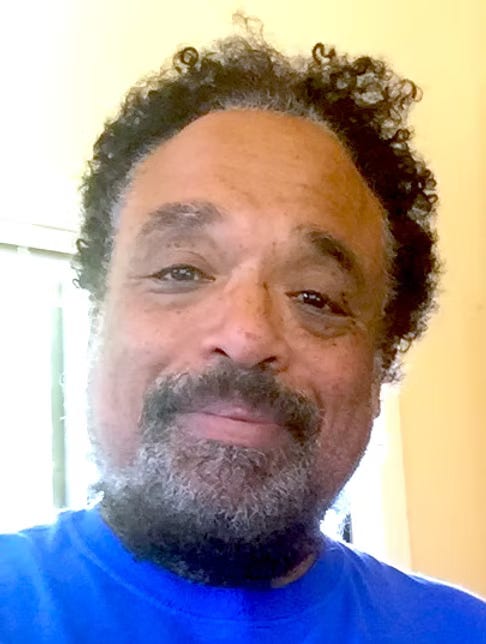










Community discussion