Martian Oceans and Lunar Mysteries: Uncovering the Secrets of Our Cosmic Neighbours
In this episode of SpaceTime, we explore groundbreaking discoveries that reshape our understanding of Mars, the Moon, and the Milky Way Galaxy.
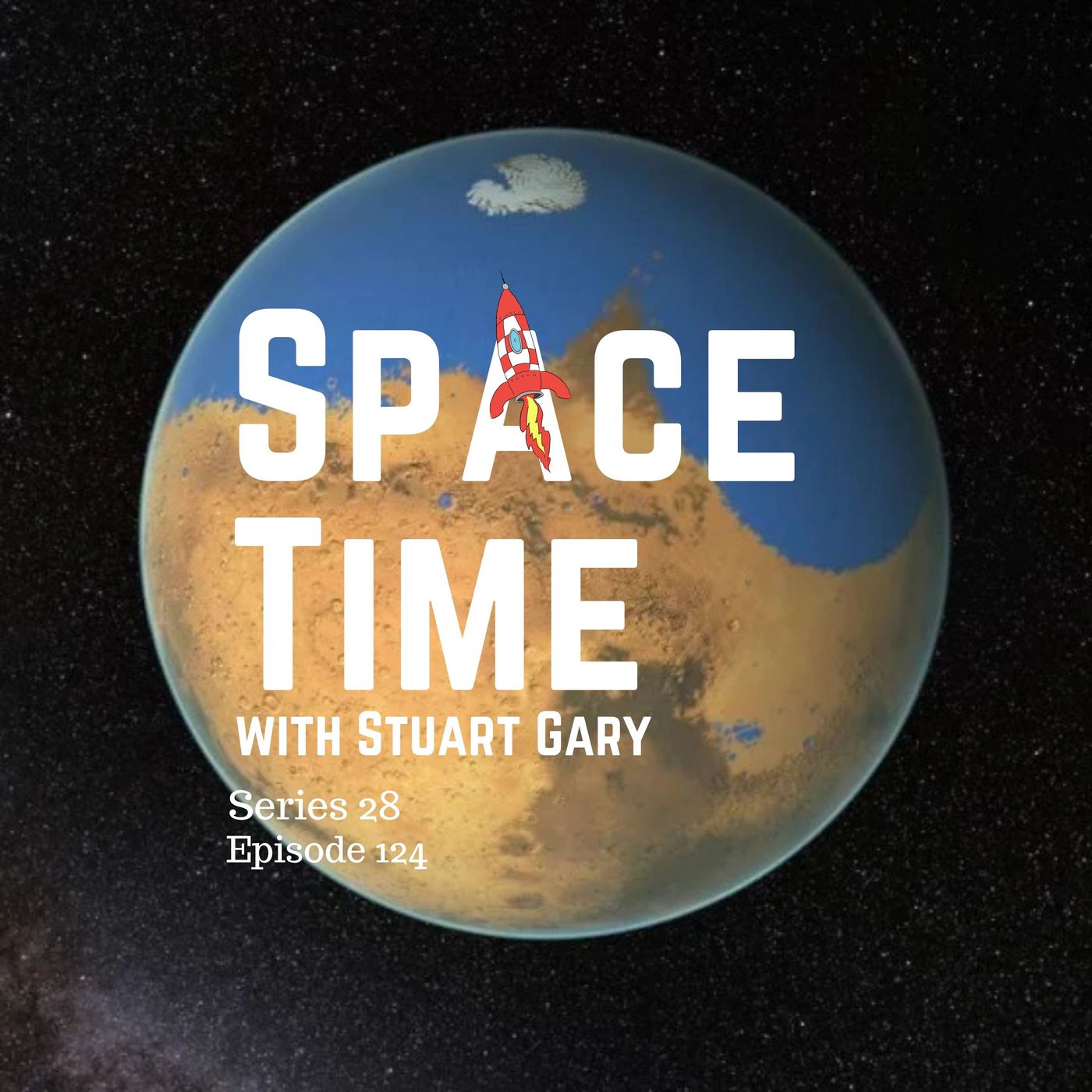
Ancient Oceans on Mars: Geological Evidence Revealed
A new study published in the journal Geophysical Research Letters presents compelling geological evidence that Mars' Northern Hemisphere was once home to a vast ocean. Lead author Chris from the University of Arkansas discusses how comparisons between river rocks on Earth and Martian sediment reveal ancient river deltas and backwater zones, suggesting that liquid water flowed on the Red Planet, increasing the possibility of past life. This episode delves into the processes of sedimentation and erosion that shaped Mars' landscape, providing insights into its watery past.
The Moon's South Pole-Aitken Basin: Unveiling Impact Mysteries
A fresh analysis of the Moon's largest impact crater, the South Pole-Aitken Basin, sheds light on its formation and the Moon's geological history. Researchers have discovered that this massive crater's shape indicates an impact from the north, challenging previous assumptions. As the Artemis missions prepare to land near this basin, they will have the opportunity to study material excavated from the lunar interior, potentially unlocking secrets about the Moon's evolution and the asymmetries in its crust.
Nancy Chris Roman Space Telescope: Mapping the Milky Way
NASA's upcoming Nancy Chris Roman Space Telescope is set to revolutionise our understanding of the Milky Way's interstellar medium. This mission will map around 20 billion stars, using infrared light to penetrate the dust clouds obscuring our view. Chief investigator Catherine Zucker explains how this data will refine our models of star formation and the galaxy's structure, while also addressing the ongoing mysteries of galactic spiral patterns and their role in star birth.
www.spacetimewithstuartgary.com
✍️ Episode References
Geophysical Research Letters
https://agupubs.onlinelibrary.wiley.com/journal/19448007
Nature
https://www.nature.com/nature
NASA Nancy Chris Roman Space Telescope
https://roman.gsfc.nasa.gov/
Become a supporter of this podcast: https://www.spreaker.com/podcast/spacetime-your-guide-to-space-astronomy--2458531/support.
Ancient Oceans on Mars: Geological Evidence Revealed
The Moon's South Pole-Aitken Basin: Unveiling Impact Mysteries
Nancy Chris Roman Space Telescope: Mapping the Milky Way
(00:00) Evidence of ancient oceans on Mars
(10:15) New insights into the Moon's largest impact crater
(19:30) The upcoming Nancy Chris Roman Space Telescope mission
(27:00) Science Robert: Heatwaves and their impact on global mortality
Ancient Oceans on Mars: Geological Evidence Revealed
A new study published in the journal Geophysical Research Letters presents compelling geological evidence that Mars' Northern Hemisphere was once home to a vast ocean. Lead author Chris from the University of Arkansas discusses how comparisons between river rocks on Earth and Martian sediment reveal ancient river deltas and backwater zones, suggesting that liquid water flowed on the Red Planet, increasing the possibility of past life. This episode delves into the processes of sedimentation and erosion that shaped Mars' landscape, providing insights into its watery past.
The Moon's South Pole-Aitken Basin: Unveiling Impact Mysteries
A fresh analysis of the Moon's largest impact crater, the South Pole-Aitken Basin, sheds light on its formation and the Moon's geological history. Researchers have discovered that this massive crater's shape indicates an impact from the north, challenging previous assumptions. As the Artemis missions prepare to land near this basin, they will have the opportunity to study material excavated from the lunar interior, potentially unlocking secrets about the Moon's evolution and the asymmetries in its crust.
Nancy Chris Roman Space Telescope: Mapping the Milky Way
NASA's upcoming Nancy Chris Roman Space Telescope is set to revolutionise our understanding of the Milky Way's interstellar medium. This mission will map around 20 billion stars, using infrared light to penetrate the dust clouds obscuring our view. Chief investigator Catherine Zucker explains how this data will refine our models of star formation and the galaxy's structure, while also addressing the ongoing mysteries of galactic spiral patterns and their role in star birth.
www.spacetimewithstuartgary.com
✍️ Episode References
Geophysical Research Letters
https://agupubs.onlinelibrary.wiley.com/journal/19448007
Nature
https://www.nature.com/nature
NASA Nancy Chris Roman Space Telescope
https://roman.gsfc.nasa.gov/
Become a supporter of this podcast: https://www.spreaker.com/podcast/spacetime-your-guide-to-space-astronomy--2458531/support.
Ancient Oceans on Mars: Geological Evidence Revealed
The Moon's South Pole-Aitken Basin: Unveiling Impact Mysteries
Nancy Chris Roman Space Telescope: Mapping the Milky Way
(00:00) Evidence of ancient oceans on Mars
(10:15) New insights into the Moon's largest impact crater
(19:30) The upcoming Nancy Chris Roman Space Telescope mission
(27:00) Science Robert: Heatwaves and their impact on global mortality
You May Also Like

The Grave Talks | Haunted, Paranormal & Supernatural
Ghost Stores, Haunted, Paranormal & Supernatural Stories

懂心理,調出好關係 《Healthy Relationship》
姜尚文心理師,朴世光心理師

Chris Skinner's Countryside Podcasts
High Ash Farm

Real Ghost Stories Online
Real Ghost Stories Online | Paranormal, Supernatural & Horror Radio

Fallo de sistema
Radio 3

The Art of Range
Tip Hudson

Arroe Collins Forest Stories
Arroe Collins

Vida Eterna. Respuestas desde la Ciencia | Dr. Manuel Sans Segarra
Dr. Manuel Sans Segarra

Accès au Marché Mondial des Dispositifs Médicaux
Pure Global

Jack's Backyard
830 WEEU "The Voice of Berks and Beyond"
The Grave Talks | Haunted, Paranormal & Supernatural
Ghost Stores, Haunted, Paranormal & Supernatural Stories
懂心理,調出好關係 《Healthy Relationship》
姜尚文心理師,朴世光心理師
Chris Skinner's Countryside Podcasts
High Ash Farm
Real Ghost Stories Online
Real Ghost Stories Online | Paranormal, Supernatural & Horror Radio
Fallo de sistema
Radio 3
The Art of Range
Tip Hudson
Arroe Collins Forest Stories
Arroe Collins
Vida Eterna. Respuestas desde la Ciencia | Dr. Manuel Sans Segarra
Dr. Manuel Sans Segarra
Accès au Marché Mondial des Dispositifs Médicaux
Pure Global
Jack's Backyard
830 WEEU "The Voice of Berks and Beyond"
Community discussion