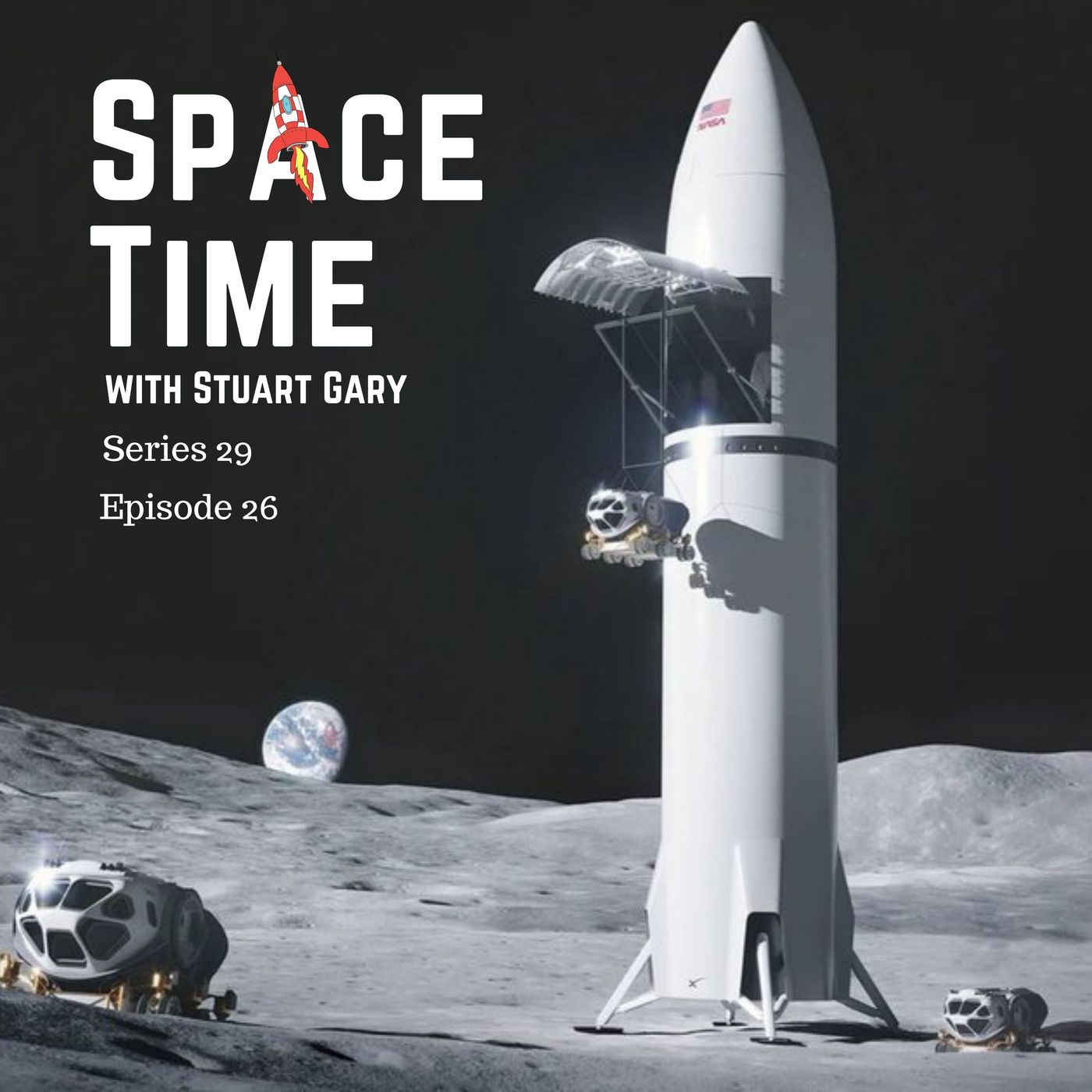
Lunar Delays and Hypersonic Breakthroughs: Exploring the Depths of Space
SpaceTime with Stuart Gary Gary - Series 29 Episode 26
In this episode of SpaceTime, we delve into NASA's postponed return to the lunar surface, a remarkable hypersonic test flight by an Australian company, and the fascinating hidden chemistry at the heart of the Milky Way galaxy.
Nasa's Lunar Return Delayed
NASA has announced a significant delay in its plans to return humans to the lunar surface, pushing the Artemis 4 mission to 2028. The upcoming Artemis 3 mission will focus on testing systems in low Earth orbit instead of conducting a lunar landing. NASA officials emphasize the need for a methodical approach to ensure the safety and success of future missions, including critical tests of lunar landers from SpaceX and Blue Origin. This strategic shift aims to facilitate at least one major lunar landing annually starting in 2028.
Successful Hypersonic Test Flight
An Australian scramjet has achieved a successful test flight, propelling the Dart hypersonic aircraft to speeds exceeding five times the speed of sound. This milestone underscores the potential of scramjet technology, which utilizes a unique engine design without moving parts to achieve hypersonic speeds. The successful mission, launched from Rocket Lab’s Wallops Island facility, marks a significant step toward developing autonomous hypersonic vehicles capable of sustained flight and could pave the way for future space travel advancements.
Revealing the Milky Justin's Chemistry
Astronomers have captured the largest and most detailed image of the central region of the Milky Way galaxy, unveiling a complex network of filaments and cosmic gas. This groundbreaking observation, made possible by the Atacama Large Millimeter/submillimeter Array (ALMA), provides unprecedented insights into the processes of star formation in the galactic center. The study reveals the intricate chemistry of the central molecular zone, detecting various molecules and enhancing our understanding of star formation in extreme environments.
www.spacetimewithstuartgary.com
✍️ Episode References
Scientific Reports, Monthly Notices of the Royal Astronomical Society
Support our podcast: Become a supporter.
You May Also Like

Aha! Zehn Minuten Alltags-Wissen
WELT

Real Ghost Stories Online
Real Ghost Stories Online | Paranormal, Supernatural & Horror Radio

The Grave Talks | Haunted, Paranormal & Supernatural
Ghost Stores, Haunted, Paranormal & Supernatural Stories

Intelligent Design the Future
Discovery Institute

Peter und der Wald – ein GEO-Podcast
Peter Wohlleben / Wohllebens Waldakademie

Eye On The Sky
Vermont Public

Astronomy Cast
Fraser Cain and Dr. Pamela Gay
Discovery
BBC World Service

Vida Eterna. Respuestas desde la Ciencia | Dr. Manuel Sans Segarra
Dr. Manuel Sans Segarra

The Dissenter
Ricardo Lopes
Aha! Zehn Minuten Alltags-Wissen
WELT
Real Ghost Stories Online
Real Ghost Stories Online | Paranormal, Supernatural & Horror Radio
The Grave Talks | Haunted, Paranormal & Supernatural
Ghost Stores, Haunted, Paranormal & Supernatural Stories
Intelligent Design the Future
Discovery Institute
Peter und der Wald – ein GEO-Podcast
Peter Wohlleben / Wohllebens Waldakademie
Eye On The Sky
Vermont Public
Astronomy Cast
Fraser Cain and Dr. Pamela Gay
Discovery
BBC World Service
Vida Eterna. Respuestas desde la Ciencia | Dr. Manuel Sans Segarra
Dr. Manuel Sans Segarra
The Dissenter
Ricardo Lopes
Community discussion