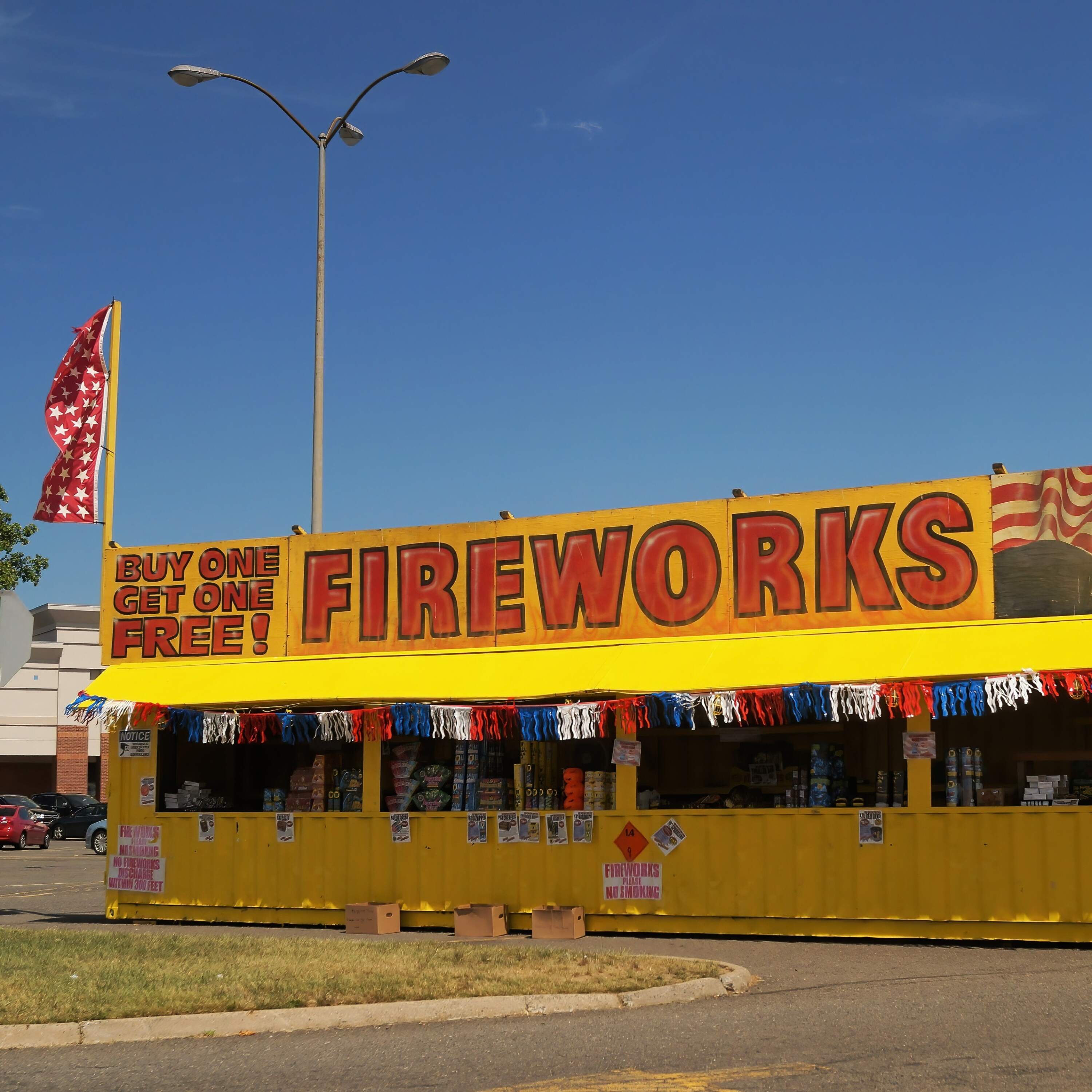
This July 4th, are you a thrill- or chill-seeker?
Independence Day is approaching!
Imagine if someone has procured illegal fireworks from a couple of states over. Are you:
1. first in line to light them?
2. content to watch while others set them off?
3. going to find a fire extinguisher — just in case — while loudly condemning the activity?
Ken Carter, a psychologist at Oxford College of Emory University, says everyone has a different level of sensation-seeking. This episode, we get into the factors at play, like people's brain chemistry, when deciding whether or not to do an activity, like setting off fireworks.
For low and average sensation-seekers, very thrilling activities like large, self-run fireworks displays can cause their bodies to produce a lot of cortisol, a stress hormone.
On the other hand, high sensation-seekers, Carter says, "don't tend to produce that much cortisol when they're in those highly chaotic experiences. So when they're seeing those fireworks, they actually produce higher amounts of another chemical called dopamine, which is a neurotransmitter or a chemical messenger that's involved in pleasure."
Carter has developed a 40-point self-assessment survey for people to figure out how much of a sensation-seeker they are. The survey can be found in his book, Buzz!
Interested in more psychology episodes? Email us your question at [email protected].
Support public media with NPR+ and enjoy perks for over 25 podcasts like this one. It includes perks like bonus episodes, early access, archive access, curated playlists and sponsor-free listening. Learn more at plus.npr.org.
See pcm.adswizz.com for information about our collection and use of personal data for sponsorship and to manage your podcast sponsorship preferences.
NPR Privacy Policy
You May Also Like
The Climate Question
BBC World Service
Science & Futurism with Isaac Arthur
Isaac Arthur
Total Disclosure Podcast
Tyler Roberts

Eye On The Sky
Vermont Public

Real Ghost Stories Online
Real Ghost Stories Online | Paranormal, Supernatural & Horror Radio

The Grave Talks | Haunted, Paranormal & Supernatural
Ghost Stores, Haunted, Paranormal & Supernatural Stories

The 365 Days of Astronomy
365DaysOfAstronomy.org

Trent Loos Podcast
Trent Loos
Reptile Fight Club
MPR Network

Farm Small Farm Smart Daily
The Modern Grower Podcast Network
The Climate Question
BBC World Service
Science & Futurism with Isaac Arthur
Isaac Arthur
Total Disclosure Podcast
Tyler Roberts
Eye On The Sky
Vermont Public
Real Ghost Stories Online
Real Ghost Stories Online | Paranormal, Supernatural & Horror Radio
The Grave Talks | Haunted, Paranormal & Supernatural
Ghost Stores, Haunted, Paranormal & Supernatural Stories
The 365 Days of Astronomy
365DaysOfAstronomy.org
Trent Loos Podcast
Trent Loos
Reptile Fight Club
MPR Network
Farm Small Farm Smart Daily
The Modern Grower Podcast Network
Community discussion