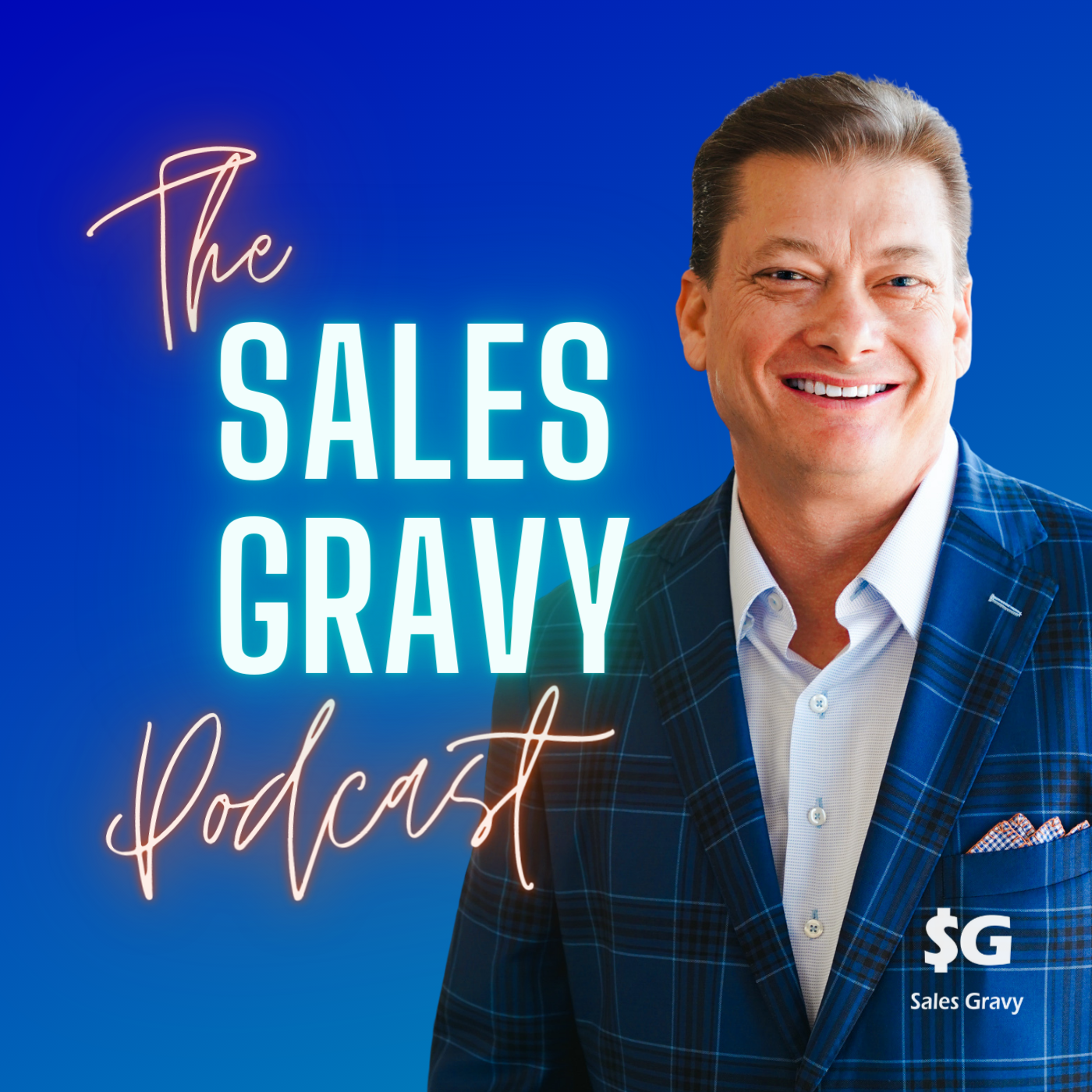
Strategies For Mastering Sales Messaging — Feat. Dr. Jim Karrh
Great Sales Messaging Isn't Rocket Science On this episode of the Sales Gravy Podcast, Jim Karrh, Ph.D. and Jeb Blount discuss the essentials of sales messaging, how poor communication skills damage your brand, the stories we tell ourselves and our prospective customers, and what the advent of automation tools like Chat GPT means for salespeople. You’ll learn how to translate marketing messages into effective sales conversations, whether in person, virtually, or over the phone. Prioritize positioning and lead the conversation to close more deals CMOs and marketing teams must take ownership of the writing that their salespeople produce. This can be accomplished by incorporating writing development into sales training and coaching efforts Use empathy and insight to connect with prospects and ensure that you establish trust at the beginning of the sales conversation. Focus on the buyer's problem and the urgency behind it, rather than just promoting the product's features and benefits. Then, simplify messaging to get customers to say yes and move forward. Create a framework and sequence for conversations, especially in discovery and closing conversations. Use automation tools like Chat GPT to improve written communication, but remember that authenticity is key and phony, robotic messaging won't close deals. Strategic Messaging Is Crucial For Any Sales or Marketing Organization In today's market, it's increasingly difficult to find and take full advantage of precious sales opportunities. That's why it's so important to prioritize positioning and lead the conversation to close more deals. At the University of Alabama, Jim Karrh, Ph.D. teaches coursework around innovative marketing and sales messaging. His curriculum is informed by his background in B2B consulting and his previous experience as a CMO for a private company. During his time as a CMO, Jim became frustrated with the sales team's inability to effectively communicate the brand’s core messaging to both their direct sales team and independent distributors. This experience led Jim to focus on bridging the gap between marketing and sales in his consulting work with B2B sales teams. Now, Jim uses his understanding of communication and psychology to help improve the practical day-to-day realities of salespeople and sales leaders. Writing Ability Is Key For Clear Communication Salespeople, even those with a college education, often face challenges with writing. If you're a leader and observe this trend within your organization, rest assured you're not alone. Nonetheless, writing and communication skills hold immense value and should be seamlessly integrated into your sales training and coaching efforts. It's common for individuals to believe they lack writing ability, but in roles like sales, management, or leadership, writing is an essential skill—and usually an untapped secret weapon. Writing compels you to structure your ideas coherently, enhancing focus on essential aspects, connecting concepts, establishing sequence, refining structure, and avoiding unnecessary wordiness. This process instills discipline, thereby fostering improved thinking and communication. Sadly, it's a rare skill and discipline in today's professional landscape. The importance of writing extends beyond mere formality; it reflects our value as professionals. Throughout the selling process and in the eyes of customers, how we sound and come across in writing can significantly influence judgments. Teams often need to revisit this aspect as people may not possess the ability to write naturally due to a lack of prior teaching or experience. By addressing this deficit and incorporating writing development into training, individuals can unlock their full potential as effective communicators and salespeople. Poor Written And Verbal Communication Is Killing Your Brand And Your Bottom Line If you're a Chief Marketing Officer (CMO), your salespeople can damage your brand if you allow them to write poorly. The responsibility for this falls on you and your marketing organization. Marketing should not write everything for salespeople because that approach can be disastrous, but every time a salesperson interacts with a customer, they become the face of your brand, so it's crucial that marketing monitors what salespeople write. This is because writing can make or break a deal. Sales are often won or lost by a small margin, and emotions play a significant role in decision-making. If your writing is sloppy, you'll put yourself in a position to lose the deal. This is no different from showing up to a meeting looking unprofessional. If you're a salesperson, leader, or trainer, you should spend time teaching people how to write for business. Verbal communication is also crucial because you'll be presenting to customers. However, in most cases, someone else will read your written proposals. This person may be in middle management or have to seek approval from someone else. If they can't understand your wr
You May Also Like

This is Money Podcast
This is Money
Bloomberg Talks
Bloomberg

Handelsblatt Today – Der Finanzpodcast mit News zu Börse, Aktien und Geldanlage
Solveig Gode, Nicole Bastian, Sandra Groeneveld, Nele Dohmen, Anis Mičijević, Ben Mendelson, Aileen Bunte

Equity
TechCrunch, Rebecca Bellan, Kirsten Korosec, Anthony Ha, Sean O'Kane, Theresa Loconsolo

How Money Works
How Money Works
RADIO 007
RADIO007

One Rental At A Time
Michael Zuber

AI Hustle: Make Money from AI and ChatGPT, Midjourney, NVIDIA, Anthropic, OpenAI
Jaeden Schafer and Jamie McCauley

The Level Up Podcast w/ Paul Alex
Paul Alex Espinoza
Money Stuff: The Podcast
Bloomberg
This is Money Podcast
This is Money
Bloomberg Talks
Bloomberg
Handelsblatt Today – Der Finanzpodcast mit News zu Börse, Aktien und Geldanlage
Solveig Gode, Nicole Bastian, Sandra Groeneveld, Nele Dohmen, Anis Mičijević, Ben Mendelson, Aileen Bunte
Equity
TechCrunch, Rebecca Bellan, Kirsten Korosec, Anthony Ha, Sean O'Kane, Theresa Loconsolo
How Money Works
How Money Works
RADIO 007
RADIO007
One Rental At A Time
Michael Zuber
AI Hustle: Make Money from AI and ChatGPT, Midjourney, NVIDIA, Anthropic, OpenAI
Jaeden Schafer and Jamie McCauley
The Level Up Podcast w/ Paul Alex
Paul Alex Espinoza
Money Stuff: The Podcast
Bloomberg
Community discussion