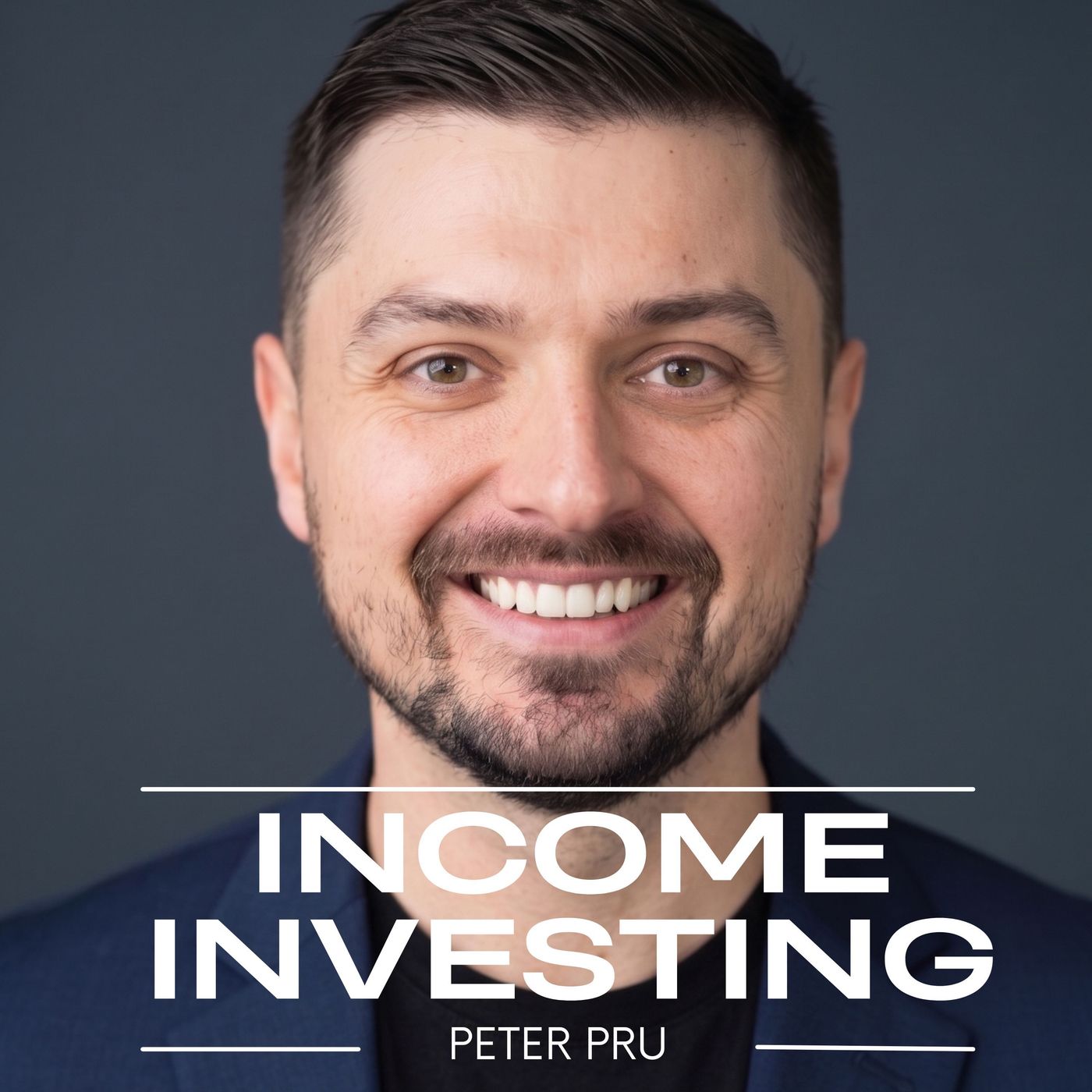
I'm DUMPING QQQI For This New High Income ETF
🖥️ Register For A Workshop + Free Calculators & Watchlist: 👉 https://onlypeterpru.com/ark-options-workshop?utm_source=pod&utm_id=social
🚨Get Trade Ideas & Market Updates: 👉 https://theweeklywheel.beehiiv.com/
While QQQI commands massive popularity with its eye-catching 14% monthly distribution yield, I am personally shifting the majority of my Nasdaq-100 income allocation into GPIC instead—a fund that pays a seemingly modest 9.5% and requires voluntarily giving up 4.5% in annual yield. In this video, we break down why that trade-off makes complete mathematical sense during the wealth accumulation phase. While QQQI’s strict call spreads lock in high cash flow, they aggressively cap upside NAV participation during strong Nasdaq bull runs; by contrast, Goldman Sachs' GPIQ applies a dynamic 25% to 75% options overlay that actively scales down coverage in trending markets, allowing it to capture roughly 87% of the Nasdaq's upside while charging a remarkably low 0.29% expense ratio. We explore how total return ultimately trumps headline yield when you are in an accumulation phase where every distribution is automatically reinvested, contrasting it with the income phase where maximum immediate cash flow takes priority.
You May Also Like

How to Trade Stocks and Options Podcast with OVTLYR Live
Christopher M. Uhl, CMA

The Wall Street Skinny
Kristen and Jen

The RAG Podcast - Recruitment Agency Growth Podcast
Sean Anderson

One Rental At A Time
Michael Zuber
The HC Commodities Podcast
Paul Chapman, HC Group
John Kitchens Coach Podcast Experience
John Kitchens

Marketplace
Marketplace

Pizza and Property
P&P Media

Bloomberg Talks
Bloomberg
CNBC's "Fast Money"
CNBC
How to Trade Stocks and Options Podcast with OVTLYR Live
Christopher M. Uhl, CMA
The Wall Street Skinny
Kristen and Jen
The RAG Podcast - Recruitment Agency Growth Podcast
Sean Anderson
One Rental At A Time
Michael Zuber
The HC Commodities Podcast
Paul Chapman, HC Group
John Kitchens Coach Podcast Experience
John Kitchens
Marketplace
Marketplace
Pizza and Property
P&P Media
Bloomberg Talks
Bloomberg
CNBC's "Fast Money"
CNBC
Community discussion