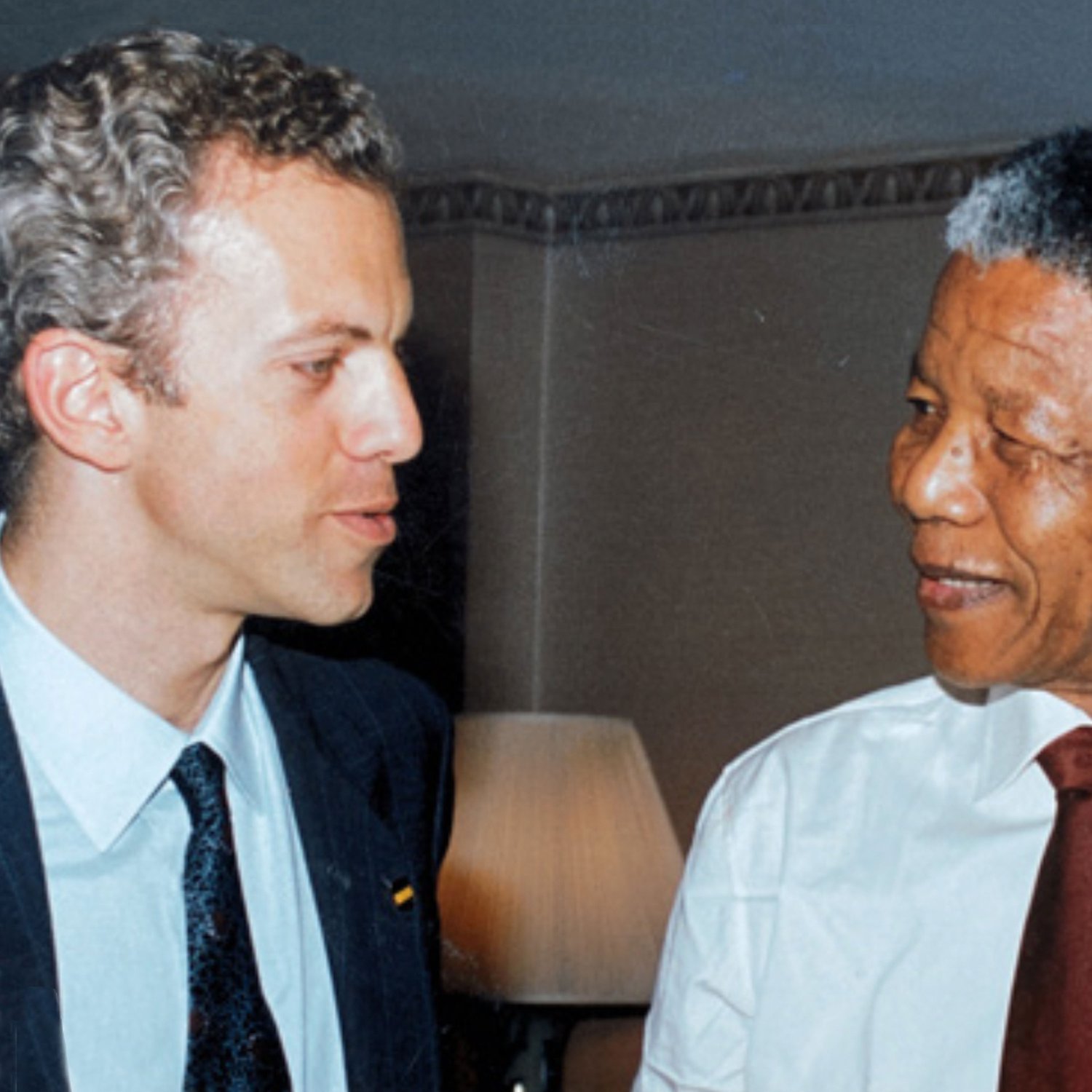
DAVID FENTON - Founder of Fenton Communications, Author of The Activist’s Media Handbook: Lessons From 50 Years as a Progressive Agitator
How can we effectively communicate that we're moving beyond climate change to a state of climate crisis? The trapped heat energy on Earth is equal to a million Atomic bombs going off every single day. Today we talk to someone who's been mobilizing the public mind for over 50 years. David Fenton, named “one of the 100 most influential PR people” by PR Week and “the Robin Hood of public relations” by The National Journal, founded Fenton in 1982 to create communications campaigns for the environment, public health, and human rights. For more than five decades he has pioneered the use of PR, social media, and advertising techniques for social change. Fenton started his career as a photojournalist in the late 1960s – his book Shots: An American Photographer’s Journal was published in 2005. He was formerly director of public relations at Rolling Stone magazine and co-producer of the No-Nukes concerts in 1979 at Madison Square Garden with Bruce Springsteen, Bonnie Raitt, James Taylor, Jackson Browne, and other artists. He has also helped create JStreet, Climate Nexus, the Death Penalty Information Center, and Families for a Future. He sold Fenton a few years ago to work on climate change full time. He is the author of The Activist’s Media Handbook: Lessons From 50 Years as a Progressive Agitator.
You May Also Like

Real Ghost Stories Online
Real Ghost Stories Online | Paranormal, Supernatural & Horror Radio

The Grave Talks | Haunted, Paranormal & Supernatural
Ghost Stores, Haunted, Paranormal & Supernatural Stories

Aha! Zehn Minuten Alltags-Wissen
WELT

John Michael Godier's Event Horizon
John Michael Godier

生態雜談
世祥、口永

Head Shepherd
Mark Ferguson

Accès au Marché Mondial des Dispositifs Médicaux
Pure Global

Vida Eterna. Respuestas desde la Ciencia | Dr. Manuel Sans Segarra
Dr. Manuel Sans Segarra
People Who Read People: A Behavior and Psychology Podcast
Zachary Elwood
The Climate Question
BBC World Service
Real Ghost Stories Online
Real Ghost Stories Online | Paranormal, Supernatural & Horror Radio
The Grave Talks | Haunted, Paranormal & Supernatural
Ghost Stores, Haunted, Paranormal & Supernatural Stories
Aha! Zehn Minuten Alltags-Wissen
WELT
John Michael Godier's Event Horizon
John Michael Godier
生態雜談
世祥、口永
Head Shepherd
Mark Ferguson
Accès au Marché Mondial des Dispositifs Médicaux
Pure Global
Vida Eterna. Respuestas desde la Ciencia | Dr. Manuel Sans Segarra
Dr. Manuel Sans Segarra
People Who Read People: A Behavior and Psychology Podcast
Zachary Elwood
The Climate Question
BBC World Service
Community discussion