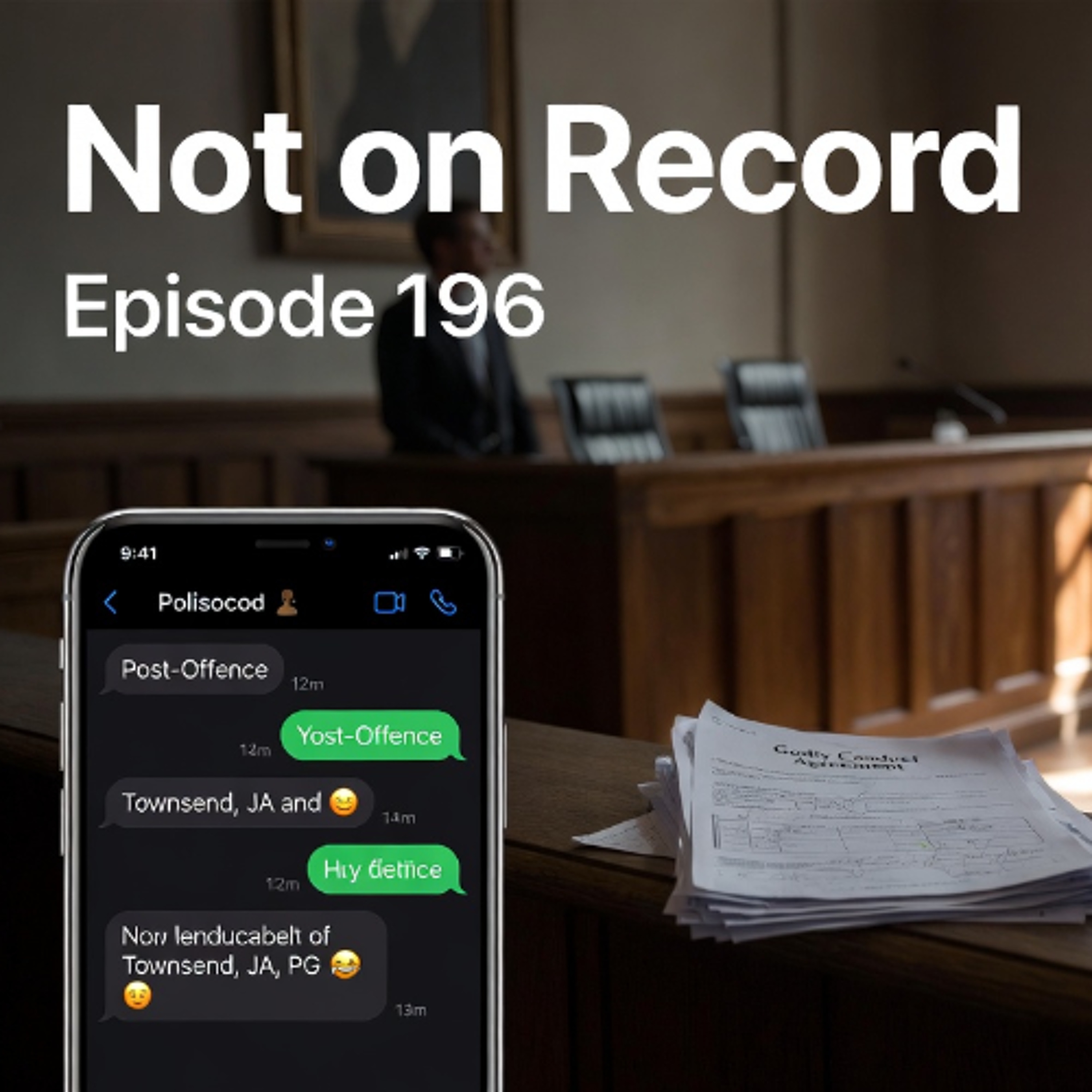
EP#196 | What You Do After an Allegation Can Ruin You - Even If You’re Innocent
Sponsored by EasyDNS [https://easydns.com/NotOnRecord](https://easydns.com/NotOnRecord) How should courts treat an accused person’s post-offence behaviour apologies, emotional reactions, “weird” texts, or even what looks like a confession without turning normal human messiness into “consciousness of guilt”? Joseph, Diana, and the crew break down the guardrails around after-the-fact conduct and why context is everything, especially in sexual assault cases. They walk through three fresh decisions: Townsend (2025 BCCA 459) on the danger of leaping to guilt from a volatile reaction (and the appellate correction when alternative explanations weren’t properly weighed), JA (2025 ONSC 4531) on how chaotic teen/young-adult texting can be misread as admissions when there’s no clear denial, and PG (2025 ONSC 7018) the “Godly Conduct Agreement” case where highly religious language that sounds like a confession is ultimately understood as moral guilt and inner turmoil, not proof beyond a reasonable doubt. The through-line: if you don’t rigorously test other plausible explanations, post-offence conduct becomes a shortcut to wrongful inferences.
You May Also Like

Shimon Davis
Shimon Davis

sarah marie anderson's podcast
sarah marie anderson

Am I the Genius?
youtube.com/@amithegenius

Financial Autonomy
Guidance Financial Services: Investing & Retirement Planning Experts

CANITY
CANITY
How I Work
Amantha Imber

SHIR HADASH
Shir Hadash

Daily Facts
Amalia Dupray and Montgomery Jones.
Life Hacks DIY & More - Transform Your Everyday With Simple Tricks and DIY Magic!
Byte & Pieces
Motivational Speeches
Motivationly
Shimon Davis
Shimon Davis
sarah marie anderson's podcast
sarah marie anderson
Am I the Genius?
youtube.com/@amithegenius
Financial Autonomy
Guidance Financial Services: Investing & Retirement Planning Experts
CANITY
CANITY
How I Work
Amantha Imber
SHIR HADASH
Shir Hadash
Daily Facts
Amalia Dupray and Montgomery Jones.
Life Hacks DIY & More - Transform Your Everyday With Simple Tricks and DIY Magic!
Byte & Pieces
Motivational Speeches
Motivationly
Community discussion