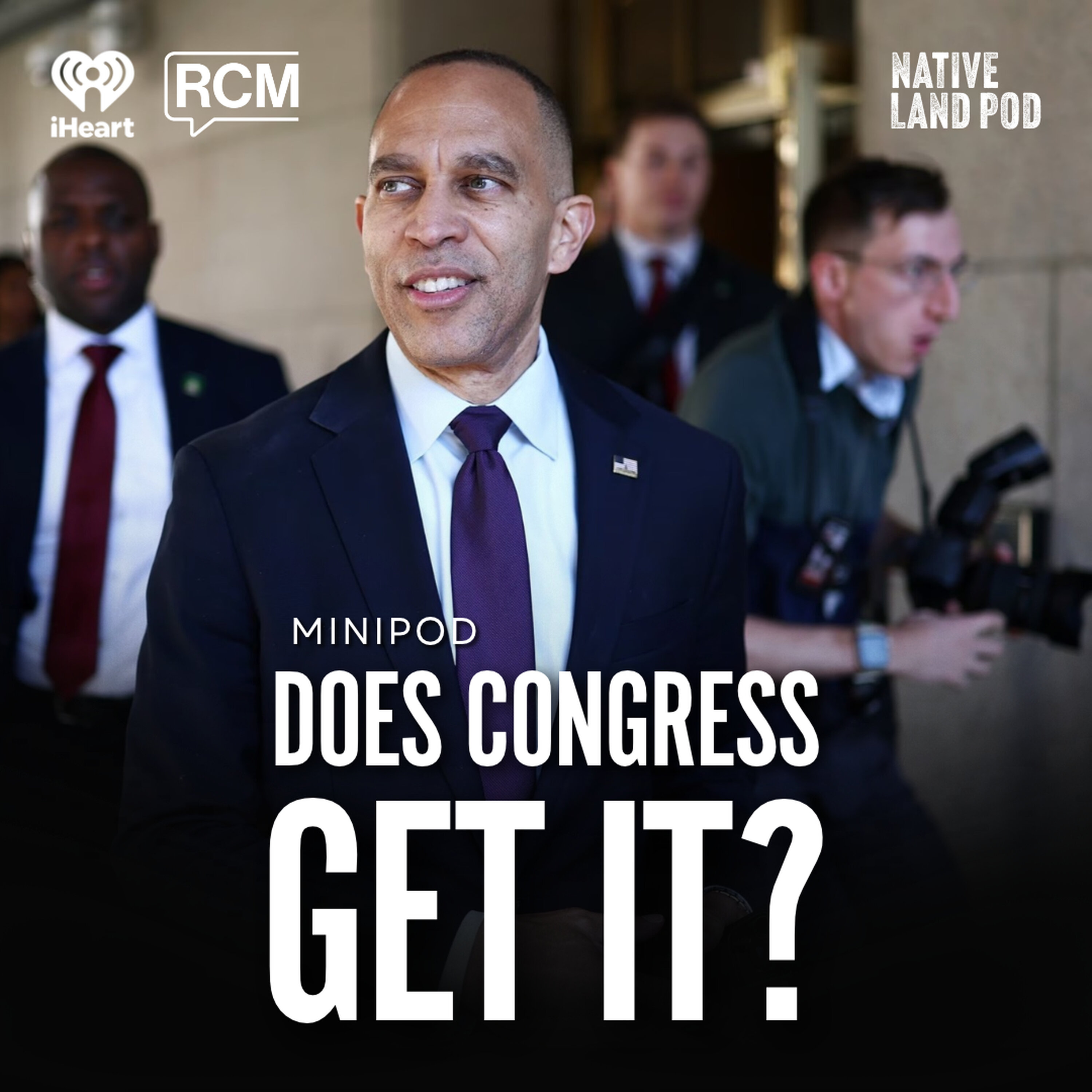
0:00 Native Lampad is a production of iHeartRadio in partnership with Reason Choice Media. 0:20 Look at you holding a note, friend. 0:22 Hey, hey, hey. 0:23 Welcome home, y'all. 0:24 Yeah, but it's the third row, though, because I didn't. 0:26 Want to be too close to the mic. Were you with the Sopranos? 0:29 Definitely. 0:29 But now I think I'm also digging your tenor, like something about hormones. 0:32 Your voice starts getting deep. 0:34 I'm still a tenor. 0:35 I'm almost a baritone at this point. 0:39 Well, at this particular point in the week, fighting off all these, you know, germs and whatnot. 0:45 You kind of sound like the. 0:47 What's the what's the dude and like uh what's the name of that group if you make five heartbeats like you anyway y'all welcome. 1:01 Home welcome it is our mini pod day this is happy friday. 1:05 Appreciate rap city day rap city got another grammy. 1:08 Nomination for album of the year That's all right. And she deserved it. She's in my top five. If y'all don't have Rhapsody, you're top five. You're sleeping on it. 1:17 Happy Friday before Thanksgiving, by the way. And the only reason why that sticks out to me is because my kids were like, do we need to go to school today? 1:25 I was like, it's a school day. 1:26 It's a school day. 1:27 Nobody's going to be at school. They're starting vacation. Do you know they get the whole Thanksgiving week off? That's good. 1:32 Has it always been that way? 1:33 I don't recall. That does not sound familiar to me. 1:37 I do not think we had Monday, Tuesday, Wednesday, Thursday, Friday, and then all the way, you know, definitely the weekend. 1:44 But like, I do remember going to school the first. 1:47 If y'all in the comments and you know whether or not, I mean, I'm in Florida. I grew up in Florida, so it may be different down here. We're very different. 1:54 Y'all are different. 1:55 If you know anything different about this, let me know. 1:58 But they want to stay home today. I'm like, and I got to keep you on the whole next week. No. 2:02 My God. 2:03 Yeah. 2:03 They're going to school. And guess what? The youngest will be in after school care today. 2:07 That is so rude. 2:08 Nephews and niece, if you need an intervention, bleep twice. 2:12 I will come get you. Auntie will come get you. 2:15 Okay, listen. 2:16 So y'all, we had this really robust, dang, I wish I would have listened to Nick. 2:21 I don't listen to Nick sometimes. He asked us if we had any clips. 2:24 It would have been so good, Nick, just in case you could still do it and don't be mad at me. 2:28 If we could pull Andrew's clip, it's the social media clip that's up right now. I think it would be good to contextualize our conversation today because really what we're talking about is this idea of how we leverage people power in this moment. There was a conversation that we 2:47 were having. This is my version, AG. If you want to contest it, please weigh in. But my version of the conversation is we were spending a lot of time on a historic vote day where Hakeem Jeffries became the speaker designate, the first Black ever to become the speaker 3:05 designate on Wednesday. We spent a lot of time talking about tactics for now what, right? We talked about the math that it will take to pass a vote. We talked about how many members of Congress won election or reelection. 3:20 We talked about how many members of Congress it would take to have a veto-proof majority on a piece of legislation. 3:28 But what we did not give adequate space for is for people's sentiment and what they expected on the other side of the election. I think Andrew spoke to some of that. and probably better than the rest of us because I think we were all in tactics and strategy. 3:53 To be honest, my full disclosure point. 3:55 Is I love that. I'm not going to say the word. 3:58 I love that stuff. 3:59 It's fascinating to me to figure out how a bill becomes law and who do we have to influence to make it happen. 4:10 I love that stuff. That is how I grew up politically. 4:14 I understand. 4:15 That y'all weren't ready for that. Y'all was like, we good on that right now. We ain't, we ain't trying to right now. We just want to vent. And I understand that. Um, but my prayer today is that our conversation could move towards now. What for the people, because 4:31 the people will want results as soon as January 3rd comes. 4:35 So, um, I'd slight, slight variation from your description. I don't know that people were, um, not ready for the mechanics of it yet. 4:46 Okay. 4:46 I think, I think, um, I think people don't want to be misunderstood by their vote. I think they do not want people to get the wrong, learn the wrong lesson from what voters went out and did on election day. 5:04 They were, um, You've seen an interview after interview since the House tsunami, blue nami or whatever you want to call it. Blacklash. 5:15 We like a blacklash. 5:16 OK, well, the blacklash that black folks delivered on Election Day. 5:20 Also, AG, to the. 5:22 Point, if people weren't overwhelmingly voting for a Democratic majority and for politics as usual, then we should probably not call it a blue tsunami and all that. 5:35 And again, this goes back to what we said election night. 5:37 It's not a celebration. It's a mandate. So what is the mandate? 5:41 Yeah. So people thought that they were sending a message. 5:45 There's no doubt. In some cases, because I don't want to undercut that in some places there were some inspiring candidates that people felt motivated to get up, go out and vote for. That was important. But there were also 6:00 folks who were basically like, there's 600,000 black women out of work. 6:04 Yes. 6:05 We are taking it left and right. Our heads are on a swivel and we're dizzy as hell from all of this stuff. And so we... We want to make sure you understand what the assignment is now, because we understood ours. The voters say we understood ours. We went out. 6:21 We did our part. And now don't get confused. Hakeem Jeffries. 6:25 Don't get confused. Chuck Schumer. Don't get confused. Democrat left, right or center on this thing. You all have a set of. objectives you are supposed to go out there and accomplish. And I think chief among them was to stop the harm, but people are not happy with just 6:41 stop the harm. They're also like, deliver me some relief. 6:45 And I know they've got the video queued up that I think you want to play. I don't mind that sitting through. 6:49 It, but. 6:49 And before we even get to that video though, what I think I also want to make sure that we go to, there's, there are these two comments and I do want this to be a little more interactive than normal because I think it's imperative to, that we don't 7:03 create space for confusion, for miscommunication and for misinformation. So this comment says it's not that we aren't ready for the mechanics. It's we don't want the mechanics to be justified as an excuse to be doing to be do nothing Democrats as usual. To be clear, I don't think 7:22 any of us want to create justification for that. 7:27 I certainly don't. 7:28 This is where it sounded like justification. 7:30 OK, let me hear. 7:31 When in our conversation, we kept saying we need veto proof majorities in order to move. 7:36 No, I never said in order to move. 7:38 I think it was possible to receive that on the listening side of it. You heard. That's why I made the comment. It sounds like we're moving the cheese again. Like, OK, we wanted you want it back in the majority. We put you back in the majority. We did so in 7:52 overwhelming fashion. You wanted the Senate. 7:55 OK, fine. 7:55 We're about to roll this thing. We rolled it and we gave it to you. And so our conversation talked a lot about, you know, again, in the mechanics of it, we're basically like, look, and over to come a president's veto, we're going to need this, this, that, and the third. 8:09 You're not wrong about that. I think we assume some things, though, when we say to overcome the president's veto. And I think what I'm saying is let's not make that assumption yet. 8:18 That's true. 8:18 Let's force him to show his hands. This president likes to think of himself as a populist. And the one thing I don't put a lot of credit in him whatsoever. 8:29 I don't think he has a philosophical base. I don't think he he has a cornerstone that he can hold on to this morning and still grip to it in the afternoon. I don't think he's that type of dude, which is why I think that there can be possibility 8:41 here for some things to happen that we may not have anticipated. In fact, I think this president probably craves having a worthy opponent on the other side rather than whip boys here. that he forces to do what he wants to do left and right. Now, I stand to 8:55 be corrected. But I think that that's kind of where people thought, well, no, it's not that I don't know the mechanics. What I'm hearing is, is now you need us to move the cheese. Now you need us to move the goalposts. 9:08 Yeah, I understand that. I do. That was not my intention. 9:14 I hear you. 9:15 My intention was to say.... 9:18 That if they want the people whom they, if we, I'll say we, if we, because I agree with this, if we want the people who we elected to be strong and courageous and bold, I want them to force some of those vulnerable Republicans to their agenda. And I 9:39 want Donald Trump to feel like he is crippled. From the outset, from the first bill, I want him to feel like there's no math that gets me here. Because whether I want to veto it or not, they have a super majority in the House and a super majority 9:56 in the Senate that prevents me from even exercising the power I have with my wounded-ass ego. 10:01 Do you know what I mean? 10:02 Like, I wanted them to come out so strong with H.R. 1, which we started calling the Relief Act. 10:07 We encourage y'all to borrow this, Democratic Party. Yeah. 10:11 That could encompass the stuff that we really, really want. 10:17 To see happen in terms of relief, affordability, and all of that. 10:20 And also, as you've so wonderfully stated, all of the corruption that needs to come out of the House, of the Senate, and certainly from the administration. So it wasn't me saying like, oh, y'all got the majority, but that's not enough. It was me saying, I don't, and this 10:36 is the protection part of me that, again, you and Bakari tell me nobody asked for. I don't want our people who showed out in record numbers to be wounded if they lose the first vote. 10:46 I want them to win it. And so what that means is. 10:49 Go ahead. 10:49 No, no, no. 10:50 What that means is I want to make it impossible for Donald Trump to have a win on the first vote. 10:55 And what that does is it strengthens the hand of Democratic leadership. It strengthens the hands of the people. It strengthens the hands of progressives who are not the overwhelming majority in the Dem caucus either. But it says that 11:08 this agenda is one for the people and our polling numbers say it. The voting numbers say it. 11:12 Blah, blah, blah, blah, blah. 11:14 Yeah. So I think I think one, the voters are not that vulnerable. I think they've withstood a lot and I don't think they need our protection from a disappointment because they've been disappointed. It is like they mad and 11:33 they're let down and they're disappointed. And we're now to the point where we actually don't have much by way of expectations of our leaders. We don't expect nothing really from Trump. 11:42 Yeah. 11:42 And I have to tell you, I think there are a lot of people who don't really expect anything from Hakeem or from Schumer. I think there's a status quo and maybe the best that we can get at this point is that we'll slow down the harm. That is 11:54 no way for democracy to have to exist. And that's no way for a majority to demonstrate its cojones is by, oh, we're just going to reduce some of the harm that's coming down the pike. No, we mean for you to do more than that. We put you there to do 12:09 more than that. And so what I think is that this first piece of legislation needs to be representative of what you think we sent you there to do. Part of that is going to be economic, but I don't want Leader Jeffries and others getting confused about what we 12:26 mean when we talk about our wallets either. Yes, we mean our wallets, but I also think we don't hold these MFs accountable. Mm-hmm. So when I listen to the leader and others do these interviews and they say things like what the people sent us here to do is 12:46 to get the economy right. Yes, but recognize that there are some things that are good. We can't just end the war. Let me be honest about this. Even though we kicked over the harness nest, we being President Trump and his stooges, it takes two people to decide whether 13:03 or not a war is going to end. And you have a whole nother country that we have invaded. who has a say in whether or not they're trying to bring this shit to an end. They can still decide they're going to shoot bombs off over the Strait of Hormuz. 13:17 They can still decide that they want to choke the global world supply of oil and cost the price to stay up. So that won't be a unilateral decision, but we can do some things like what? Slow down the funding for this goddamn thing. Stop the funding in some 13:32 cases where necessary. We can do something on tariffs. The Congress is the one that is legislative, the body that has to approve tariffs. And this president made his way around them. Assert the power of the first institution of government. 13:48 And that wasn't the executive. That's the legislative was the first branch of government. So insert the power of the legislative branch to levy taxes, to levy tariffs, and withdraw that power from the president. That will bring down goods 14:02 and services coming across the border from Canada, which is our number one trading partner in this hemisphere. And then Mexico after that. So there are some things that can be done, but there are also some accountability pieces that 14:13 I think people are going to be roaring for. They cannot get away with what they did these first two years and everybody walk away like it's just a new day. 14:21 That's not acceptable. 14:23 And I think, you know, to Hakeem's credit, which not a lot of people want to. 14:27 Give right now, but... he has said it's. 14:31 An agenda of not just affordability, but also accountability. And he would been saying for a long time, the Trump crooks must be held accountable or whatever. It's something like that. 14:39 The Trump crime mob, something like that. But I guess all I'm saying is- He didn't. 14:43 Sound like that the day after the win on Morning Jail when he did that interview. And I think that put shockwaves to a lot of people like, wait, wait, wait. 14:50 I think so too. 14:51 And I think it was- Not a good move. 14:53 What I'm sensitive to is, like the soundbite culture doesn't give much room for grace and it doesn't look at like the totality of what someone has said. 15:03 But the leader knows that. 15:05 I agree with that. 15:05 And I'm saying we have to be mindful of it, but I can also understand how when in your excitement, you can get caught off guard. I think that he's also shown a platform online of what. 15:15 He intends to do. 15:16 And I think that there's still plenty of room for the people who feel like they're not represented in the platform to be heard. Ultimately, if, we are not doing that in a cohesive manner, we will still lose. And so, and I think that my heart is in, I want 15:34 it to be an indisputable majority. Like there's no room for confusion. We're all saying the same thing. We have demands that have been clearly articulated to our elected members, to the larger leadership, to the administration. And we're asking 15:49 people to sign onto a pledge for that. That is in the spirit of the 1972 Black Political Convention in Gary. 15:56 Where it was like, here's the pledge for the black candidate. 15:58 Here's the pledge for the non-black candidate. We want all y'all on the same thing. And sadly, some of our demands haven't changed. The black papers that David just edited and the 1972 agenda. 16:08 Dr. David Jones. 16:09 Yeah, sorry. 16:10 Dr. David Jermaine Jones just edited for us for State of the People and the black political agenda from 1972 and Gary and the 61 recommendations that the Congressional Black Caucus brought to Richard Nixon. There is too much similarity 16:25 for it to be decades apart, right? And so all I'm saying is at some point, we've got to say our fight has to be so significant that they cannot turn our backs and say, well, it wasn't enough people. Well, y'all didn't have a united front. Well, y'all didn't all 16:39 come together. Well, only one person gave me this agenda. 16:41 I don't know who really signs on to this. You only sold three books. You know, all the excuses that we have heard working in policy space. So what I was trying to do, probably not as well. 16:54 Let's lift back up, Tamara. I wanted to, because we want to interact with some of these comments as well, if it's possible to go back. 17:01 I know, and they commented too, and I'm missing them. 17:03 Go ahead. 17:03 Here it is. Absolutely, this first piece of legislation needs to articulate why we sent them, amen. In short, I believe it needs to include appealing large parts of HR1 cuts. 17:13 I'm sorry, I said appeal, my bad, repealing. Of course, we need to appeal it too. Anyway, parts of H.R. 17:20 1 cuts and eliminate tariffs, et cetera. I think we're on the same page there. And there was one behind it. 17:25 I'm sorry. I missed that. Angela, you can take that. 17:28 There's no and I didn't even see it either. 17:30 But there's another one right here. It says, but the black voters aren't about Gaza. It was the Voting Rights Act gerrymandering black Medicare focus, black Medicare focus. I don't know that one. School funding, et cetera. All of this 17:45 was addressed. And it's important to see the facts. I think there are some black voters who are absolutely and loudly against the genocide in Gaza. 17:53 Right. I think most of this podcast are on that train. 17:57 I think all of us are. 17:58 Yeah, I hope so. 18:00 And then also what's happening in Sudan. In the Congo, we also are opposed to that. We are adamantly opposed to that, funding those things, funding wars anywhere else. There are wars going on in our own neighborhoods where people are just trying to keep the lights on. 18:17 Wage war to create jobs. 18:20 Yeah. 18:21 Raise some war to bring this inflation down. 18:23 Yeah. 18:24 Wage war against dirty water and data centers, right? 18:28 All of these things. 18:29 And I think Ultimately, what we have to get clear on and hopefully even for us on this podcast, as I said, I think Andrew and I agree on policy 99 percent. 18:38 Of the time. 18:40 What we have to get clear on is how we articulate those demands and how we get them into the hands of our elected officials who have the obligation to introduce legislation and speak to the needs of the people in that space. 18:54 Angela, I think this is also going to require, you know, this the moment that we are in, I think is going to really require we the voters to have to think about our jobs a little bit differently. You've always said in this space that voting is not the beginning, 19:10 is not the end of the process. It's actually the tip of the spear. It's the beginning of the process. 19:15 And I think of that to be to be true, but probably more true today than it has been in a long time. Before, I think people had some ease around, look, I'm going to go out and do my civic responsibility. 19:27 I'm going to send the right people up to the houses of power to make the right decisions. And next time they come back around, I give them a grade on how it is that they did by either sending them back or taking them out. Unfortunately, I think given 19:41 the speed at which things move and moreover, the overwhelming, powerful lobby that exists today, on our elected officials, when we send them away from their home districts to represent us in state houses and city halls, but especially in Washington, D.C., 20:02 I don't know what the percentage is. Somebody can look it up for me. I'm sure it exists in AI somewhere. 20:06 But what the ratio is of lobbyists to elected officials in Washington, D.C., what that ratio is. And I'm willing to bet that it is outsized. When you put on top of that, not just the number of lobbyists that are on these elected officials, but the volume of money 20:22 that is being traded, right, going into campaigns, going into campaign committees, going into the DSCC, DTRIP-C, so on and so forth, it just gets overwhelming for regular people's voices to be able to crack through When this stuff happens, 20:40 somebody said Overturning Citizens United. Boy, you could not get me on that more. And that's part of the problem I'm pointing out is this unlimited cash game that keeps them off purpose and on the phone trying to raise money up and down. 20:53 Right. 20:54 So we've we've we've got to recognize that now. we have to keep our arms around these elected officials a lot longer than we thought we had to. And we thought we didn't even have the job to because we got our own jobs to do. 21:05 Well, now here's the thing. 21:07 And I'll say this honestly, in most of my speeches related to the political process, I talk about how elected officials work for us, whether we voted for that particular individual or not. And at some point, You know, when 21:21 you have an employee when you're and people don't like that, I make these analogies, but I'm doing the best I can with what I got. 21:27 Some people work for people. Some people had their own companies. 21:29 They work sometimes. Follow me. 21:31 So when you have, you know, when you have an employee, at some point, the employee gets a review, whether it's a review during a, you know, a team call or it's a formal sit down review to determine whether or not their job description and their duties as assigned have 21:49 been fulfilled. And I think voters, we have an obligation to hold them accountable to be true to what they said on paper. Be true to what they, right? So that is the other part of this. Voting is the threshold matter. There's a whole lot more work to do 22:06 on the other side of that. It's showing up to the town hall meetings or the city council meetings or the school board meetings. 22:11 It's showing up. 22:12 On the phone to say, hey, I know you got this vote today. I don't know how you thought you was going to vote, but let me tell you how you better vote. 22:18 All of that. 22:19 Yeah. 22:19 So, Angela, I think where I I don't think we disagree here, but I just want to double down on it. 22:24 And that's to say it would be one thing if it were a fluke that a member wasn't very in touch with what the needs were of their community. 22:34 Right. 22:34 It'd be one thing. But what I'm saying is we're delivering them into a system that substantially reduces the voices and inputs of the people back at home, the people in the districts. They are overwhelmed by the system that 22:47 they are delivered into. of money in politics, of lobbyist culture, of frankly being away from home, being in Washington and not necessarily in the districts as much as folks would like spending more time, not with constituents, but down at 23:02 the headquarters of the DNC on the phone, working that phone because you got membership that you got to raise and you've got to raise them. And we've gotten seats in areas that are more competitive now. So even more money is going to have to be raised. So we are, 23:16 I mean, we're literally taking, it's like taking a newborn and I don't want to relate these guys to babies. 23:22 But in some ways it is. And you're removing them from the safety, comfort, bubble wrap of the house. And you are now putting them in a cesspool. 23:31 That's true. 23:32 And all of the mechanisms of that cesspool are designed to deliver a certain outcome. And too often, that outcome is not with us in mind. 23:40 And I guess what I'm saying is, whatever they. 23:43 Want to call this, a blue nami, a black lash, an ass beating, whatever it's called, they cannot show up the way they've been showing up the last several years. 23:53 Those times are over. 23:54 The members, you're saying? 23:55 The members, yeah. Members and staff. Nobody. 23:59 People expect to be protected right now. People expect to experience relief right now. People expect to see the crooks and the cheaters be held accountable. 24:10 I understand that. I'm saying, how are you going to do it? 24:15 Understand that to your point, if we're going to continue with the newborn analogy, we drop them off into a system, but we haven't given guardrails. Our demands are the guardrails. 24:29 We don't care what else you do. but make us proud. 24:33 And the way that you make us proud is by doing what we told you to do. 24:38 But before they can do that, they have to be instructed. 24:41 There's a lot of things, AG, that I feel like are implied, but haven't been overtly stated. And there are some people who watch this podcast. So for example, there are some people in the comments saying, we don't need all this. We know this already. But we also get 24:56 questions like this. How does Congress overturn a SCOTUS decision? 25:01 By passing a bill, by passing a legislative measure and getting that thing signed into law. 25:08 That's such a good question. But do you see what I'm saying? 25:14 Like we have the spectrum watching the show. 25:16 We have people who worked on the Hill themselves, people who worked in politics themselves, and some people who are just are fans of politics and some people who want to understand the process. That is why sometimes we go so far to explain how it has worked. Maybe not 25:31 how it should, but how it has worked so we know how to better equip ourselves for success. 25:36 Can I give you an example just here on the SCOTUS decision? Because you gave the right answer and I want to enumerate just an example. So the Voting Rights Act being one of them. 25:44 Yeah. 25:45 The Calais decision that caused the court to go in a specific direction and draw a conclusion there. What the legislature failed to do is to give clear enough language, updated language and statutes that the courts could then interpret. 26:02 So the courts have been interpreting off of language that frankly is now outdated and needed to be updated. New guidance needed to be given. Clearly now that we know what the Supreme Court has determined, but new guidance has 26:15 to be given from the Congress, passed into law, produced by Congress, signed by a president, that then gives us a whole new framework by which to review the Voting Rights Act. The SCOTUSes, the members of the Supreme Court, cannot create law. That is not their job. Their job 26:37 is to interpret what the law is. And in the absence of clear instruction from the Congress about what the law is supposed to be, then you leave it up to a very right-wing, majority on the Supreme Court to create whatever law or interpretation out of that law that 26:54 they want to. If there is void, they will fill it. 26:57 That has not always been the posture of the courts, but the posture of this court is if the instruction is not clear and is left for interpretation, they're going to come down on the most radically right position of these decisions. So Angela was 1,000% right. The way you 27:14 override what a SCOTUS has said, Supreme Court of the United States, short SCOTUS, is to inculcate new laws, is to codify new laws, put them on the books, and then you restrain their ability to interpret whatever they want. 27:30 Yeah. 27:30 So, OK, there's some folks are saying. We keep continuing to put up ideas that people have because what we want to do, again, our show is not just information. 27:40 We like action a lot. And part of that comes from our own organizing and all of that. We want to ensure that the people's needs, their demands, their priorities are getting heard and pushed. We have made a lot of assumptions, y'all, about what these folks are going in 27:55 with as a mandate. We need to all put it down together, sign on to it together and push it out together. 28:02 And we'll be there each step of the way. Our intention is to help use what we know about the process to help inform action, right? Because we can't be left to our own devices to figure this out. Because Angela, to some extent, I'm with you that we leave a 28:17 little bit to chance when we don't speak very clearly about what we want. But in some cases, you got voters who are out there like, look, I baited very clear. 28:25 You ain't got to do nothing but look at the exit poll and know where I am on these things. 28:28 And so Get started there. But we want to be more clear. And I think that's I think that's mandatory. 28:42 I want to go back to something that Andrew said on our podcast the other day. But before we do that, our brother and friend and co-host has joined us finally. 28:54 Despite the fact that we're at the benediction. But Carl, you need headphones. 29:00 Why? 29:01 Because you're echoing. 29:03 Oh, I'm sorry. We got a raw dog this one. 29:09 Not now, but I think Nick might have just taken off echo cancellation. Thank you for rolling out of bed and joining us. That's how you look. 29:17 So if we. 29:18 Can, let's play Andrew's video from Wednesday. 29:24 There we go. 29:27 Bakari gave the example that we won't get an ideological extreme on the left or the right coming out of the Democratic caucus as the leader. I completely agree with that. 29:37 I know that that's really the reality. but that's the reality for democrats only republicans gave us jim jordan the guy is a maniac he is quite frankly probably part and parcel to some issues with regard to those kids being molested um um um but I get off track. 29:57 All I'm saying is you got the most dogged of dogged, right? 30:01 And these people have run through the walls, every barrier, every limitation, everything that we thought was not possible because we had a sacred constitution, because we had institutionalists, because we had people who believed in the protection of the 30:14 filibuster and the protection of the minority vote or the minority status in a chamber. None of that existed. None of it stood the test of time. Those walls have all come down. And so if the leaders that we've now put up And Schumer and Jeffries, if that's to be, 30:30 are the same people who appeared to sideline when all that came crumbling? I get why people have questions. I have questions about what the strategic mind of these people look like to make sure that they can dig us out of this hole. 30:50 We wanted to just bring this back because I think that it's important to understand I'm sorry. 30:57 Angela, you asked me what I was referring to about the molestation. This was the whole wrestlers, the wrestling team, folks at Ohio State. 31:07 McCarty said Ohio State. I was like, oh, I got it. 31:10 I heard it. 31:11 Accused Jim Jordan, who was the assistant wrestling coach at OSU from 87 to 95 of knowing about sexual abuse by team member Dr. Richard Strauss and failing to act on the allegations. Jordan repeatedly, of course, denied that. 31:25 Yeah. So, yeah. So I think that it's important for us to be here. 31:31 Bakari, now that you've joined us, one question that I had for you both is what are the top three priorities that a Democratic majority must pursue from the outset? 31:46 Right when January 3rd comes and members of Congress are sworn in, what are the top three? 31:51 Like, what must the top three priorities be? 31:55 You want a practical one or you want one that's going to be real? 31:58 I want you to speak your truth, sir. It is a safe space. Welcome home. 32:02 We didn't tell you that when you got here in two minutes. 32:07 Practically, they're going to have there's going to be a cliff where health care premiums are going to rise because of the one big, beautiful bill. So they're going to have to do something about that when they get there. 32:18 Those Medicaid subsidies are going to run out. those insurance subsidies are going to run out. So practically they have to do that. And then the second thing they have to do is something that we, we you and Andrew so eloquently argued about earlier this week is that they're 32:34 going to have to pass a budget and that budget is going to have to be something that Donald Trump signs. 32:40 And so there's going to have to be some give and take, and then you're going to have, you know, people who have opinions and loud voices express their disdain because those two issues are very much necessary. But there will be an argument that that ain't why we sent 32:58 you there. And so you're going to have a pragmatic reality that meets a fever dream pretty head on by February, March. 33:08 And we'll see how Democratic leadership is able to handle that, resolve that message their way through and beyond that. Because those are going to be the first things that have to happen, regardless of, quote unquote, why voters sent them there. 33:23 Can I just say, sorry, Andrew, for clarity, because one of the things that we really want to make sure we're clear about on this show is if you could tightly encapsulate your three priorities. 33:34 It sounds like it's health care. 33:38 Oh, well, I'm saying those are necessary. I mean, they ain't necessarily Bakari Sellers priorities. 33:42 What are the. 33:43 Three priorities that you have for members of Congress? Andrew, half your face is cut off. Three priorities that you have. 33:49 There you go. 33:50 That you have for members of Congress. What are the three things they must do? Their top priorities coming into Congress after January 3rd? 33:59 I mean, they must do something about health care subsidies. 34:02 They must pass a budget. 34:05 And, you know. Anything else they come up with is, you know, fine by me. I don't I don't really. 34:10 Those are the two musts because those the red light is literally blinking on both of those. 34:14 Yeah, I agree. I think I'd agree with with Bakari that budget. And I really am specifically talking about health care costs. It's already the cost has already begun to balloon for folks on the on the exchange side. States 34:32 have removed subsidies. We've got a number of Democratic governors that were not that are now in states that were held by Republican or are currently held by Republican governors who have not expanded Medicaid in those states since Obamacare passed. 34:46 Georgia is one of them. Texas is another one. that are going to be positioned to do that. That is going to also, 90% of that cost is going to come back on the federal government. The effects on regular people will be deleterious if we don't do something about it. 35:00 And so I think healthcare is going to be at the top of the agenda when it comes to a budget item. I think they got to deal with these tariffs. 35:07 The legislature is given the power of taxation. So Mexico and Canada need to be at the very top. And we have a number of states bordering Canada, Michigan being one of them, that are truly feeling the impact of this thing. And then the other thing I put in 35:28 here is accountability. And that's through confirmations. That's through investigations. 35:34 And that may even be through some impeachments. But I know people think this is just punitive. This is not what it is for me. It is that if the crooks can get away with it now, when does the genie get put back in the bottle? It doesn't. You 35:49 give permission. It creates a permission structure for this stuff to keep going on. The crooks are getting richer. The people who are holding political office that ain't got no goddamn jobs are wealthier today than they've ever been anytime 36:02 they've ever worked in their lives. It just doesn't make sense. 36:05 And people see that. And so they want some accountability for it. 36:09 I'm going to ask you the same question, AG. If you could encapsulate briefly and succinctly what the top three. 36:17 Healthcare. 36:17 Mm-hmm. 36:18 One. 36:19 Tariffs, number two. Accountability through the process of committee investigations and holding the line on confirmations. They don't get another nothing as far as I'm concerned. And if they do, it would have to be through heart-staking, pain-staking negotiation. This 36:40 president is going to want some things and the Democrats are going to want some things. And the Black Ground TV, I just want to read this one. Does anyone... I think it said, does anyone believe that Trump is going to give Democrats a win? And this is what I 36:53 think about that. I tried to share it the other day in the show. And this is to simply say this Congress and this president are going to come to the Republicans in Congress and this president are going to reach a pass where he becomes incentivized to do some 37:08 things and they become incentivized to do some things. And they're not the same things. This president is going to be incentivized to rack up some wins and And we'll likely have to get in bed with Democrats to accomplish 37:20 some of that. Republicans are going to want to be obstinate. 37:23 They're going to want to stand in the way of Democratic progress or giving Democrats the ability to get out on the trail and say that they delivered on anything. 37:30 They will be at divergent paths at that point. president will want one thing because he is limited and about to be out of office and maybe kill over and then you've got republicans in the legislature who have a different agenda to accomplish so i think they'll be at 37:44 a pass and yes i think not because he wants to work with democrats but because he wants something and democrats are going to be in the position to give it to him. 37:53 Um okay so here's the thing you just brought up the president i i have my list of priorities too But let's first run this. 38:01 Well, give it. 38:01 No, no, no. 38:02 It's really quick. I just because I don't want to get too sidetracked. I want to because both of you referenced Trump. I want to play this clip about what he's saying about dealmaking with Democrats. 38:14 I think I can do in many ways better now. 38:17 I have been called by Democrats at a level that's pretty amazing. Nobody would even believe it. They want to make deals because they can send me all the bills they want if they're not And I have a feeling that this is going to be an unbelievably productive two years. Well, 38:35 they'll send me a bill on health care and I'll say no way. And I'll veto it. And then they'll call me and say, well, sit down. 38:43 And this is what I do. My life. 38:44 You'll have him at the White House soon. 38:46 Sure. 38:46 I'll have. 38:47 I respect him. 38:48 They won. 38:49 Politics is a nasty game and they won. And I don't agree with everything, but I will say this. I think I can do. In many ways, better now. 39:02 My point exactly. 39:03 I don't believe this man. 39:04 I don't believe him. 39:05 Okay. 39:05 I don't believe him usually. 39:07 I don't believe him now. 39:09 Except he's self-interested. And to that end. 39:12 I believe him. 39:15 Let's not be confused about this egomaniacal individual. He cannot wait to veto a bill. And this goes right back to the heart of what I was trying to articulate the other day. he wants to veto because he wants to feel all powerful because his little teeny ego and 39:33 his little teeny hands are telling y'all that he can't handle somebody else coming up with an idea that's far better than anything that he could ever come up with. 39:41 So my three priorities that are veto-proof measures, hopefully, would be what we talked about the other day, which is this relief act that would include accountability for the crooks and the cheaters, affordability for the people, bringing down gas prices, 40:02 bringing down the cost of groceries, ensuring livable wages, opportunities for entrepreneurs to get grant money credits so that they can keep their doors open. Andrew, I wholeheartedly agree with tariffs. 40:16 I think that all belongs in one big relief package. 40:19 Maybe stimulus checks. Stimulus checks went over very well. People like their coins. They're like, if you're not going to give me no reparations, at least give me this quick little hit. The $ 5, 000 Trump promised you, maybe we put it in there. If we put it in there, maybe 40:31 he wouldn't even veto it. 40:32 I don't know. 40:32 You got to figure out how you use the carrot instead of the stick approach with this man. 40:37 I don't trust him. 40:37 I'd rather we just get 290 on the vote. The second thing that I think is really important is a civil human and voting rights act. I think we need to figure out some other way to codify a lot of what they've gutted over the past couple of years 40:51 and what they plan to continue to gut. And then the third thing I think is a Medicare for all approach. 40:55 Hakeem has come out and said he supports some aspects. 40:59 It was like a Medicare for some approach. I think we really need to stretch to a Medicare for all. 41:04 If you can't call it Medicare for all, call it something. 41:07 Under Barack Obama, it was a public option. Call it something because the bartering system, what is the system called where the exchange? 41:17 Yes. 41:18 Doesn't work because over time it's just become more and more and more and more and more costly. It's unaffordable. 41:26 And so those are the things that I think are the priorities. I don't think there's a lot of light between our positions. Bakari, yours were more moderate in approach, but I think you were saying you're focused on a harm reduction approach. 41:38 I think their strategy has to be big and bold. 41:41 It's not harm reduction. 41:42 It is. 41:43 It's a fact of the matter. 41:44 Like, I mean, if you don't address health care subsidies right now, then prices are going to rise. 41:48 But do you can you see how. 41:50 Budget right now or the government will shut down? I mean, those those those things literally are the pressing legislative issues that are January 3rd. 42:00 Can I ask you, Bakari, do you think on the on this question of whether or not Trump will find himself more malleable? What do you what did that clip do for you? 42:08 Do you think I've always said I've always said, I mean, I think that he's very I think that if you're astute enough, you can get him to create any deal you want him to create. I mean, I said things as simple as put his name on something. Right. 42:19 And he'll he'll sign it. 42:21 Right. 42:21 I mean, that that is that is somewhat facetious. 42:23 But roll out a red carpet. Yeah. 42:26 He's going to have he's going to have he's going to find himself very alone pretty, pretty, pretty soon. And the reason being is because there's going to be a huge race for president of the United States. And while people are going to want to coddle him to get 42:42 MAGA voters, they will also realize that based upon this past election, he's very toxic. So the Republican Party is going to move further away from him as well. And you're going to see people break ranks. And when they do, he'll be more inclined to do things with people who 42:55 want to do things with him. I don't think you can look at this in a vacuum. I think that Republicans are going to see the fact that we're inching closer to Uh, did 2021, 2020 yet. 43:07 Part of it. 43:08 Yeah. 43:08 We overheated the economy, but, but I will also say that, um, I think that you'll find him very alone and he'll be more malleable and he'll be more inclined to make deals. 43:16 I've always, he's not going to give you, he ain't gonna sign Medicare for all. 43:21 I don't think we should trust him. Of course not. 43:23 I just, but I think, I think we can trust him to this end, which is that he is eminently self-interested. 43:29 I think you can do what this was my argument the other day. I think you can do what you're saying, Andrew, which is you can you can. 43:39 He's malleable. 43:40 You can go to him with different ideas to, you know, woo him on certain issues that he may be because he's not a he ain't no Reagan conservative. 43:47 Right. But I do think you can also get you can also. 43:51 Get 15 Republicans who are in. There still are Republicans who are in Kamala Harris districts. That is the that's kind of the weird part about this. So I do think that you there there are some some people in the middle that will come along and get in line 44:06 with you on certain issues. 44:08 I think by and large, it will be hard to pull. 44:11 I think we'll have to be targeted. But we're talking about big numbers on the U.S. and aside to incentivize them to come our way. one thing for me that remains a bit of an X factor, and I don't know if it's much of an X factor, is we 44:26 just have to take him based off what he's shown us. 44:30 And that is the chief of staff in the White House. 44:32 I think he's going to be a huge impediment to any deal being made. And in fact, I think Trump is going to have to part ways with him if there is going to be a road, because I think this man, this man is going to torpedo I think 44:47 he's going to look for ways to torpedo any possible deal. 44:51 Stephen Miller is, as far as I'm concerned, the devil incarnate. 44:55 And he works for the devil. And so he ain't nothing in there but hellation. So Stephen Miller having the job that he has, I think, is going to make anything near impossible to do. But I think this president, left to his own devices— is going to be self-interested, 45:14 and will try to figure out a way not to look like a loser. 45:18 Guys, I just want to say, as exciting as it is to deconstruct whatever happens in your president's mind, I really would like for our agenda to exist outside of him. 45:32 And so if it were the three of us in a room and we had to come up with the things that are going to be exciting to the base, move the needle so that people embody their power even more right now so that a Democratic majority gets a win in the House and the Senate. What are the 45:49 three things that we're asking elected officials to sign on to? 45:54 Not the things they have to do, but the things they need to do to make sure the base is like, you heard us. You see us. 46:00 They're going to have to deal with prices. I mean, honestly, it won't be rocket science. 46:04 They have to deal with one thing. I mean, we always, people, like they have to deal with money, period. 46:10 It's not just money, though. 46:12 It's corruption, too. 46:13 So you're saying corruption and affordability. 46:15 I'm saying corruption because you can pass corruption, right? And corruption will stop a lot of the bleeding. But at the end of the day, people... People need more money and need things to cost less. This isn't necessarily. 46:27 Yes. 46:27 OK, so don't be a smart ass. We're just trying to figure. 46:31 Out how we can. 46:31 I was not being a smart ass to you. 46:33 It's not rocket science. 46:35 It's not. 46:36 I agree with that. I agree with that. 46:37 People make things too complicated sometimes. 46:40 Because it is. 46:41 But it is more complex than what meets the eye. 46:43 That's my point. 46:44 That's for sure. 46:44 That's why you also can't do this exercise outside of Donald Trump. 46:48 The process. 46:49 No, you can if you can get a veto-proof majority on the bills. 46:54 So I don't think that's going to happen. 46:55 We're not going backwards. 47:00 I'm just saying I'm not willing to cede the power of the people this soon. 47:04 That's just 30 additional. 47:06 Members in the House and 10 or 11 in the Senate. 47:09 But remember that structure we talked about that they're dropped into on the right? 66. How many are there? 47:16 You can't even get to, wait a minute, let's back up to the center real quick. You're right on veto proof. 47:20 You still got to get the 60 first. 47:22 Oh, I agree. I agree. 47:24 You need four before you get 11. 47:25 That is true. 47:26 But I'm just, I'm just saying to this point B, I don't want, and I was telling this to Andrew before you got on, I'm terrified that if people see the first big bill and it's strong and it's bold, but it's not veto proof that people get discouraged by that. 47:42 And some people in the comments are like, oh, it is 67. 47:44 Okay. Thank you. 47:46 I don't think they can design it. 47:47 But I know. 47:48 I know. But just roll with me two seconds through my control challenges. I just I want to protect that that energy, that surge of power and make sure that we get a win. 48:01 And I don't want to see you. 48:02 You assume that if it is a defeat on the vote, that it will be defeatist to the people. And I don't draw that same conclusion. 48:10 If you don't, if let's just say worst case scenario, doomsday scenario. All of these amazing pieces of legislation are introduced in the House and the Senate. Nothing passes. Your president's ego's hurt. He's not signing. I mean, it passes, 48:26 but it's not getting signed into law. Your president's ego's too hurt. He's not going for it, whatever. When 2028 comes, their messaging machine is 50 million times better than ours. 48:40 They will somehow put that at the feet of the Democrats. 48:43 Who suffers in 28? 48:44 Well, then if we allow that to happen, we don't deserve power. I don't. 48:51 First of all, I think voters are smarter than that. 48:53 And I think they are that that that's also why I was like, man, let's be clear about this. And these omnibus bills that that they like in D.C. like let's let's let's disavow those for a minute and let's send a let's send a series of bills that that we can go. 49:10 And, yeah, they're going to get vetoed. 49:11 I mean, all right, but go communicate what we're doing, why we're doing it, who is going to help. 49:16 Put the pressure on him. And if he vetoes it, he vetoes it. Bring it back. 49:20 And then try to override the veto. I mean, if you don't override it. And this is, part of this comes from the fact that I worked in a minority my whole life. And then I worked in a super minority, a part of my legislative life. So, I mean, I've 49:32 been in that where you try to put forth good things and they don't even get hearings. 49:35 But put up a- You guys don't think. 49:39 Think about the younger voters. Some of these voters are voting for the first time. 49:43 In their lives. 49:43 They have to learn the process. They have to understand. 49:46 I hate that for them. I want the process to change for them. 49:49 Angela, we are not dealing with babies, kids who can't read. 18-year-olds? No, 18-year-olds have to live real stuff right now. They're right now financing their way through college to the extent that those are going. And the other ones are looking around 50:06 trying to figure out if they're going to have a job because we've got AI run amok with no regulation replacing people in systems every single day, multiple times a day. 50:14 So they're not in a care package right now. Folks are already exposed to the elements. And now all I'm saying is that Democrats... If we lose, we are not losing in the minority. We're losing with the ability to set the agenda for committees. We're losing with the ability 50:30 to have a speaker and a leadership team that can get out there and talk about what's at stake at every single turn. This president will look like a flame out. 50:39 He will look like he and the last thing he wants to look is irrelevant. 50:43 But he's going to make himself. 50:45 Yeah. 50:46 He's going to make himself even more irrelevant if he doesn't figure out a way to get to the table to play ball. Now, will we get everything? No, we might not even get half of what we really like, but we can get started and we can get them 50:57 responding so that everybody knows where everybody stands. Somebody a moment ago mentioned, do we assume we'll get four Republicans to come over? Let me tell you about Republican senators. 51:07 They're not necessarily like Republican House members. They have a different calculus to make. They actually have to look in some ways like they're willing to play ball. Not all the time, but some of the time. But I'll tell you, by and large, my money is not going to be 51:21 in the bank that we're going to bring. We'll be able to bring over the sufficient number of Republicans in the House and in the Senate to move this forward. 51:28 In fact, I think we should assume that that probably isn't the case. Let the leaders do what they need to do behind the scenes to try to bring over what they can. But but these people are at perverse incentives. 51:39 The machine that powered Donald Trump up to this point will still exist. Elon Musk and his trillions still exist. 51:47 He may be trying to pivot right now, but they are self-interested to keep that Republican machine propelled. And I think if they stay propelled, we're going to have a hard time convincing these people to go against the right to come to our side when all the money for 52:00 them is stacked up on the other side. They're just not going to do it out of the goodness out of their heart. 52:06 I agree with that. 52:07 And I think all I'm saying is I am I'm not concerned about seasoned voters. I'm concerned about the new ones that were like, OK, we're signing up for change. 52:15 They see this what appears to be tie change. And then they are met with incremental legislation at the top. 52:23 And they're met with vetoes and they're met with more pain and they're met with rising costs. 52:29 And there's still no jobs, to your point. 52:32 And may it power them into the next election. 52:34 I hate that. 52:36 But also, nothing happens in a vacuum. 52:38 So we'll have a series of robust messengers, some better than others, who are going to be able to articulate a path forward. You'll have people like Ossoff with the bullhorn. 52:46 You'll have people like Westmore with the bullhorn. You'll have Kamala Harris with the bullhorn. You'll have all of these people, Pete Buttigieg with the bullhorn. Because it's not just the parlor, I think you call it parlor games. 52:58 Parlor games, yeah. 52:59 Yeah, it's not just the parlor games of, of D.C. 53:02 that are at play. Right. And I agree. 53:05 But I guess what I mean. 53:07 Like and also to that point, to that point, Andrew, you talk about governors. I mean, you have Keisha Lance Bottoms, who's going to bring in gaming, who's going to usher in Medicaid expansion. You have the governor of Kansas going 53:19 to usher in Medicaid expansion. You have the governor of Wisconsin going to usher in Medicaid expansion. 53:25 Possibly Texas. Possibly Mississippi. 53:29 That's how T-Pain pronounced it. Possibly Texas. I don't know if you're going to get it in Mississippi, but you'll be able to. 53:35 I mean, none of this is not it's hard to have these exercises, although they're very helpful for people, because for me, like nothing happens in a vacuum. And so while you see these people expand Medicaid, I mean, I think that that's why this debate about Akeem Jeffries and 53:49 Chuck Schumer is so it's so interesting to me because they are very relevant. 53:54 They are very important. But in four to six months. 53:58 They won't even be the. 54:00 Prominent fixtures who are messaging for the Democratic brand or Democratic Party. 54:07 No, but they will. But but but they will be asked to respond to what's happening out on the trail and they will organize votes indubitably. Indubitably, yes, they will organize votes. They will do all these things to help give lift. to the larger democratic agenda. So it really 54:24 is a both and. You're right, Bea, for pointing out that this stuff is not going to happen in a vacuum. 54:31 We are not going to be talking exclusively about the legislative branch here. We're going to be talking about a lot of players. Governors will have something to say. Governors will bring lawsuits. Attorneys generals will bring lawsuits. There will be, 54:44 I mean, I don't just mean lawsuits. I just mean to hold the federal government to account of what their promises are to the states. 54:51 Right. 54:52 And so it's this is going to be a very dynamic process. I'm happy that we'll have each other to navigate through that, you know, with because a lot's going to be coming at everybody. And I think excitingly so, because the opportunity for the wins do exist there, y'all. 55:09 But does Native Land do Super Chats? What is that? 55:15 I don't know. I would like to know what a Super Chat is, too. Is this meaning we're old? 55:18 We're going to Google it, Jay Morgan. 55:20 I just I think. 55:22 That the one thing that I would ask us to keep doing is and I don't know if it becomes a new segment on our show. 55:28 If there's, you know, Andrew's breakdowns, whatever it is. 55:31 I just want I don't want us to just talk about what the process has been. I want us to talk about what the process must become. Being people powered. 55:41 And that is why I really wanted to have this show this way today. Again, I think Bakari and I and Jamie were focused on the tactics, like the practical application of how things work based on what we've seen. 55:52 That's not to say we don't think that the process needs to shift. I'm not going to speak for Bea, but that's not what I'm saying. I think that there are a number of levers that we have to pull. 56:04 The first begins with producing an agenda that we want people to sign on to, a set of demands. 56:10 And I think we're close. I don't think we rounded it out all the way, but we're almost at an hour and it's a Friday. 56:16 So I think we should end maybe with calls to action, even though this isn't a normal show. 56:20 How do y'all feel about a call to action? 56:22 Lead us, lead her. 56:25 I want demands. I would like for us to sign on to them. 56:28 We have Black Papers, State of the People Black Papers. 56:31 I asked you all to get familiar with what those are at stateoftheppl.com. I want you all to sign on to them and I want you to ask your members to sign on to them. I think it would be really, really good because we need people. 56:45 That are clear. About what we are standing for. We should not make assumptions. 56:50 When Andrew and I did our off the record podcast earlier by accident, we talked about this quote online that says it is false for you to tell when people say you don't have to tell people how to love you. 57:06 It's that's false. 57:07 You actually have to be very prescriptive with people about how to love you. And that is what this is. 57:13 Policy is supposed to be a love letter to the protection of the people. And so we need to be very clear about what we expect of our elected officials and be very clear about our role in holding them accountable, holding their feet to the fire on what that is. 57:28 Period. 57:29 It doesn't matter who it is. 57:30 It don't matter if the speaker elect, the majority leader, the whip, the congressperson is black, white or green. We need to be very clear and prescriptive. So I'd ask you to join us in the black papers right there and make sure that your members of Congress, your governors, 57:45 your AGs, your attorneys general, everybody knows what these are and knows where you stand. 57:50 That was really poetic. It's a love letter to protect the interests of the people. Anyway, you put that on a shirt somewhere. I don't know if that, you know, I'm not schooled enough in all my quotations. Huh? You said it's a lot of words. It's a lot of words. 58:03 He's rude. 58:04 He's rude. Oh, see, somebody else said so. Policy is a love letter to the protection of the, well, I agree. Buckeye, Ohio in the building. 58:14 Black guy. 58:15 Buckeye. Buckeye. Buckeye. Jesus. Yeah. Someone mentioned it went away, but that maybe we can do a show on Medicare for all, maybe bring together some experts and have maybe a single payer conversation. Here it is again, Medicare for all. 58:30 That's a different one. 58:31 In the bills, effectively eliminates private insurance. Yes, people don't want that. Well, it just depends. So these are the kinds of things we could, you know, bring for conversation. 58:39 Medicare for all versus a single payer system. What makes maybe health care different for seniors? And society versus the rest of us, because I think that can help expand people's belief for or understanding of what Medicare for all might look like. All right. A super chat is a 58:54 highlighted comment that viewers, commentators pay to post on your. Oh, they got to pay to post on our stream. 59:01 We don't believe in that. We don't we don't we're not predatory. 59:03 Well, we ain't completely innocent because people pay for ads to be on our show, which we don't approve. 59:09 I was going to say, you know, we got dragged for that because they said there was a Mike, was it a Mike Rogers ad? 59:14 And I was like, we didn't sign up on that. 59:15 I don't really know, but we don't get to, we don't get to approve it. It's equal time. 59:18 Shout out to iHeart. We definitely flagged for them. Can you please not have Mike Rogers ads? 59:22 So my thing that is that, I guess my takeaway is, is that we got to do a better job at platforming some of these deeper policy issues. And, um, Y'all hang with us on that. Give us your suggestions would be my call of the action for you is if 59:35 there are issues you would like us to deepen into on this show, use the platform to bring on voices that can help us understand. Let's do that. Change the name from Medicare for all to health care for all. 59:45 Amen. 59:47 That was Darren Jenkins. B, what you. 59:49 Got, man? 59:51 I just think that we have to be mindful in these discussions about expectations. And I think that you breed disillusionment when you don't. accurately or adequately set expectations. And I think that we've seen that in politics over the 60:06 past 10 years of individuals not managing expectations. 60:14 And I. 60:18 Hear people describe themselves in various ways. I like to say I'm a radical pragmatist. 60:24 I like to say you're radically pragmatic. 60:26 Radically pragmatic. because I do believe that while. 60:30 People want to, while hungry people want to eat a well, sometimes, you know, it's okay to feed them a piece of one as well while we still try to do the whole thing. So, you know, I am, my favorite poet of all time is Andre 3000. I love Big Boy too, 60:49 but they would always say, you know, you shoot for the moon, you miss, you'll hit a star. And so there's nothing wrong with radical pragmatism. 60:56 I ain't mad at it. Y'all, we want to thank you. 60:59 I'm progressive. 61:02 Thank you for the truth, the facts, and what we may never learn if you don't explain it on Native Land Pod. That's real. Appreciate that. I think that was Buckeye again. The other thing is, and I think, Angela, you are very sensitive to this concern too that Buckeye 61:18 just raised, was around holding the expectations of folks. And the only thing I would say in response to that is that people are really resilient. And what's important about resilience, I think, is making sure we lay things out so 61:39 that things don't come as surprises to the best of our ability. The thing that throws us off our kilter is when something comes from out of a direction that we have no expectation for. 61:48 And I'm also not saying temper people's expectation. I don't, I don't think there's a difference, but yeah, it's, it's, it's, it's allowing people to have a level of expectation, but then also showing what's possible. 62:01 But I think possibility can change. And I think that's, that's the part. 62:06 Possibility doesn't. Okay. 62:09 Anyway, we don't have to get philosophical, but, I mean, possibility, possibility, of course, can change. But possibility changes with players. Possibility changes with time. Possibility changes with institutional change. Possibility changing 62:23 is almost the equivalent of parallel parking a submarine. Possibility does not change in a microwave environment. We live in a microwave environment where people want political change. 62:35 And like I'm very mindful of like. 62:38 The cost of change for Black folk is overlaying in this conversation has always been really, really high. Usually somebody has to die, right? You don't get the Voting Rights Act. 62:46 You don't get the Civil Rights Act without the Evan Pettus Bridge. You don't get the Fair Housing Act without King dying. LBJ gave us that because the streets were on fire. King died. We don't take down a Confederate flag in South Carolina without nine people dying in a church. 62:57 Like, I get that. 62:58 The price is too damn high. However, you cannot have a microwave... belief system in the American body politic today, because you cannot grow those crops overnight. We literally have to toil in the vineyard. We have to have some 63:15 crop seasons that get destroyed, right? There will be a season which all the corn burns up because it's too hot outside. But we have to continue to plug away at that, knowing that there will be fruit at the end. 63:26 Of our labor. 63:28 But that does not mean that I'm going to plant a seed and tomorrow, because of the simple fact that I have a new hope, I have a new irrigation system. 63:35 The ground is fertilized, meaning we have Democrats everywhere, that things are going to all of a sudden change by February. 63:42 I think that that is so short-sighted. 63:45 And the reason I do is because what that assumes is that this backlash election was the result of Project 2025 or the result of Donald Trump allegedly winning the 2024 election. I think that it has been a long time coming for You know, 250 years plus coming. 64:05 Crispus Attucks coming. 64:08 I think that's what he's saying. 64:09 No, he's not. He said it's a microwave. 64:12 No, he's saying he doesn't want people to believe that things are happening. And by the way, I disagree with the both of you. 64:18 I figured Andrew would disagree. Yeah, I do. 64:21 Because I think in the boiling pot is exactly... when we've seen the most radical change sometimes in this country. 64:28 I agree with that, too, but what I'm saying is the boil has been a slow freaking boil. 64:33 You may be right about that. And I think that now, if there. 64:37 Was ever going to be a time to push. 64:39 For a veto-proof majority, it's now. 64:43 People, I'm not certain, I'm not certain, and I'm, no, I am absolutely certain that people did not vote for the ideas of. 64:53 Akeem Jeffries, per se. I think Black folk Or Chuck Schumer. 64:57 I think Black folk voted with an agenda in mind of things they wanted, but I think swing voters in this country, mainly young people and Hispanic voters, voted for extreme change. 65:06 I think most people, and I don't know to a person, but voted to stop being harmed, and they wanted. 65:12 To turn it back. 65:13 I think that is a great thing to envelop the emotions of all. I think Black voters voted for something, and I think that there are a subset of swing voters who voted for who voted for change because they, they, I. 65:28 Think everybody voted for change. 65:30 I think that our, like some black, some black voters voted for, um, and. 65:36 When I say, well, let me, let me be clear. 65:38 I mean, we voted, we voted this way in 2024. 65:42 We voted this way in 2020, right? 65:44 We voted our own self-interest, but there are voters out there who voted against their own self-interest And they are legitimate swing voters. 65:51 I think that's probably another discussion. What does a swing voter look like? Who are they? 65:54 But I also am just saying that there are people who are cynical about the system for good reason. And if they don't have the opportunity to see the system work differently, I don't know how long we hold on to them. I think that is a part of harm reduction. 66:14 But harm reduction is harm. 66:16 It's harm reduction. 66:18 And I don't think I don't know that anybody voted simply for harm reduction. I think that and I don't want to speak for everyone, but I can say in the back of my mind, it was at least we don't stop the hemorrhage. 66:29 But I want more too. 66:31 Right. 66:32 I think I think most people I don't think I don't think anybody on Earth is to is so terribly cynical. 66:37 They don't think the possibility for something good to happen is. 66:41 It's impossible. I think people think the possibility, but, but I will tell you on my vote, I didn't go out thinking I was going to get the agenda that I want. 66:48 Not at all. 66:50 I wasn't inspired by that necessarily. I wanted to somebody to, I wanted an adult to show up in the room and tell this kid he cannot have it, that he cannot have it anymore. And, and you slow it down. 67:03 However you, you, you, you got to do it. There are things that I would love to see happen for sure. 67:10 But God knows I didn't pin all my hopes and dreams on that when I went into I've mailed mine in to be truthful. Somebody said, well, our community isn't and hasn't been voting in our best interest. We look we are like set with the message of harm reduction 67:26 and what feels good versus effective leaders who will govern. 67:29 Yeah. 67:29 I mean, I think both. And I think you want people to effectively govern us out of the harm. But that's probably the whole of that story. But y'all, there's a lot of energy here. We should talk about this sometime. 67:40 We're clearly not. 67:41 We're on part three now. 67:42 Yeah, we're on part three. And we want to let y'all go and get to your weekend. 67:46 But let's workshop it, too. 67:47 I think that one thing about our show is we do have people who have tactically... labored in this and i think that there's spaces for us to grow to probably spaces for our hope to be challenged you know for our belief in systems that we've seen fail for 68:00 a long time to be stretched and like how can we reimagine them in real time so hopefully we can workshop a little more where are we with our demands on wednesday um i like that idea a lot so. 68:12 So medicare for all the health care landscape conversation we got to put some thought into putting it together bringing the right people to you. 68:17 They said they wanted an andrew gillum mini pod on that girl please. 68:21 I'm not playing we're gonna do an episode we'll do an episode on we'll have to bring the bring the bring the issue centerfold for everybody so hey y'all i hope y'all enjoy the friday and the rest of the weekend and we will have an episode next week um 68:34 before thanksgiving so y'all don't don't check out on this um thinking you won't hear our voices and whatnot. We're coming back to you before Thanksgiving with another episode of NLP. 68:45 Tuesday. Are we doing it live? Are we doing it live or not? 68:49 We'll do it live. 68:50 We'll do it live. I don't know, but we'll see y'all. 68:53 He's like, I don't know. I don't know. Not my job. 68:56 Not my job. 68:57 All right. 68:58 Love y'all. Welcome home. 69:12 Native Land Pod is a production of iHeartRadio in partnership with Reason Choice Media. For more podcasts from iHeartRadio, visit the iHeartRadio app, Apple Podcasts, or wherever you listen to your favorite shows.









Community discussion